
SPONSORED
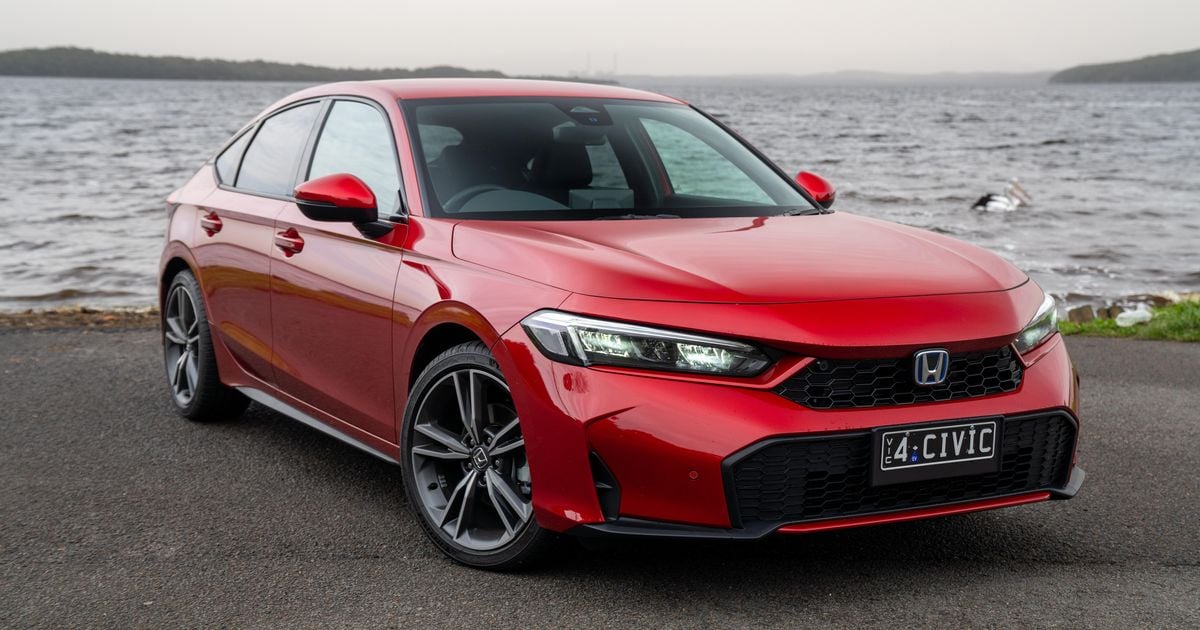
The Honda Civic has been a mainstay of the small hatchback class for more than 50 years.
In fact, it was one of the early pioneers from Japan that broke the stranglehold of locally built large family sedans, providing a more affordable and efficient option when it first landed on our shores in 1973.
Since then, and over 11 generations, it has become one of the world’s best-selling cars with more than 30 million examples sold around the world, and has built an enviable trophy cabinet of awards including its most recent, the 2026 CarExpert Choice Best Luxury Small Car award.
That title alone highlights the evolution of the Civic over its lifetime, transforming from a cheap newcomer to become a genuine alternative to luxury European brands.
So, here are seven things we like about the latest Honda Civic.
Cut-price luxury
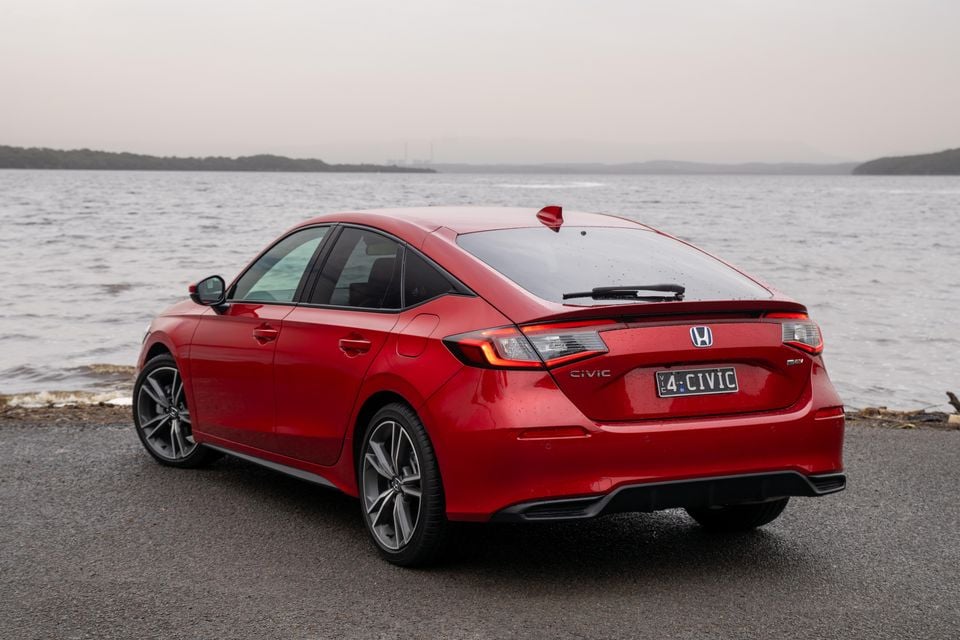
The Honda Civic is available in Australia in just two model grades, the entry-level e:HEV L and the flagship e:HEV LX, priced at $49,900 and $55,900 drive-away respectively.
Now, while that seems like a fair chunk of change away from its origins – and some of its traditional rivals like the Toyota Corolla, Mazda3 and Hyundai i30, which all have entry-level grades starting at just over $30k – Honda has trimmed its lineup to focus on the top-end of the category while offering more for less than base variants of established European rivals like the Audi A3, BMW 1 Series and Mercedes-Benz A-Class.
Fully loaded
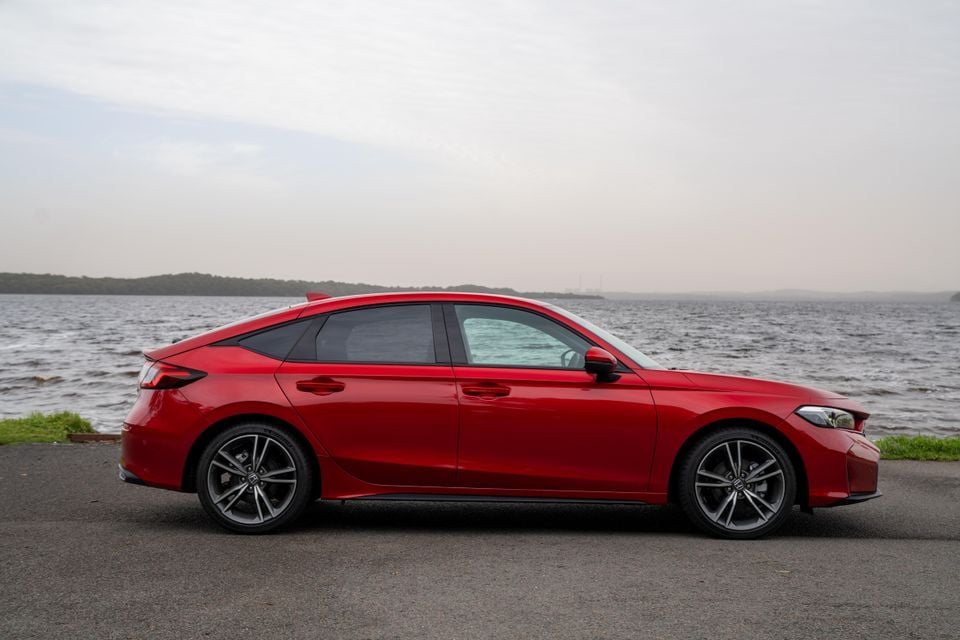
As such, even the Civic e:HEV L comes loaded with a generous level of standard equipment, including:
- 18-inch alloy wheels
- LED headlights and tail-lights
- Keyless entry with push-button start
- Smart keycard
- Leather and high-quality fabric seat trim
- Dual-zone climate control with rear air vents
- Power windows
- Heated front seats
- Heated steering wheel
- Rear privacy glass
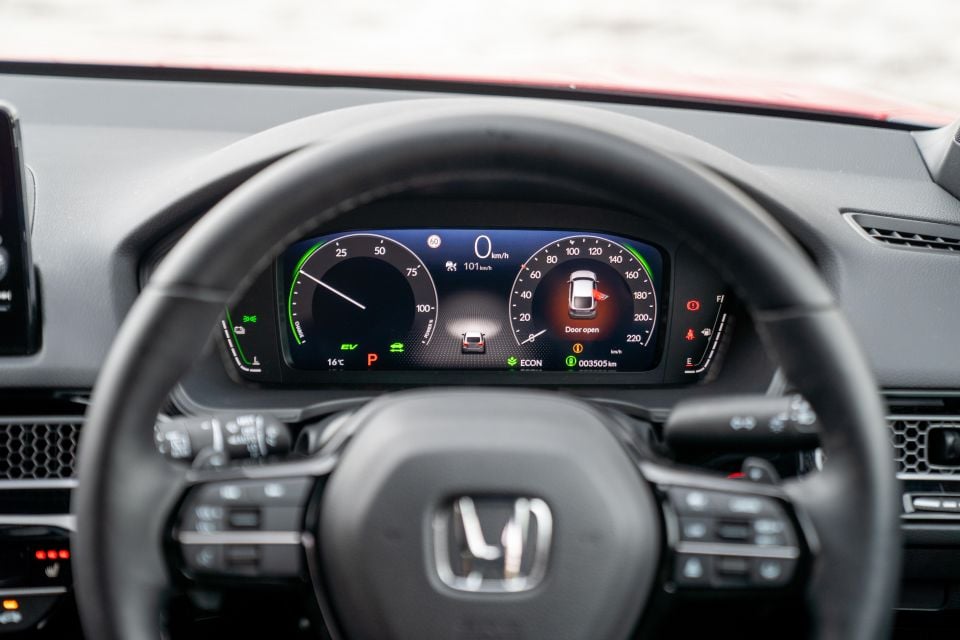
- 10.2-inch digital instrument cluster
- 9.0-inch infotainment touchscreen
- Bluetooth connectivity
- Google Built-in with embedded sat-nav, voice assistant and Google Play Store
- Wireless Apple CarPlay and Android Auto
- DAB+ digital radio
- Over-the-air software updates
- 12-speaker premium Bose audio system with subwoofer
For the additional $6000 premium, the Civic e:HEV LX adds a few more luxuries, such as a wireless phone charging pad, panoramic sunroof, full leather-appointed trim, power-adjustable front seats and more.
Space to grow
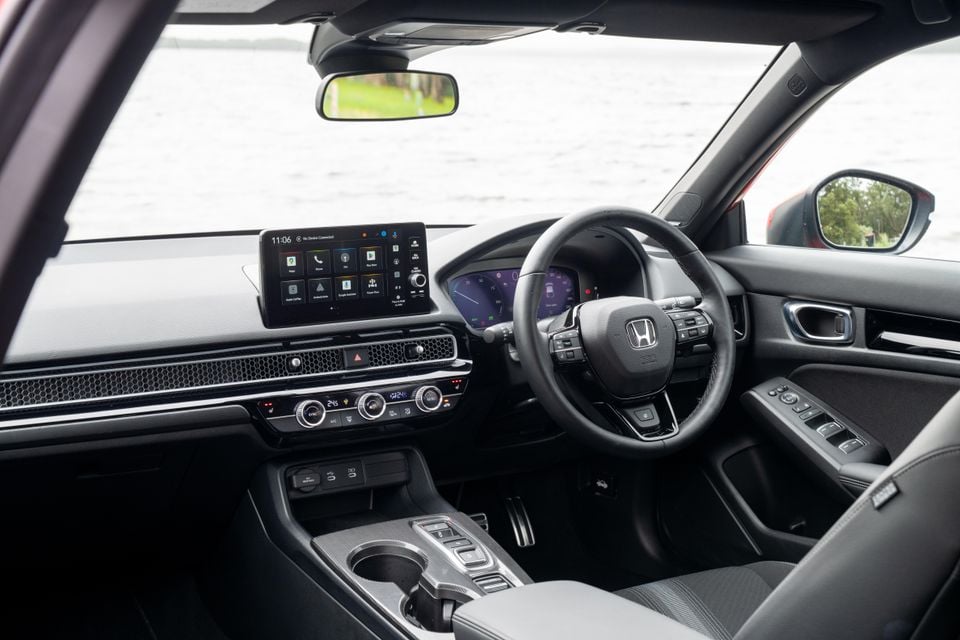
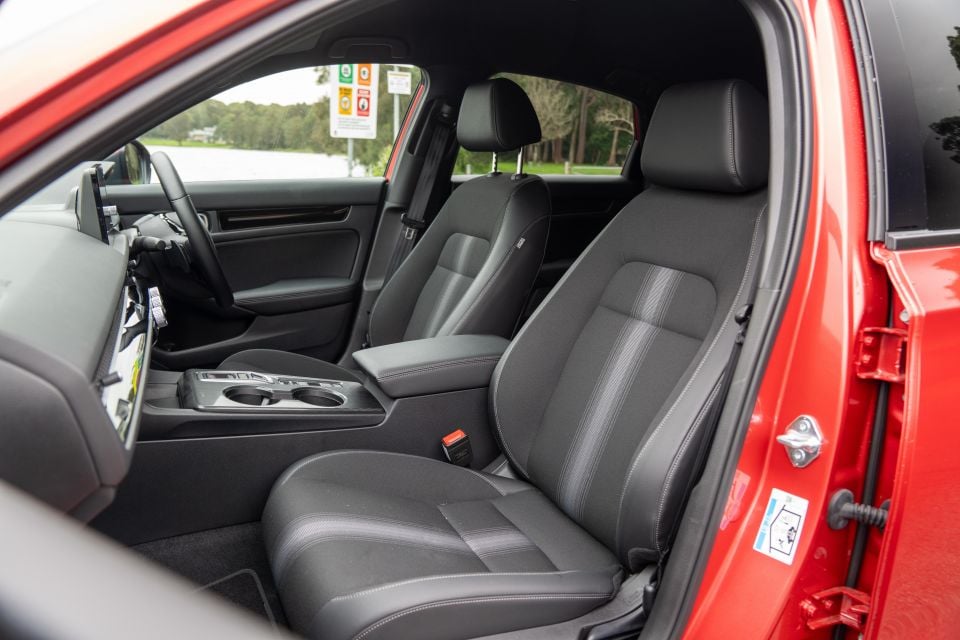
While the Honda Civic is no longer a cheap car, it isn’t a small car anymore either.
In fact, it is actually one of the biggest in its class and not that much smaller than the popular Honda Accord Euro from the early 2000s.
Measuring 4569mm in overall length, 1840mm wide, 1415mm tall and riding on a 2735mm wheelbase, the Civic is larger than all hatchback versions of the A3, 1 Series and A-Class.
What that means is it has acres of space inside the cabin, especially in the rear, with room to cater for growing families.
Plus, it has 409 litres of cargo-carrying capacity in the boot, which is easily accessible via a wide-opening tailgate.
Hybrid done right
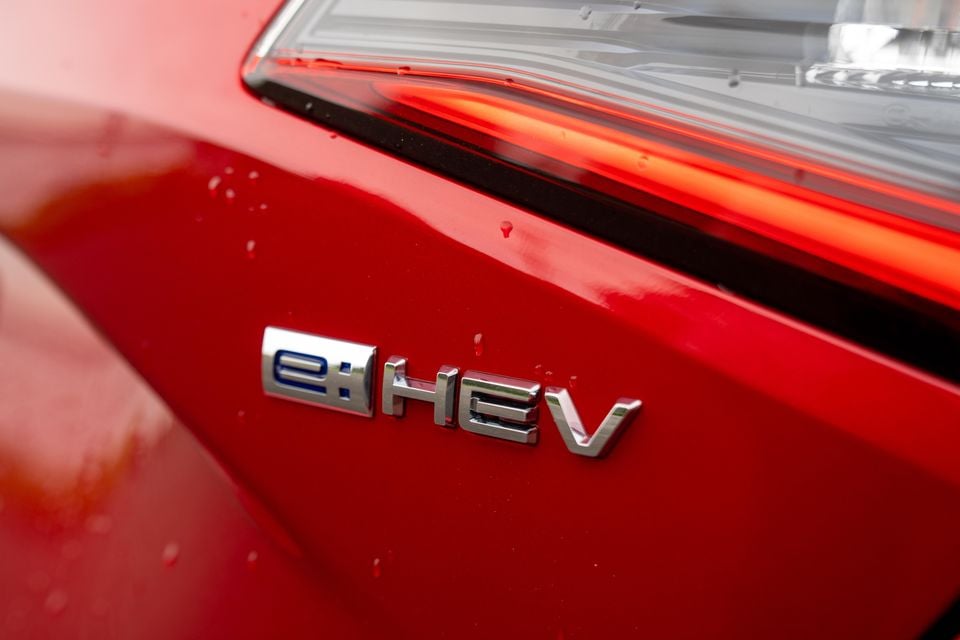
At the other end of the car, both versions of the Honda Civic are powered by a fuel-sipping petrol-electric hybrid powertrain that is complex in its mechanical makeup but simple to use.
It pairs a 2.0-litre naturally aspirated four-cylinder petrol engine with a continuously variable automatic transmission (CVT) that drives the front wheels and features two electric motors.
The primary unit is a traction motor that drives the car away from a standstill and at low speeds and then assists the petrol engine with additional power and torque when required. The secondary unit acts primarily as a generator that feeds electricity to the battery to ensure it always has energy on tap, but can also be used to help deliver maximum power under full-throttle acceleration.
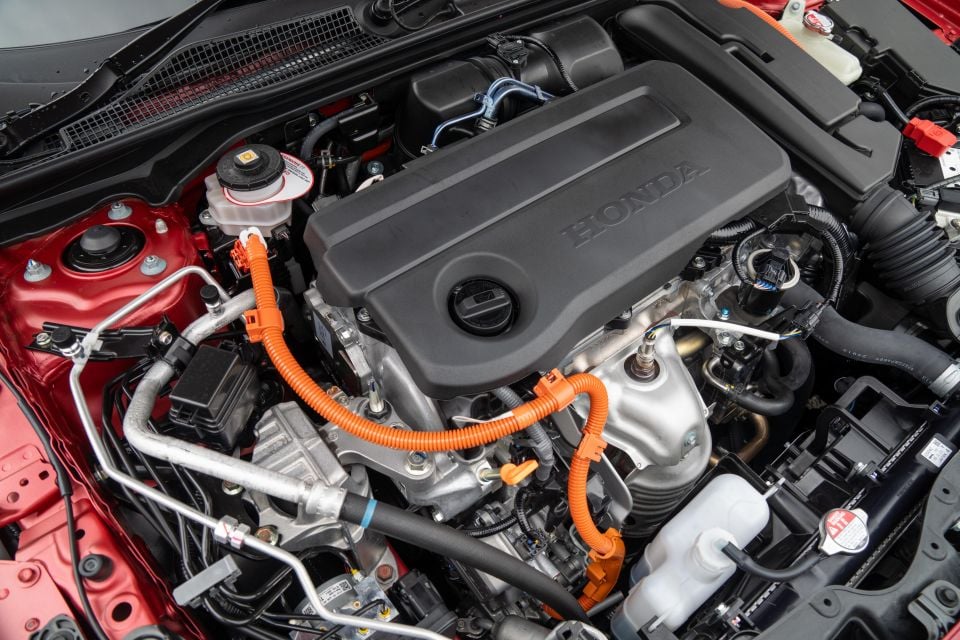
The net result is a combined output of 135kW of power and 315Nm of torque, and combined-cycle fuel consumption of 4.2L/100km.
Remarkably, Honda claims the powertrain will consume just 2.0L/100km in urban conditions, where it can use the electric motors on their own more often.
In any case, with a 40L fuel tank, it isn’t an unreasonable task to achieve around 1000km between refills in the Civic.
Safety that works
Both variants are equipped with a comprehensive suite of advanced crash-avoidance systems and autonomous driving aids under the banner of Honda Sensing technology, including:
- Autonomous emergency braking
- Forward collision warning
- Adaptive cruise control
- Lane-keeping assistance
- Traffic jam assist
- Traffic sign recognition
- Driver attention monitoring
- Blind-spot information
- Rear cross-traffic alert
- Front and rear parking sensors
- Reverse parking display
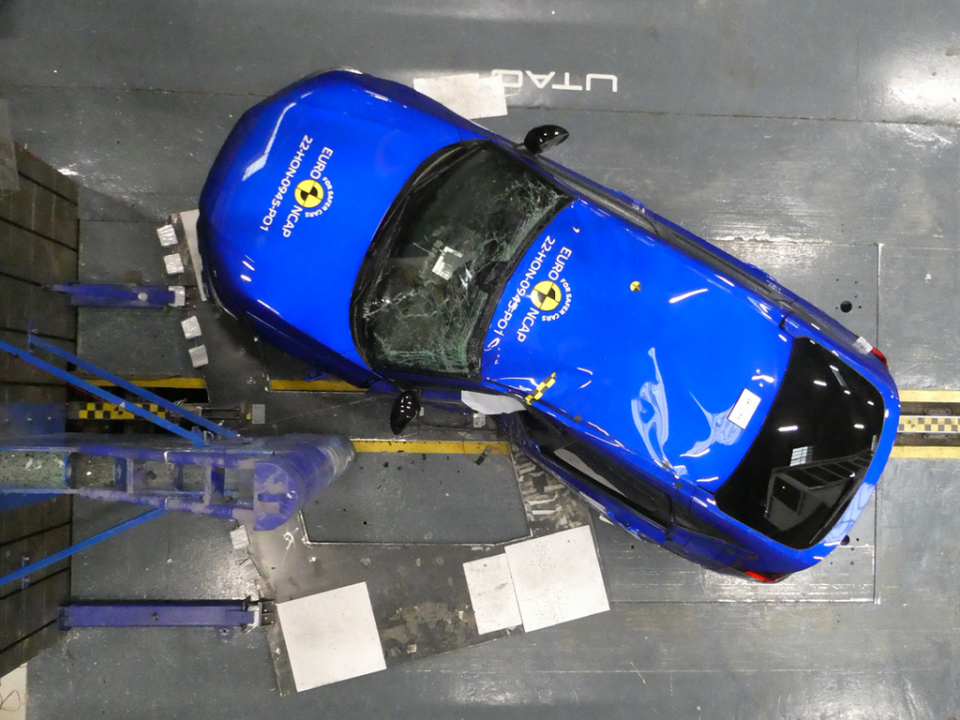
The cabin is fitted with eight airbags and the outboard rear seats have ISOFIX child restraint points.
While many rivals offer a similar level of box ticking, the Civic sets a benchmark among its peers for how well calibrated its safety systems are.
In other vehicles, modern functions like lane-keeping, driver monitoring and speed limit recognition can be so oversensitive that they are annoying and distracting to the point where it is better to turn them off, which is obviously counterproductive to actually have them fitted in the first place.
But the Civic’s safety net is almost invisible until you actually need it – exactly the way it should be.
Affordable running costs
One thing that hasn’t changed over the years is that the Civic remains one of the most affordable small cars to own, and not just because of the outstanding fuel consumption from its hybrid powertrain.
The Civic is covered by a standard five-year, unlimited-kilometre warranty that can be extended by up to three years if the vehicle is maintained on schedule through the Honda service centre network.
It requires servicing every 12 months or 10,000km, with the first five workshop visits capped at just $199 each, which could save you thousands compared to a European luxury hatch.
Driving character
However, the Civic does more than just match its luxury rivals on the subjective stuff, as it also drives just as well – if not better – than many Euro hatches.
The powertrain, for starters, is superbly refined with the electric motors providing smooth, effortless low-speed motivation, while the petrol engine is barely perceptible when it chimes in. Yet, with both in play, the Civic offers more performance than its numbers suggest.
Using active noise cancelling technology through the audio system, which reduces wind and road noise inside the cabin with counteracting frequencies, the Civic is remarkably quiet at highway speeds.
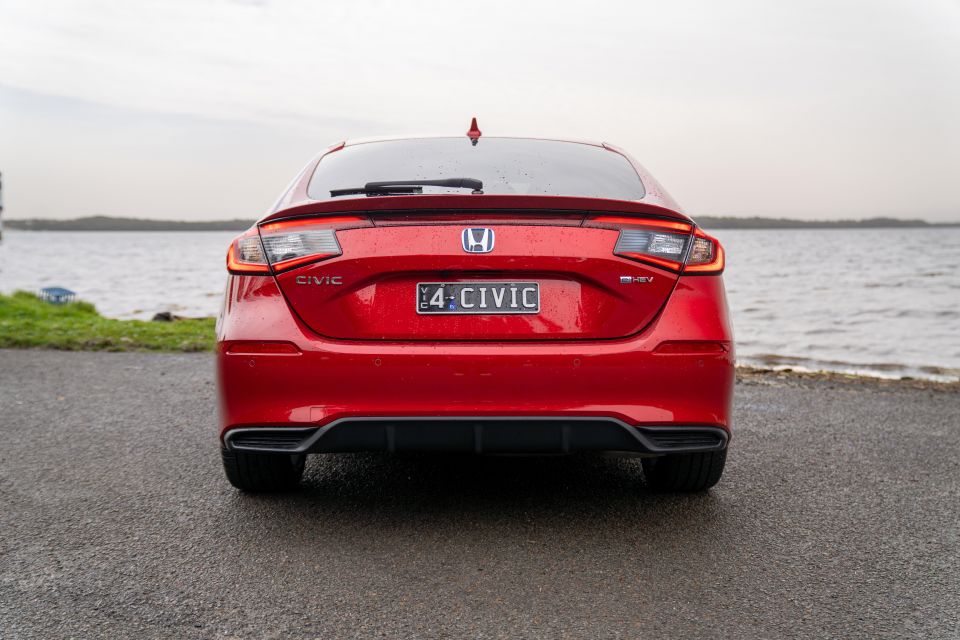
Adding to its sophisticated character, the suspension is beautifully calibrated with a magical blend of everyday comfort and sure-footed handling.
Point it at a twisty road, and the Civic can also be quite engaging and enjoyable to punt along thanks to positive, well-weighted steering, a neutral handling balance, and good pedal feel through the regenerative braking system.
On top of all of that, the Civic’s front seats are comfortable and supportive, there’s plenty of adjustment in the driving position to suit all sizes, it feels extremely well built with higher quality materials than many base-level luxury cars that cost significantly more, and Honda’s enviable reputation for reliability means it will likely last a lifetime.
And that’s seven reasons why we love the latest-generation Honda Civic, CarExpert’s Best Small Luxury Car of 2026.