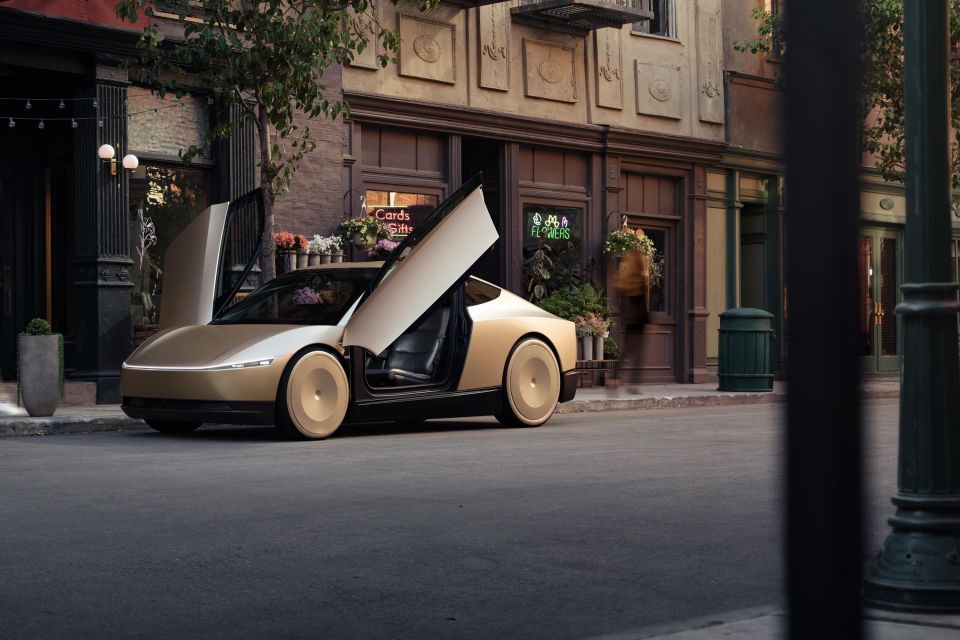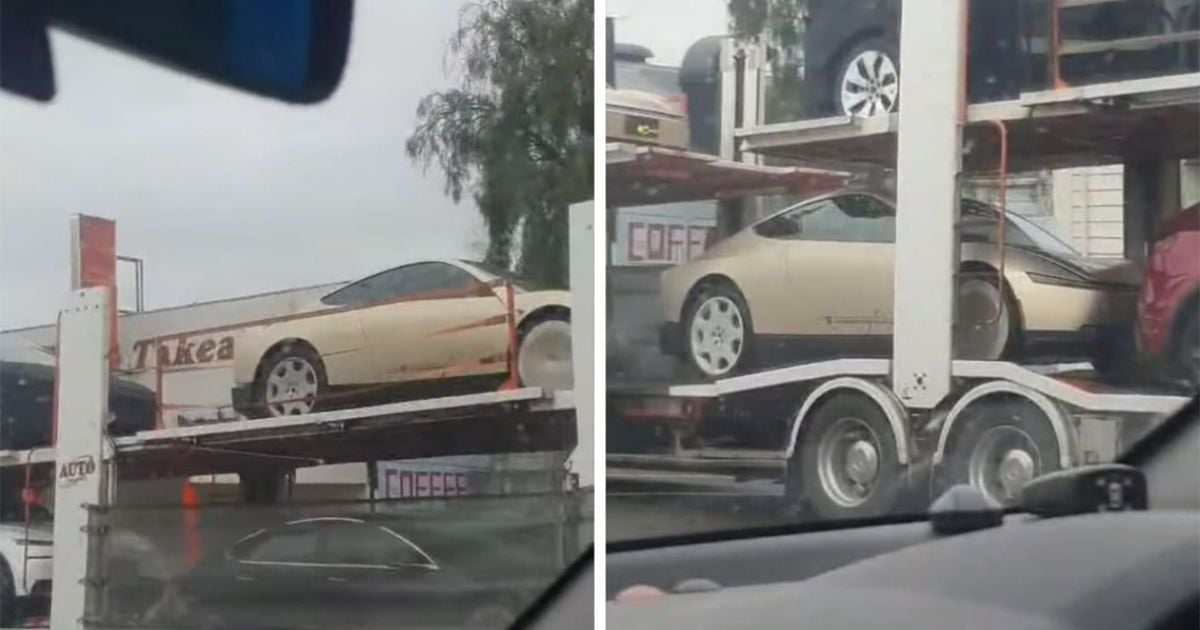
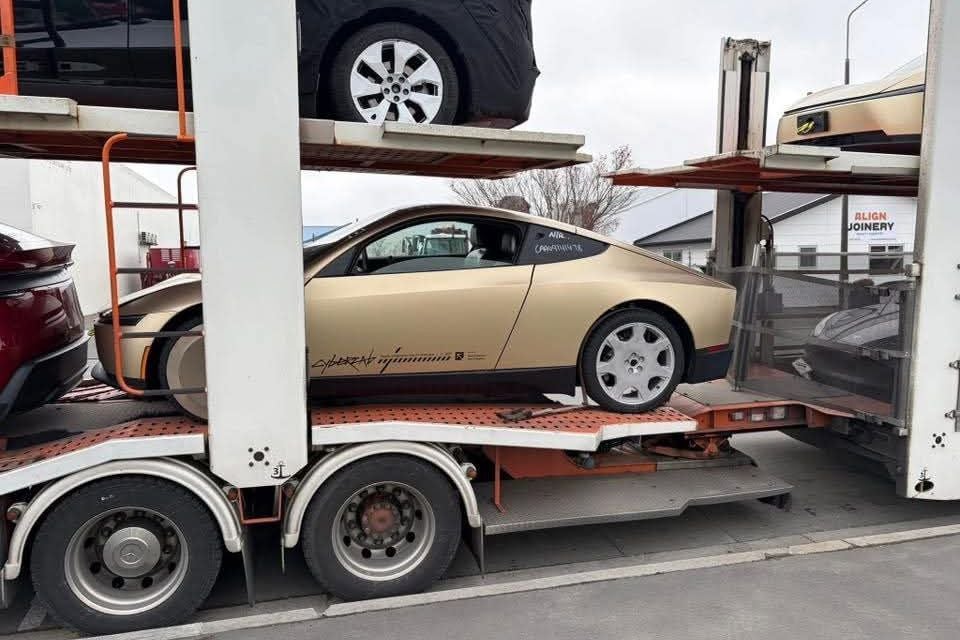
The Tesla Cybercab has been spotted in New Zealand, with not one but two examples of the autonomous robotaxi seen on the back of a vehicle transporter.
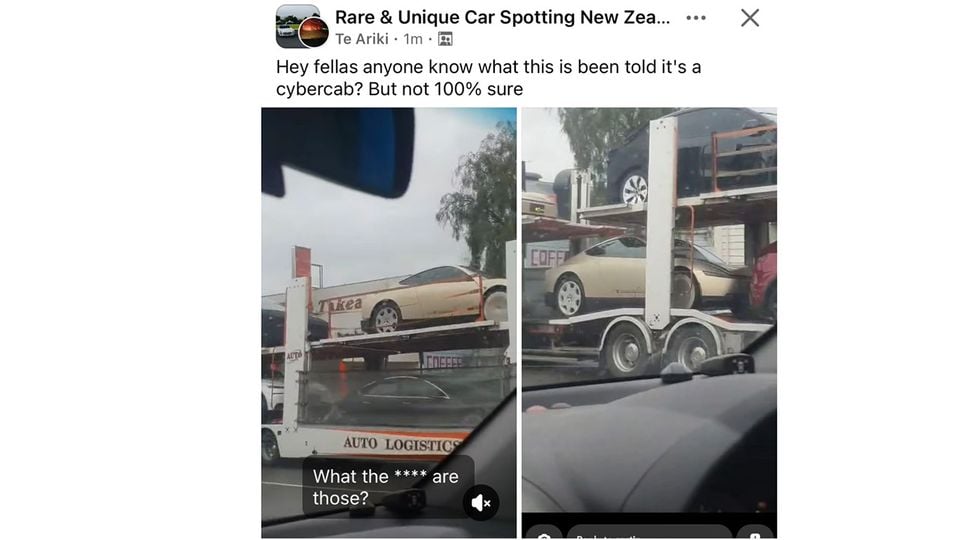
Images shared on the Rare & Unique Car Spotting New Zealand group on Facebook showed the two vehicles in public on board a transporter on the country’s South Island.
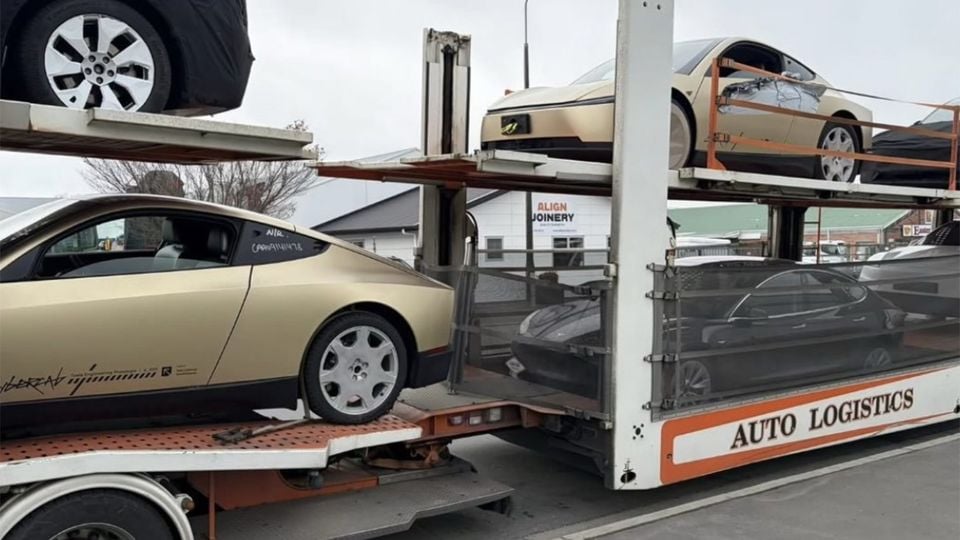
Tesla has confirmed the two vehicles are Cybercabs it owns and were photographed on their way to the Southern Hemisphere Proving Grounds in Cardrona, northeast of Queenstown, for cold-weather testing.
Looking for your next car? We’ll help you research and compare so you choose with confidence.
Tesla unveiled the Cybercab in October 2024 as a two-seat, butterfly-doored electric autonomous ‘robotaxi’, with an interior designed without a steering wheel or accelerator and brake pedals.
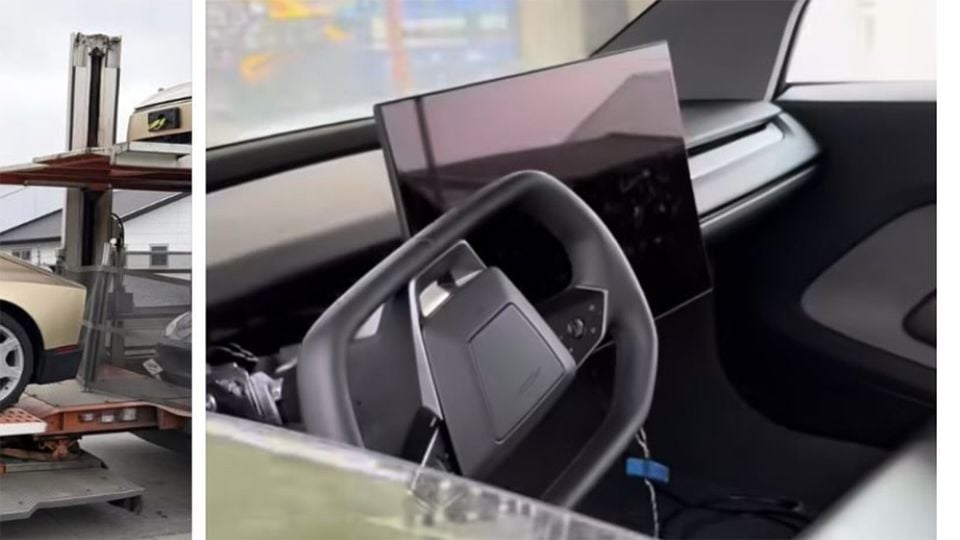
It’s worth noting the Cybercabs seen in New Zealand did include steering wheels, clearly visible in images from the Tesla Model Y NZ Group, which revealed the left-hand-drive cabins.
While intended to take over from the Model Y used for the brand’s first robotaxi service, which launched in Austin, Texas, in June 2025, the Cybercab is scheduled to go on sale to the public in 2026. It hasn’t been confirmed for Australia.
US pricing is expected to be around US$30,000 ($A42,654), which would make it the most affordable Tesla on sale in North America.
It would also see the Cybercab similarly priced to the cheapest EV currently on sale in the US, the Chevrolet Bolt, which starts at US$28,995 ($A41,225) before on-road costs.
As reported by US outlets this week, documents filed with the Environmental Protection Agency (EPA) revealed key mechanical details of the Cybercab.
The documents show the robotaxi has a single electric motor producing 219hp (161kW) driving the front wheels, with a kerb weight of 1412kg for a power-to-weight ratio of 114kW per tonne.
For comparison, the entry-level Model Y Premium RWD sold in Australia has a power-to-weight ratio of 133kW per tonne.
The Cybercab’s weight is kept low with a relatively small 50kWh battery and a 280-mile range (451km), according to the EPA, though it cautions these figures are estimates only.
Tesla CEO Elon Musk told media at the 2024 launch the Cybercab would be made “in very high volume”, declaring autonomous vehicles would play a revolutionary role in the future of transport.
“Autonomous cars could be used five or ten times more [than privately owned non-autonomous cars],” Mr Musk said. “[Therefore] the same car would have five or ten times more value.”
“The cost of autonomous transport will be so low, you can think of it like individualised mass transit.
“The average price [of bus travel] is around US$1 per mile [$A0.88 per kilometre]. Operating costs for the Cybercab are going to be around US$0.20 per mile [$A0.17 per kilometre].”
Tesla’s robotaxi service launched in 2025 in Austin, Texas, operating within a geo-fenced area as an invitation-only service.
In June 2026, the service expanded to the entire Austin metropolitan area. Tesla has also launched robotaxi programs in Dallas and Houston, while expanding operations to the San Francisco Bay Area in California.