
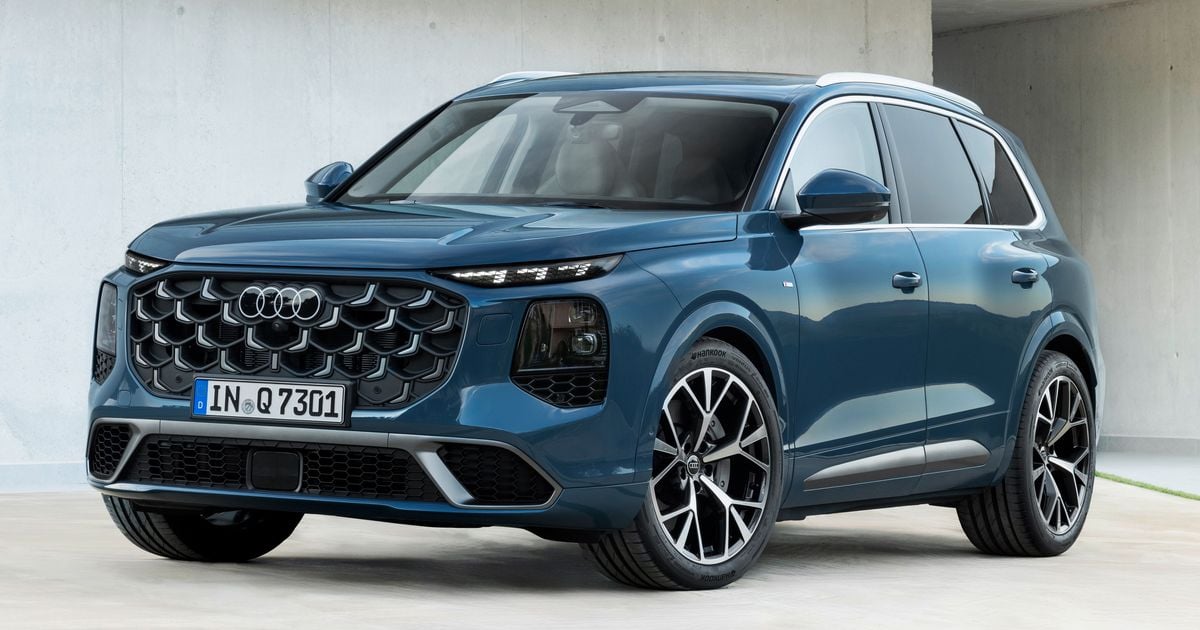
The covers have come off an all-new Audi Q7, and while the exterior design might not appear as radical as some of the German luxury marque’s recent concept cars, the interior of the third-generation large premium SUV sees a return to better materials and greater practicality.
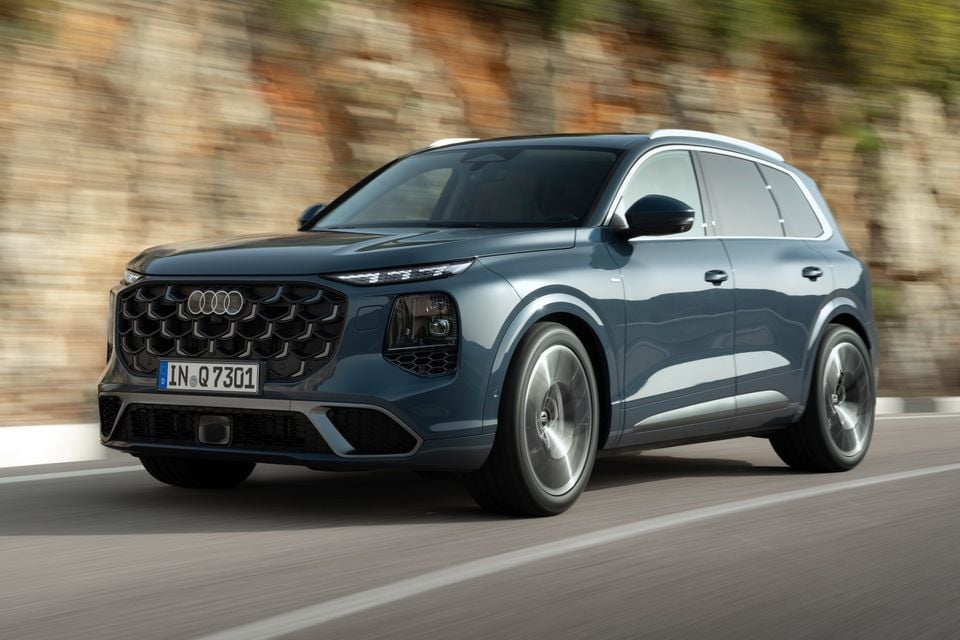
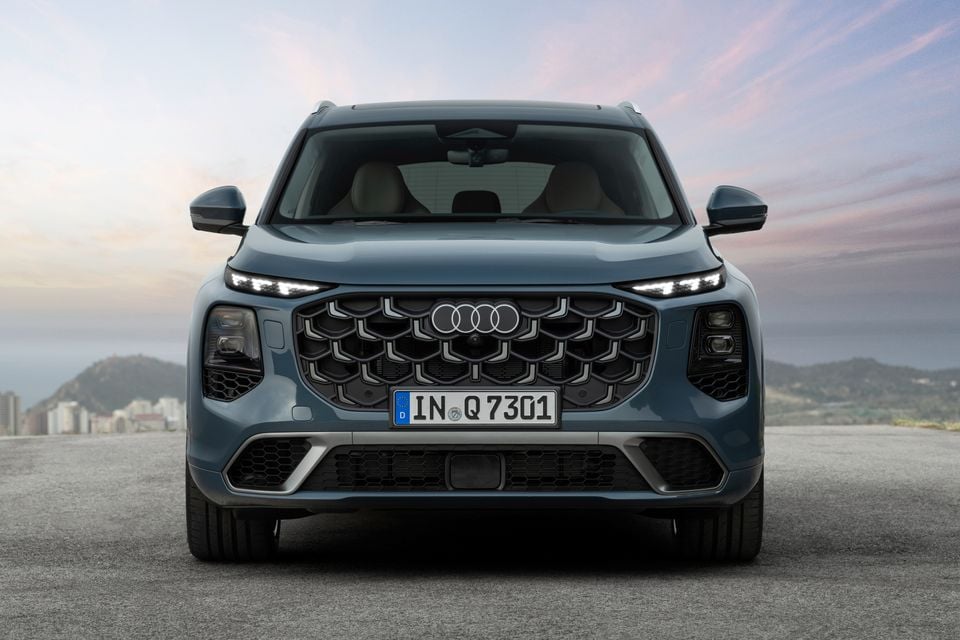
It carries forward a design language that was started with the smaller Q6 e-tron and builds upon that foundation. The company’s signature large grille appears larger again, and its honeycomb-like construction includes subtle LED downlighting to illuminate it at night. Nowhere near as garish as some others, but still far from subtle.
In contrast, thin LED daytime running lights can be programmed to display assorted designs. Below are the main headlights, featuring optional digital Matrix-LED technology with 25,600 micro-LEDs, each measuring 40 micrometres – or less than half the thickness of a human hair.
Looking for your next car? We’ll help you research and compare so you choose with confidence.
These advanced headlights do more than just light up the road ahead; a feature that marks out pedestrians, making them easier to spot at night, is just part of a suite of advanced safety systems that Audi equips the new Q7 with.
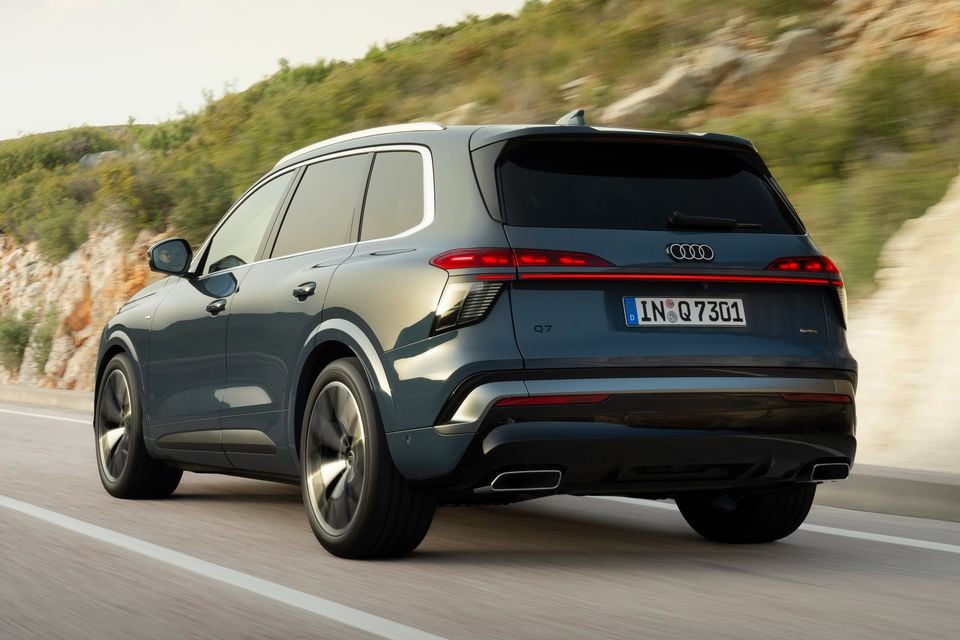
Another is the optional OLED rear lights, which not only can be switched between different patterns, but as vehicles or pedestrians approach the Q7’s rear, they automatically switch to static warning symbols to alert whoever is getting a bit too close.
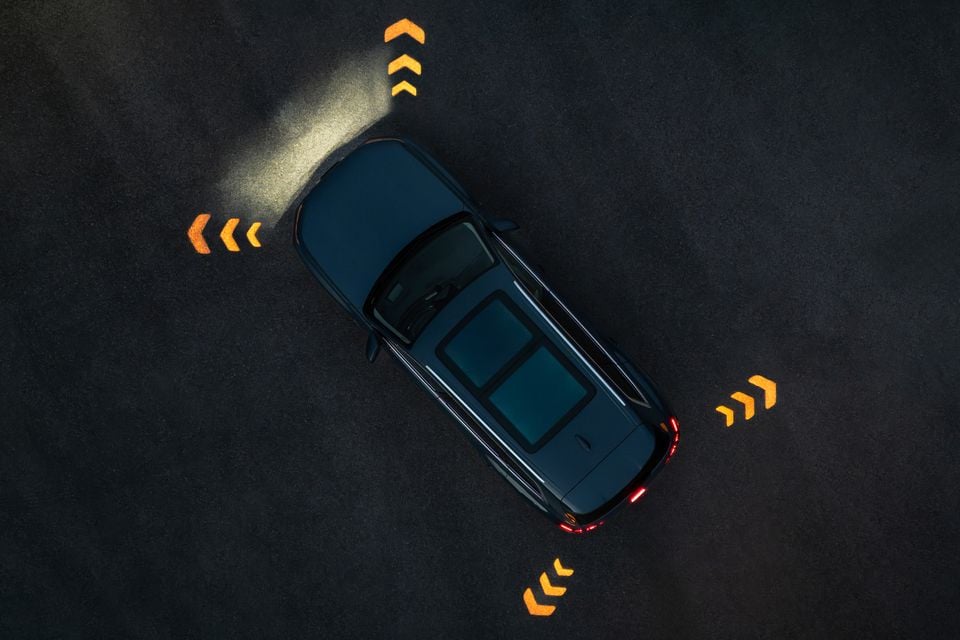
In conjunction with the OLED rear lights and digital Matrix LED headlights, a new advanced turn signal is available. This setup projects dynamic amber symbols onto the ground around the car when it signals a left or right turn, making it much more obvious to pedestrians, cyclists and other drivers.
Audi’s designers have kept things simple with the surfacing down the sides of the new Q7, though the blistered rear haunches provide a bit of muscle to what is otherwise a simple, if slightly boxy SUV. It measures 5056mm long and 2010mm wide, with an overall height of 1800mm.
Wheel sizes will start with a 20-inch rim, followed by three 21-inch designs. Four styles in 22-inch diameters will include a sporty ‘5-V’ and, for the first time, there will be a 23-inch alloy wheel option from the factory.
Behind those wheels lurk 400mm brake discs up front, gripped by six-piston callipers painted in grey, with red as an option. On the rear axle, 350mm discs complete the Audi’s brake package.
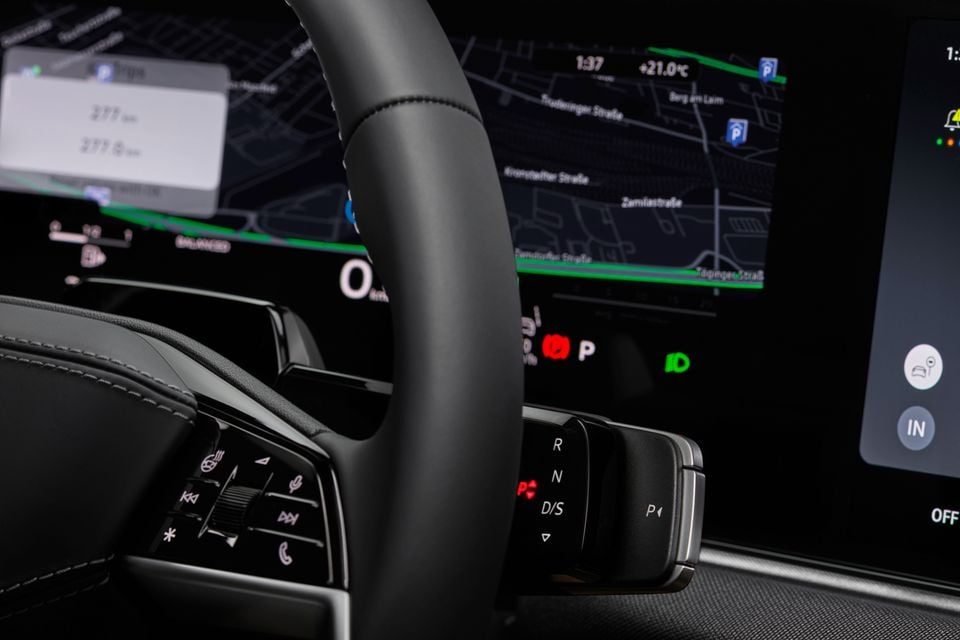
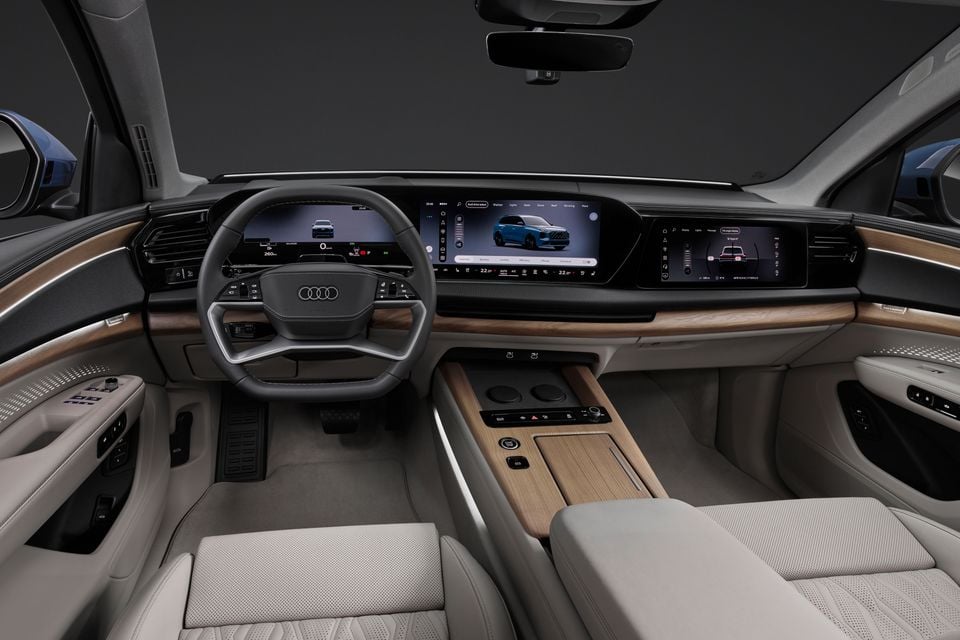
The interior is nicely finished, though it remains a very digital affair, with a 12.3-inch driver’s instrument screen and a 14.5-inch infotainment touchscreen that are combined into a single curved unit. The Audi native infotainment system looks complicated but has a reasonably logical menu layout and supports all the usual smartphone mirroring features.
An additional display in front of the passenger is available and, as with other Audi models that offer such a setup, it looks very much like an afterthought in terms of design and, given the size of the central touchscreen, it seems largely redundant.
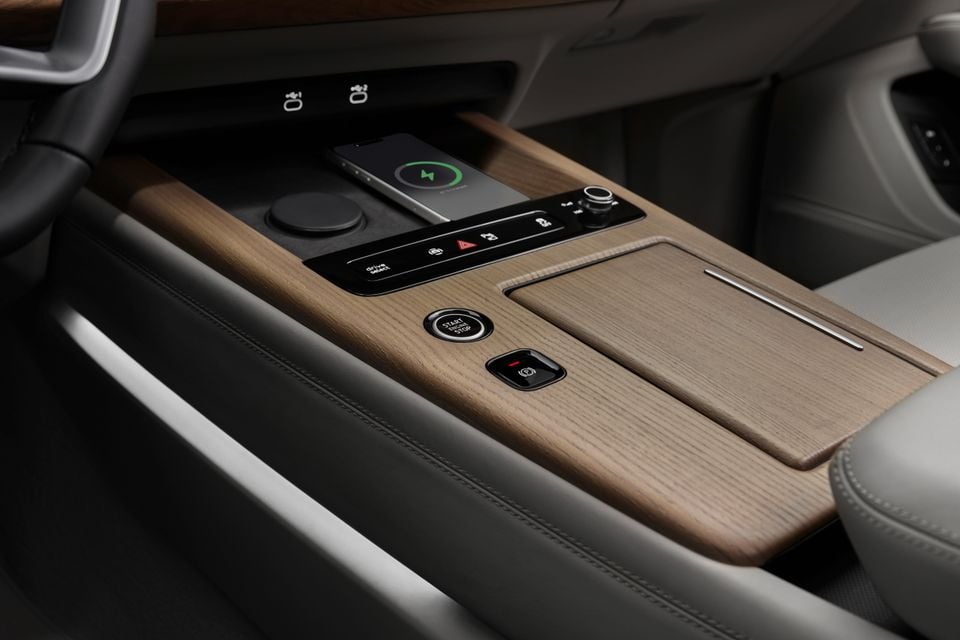
A wide centre console features two large cupholders and two wireless phone charging pads with magnetic connections that hold devices in place even when the vehicle is on the move.
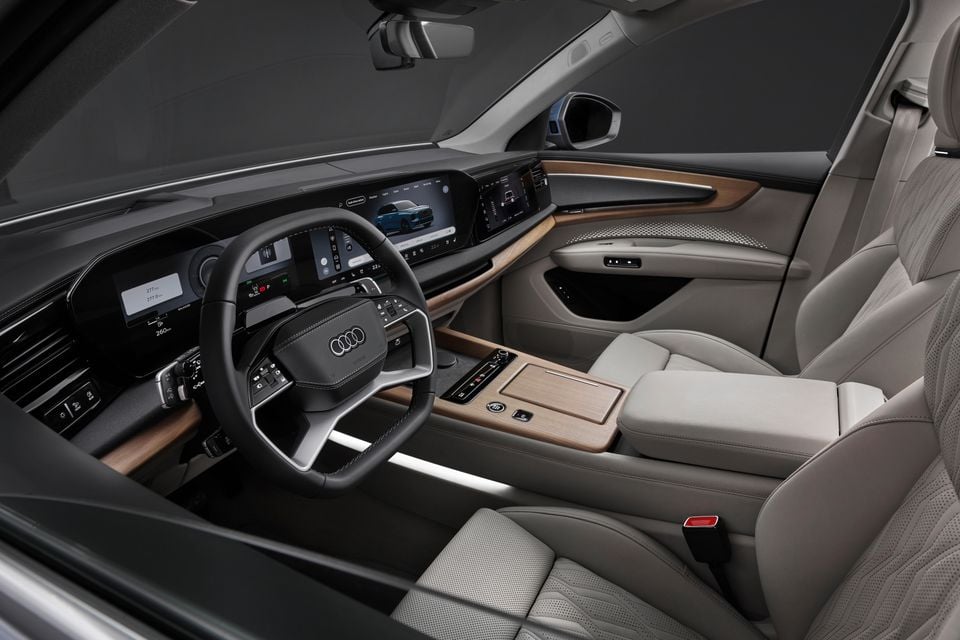
Although there are still not as many proper buttons as we’d like to see, we will applaud Audi’s interior designers for getting rid of much of the glossy black surfaces that it previously employed in its cars.
A move to more traditional open-pore wood and soft fabric that wraps around into the doors to hide the 22-speaker Bang & Olufsen stereo indicates a move back to more premium materials.
New front seat designs offer numerous adjustments (all done electrically) in virtually every plane.
Head restraint speakers enable phone calls to be more private, similarly for navigation direction announcements. The seats can be equipped with a 4D sound system that incorporates actuators in the base of the front seats to let you ‘feel’ the music even more.
The new Q7 will be sold as a five-seater initially, but Audi will offer both a six-seat setup with two captain’s chairs in the second row, or as a seven-seater.
In all cases, all seats are electrically adjustable, and boot capacity will vary from 805 litres in the five-seat version to 2075L with the rear seats folded. In the case of the seven-seater, boot capacity will range from 722L – in five-seat guise – up to 1980L when the back seats are folded. All rear seats are equipped with ISOFIX anchor points for child seats.
Audi will kick off sales with a turbocharged 3.0-litre six-cylinder diesel engine that produces up to 180kW of power and 500Nm of torque. It will be joined by a tuned version that gets 220kW and 630Nm.
Both engines utilise mild-hybrid (MHEV) technology with an electrically powered compressor to boost standing starts and keep efficiency in check. Audi provisionally quotes a fuel consumption figure of 7.1-7.8L/100km for the 180kW engine.
The existing Q7 already used this technology, but Audi has further improved the system, which now includes a belt alternator starter, powertrain generator and a compact lithium-iron phosphate battery to deliver better performance, lowering fuel consumption and emissions.
Short bursts of engine-off driving are possible as the MHEV portion of the powertrain provides up to 18kW and 370Nm. However, drivers shouldn’t expect much more than limited engine-off coasting and driving very short distances under reduced load. The Q7 is capable of pulling away from rest electrically and completing parking manoeuvres without the diesel engine running.
Audi confirmed that it plans to introduce a plug-in-hybrid variant with a 3.0-litre V6 but has yet to confirm what kind of electric-only range it will provide. Executives also confirmed to CarExpert that there are plans to add a smaller, four-cylinder engine to the lineup “during the lifecycle” of the Q7.
Buyers will be able to choose between three suspension options, starting with a passive setup on steel springs, which Audi says has been developed to provide a more comfortable ride than its predecessor.
Adaptive air suspension with electronically controlled damping can provide a broader spectrum of handling, from a more comfortable ride to a stiffer setup for sportier driving modes.
The system automatically levels out the vehicle regardless of load and can use geodata to alter its setup during a drive. For example, if the lift function is enabled when the car comes to a railway crossing, it will adjust the suspension to provide a smoother experience.
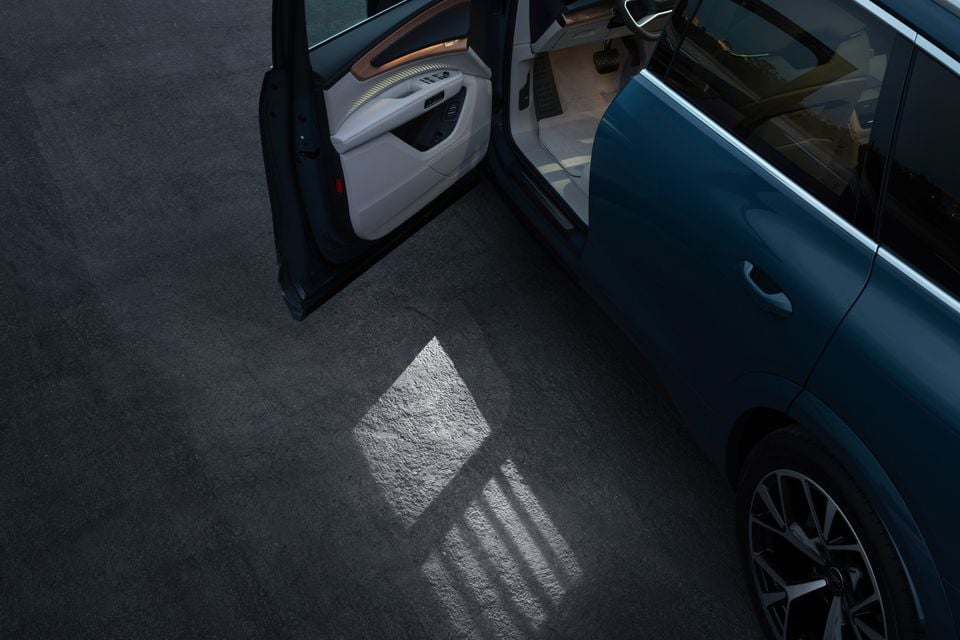
Another benefit of the air suspension is that it can lower the Q7 by as much as 62mm to make ingress and egress easier for passengers. Furthermore, the rear-end can be lowered to aid with the loading of bulkier items into the boot. The Q7 is rated to tow up to 3500kg with a braked trailer.
Keener drivers can take things one step further with the adaptive air suspension sport option, which lowers the ride height by 30mm over the standard Q7 to reduce the car’s centre of gravity and boost handling.
The new Q7 will enter production later this winter at the same production facility in Bratislava as the existing Q7, with the first examples expected to arrive in Australia towards the end of 2026.