
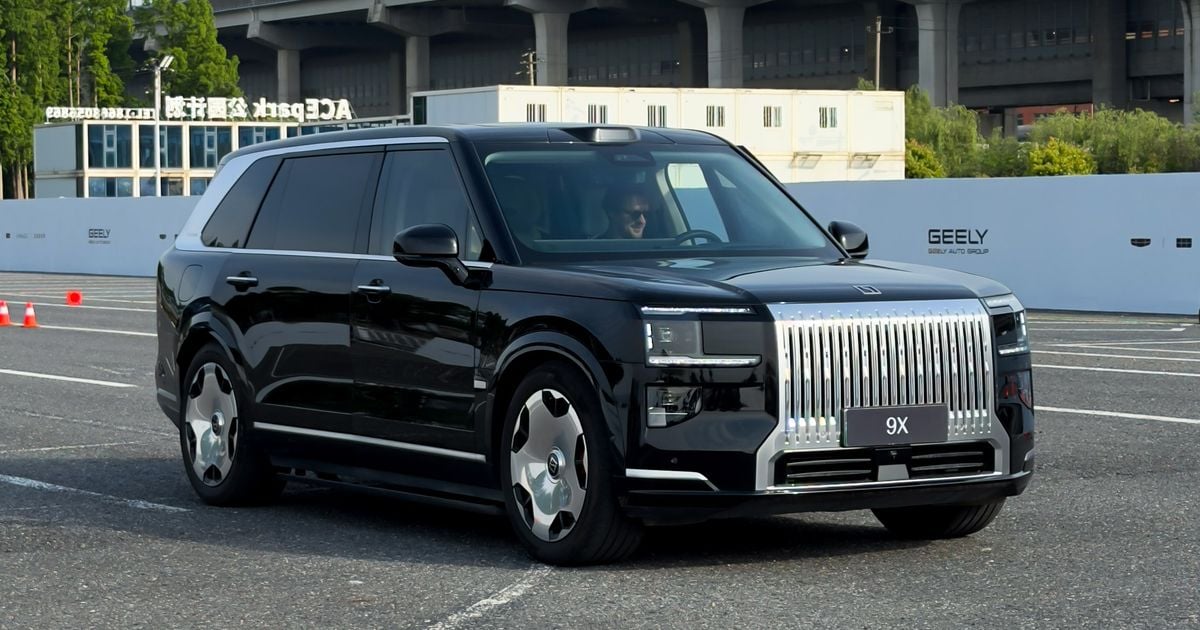
The Chinese aren’t just making ‘cheap’ cars anymore – something that’s no better evidenced than by Zeekr, premium arm of the Geely Auto Group.
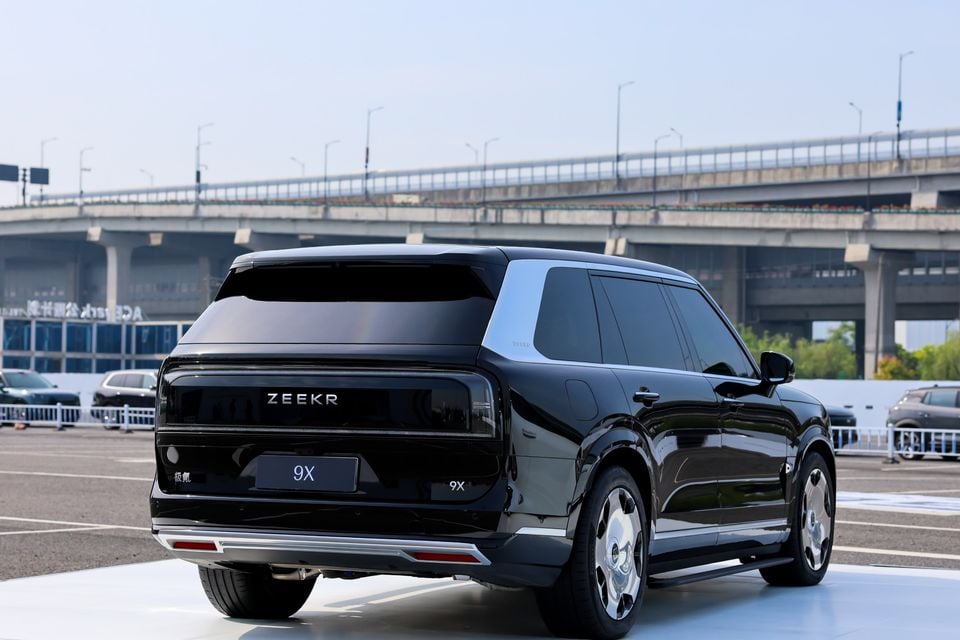
While the Chinese brand’s story started in Australia with the Volvo EX30-based Zeekr X small electric SUV and then continued with the Tesla Model Y-fighting 7X mid-size SUV, it actually all began with the 001 electric shooting brake at the beginning of this decade – a model which has the same DNA as the Polestar 4 and pioneered the brand’s development of high-performance electric vehicle (EV) technologies.
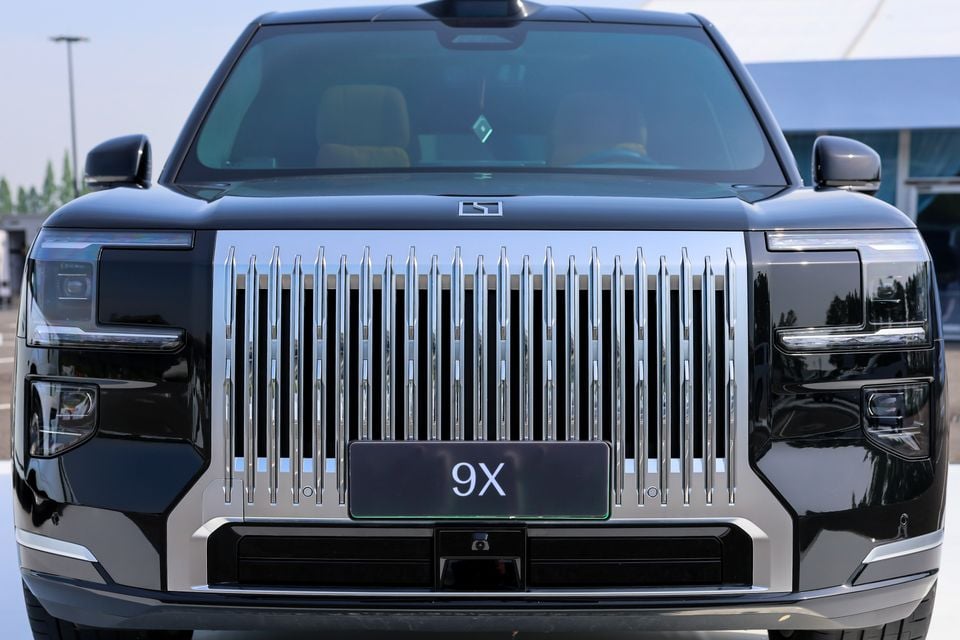
Just five years on from the brand’s first model, Zeekr is now looking to take on the likes of Audi, BMW and Mercedes-Benz with a vehicle that draws design inspiration from the ultra-luxury segments, with styling elements from Range Rover, Rolls-Royce and Bentley all woven into the external and interior.
The 2026 Zeekr 9X was revealed at last year’s Shanghai motor show (Auto China 2025) as the Zeekr brand’s first hybrid model – better classified as an extended-range electric vehicle (EREV) – and attracted no less than 40,000 domestic orders within the first hour after it went on sale.
It’s not just a cheap copy of an established luxury car either. The 9X offers a suite of high-end technologies like adaptive air suspension and active anti-roll stabilisation, dual-megapixel headlights, a premium sound system from Naim (Bentley’s cost-option audio supplier), and an available tri-motor EREV drivetrain producing over 1000kW of power and 1400Nm of torque – enough for a claimed 0-100km/h time of just 3.1 seconds.
Suffer from range anxiety? The 9X’s plug-in EREV system boasts lofty EV driving claims of 300km-plus per charge based on China’s more lenient CLTC standard, and a claimed combined range of over 1200km from a full tank of fuel and a fully charged battery.
Throw in up to three rows of seating and enough convenience and luxury features to make it feel like business class travel, and it sounds like a pretty good deal for a vehicle that starts from ¥465,900 (A$94,397) in the Chinese domestic market.
Zeekr Australia has confirmed the 9X for this market, where it’s set to arrive in local showrooms either in late 2026 or early 2027, and has sparked a lot of interest in CarExpert‘s comments section as well as on social media platforms.
Does it live up to all the hype? Well, we got a very brief first taste at Geely’s Hangzhou HQ following last month’s Beijing motor show – read on to find out more.
How much does the Zeekr 9X cost?
The short answer is we don’t know yet.
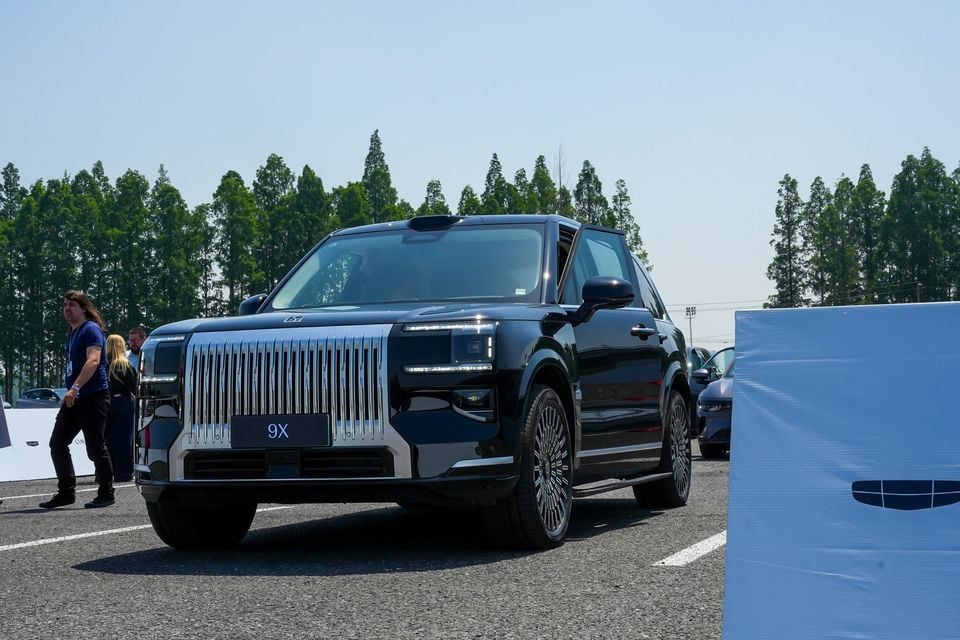
As noted earlier, the 9X starts from ¥465,900 (A$94,397) in China for the entry-level ‘Max’, which gets a smaller 55kWh battery pack and 660kW dual-motor EREV powertrain. Zero to 100km/h takes a claimed 3.9 seconds, with CLTC EV range rated at 300km.
Find your perfect new car with CarExpert
At the top of the tree is the Ultra, which at ¥559,900 (A$113,442) ups the ante with a massive 70kWh battery and a 1030kW tri-motor drivetrain, good for 355km of claimed CLTC electric range and a 0-100km/h claim of just 3.1 seconds.
There’s also a mid-spec Ultra grade with both 55kWh and 70kWh battery options, and a 968kW dual-motor EREV drivetrain. Zeekr has also introduced an Obsidian Black Edition flagship for a lofty ¥599,900 (A$121,547), which gets unique black pack-style upgrades and all available option boxes ticked as standard.
While the 9X’s hefty 5239mm length, 2029mm width and 1819mm height make it certifiably upper-large in size, and it has straight-line performance to rival a Bentley Bentayga Speed, even the most expensive variant costs around the same as a base BMW X5 in China, where it’s priced from ¥598,000 (A$121,162) for the elongated joint-venture model sold there.
In Australia, a starting price of even $110,000-$120,000 for the Zeekr 9X would position the big Chinese SUV favourably against established German models like the Audi Q7 (from $108,815), BMW X5 (from $139,900) and Mercedes-Benz GLE (from $136,600), all of which are smaller and more expensive spec-for-spec.
Time will tell, but Zeekr’s price positioning will definitely play a key role in whether the 9X sells in decent numbers Down Under.
What is the Zeekr 9X like on the inside?
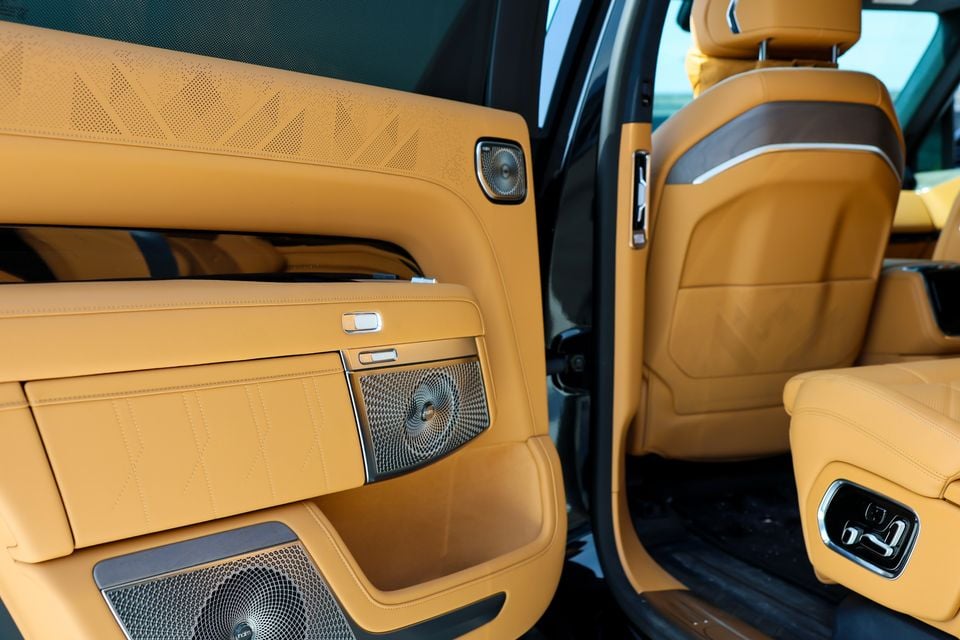
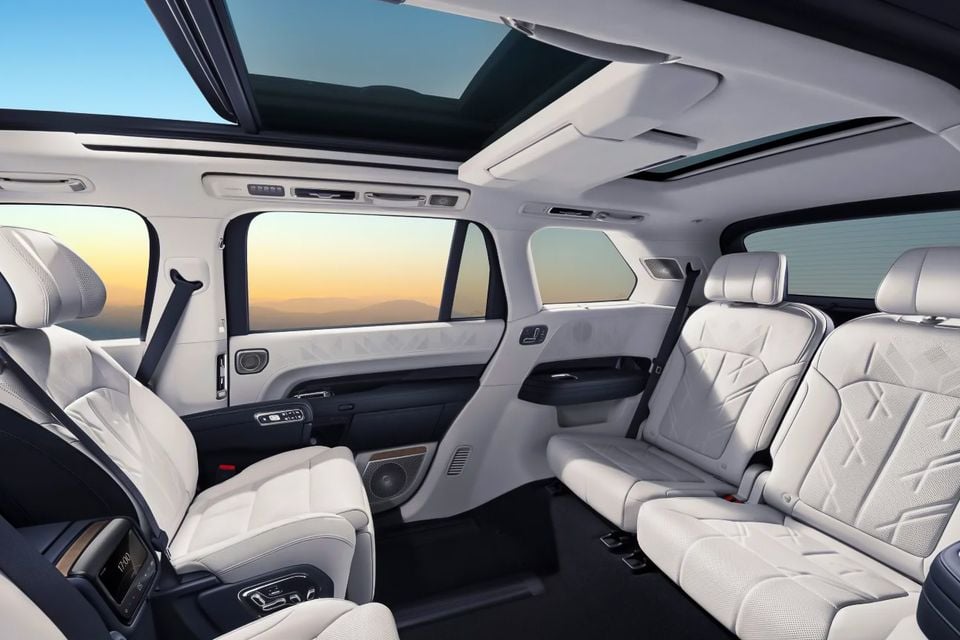
Zeekr has very liberally applied genuine Nappa leather upholstery throughout the interior, with its Chinese public website claiming “all areas of the car seats that come into contact with the body, the centre armrest and parts of the door panels” are finished in the real stuff.
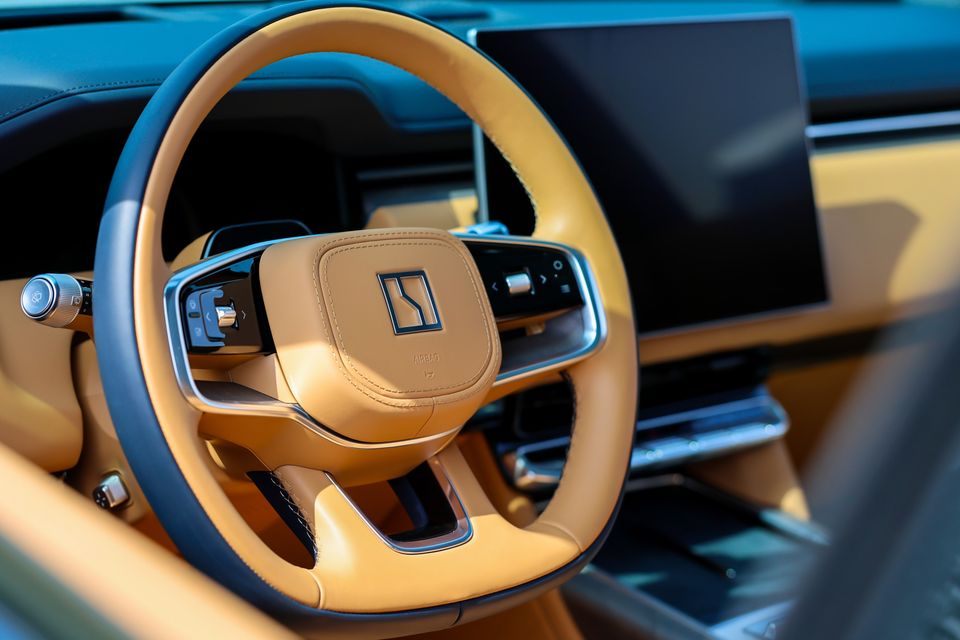
We didn’t get a long enough stint to do a full cabin breakdown or really get a feel for the build quality, but there’s certainly an opulent ambience in here.
The Nappa hide is available in multiple dual-tone colourways, and accented with flourishes of metal and natural wood trims, plus quilting and perforation detailing that really goes that extra mile.
Look up and the roofliner is finished in a lovely suede, and there are a variety of seating configurations available – at least in China – which go a long way to make rear passengers feel as comfortable as those up front, if not more so.
Second-row occupants can take advantage of the ‘Cloud Seat’ captain’s chairs, which can be adjusted into a business class-style recliner configuration and offer heating, cooling and massage functions, as well as being able to be rotated to face the third row in an executive meeting-style layout.
Even the third row can slide fore and aft as well as recline, electrically, for increased comfort. There’s a one-touch power access function from the second row into the third, while the six-seat configuration has a corridor-like gap to allow access into the back, like a people mover.
Zeekr has also indicated plans to sell an even more plush ‘9X Grand’ specification with a four-seat limousine-style layout that apes the options available in Bentley’s and Rolls-Royce’s ultra-luxury SUVs.
Back to the first row, and there’s a digital driver’s instrument cluster augmented by dual 16-inch OLED infotainment touchscreens in the centre and ahead of the front passenger, each boasting 3.5K resolution. In China, you can also opt to delete the front passenger display – which I personally prefer and could also be an option in Australia.
Zeekr also claims a 47-inch display area for its augmented reality (AR) colour head-up display, which also claims peak brightness of 20,000 nits. Sadly we didn’t really spend enough time with the car to get a gauge of its effectiveness, but the numbers are impressive nonetheless.
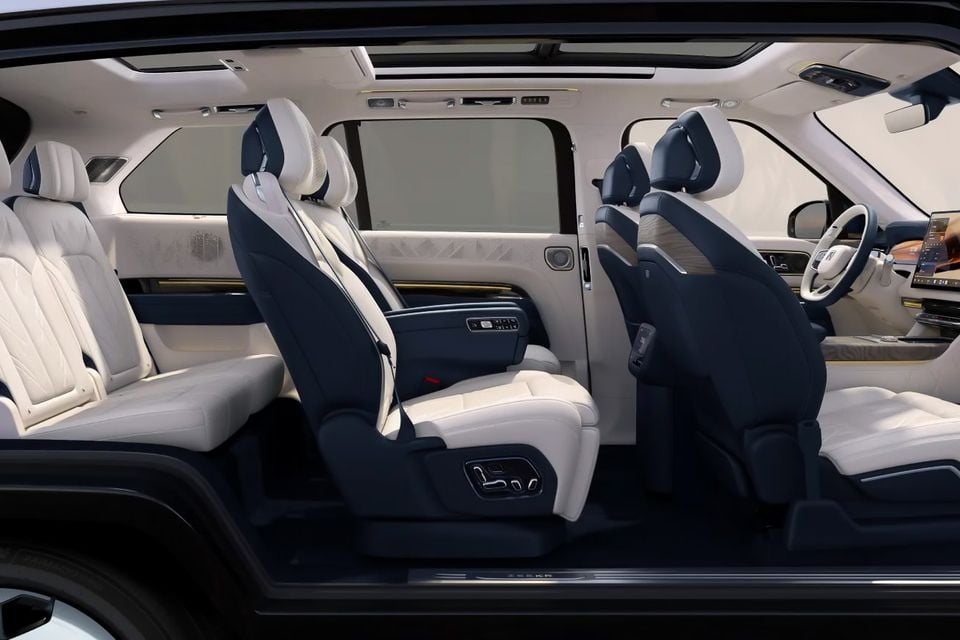
There’s a litany of other niceties too, not limited to a 17-inch 3K flip-down rear passenger entertainment display, a fully integrated AI assistant for the vehicle displays and software features, a rear refrigerator for your champers, power rear sunshades, fully customisable ambient lighting, and a dual sunroof with opening front section.
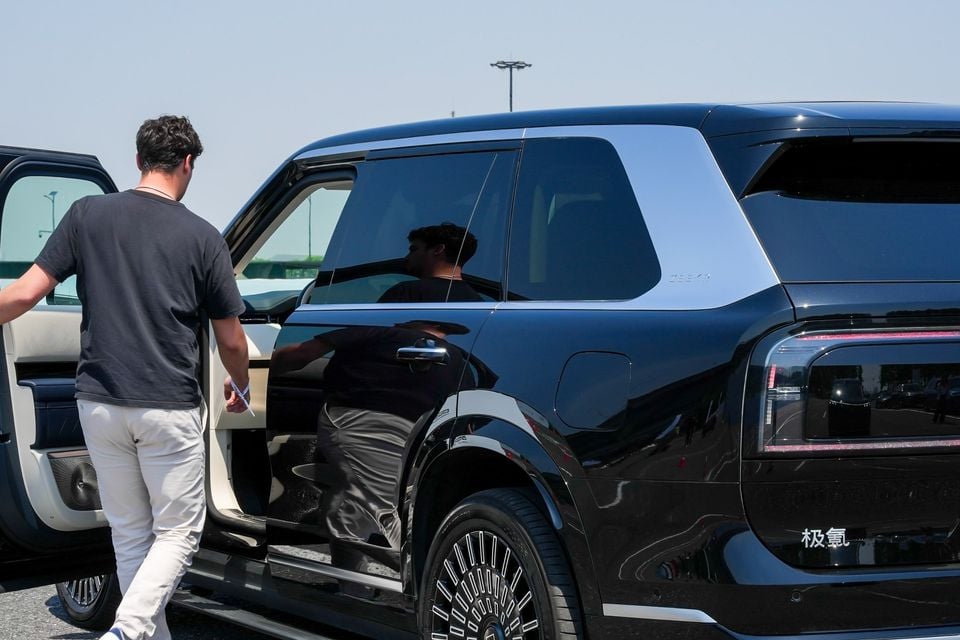
All this in a cabin accessed via electric doors front and rear, in another nod to Rolls-Royce.
Our short time with the vehicle didn’t allow us to play around with the rear seats, but the second row has plenty of space and adjustability for even taller adults like 6’1″ me, and the electric adjustment of the second and third rows should allow adults to fit in the rearmost row as well.
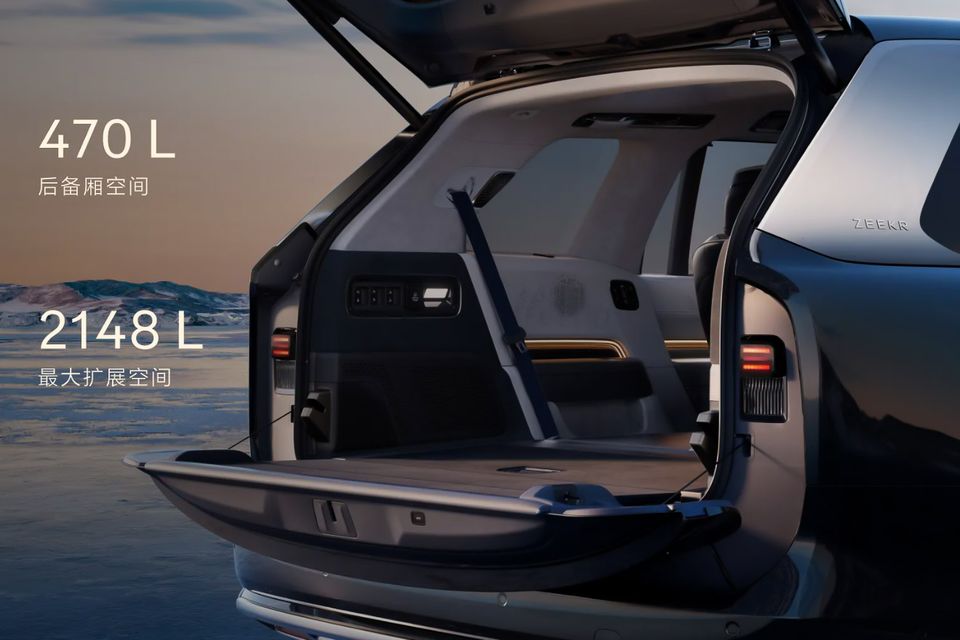
Further back, Zeekr quotes a 470-litre cargo area accessed via a Cullinan- or Range Rover-style split tailgate, which extends to a cavernous 2148L with the rear seats folded.
| Dimensions | Zeekr 9X |
|---|---|
| Length |
5239mm |
| Width |
2029mm |
| Height |
1819mm |
| Wheelbase |
3169mm |
| Cargo capacity |
470-2148L |
What’s under the bonnet?
While initially labelled as a plug-in hybrid (PHEV), the Zeekr 9X’s powertrain is probably better described as an extended-range electric vehicle (EREV), teaming a turbocharged 2.0-litre petrol engine with either two or three electric motors and a large lithium-ion battery pack.
| Specifications |
Zeekr 9X Max |
Zeekr 9X Ultra |
Zeekr 9X Hyper |
|---|---|---|---|
| Engine |
2.0L 4cyl turbo-petrol |
2.0L 4cyl turbo-petrol |
2.0L 4cyl turbo-petrol |
| Engine outputs |
205kW |
205kW |
205kW |
| Electric motor outputs |
– |
– |
– |
| System outputs |
660kW + 935Nm |
660kW + 935Nm |
1030kW + 1410Nm |
| Battery |
55kWh li-ion |
55kWh or 70kWh li-ion |
70kWh li-ion |
| Transmission |
– |
– |
– |
| Drive type |
Dual-motor AWD |
Dual-motor AWD |
Tri-motor AWD |
| Weight |
– |
– |
– |
| 0-100km/h (claimed) |
3.9 seconds |
3.9-4.2 seconds |
3.1 seconds |
| Fuel economy (claimed) |
– |
– |
– |
| Fuel economy (as tested) |
– |
– |
– |
| Electric driving range |
235km – WLTC 300km – CLTC |
230-302km – WLTC 288-380km – CLTC |
280km – WLTC |
|
Combined driving range |
1200km – CLTC 1015km – WLTC |
1160-1250km – CLTC 982-1049km – WLTC |
1165km – CLTC 1000km – WLTC |
| Fuel tank capacity |
50L |
50L |
50L |
| Fuel requirement |
95-octane premium unleaded |
95-octane premium unleaded |
95-octane premium unleaded |
| CO2 emissions |
– |
– |
– |
| Emissions standard |
China VI B |
China VI B |
China VI B |
| Braked tow capacity |
– |
– |
– |
It’s unclear which variants will make it to Australia, but no doubt the tri-motor flagship will be high on the priority list given Australia’s thirst for top-end performance flagships.
Also worth noting is the differences between CLTC and WLTC efficiency and range claims, the latter of which is more accurate in the real world.
We tested the flagship ‘Hyper’ version with the 1000kW-plus tri-motor drivetrain, but according to official specs the standard dual-motor version itself is hardly ‘slow’ for such a large vehicle.
How does the Zeekr 9X drive?
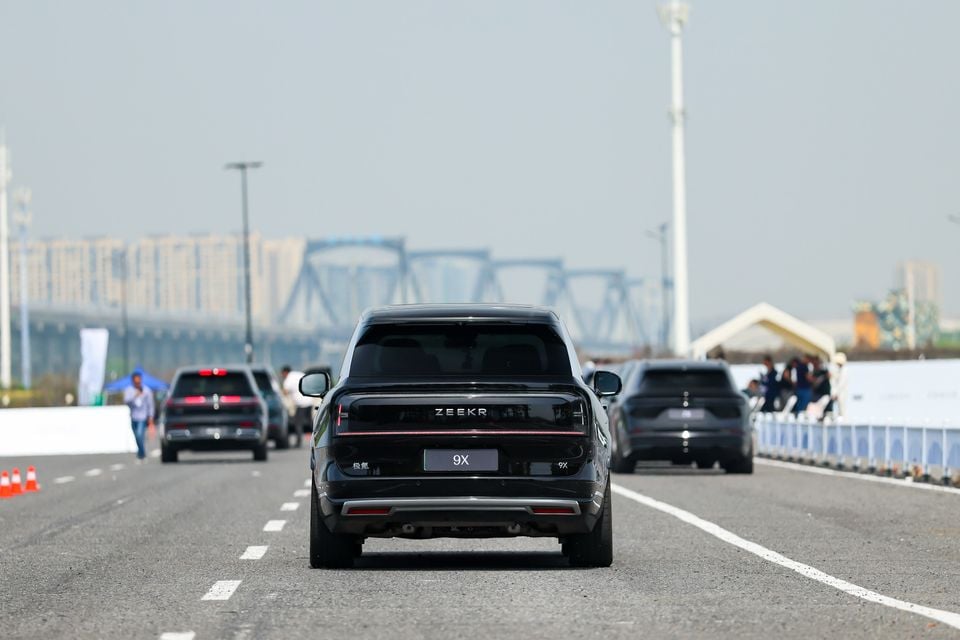
Let me start by managing your expectations – our test drive was limited to 90 metres of acceleration testing, followed by braking, then speed humps and a ‘moose test’-style handling course around obstacles in what was basically a flat carpark.
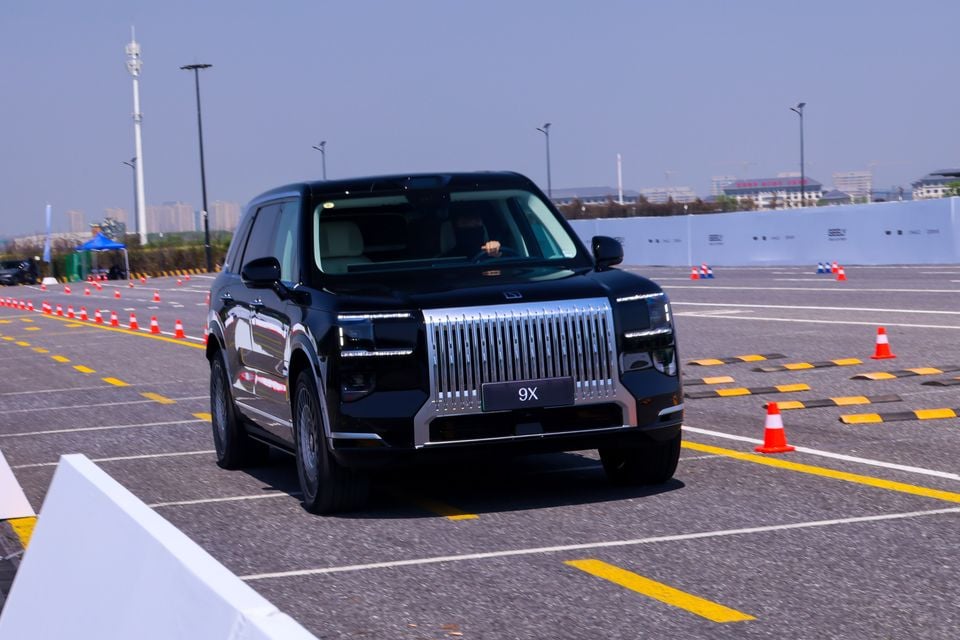
So, as you can imagine, my first impressions of the Zeekr 9X are pretty brief, but I can at least provide some early feedback on acceleration performance and feel, as well as some ride and handling appraisal.
While the specs sound monstrous on paper, the 9X builds acceleration in a very smooth and effortless way, more like a Rolls-Royce than a BMW M-car. Slam the throttle and the nose lifts slightly towards the sky like a speed boat, and it very quickly builds up speed.
The acceleration test was a 90m straight marked out by cones, and we managed to hit an indicated 100km/h without much effort.
Hard on the brakes, you can feel the 9X’s weight shift forward, but the flagship model’s six-piston front brakes did pull it up fairly confidently without much fuss.
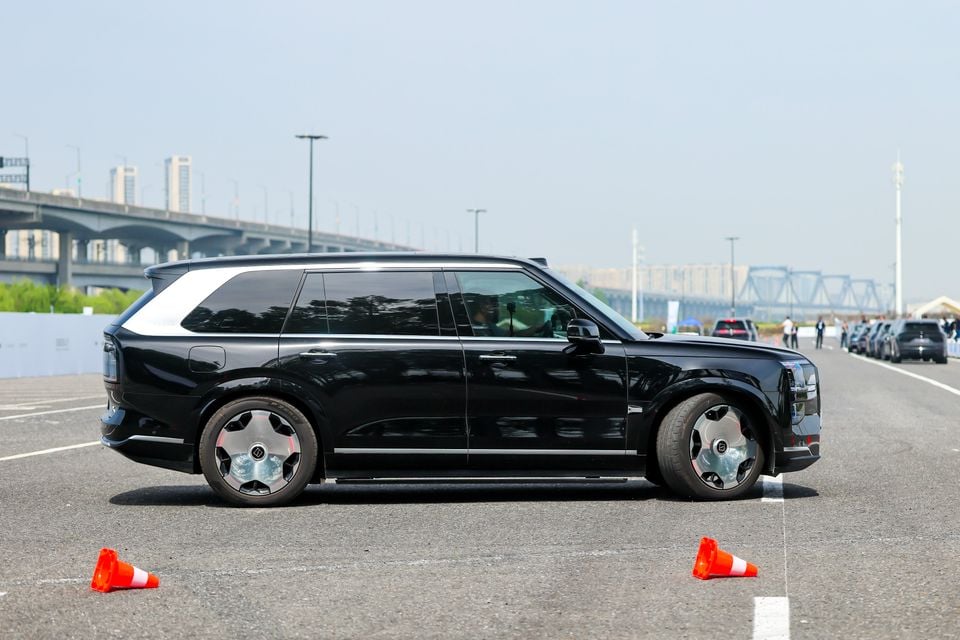
Heading into the left-hand turn, it’s quite clear the 9X is tuned for comfort rather than directness, though there’s a fluidity and accuracy to the steering which makes it manageable for such a big bus.
Remember, this SUV measures over 5.2m long and 2.0m wide, so it’s a big thing. The relatively sharp response of the light and generously assisted steering makes it feel pointier at the front than you’d expect, though there’s still no hiding its sheer heft.
There’s the added layer of the adaptive air suspension and 48V active anti-roll system working under you in higher-spec models, which help limit body movement when accelerating, braking and cornering.
When turning, the limited body lean detectable from the cabin can feel a little odd at first, given the 9X’s size and weight can still be felt somewhat. Still, it’s impressive how it isolates the cabin from external forces.
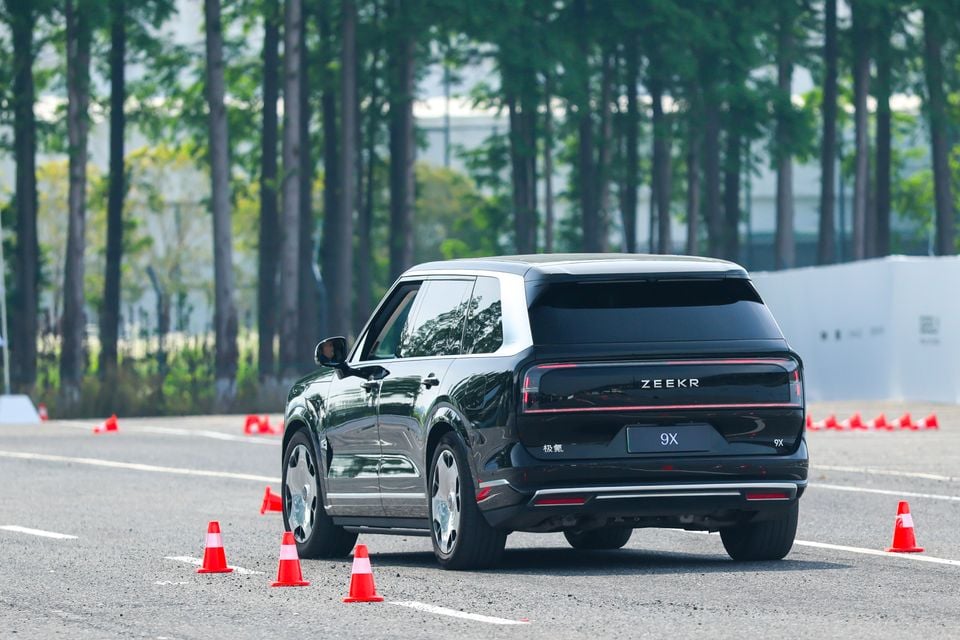
Driven with measure, the 9X feels accurate, secure and relatively manoeuvrable given its size, but if you’re a keen driver and want better response and engagement you’d be better off going for the smaller 8X, which is pitched as more of a driver-oriented rather than passenger-focused SUV.
That said, the harsh speed bumps transmitted sharper forces through the chassis than I expected, given the 9X has air suspension to offset its massive 22-inch forged monobloc-style alloys, but more varied testing on public roads will give us a better idea of the 9X’s on-road behaviour when we eventually get to drive it outside what was a carpark.
What do you get?
Quite a lot, actually.
2026 Zeekr 9X standard equipment highlights in China:
- Matrix LED headlights
- Active grille
- Soft-close doors
- 20-inch alloy wheels
- Panoramic sunroof – openable
- Secondary sunroof – 3rd row
- Double-glazed glass – front, sides (1st, 2nd, 3rd rows)
- Side mirrors – electric, folding, heated, tilting
- Rear power sunshades – second row side
- 13-inch HD digital instrument cluster
- 16-inch 3.5K OLED infotainment and passenger touchscreens
- 47-inch AR head-up display
- 5G dual-SIM communication module
- Digital rear-view mirror
- 32-speaker sound system
- 3-zone climate control
- Intelligent fragrance system
- PM2.5 detection and filtration
- 50W wireless phone charging
- Nappa leather upholstery
- Suede headliner
- Nordic natural wood veneer
- Crystal volume knob
- 16.8-million colour ambient lighting
- 4-way power steering wheel adjustment incl. memory
- Heated steering wheel
- 14-way power front seats
- Front seats – heated, ventilated, massaging
- 2nd row zero-gravity seats
- 14-way power 2nd row seats incl. leg rests
- 2nd row seats – heated, ventilated, massaging
- Rear tray tables
- 4-way power 3rd row seats
- One-touch entry/exit
- 3rd row seats – heated
- 220V power outlet in boot
Options
Even with the long list of standard equipment, a number of options are available in China.
From expert reviews to the right deal
CarExpert brings together reviews, research tools and trusted buying support, guiding you from research to delivery with confidence.
Mid-spec versions offer the option to spec a larger 70kWh battery, as well as the 48V active anti-roll system. Across the range, you can add an electric trailer hitch, rotating second-row seating (base and mid-grades), a Naim Palace premium audio system, and a 17-inch OLED rear display.
You can also delete the secondary 16-inch passenger touchscreen if you want a cleaner look, and there are power-operated doors available too.
Is the Zeekr 9X safe?
The 9X hasn’t been crash-tested by ANCAP or Euro NCAP just yet, but Zeekr’s flagship SUV comes decked out with a full suite of safety and assistance technologies.
Standard safety features include:
- Adaptive cruise control
- Anti-misacceleration assist
- Automatic parking assist
- Autonomous Emergency Braking – AEB
- Autonomous Emergency Steering
- Blind-spot monitoring
- Door opening warning
- Forward collision warning
- Lane change assist
- Lane departure warning, assist
- Lead vehicle departure alert
- Front cross-traffic warning, assist
- Rearward collision mitigation
- Rear cross-traffic warning, assist
- Remote automatic parking
- Remote direct-in/out parking
- Traffic light reminder
- Traffic sign recognition
The standard driver assistance package includes the NVIDIA Drive Thor-U chip, LiDAR and an array of cameras and other sensors, with the option to upgrade to an even more sophisticated dual-NVIDIA setup for autonomous driving capability in China.
How much does the Zeekr 9X cost to run?
The 9X isn’t on sale in Australia yet, but the Zeekr X and 7X are currently covered by a five-year, unlimited-kilometre warranty for private buyers. Commercial and fleet customers only get a three-year, 120,000km warranty.
Service intervals and pricing will be confirmed closer to the 9X’s Australian launch.
CarExpert’s Take on the Zeekr 9X
It’s a bit early to give a definitive verdict on Zeekr’s new flagship SUV given the brevity of our first drive.
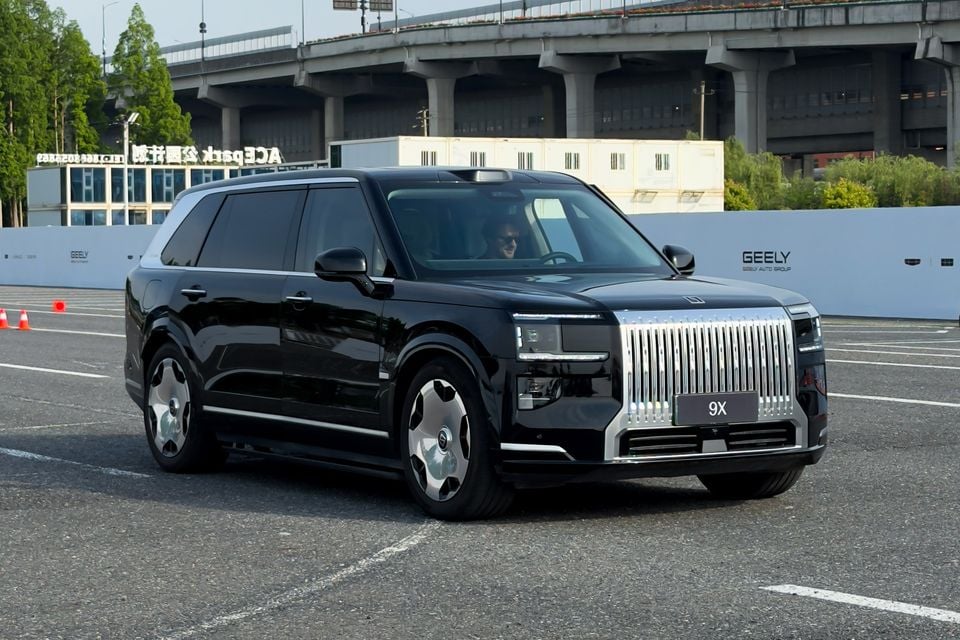
That said, if Zeekr can land it here under the starting price of a BMW X5 or Mercedes-Benz GLE, like it does in China, it could get the Chinese brand into the same conversation as the luxury stalwarts.
The 9X looks, as the kids would say, “baller”. Add to that the monstrous straight-line performance, long electric-only and combined driving ranges, and enough screens and luxury items to overstimulate the senses of your passengers, and it may be enough to get plenty of Aussies over the line.
Obviously, $100,000-plus is nothing to sneeze at for any new car, let alone one from a relatively new Chinese brand. But the success of the 7X on the sales charts shows that the brand is building momentum Down Under, perhaps more so than some of its compatriots.
Personally, I love the looks and the ambience the 9X offers, and I suspect most potential buyers won’t be needing a corner carver – so as long as it rides comfortably over poorly surfaced Melbourne and Sydney roads, for example. I got plenty of messages about this car while I was travelling too, which suggests that if the price is right, customers will come.
Click the images for the full gallery