
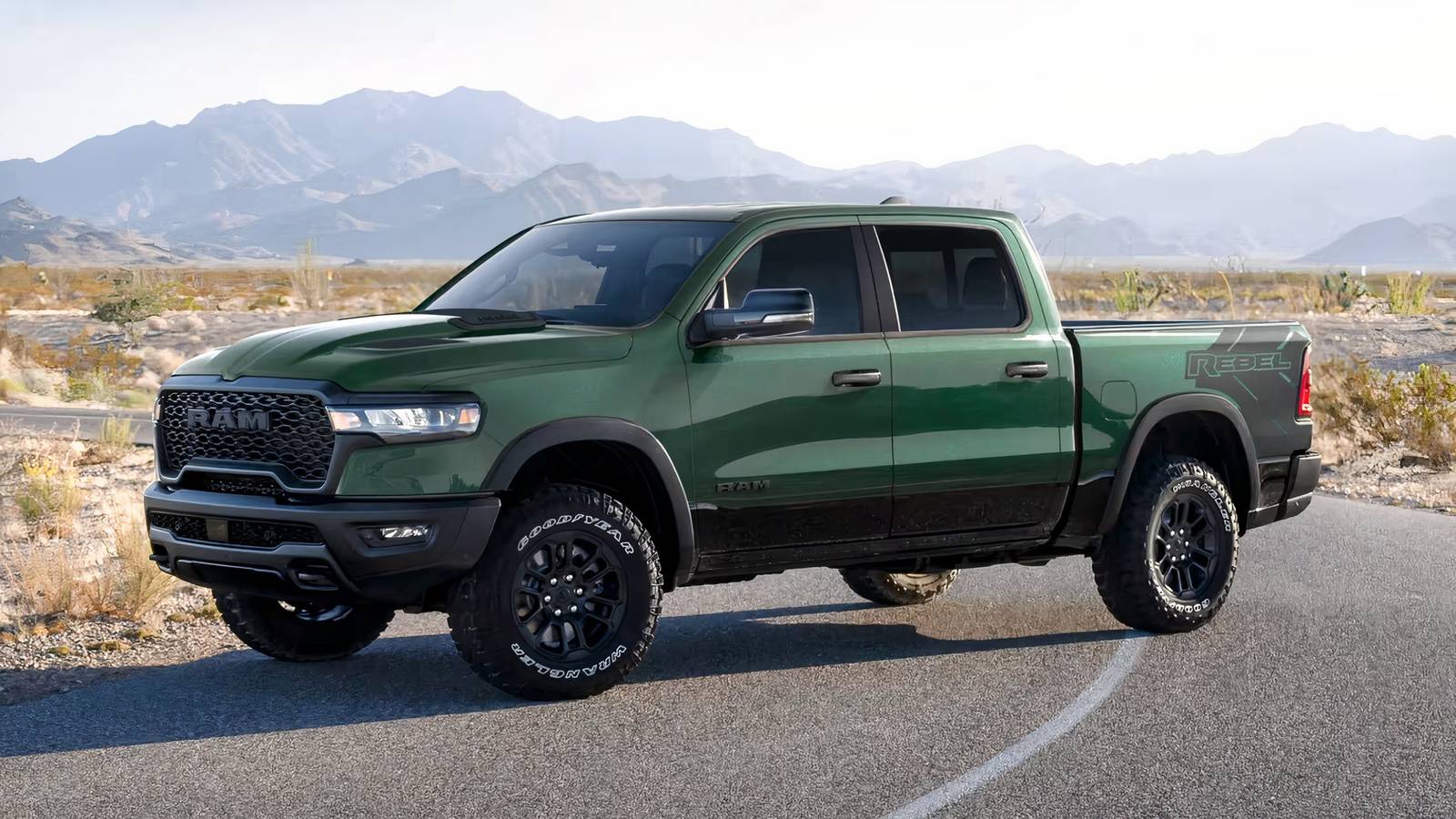
Timing has always been everything in the automotive market, and that’s especially true when it comes to full-size pickup trucks on the used market. On paper, buying a 2025 Ram 1500 in 2026 sounds like a no-brainer. You’re essentially getting a nearly new truck, often with low mileage, modern tech, and plenty of warranty coverage, for thousands less than its original sticker price. But dig a little deeper, and the story becomes far more complicated.
The 2025 model year marked a turning point for Ram. It introduced the brand’s new twin-turbocharged Hurricane inline-six engines, quietly retired the long-running Hemi V8, and pushed the truck further into premium territory with higher trims and more technology. That combination has had a direct impact on depreciation, buyer perception, and resale dynamics just one year later.
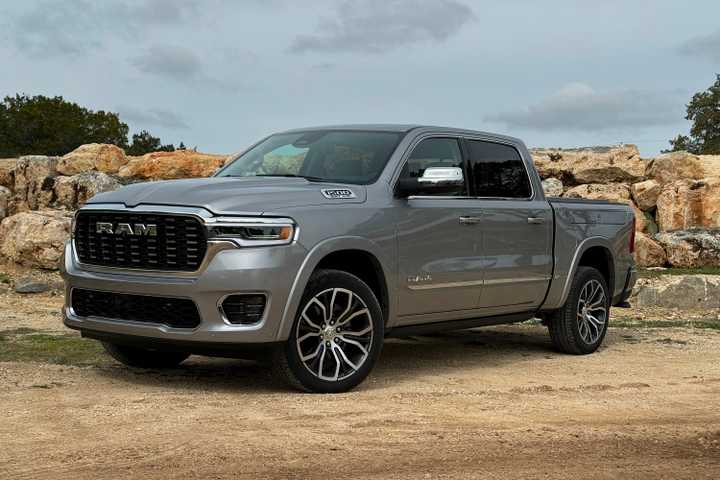

- Base Trim Engine
-
3.6L V6 Gas
- Base Trim Transmission
-
8-Speed Automatic
- Base Trim Drivetrain
-
Rear-Wheel Drive
- Base Trim Horsepower
-
305 hp
- Base Trim Torque
-
269 lb-ft @ 4800 rpm
- Fuel Economy
-
17/24-20/25 MPG
- Make
-
Ram
- Model
-
1500
- Segment
-
Full-Size Pickup Truck
At the same time, shifting consumer demand, rising fuel costs, and the return of V8 power in newer 2026 models have created a market full of contradictions. Some 2025 trucks are bargains. Others are overpriced leftover inventory. And a few are quietly becoming the least desirable options in the lineup. If you’re considering one in 2026, here’s the reality you need to understand before signing anything.
MSRP vs. Reality: How Much A 2025 Ram 1500 Has Dropped In Just One Year

The depreciation curve for the 2025 Ram 1500 is steeper than many buyers expect, and that’s where the opportunity begins. When new, a 2025 Ram 1500 could easily stretch from the mid-$40,000 range into well over $80,000, depending on trim and options. But just one year later, real-world values tell a very different story. Used 2025 models are already trading anywhere between roughly $26,000 and $71,000, depending on condition and specification.
That spread is massive, but it reveals something important: entry-level and mid-range trims have taken the biggest hit. A typical Big Horn, for example, can lose well over $10,000–$15,000 in its first year alone. That’s not unusual for full-size trucks, but the speed of the drop is noteworthy.

Over a longer ownership period, the numbers stabilize somewhat. The truck is projected to lose around $21,000 in value over five years, which puts it in line with segment averages. The difference is that much of that depreciation is front-loaded into the first 12-18 months. For buyers in 2026, this creates a sweet spot, but only if you understand what you’re looking at. That “great deal” might simply be a truck that has already absorbed its biggest loss in value. But, these depreciation numbers only tell part of the story. The bigger question is whether the engine under the hood makes these deals worth pursuing at all.

These Are The First 10 Production Cars In History With Factory Turbochargers
We may love a good turbo today, but they had to start somewhere – here are the first 10 production cars to boast a turbocharged engine under the hood.
Hemi, Hurricane, Or Hybrid? Which Powertrain Makes The Most Sense

The biggest wildcard in the 2025 Ram 1500 equation isn’t price, it’s what’s under the hood. For 2025, Ram made a bold move by dropping the Hemi V8 entirely and replacing it with a new family of 3.0-liter twin-turbo Hurricane inline-six engines. On paper, the Hurricane is objectively better: more power, more torque, and improved efficiency compared to the outgoing V8. But trucks aren’t bought on paper alone. The absence of the Hemi has had a surprisingly strong impact on buyer perception. Enthusiasts and traditional truck buyers still associate V8 power with durability, towing confidence, and character. That emotional connection matters, and it’s already affecting resale value.

In fact, demand for V8-powered Ram trucks surged so strongly that Ram reversed course andbrought the Hemi back for the 2026 model year as an optional engine upgrade for $1,200, where early units reportedly sold far faster than industry norms. That single decision has immediate consequences for anyone considering a 2025 model. Suddenly, the 2025 Ram 1500 sits in an awkward middle ground. It’s more advanced than older Hemi trucks, but less emotionally appealing than the revived V8 models. As for hybrid options, the mild-hybrid eTorque system remains part of the lineup, but it’s not a game-changer in terms of fuel savings. And with fuel prices fluctuating sharply, efficiency is becoming a bigger factor in ownership decisions.
The takeaway is simple: the Hurricane engine is technically excellent, but the market hasn’t fully embraced it yet. That hesitation is part of why 2025 models are more affordable, and why they may remain that way.Understanding this powertrain hesitation is crucial because dealers are using it as leverage in ways most buyers don’t expect.
These Are The First 10 Production Cars In History With Factory Turbochargers
We may love a good turbo today, but they had to start somewhere – here are the first 10 production cars to boast a turbocharged engine under the hood.
Big Discounts Or Hidden Costs? What Dealers Aren’t Advertising In 2026

The sticker price you see on a used 2025 Ram 1500 in 2026 rarely tells the full story. Yes, there are genuine discounts to be had. Dealers are motivated to move leftover inventory and off-lease returns, especially as newer 2026 models, with the return of the Hemi and updated trims, draw more attention. But there are also hidden costs that can quietly erode the value proposition. First, financing. Interest rates remain relatively high compared to the ultra-low rates seen just a few years ago. That means even a discounted truck can end up costing more over the life of a loan.

Second, insurance and running costs. Full-size trucks like the Ram 1500 are expensive to insure and maintain, and fuel costs can add up quickly, particularly for less efficient configurations. Third, dealer add-ons. Extended warranties, protection packages, and mandatory accessories are often bundled into deals, inflating the out-the-door price.
There’s also the issue of price inconsistency in the used market. Similar Ram 1500 models can vary wildly in price depending on trim, condition, and dealership strategy. That inconsistency isn’t accidental; it’s part of how dealers maximize margins on high-demand vehicles. In short, the discounts are real, but so are the traps. The key is understanding the full cost of ownership breakdown, not just the headline price.
These Are The First 10 Production Cars In History With Factory Turbochargers
We may love a good turbo today, but they had to start somewhere – here are the first 10 production cars to boast a turbocharged engine under the hood.
Trim Levels That Hold Value Best
Not all 2025 Ram 1500s depreciate equally, and choosing the right trim can make a significant difference. Historically, mid-range trims like Big Horn and Laramie strike the best balance between features and resale value. They’re well-equipped enough to satisfy most buyers without the heavy depreciation hit that comes with top-tier luxury trims.
At the top of the range, models like Limited and Tungsten offer impressive interiors and technology, but they also carry the highest initial price, and therefore the largest absolute depreciation. A heavily optioned truck that originally cost close to $90,000 can lose value quickly once it hits the used market. On the other end, base models tend to depreciate faster in percentage terms because they lack the features most buyers now expect.

There’s also a new wrinkle in 2026: desirability tied to engine choice. Trucks equipped with the Hurricane high-output engine may hold value better than base powertrains, simply because of their performance edge. But they still face competition from the newly reintroduced Hemi-powered models. Ultimately, the best-value trims in 2026 are the ones that hit the sweet spot: desirable features, reasonable original pricing, and broad appeal in the used market.
Why A Nearly-New Ram 1500 Isn’t Always The Deal It Seems

At first glance, a 2025 Ram 1500 in 2026 looks like the perfect compromise, modern, lightly used, and significantly cheaper than new. But when you compare it directly to a brand-new 2026 model, the gap isn’t always as large as it seems. In some cases, manufacturer incentives, dealer discounts, and financing offers on new trucks can narrow the price difference to just a few thousand dollars. And for that small premium, you get a full warranty, the latest updates, and, crucially, the option of a Hemi V8 again.
There’s also the psychological factor. Buyers often prefer “new” over “almost new,” even if the practical difference is minimal. That affects resale value down the line. And then there’s timing. The biggest depreciation hit has already happened by the time you buy a 2025 model in 2026, but it doesn’t stop there. Trucks continue to lose value, just at a slower rate.

In other words, you’re not avoiding depreciation; you’re just entering the curve later. That’s not necessarily a bad thing. In fact, it can be a smart move if you plan to keep the truck long-term. But it does mean the savings aren’t as straightforward as they appear. You’re getting a truck that has already absorbed its steepest depreciation, which is a major advantage. But you’re also buying into a transitional model year, one defined by a controversial engine shift, shifting buyer preferences, and a market that hasn’t fully settled.
Sources: Ram U.S. & MotorTrend