
Some SUVs today have lost the forever vehicle idea that originally put the segment near the top of our shopping lists. With the dawn of the crossover and the everyday-usable SUV, most brands are now making one. But what about SUVs that can tackle everything and last a lifetime?
Toyota is no stranger to high praise for its unkillable SUVs and engines, and models like the Land Cruiser are always at the top of the list for long lives, but it is not the only one.
Not All Modern SUVs Will Last Forever

Modern SUVs are more refined and easier to live with than ever before, even with the growing reliance on tech. They’re packed with driver assists, smooth powertrains, and better fuel efficiency, which on paper make them feel like smart long-term buys. A good swathe of them are: take the Toyota RAV4 and Honda CR-V, both of which have starting prices of under $32,000; they get features like adaptive cruise control, a decent amount of cargo capacity, and large infotainment screens, and oodles of safety features.
For daily driving, they are well-rounded and easy to live with. Modern convenience can come with trade-offs, though. A lot of modern SUVs are equipped with unibody construction, less powerful turbocharged engines, and finicky electronics that aren’t necessarily designed for years of hard abuse. Comfort and efficiency are first thoughts, which means that long-term durability under stress comes second.
The Rise Of The Everyday Crossover And Today’s Market

In recent years, compact SUVs and crossovers have become a mainstay in the market. While it is great for everyday driving around town and down the highway, the ruggedness of some leaves a little to be desired. Models like the Land Cruiser and the RAV4 are some of Toyota’s most successful models, but there is another, smaller Toyota Crossover that is beating them in sales growth at the moment, the Corolla Cross.
It is affordable, fuel-efficient, useful, and comfortable for on-road use. And this is how the market is going at the moment. Smaller, more manageable crossovers available with CVTs, suspension tuned for smooth road riding, commute-friendly builds, and comfortable, family-friendly features are becoming more popular up against the SUVs that can handle repeated off-road beatings, high towing loads, and high-mileage driving.

Every Toyota 7-Seater SUV You Can Buy Today
Toyota’s rugged and roomy SUVs deliver modern comfort, convenience, tech, and more. Here are the ones that seat seven.
This New Toyota 4Runner Is Built As A Forever SUV

The 2026 4Runner is different. This year marks the second model year of the sixth generation of the Toyota 4Runner. The design has changed over the years, especially with the release of the latest generation, and the badge still carries a lot of weight, but Toyota hasn’t ditched the formula that made it a legend. Durability, capability, and long-term ownership appeal are still what the new 4Runner is about, but Toyota has tweaked the formula to work in the modern world. The 2026 Toyota 4Runner lineup is an extensive one, with the following grades available:
2026 Toyota 4Runner Pricing
|
SR5 |
$41,870 |
|
TRD Sport |
$48,350 |
|
TRD Off-Road |
$50,290 |
|
TRD Sport Premium |
$53,710 |
|
TRD Off-Road Premium |
$56,070 |
|
Limited |
$56,500 |
|
Platinum |
$63,960 |
|
Trailhunter |
$68,000 |
|
TRD Pro |
$68,200 |
|
TRD Off-Road i-FORCE MAX |
$53,090 |
|
TRD Off-Road Premium i-FORCE MAX |
$58,870 |
|
Limited i-FORCE MAX |
$61,300 |
TNGA-F Makes The 2026 4Runner A True Body-On-Frame Platform

The new 4Runner rides on the TNGA-F platform, but it has only been fitted with it recently. The shift to this chassis rig didn’t happen overnight. Toyota started using the TNGA (Toyota New Global Architecture) in 2015 for its cars to standardize engineering and improve rigidity. However, body-on-frame vehicles like trucks and rugged SUVs need a different approach, and this is where the TNGA-F comes in.
The TNGA-F platform is a dedicated ladder-frame version of the architecture, made for durability, towing, and off-road use instead of on-road refinement. The TNGA-F platform was first used in 2021 for models like the Tundra and Land Cruiser; then the Sequoia and Tacoma got it, before finally being used on the Toyota 4Runner in its all-new 2025 redesign.

By the time the rugged TNGA-F platform debuted for the sixth-gen 4Runner, it had already been tried and tested for years in some of Toyota’s most bulletproof builds. That means there was already real-world testing and validation of the platform before it was used on one of Toyota’s most iconic lines.

Every Toyota 4Runner Generation And How It’s Changed
The Toyota 4Runner has been smashing through our trails and deserts for 41 years – here is what you need to know about all the 4Runner generations.
Toyota 4Runner Hybrid Prioritizes Longevity Over Efficiency

There are two engine options for this year’s 4Runner: an i-FORCE turbo-four and an i-FORCE MAX turbocharged hybrid inline-four. While fuel economy is the aim of the game for a lot of modern SUVs, Toyota has utilized the hybrid turbo-four for different reasons.

According to Toyota, the grades that are equipped with the i-FORCE turbo-four can achieve between 21 and 22 combined MPG. 4Runner grades equipped with the i-FORCE MAX hybrid turbo-four (the ones with i-FORCE MAX in their badge name) can achieve 23 combined MPG. Either way, not the worst fuel efficiency, but not the best.
Smoother Power Delivery Will Age The New Toyota 4Runner Better

Both powertrains in the 2026 4Runner are built around the same turbocharged base, but they are designed to behave differently in how they deliver power. The standard-fit i-FORCE turbo-four offers steady and predictable output without the added complexity of the hybrid rig. It is tuned for consistency, which, if you are looking for an SUV that drives slightly more like a traditional SUV and potentially has fewer powertrain problems over the long-term, then it can be an ideal choice.
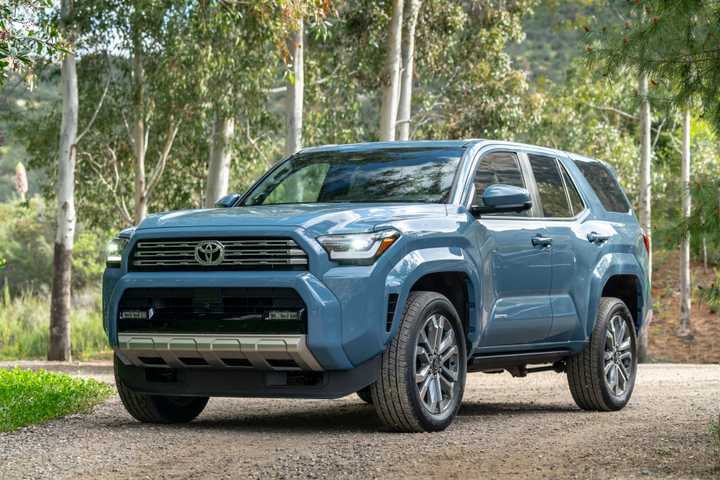

- Base Trim Engine
-
2.4L I-FORCE I4 ICE
- Base Trim Transmission
-
8-speed automatic
- Base Trim Drivetrain
-
Rear-Wheel Drive
- Base Trim Horsepower
-
278 HP @6000 RPM
- Base Trim Torque
-
317 lb.-ft. @ 1700 RPM
- Make
-
Toyota
- Model
-
4Runner
- Segment
-
Midsize SUV
The i-FORCE MAX hybrid version, however, changes the character of how the 4Runner drives by filling in torque gaps with assistance from the hybrid system. It does slightly reduce gas usage, but more importantly, in this context, it improves performance for everyday driving and under load.
|
2026 4Runner i-FORCE Models |
2026 4Runner i-FORCE MAX Models |
|
|---|---|---|
|
Engine |
2.4-Liter Turbocharged Inline-Four |
2.4-Liter Turbocharged Hybrid Inline-Four |
|
Transmission |
Eight-Speed Automatic |
Eight-Speed Automatic |
|
Horsepower |
278 hp |
326 hp |
|
Torque |
317 lb-ft |
465 lb-ft |
|
Driveline |
Rear-Wheel Drive or Four-Wheel Drive |
Rear-Wheel Drive or Four-Wheel Drive |
In everyday driving, especially in stop-start traffic and easy acceleration, the system smooths out power output, so the drivetrain isn’t constantly under stress. Over time, that can mean reduced mechanical strain or a longer life. A CarBuzz test drive review of the Toyota 4Runner sums up how the 4Runner’s engine complements the build.
The 2.4-liter turbocharged hybrid brings a massive upgrade with 326 horsepower and a mammoth 465 pound-feet of torque, which you get at a much lower peak than the previous model. It takes off quickly. The base gas engine still offers ample oomph.
The output of both available engines is pretty sturdy, considering that they are relatively small turbo-four engines compared to what was used in the 4Runner yesteryear, but despite the small displacement, the engine choices are still good for what the 4Runner is built for.
The Low-End Torque From The i-FORCE MAX Is Purposeful

2026 4Runner sprint times to 60 mph can take up to eight seconds, which is not bad, but it’s never going to set the world on fire. Where the new 4Runner’s engine options are useful is for low-end grunt. Both the i-FORCE and i-FORCE MAX engines used in the new 4Runner deliver peak torque at a very low 1,700 rpm.
Torque delivery from the base-model engine comes more traditionally, building boost and responding nicely through the transmission. It is capable, but it behaves like a conventional turbocharged mill, meaning that there can be a slight delay before the full low-end response kicks in.

The i-FORCE MAX hybrid inline-four is rated higher for both horsepower and torque, and thanks to the hybrid rig, the behavior underfoot is very different. With electric assist, torque is almost instant, even at low speeds. This is more ideal for rock crawling or climbing dunes; the hybrid system reduces the need to rev the engine or rely on turbo spool, allowing you to creep forward with much finer control and less load from the drivetrain.
Why Toyota Moved On From The Old V6 Formula

Though the dropping of the 4.0-liter NA 1GR-FE V6 at the end of the fifth generation may have irked some 4Runner fans, and it indeed helped the 4Runner build its rock-solid reputation, it also represented an aging approach to SUV performance. As other brands started using smaller, turbocharged engines, the V6 looked a little old hat in terms of usable power and fuel consumption.
To put things into perspective, the final V6-equipped 4Runner in 2024 is good for 270 horsepower and 278 pound-feet of torque, and can only achieve 17 combined MPG. Even this year’s base engine outperforms that on all fronts. Market expectations have also shifted; we want low-end response, better towing manners, and more everyday drivability without losing any reliability, and the i-FORCE engine family delivers.

Some large displacement V engines can still deliver durability, but they can struggle to match the efficiency and torque flexibility of modern engines like the i-FORCE and i-FORCE MAX. This is where Toyota’s decision to drop the V becomes strategic. It isn’t about replacing an engine, but adapting to how SUVs are being used more today, with a mix of heavy loads and urban driving.

Best Toyota 4Runner Model Years Ranked By Reliability
The 4Runner is one of Toyota’s most popular SUVs of all time, but which one is the most reliable of all time?
Overbuilt Hardware Defines The New Toyota 4Runner

Where the new 4Runner pulls away from typical family SUVs is in how overbuilt the hardware is beneath the surface. The ladder frame isn’t just for off-road credibility on paper; Toyota has heavily reinforced key stress zones, high-strength steel, and sturdy crossmembers used for rigidity.
Most SUVs are fine when they’re new, but long-term wear shows up subtly, with steering going vague, creaks developing under stress, and alignment changing. The approach is here to reduce that creep. Even the way the engine and transmission are mounted to the frame using large rubber-isolated mounts is designed to control movement under torque rather than just isolate vibrations, which helps keep the drivetrain feeling tight over time.

Where this plays a part in the new 4Runner is reduced flex, which not only helps with performance, but also with long-term durability. These engineering decisions don’t always impress on a spec sheet, but crucially, they will after 150,000 or more miles.
High Towing And Heavy Curb Weight Signal Long-Term Intent

Curb weight of the 2026 4Runner ranges from 4,455 pounds for the RWD SR5 to 5,500 pounds for the Trailhunter i-FORCE MAX. All trims have substantial weight behind them, and this is due to the available hybrid system and the high-strength steel used. However, instead of this being a burden (except for maybe sprint times), the weight and materials aid in how the 4Runner will last and how it tows.
The new 4Runner has a maximum towing capacity of 6,000 pounds when properly equipped. The 2024 4Runner can only tow 5,000 pounds. Rather than treating towing like an occasional-use feature, Toyota has ensured that the materials used, the staunch torque output, and heavy-duty cooling systems, especially in the hybrid grades, all work toward making the 4Runner a useful and long-lasting SUV.
FOX Suspension And Off-Road Tech Built For Repeated Abuse

Across the 2026 4Runner lineup, suspension architecture is designed around easy wheel travel and rigid pickup points in the frame to keep alignment stable. The goal is to prevent gradual geometry drift, something that shows up in long-term off-road use when bushings start to wear.
On TRD Off-Road models, Toyota has added revised damper valving, which is designed for low-speed compression control. In other words, it helps manage repeated impacts without the suspension packing down. That matters because excessive packing increases stress and transfers sharper loads into the chassis, and means quicker joint and mount wear.

The 4Runner TRD Pro and Trailhunter grades go even further, with FOX internal bypass dampers and remote reservoirs being used. The internal bypass design allows oil to move through different circuits depending on how the suspension is positioned, so damping increases progressively. This prevents harsh bottom-outs and reduces the impacts reaching the frame, and means it can take some abuse for a long time.

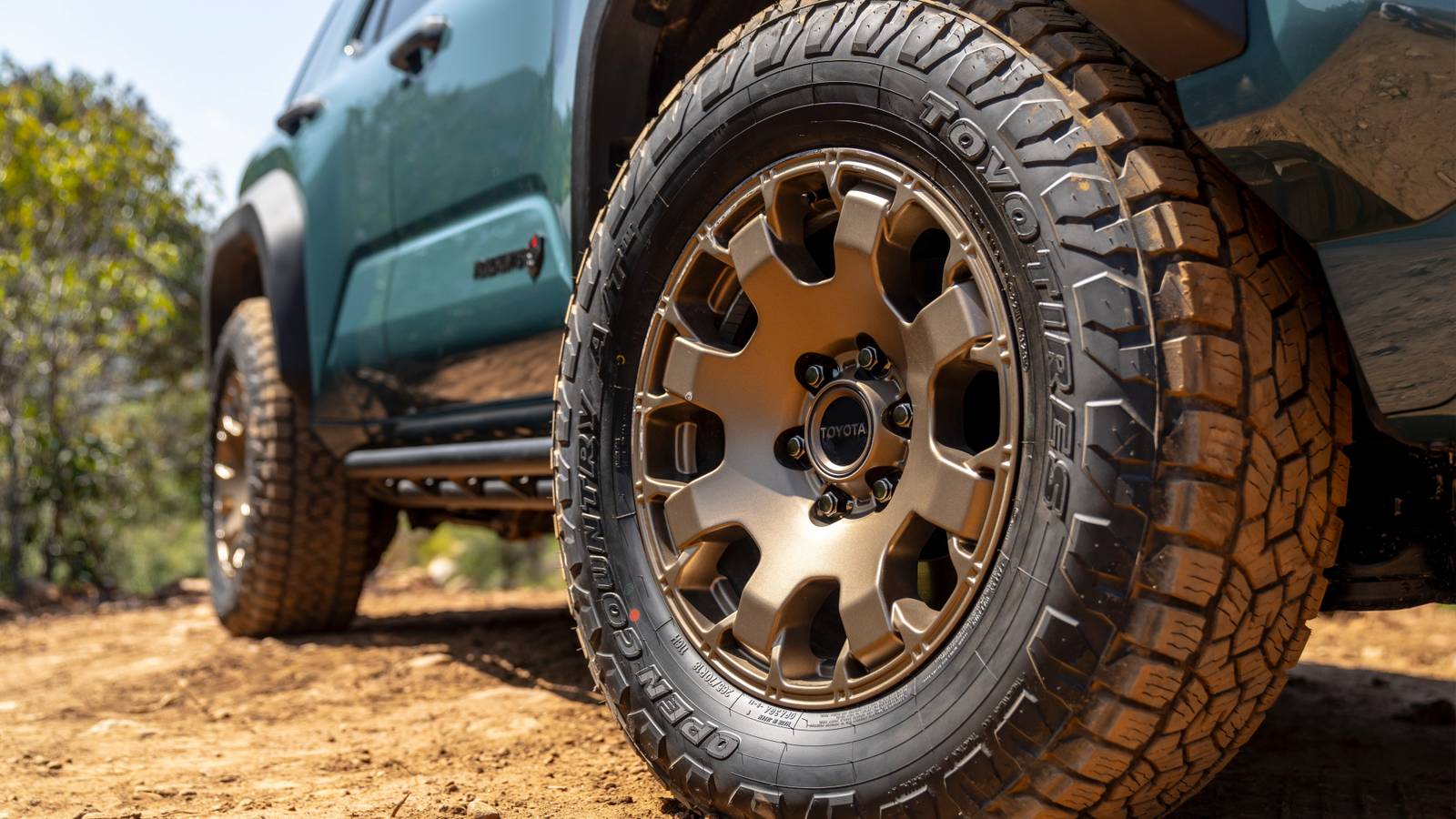
You also get underbody protection. Skid plates shield the engine sump, drivetrain components, transfer case, and fuel tank. So, if you are fond of getting muddy in an SUV or just want an SUV that is inherently designed to take a lifetime of use, the new 4Runner is one to consider.

How The Toyota 4Runner’s Simplicity Became Its Biggest Strength
The Toyota 4Runner is an icon for many reasons, and we all love it because of its simplicity – find out how it wins at non-complex ruggedness.
The 2026 Toyota 4Runner Is Future-Proof

According to reviews of the 2026 4Runner on Kelley Blue Book, things are already looking good for it. So far, owner reviews rate the 4Runner 4.3 out of 5 overall, which includes ratings of 4.2 out of 5 for value, 4.8 out of 5 for performance and comfort, and 5 out of 5 for quality, reliability, and styling. Exactly what you want to hear about an SUV that is built to last.
The interior is smart rather than flashy, and you get a modern mix of Toyota-grade ease of use. An eight-inch touchscreen is standard fare, while higher trims get a 14-inch display paired with either a seven-inch or 12.3-inch digital gauge cluster.
Physical buttons are still used for climate control and drive modes, which, while not as fancy, should age well. There is also the option to have five or seven seats, and a maximum cargo capacity of 90.2 cubic feet when you fold down the seats.
It is the balance the new 4Runner strikes that will work well into the future. The engines available are low-stress; the overbuilt nature of the build is made to take a hit; there aren’t too many complicated systems utilized, and Toyota isn’t chasing trends; things just work together well. Toyota SUVs are well known for their long lives, and if the 2026 4Runner carries on the way it is going, we think that it will join the other 200,000+ mile icons we have seen in the past.
Sources: Toyota and Kelley Blue Book