
If you want a reliable engine, your best bet is always a Japanese vehicle. Honda, Toyota, and Nissan, the Japanese Big Three, have set reliability standards for the past few decades, with Mazda in the mix as well. Yet just because Japanese reliability has been class-leading, does that invalidate all other alternatives? Not quite. For that very reason, we assembled a list of the most reliable engines that aren’t from a Japanese brand. Our focus will be on non-Japanese engine platforms produced after 2008, so we’ll stick to what has been relevant in the past two decades or so. Our entries will be ranked in ascending order by horsepower, and among them you will find engines from Hyundai, General Motors, BMW, and more. Let’s break down each engine, one by one.
Hyundai Smartstream G2.5 Inline-Four
Horsepower: 177 Horsepower

What is the most straightforward and low-stress engine platform available across all Kia/Hyundai vehicles? The 2.5-liter Smartstream G2.5 inline-four. There are two distinct versions of this engine: the MPi (port-injection) and GDi (port and direct injection) variants. Currently, the MPi variant is no longer available on any new Hyundai models, leaving the GDi as the sole option.

The MPi variant eliminates the high-pressure fuel pump and associated failure points. The GDi variant, despite utilizing port injection, still suffers from carbon buildup issues with higher mileage. Hyundai’s 1.6-liter turbocharged inline-four has documented oil consumption concerns, and any turbocharged model adds cost and complexity. The naturally aspirated 2.5 MPi is the simplest engine the brand has offered in recent memory, with the GDi variant in close second. Because Hyundai offers the best powertrain warranty in the business, you can be confident in either platform as long as your warranty is still valid.
GM EcoTec 2.4-liter Inline-Four
Horsepower: 182 Horsepower

GM’s EcoTec engine family has been powering virtually every commuter car in the brand’s lineup for nearly two decades. There have been a wide variety of different configurations of the EcoTec, but one of the simplest and most reliable has been the 2.4-liter naturally aspirated version first introduced around 2006.

There were six different iterations produced of the 2.4-liter EcoTec during its tenure from 2006 to 2019, the most of any EcoTec engine since the engine family’s debut in 1999. Notably, the GM inline-four powered the Chevrolet Malibu, Polaris Slingshot, and Chevrolet Equinox throughout the late 2000s and 2010s. The 2.4-liter EcoTec utilizes uncommon twin counter-rotating balance shafts, which reduce its overall vibration levels compared to other inline-four engines. Direct injection variants have been known for some carbon build-up concerns, but nothing out of the ordinary compared to other direct injection engines that suffer from the same issues. The 2.4-liter EcoTec remains one of GM’s strongest and most widely produced inline-four engines that benefits from its relative simplicity and low upkeep costs.
Volkswagen EA888 Inline-Four
Horsepower: 220 Horsepower

To fully understand the VW Group’s most notable engine platform ever produced, the 2.0-liter EA888 turbocharged inline-four, we need to provide some generational context. The Gen 1 and Gen 2 variants were notorious for oil consumption issues and general unreliability, so we are discussing the Gen 3 EA888 variants and newer varieties, which were introduced to North America around the 2013-2014 model year.

The Gen 3 EA888 engine addressed oil consumption concerns with redesigned piston rings and a revised PCV system, along with dual port and direct injection to combat carbon buildup. Since these additions, the general reliability of Volkswagen’s most prominent engine has steadily increased. The EA888 engine is a story of continuous development, with the Gen 4 introduced in 2020 and Gen 5 in 2025. Since it has retained its core architectural foundation for decades, most maintenance items and common issues are well-documented and relatively affordable to fix with proactive upkeep. Considering the EA888 is a performance-focused turbocharged inline-four, this engine remains one of the most dependable options available from any non-Japanese automaker.
BMW B48 Inline-Four
Horsepower: 248 Horsepower

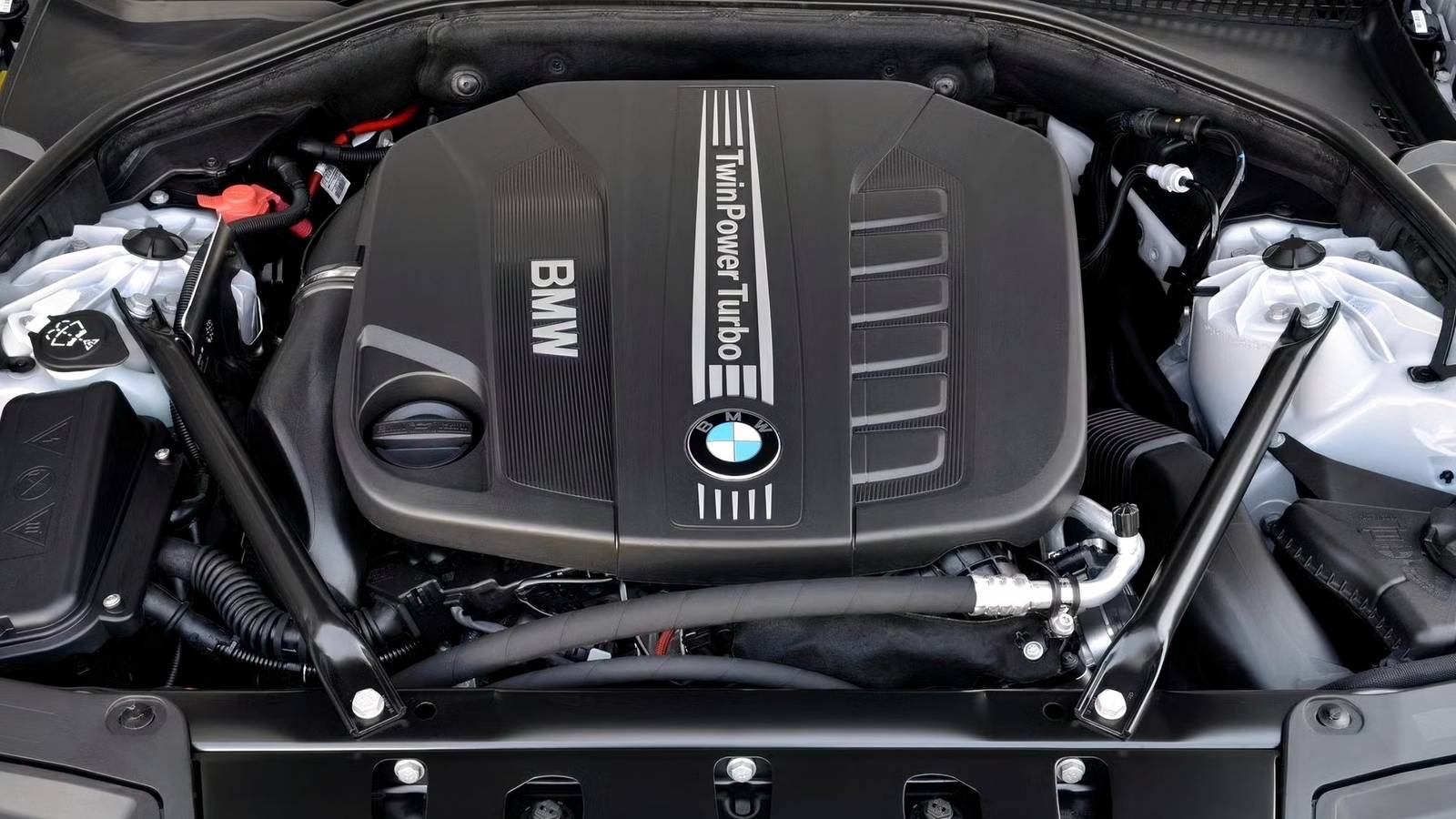
The BMW B48 turbocharged inline-four was a major turning point for the German luxury brand in terms of overall reliability standards. The B48 was introduced in 2014, replacing the issue-plagued N20 inline-four that preceded it.

Unlike its predecessor, the BMW B48 utilizes a closed-deck construction with improved oil and thermal management. Despite being more reliable than the N-Series engines that preceded it, the B48 is simpler and has fewer ancillary failure points. While maintenance is still not considered cheap on this engine, it has fewer issues when compared to a similar mileage N-Series-equipped BMW. The B48 is notably featured across nearly the entire BMW andMinivehicle lineup, even today. As far as tunability, the B48 has the most potential of any turbo-four in its segment. Considering its performance relative to its cost, the BMW B48 remains one of the best engines for long-term ownership among German automakers.
Mercedes-Benz 5.0-liter M113 V-8
Horsepower: 301 Horsepower

The Mercedes 5.0-liter M113 V-8 is considered the last truly overengineered naturally aspirated Mercedes engine. From 1998 to 2011, the M113 was widely utilized across models such as the S 500, E 500, and SL 500.

The M113 uses a traditional aluminum block with no spray-on cylinder coating; it uses traditional iron cylinder liners. Yet, what made the M113’s reliability outstanding was that the engine was tuned so conservatively that it was always operating well below its mechanical limits. This is why Mercedes-AMG had a field day with its 5.4-liter supercharged variant of the M113, which responded to the increased demands of forced induction without issue. With basic scheduled maintenance, these engines are known to achieve 300,000 miles while keeping maintenance costs and unexpected problems to a minimum. Considering its age, most of its weak points have been identified, like plastic coolant fittings and the hydraulic tensioner. The M113 is one of the few engines that was built to last a lifetime and will always be recognized as one of Germany’s most durable platforms.
Chrysler 5.7-liter HEMI V-8
Horsepower: 370 Horsepower

The current generation of the iconic Chrysler HEMI V-8 has been in production since about 2003. The 5.7-liter variant has powered almost every vehicle in the Stellantis lineup, including the Dodge Ram, Chrysler 300, and Jeep Grand Cherokee. Although the 5.7-liter HEMI is no longer a true HEMI by design, this variant carries the tried-and-true two-valve pushrod design of its predecessors. With a cast iron block and a conservative factory tune, the 5.7-liter HEMI has a strong track record of exceeding 200,000 miles without requiring a rebuild.

The largest reliability issue with the 5.7-liter HEMI is the multi-displacement system (MDS) cylinder deactivation used in certain variants. If you want your Chrysler V-8 to last as long as possible, disabling the MDS via reprogramming is a well-documented method of obtaining a longer lifespan. Without MDS, the 5.7-liter HEMI is a straightforward and durable powerplant that is widely available and has strong aftermarket support. It may not be the most sophisticated option on our list, but decades of real-world data have proven this V-8 engine is one of the best Chrysler has produced.
BMW 3.0-liter B58 Inline-Six
Horsepower: 382 Horsepower

Since the day the BMW 3.0-liter B58 turbocharged inline-six was introduced in 2015, it had an immediate impact on the performance luxury market. Now, over a decade later, the B58 has earned the reputation of being the modern Toyota 2JZ-GTE inline-six for its combination of power potential and long-term reliability.

The BMW B58 improved on all of its predecessors’ weaknesses while retaining its strengths. With a forged crankshaft and connecting rods, and a heat encapsulation system, the B58 is designed for the long run. Its versatility and performance are unmatched in the luxury segment, so convincingly that Toyota even opted for its use in the GR Supra. How often has a Japanese automaker teamed up with a German one to use one of its engines?

Pound-for-pound, the B58 is the best performance engine on the market and has held that title comfortably. The B58 has earned multiple awards via Ward’s 10 Best Engines list and can routinely make 450 to 500 horsepower with simple bolt-on modifications. The BMW M variant, the twin-turbo S58 inline-six, shares the same architecture but takes performance to newfound heights. With diligent maintenance and care, there is no reason any B58 can’t make it to the 200,000-mile mark without any sort of rebuild.
Ford 5.0-liter Coyote V-8
Horsepower: 412 Horsepower

Though Ford has built many legendary V-8 engines in its history, the 5.0-liter Coyote V-8 is the most notable addition in the last two decades or so. The Coyote was introduced in the 2011 Ford Mustang GT and is an evolution of the Ford Modular V-8 engine family that has been around since the start of the 1990s.

Since then, the Coyote has remained a reliable performance benchmark despite its more complex four-valve DOHC design with Ti-VCT (Twin Independent Variable Camshaft Timing). Over the years, Ford has constantly been improving the Coyote, raising its power output from 412 hp to 480 hp in the current 2026 Ford Mustang GT.

Yet, what is truly impressive is its versatility, as the Coyote has been utilized for both the Mustang and the Ford F-150—two dramatically different use cases. The Coyote has one of the largest owner data sets of any modern V-8 engine, and its power potential with tuning is not to be understated. 600 to 700 horsepower is easily achievable with a supercharger setup, and it’s no surprise the Coyote has made Ward’s 10 Best Engines list three times since its introduction.
GM 6.2-liter LS3 V-8
Horsepower: 430 Horsepower

GM’s 6.2-liter LS3 V-8 has gained a solid reputation as one of the most reliable modern V-8 engines ever built. Compared to the DOHC Ford Coyote, the LS3 relies on a tried-and-true push-rod design that has been the basis of the small-block Chevy’s reliability for decades.

The LS3 debuted in 2008 as the base engine for the C6 Corvette, and within a few years, it became the benchmark American V-8 engine in terms of both performance and reliability. Even with 430 horsepower in its base configuration, the engine’s internals are barely scratching the surface of their potential. iSeeCars data consistently show that LS-powered trucks and SUVs are among the longest-lasting vehicles on the road today.

The Chevrolet Silverado, Chevrolet Suburban, and GMC Sierra are all among the top 25 vehicles most likely to make it to 200,000 miles or greater, and all are powered by 6.2-liter LS engines. The LS3’s durability reputation has grown so much in the last two decades or so that it is also the consensus engine swap for many project cars and custom builds globally. Indeed, the LS3 offers a simple architecture, vast aftermarket support, and plenty of potential for forced induction.
Porsche 3.0-liter 9A2 Flat-Six
Horsepower: 443 Horsepower

In the 2016 model year, the Porsche 911 received one of its most significant updates ever: a new 3.0-liter twin-turbocharged flat-six engine across the entire trim range. This engine, dubbed the 9A2, marked the point where Porsche’s flat-six solidified its reliability.

The Porsche 911’s iconic lineage had been sullied by the unfortunate circumstance of the IMS bearing failures that plagued the 996 and early 997 generations of the German sports car. Then there were the bore scoring issues with the 997.2 and 991.1 generation MA1 flat-six engines in cold climates. The 9A2 flat-six addressed all of these lingering issues, and since then, the 991.1 and 992 generations of the 911 have consistently ranked near the top of reliability rankings for performance vehicles.

Part of this robust design comes from the engine’s dry-sump lubrication system, which allows consistent oil pressure levels despite high lateral loads. As far as reliability in high-performance conditions, no other conventional wet-sump engines can even come close. The current 992 generation continues the same architecture with refinements to thermal management and fuel delivery. Porsche states that over two-thirds of all Porsches ever produced remain on the road today. If there is any Porsche engine that will continue this legacy for many years to come, it’s the 9A2 flat-six.
Sources: BMW, GM, Ford, Chrysler, Hyundai, Volkswagen, Mercedes-Benz, Porsche, iSeeCars.com, Ward’s Auto