
When motorcycle manufacturers don’t innovate, then they are heavily criticized. When they do innovate, customers are often hesitant to adopt whatever new technology is being offered. Worse still, the early adopters of this “new technology” are often let down by it and left discouraged.
We have seen this happen time and again, but when something is worthwhile, it will eventually prevail. Electric vehicles are indeed here to stay. But they are very much still in their infancy in the motorcycle world, and early adopters have faced all sorts of challenges. The solution to most of these problems comes straight from the automotive world.
Where Innovation Meets Pragmatism

Unlike the other brands that have come and gone, Zero Motorcycles stands out as the only mainstream electric motorcycle manufacturer. Other major motorcycle manufacturers are certainly getting in on the act, but so far, all their offerings have flattered to deceive. The SR/S, on the other hand, is a genuinely good product that comes with a proper warranty.

While significantly more expensive than the bike in question, if you happen to live in a state that offers some form of tax break for electric vehicles, the price could be reduced by a significant amount. The hurdles Zero and pretty much every other manufacturer face are all too apparent, though. While most of the specifications compare well to ICE sport bikes, its range is still limited.
If you stick to the city limits, 171 miles is theoretically possible, but as soon as you start riding on the highway, it comes down to under 120 miles. Realistically speaking, 100 miles of range is far from ideal. This is easily the biggest issue with any electric motorcycle. Battery technology simply has not yet reached the point where they are small enough to give a full-sized bike enough range.

2024 Zero SR/S: A Comprehensive Guide On Features, Specs, And Pricing
Zero’s fully-faired SR/S is the apex predator of EV street bikes
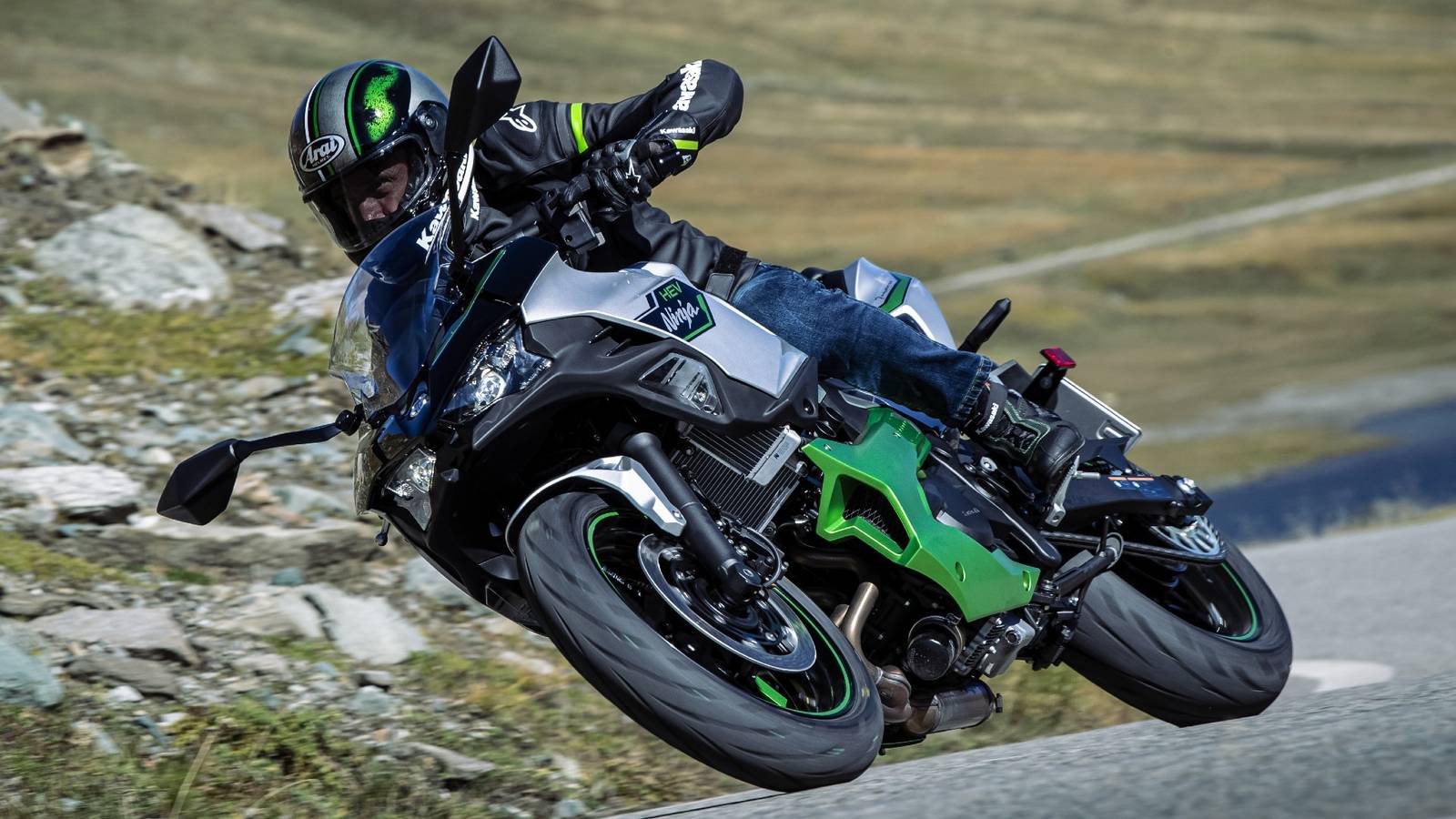
The Ninja 7 Hybrid ABS Shows How Far Kawasaki Has Come
MSRP: $12,499

Back when the Toyota Prius was first launched, it was written off as a waste of time. It wasn’t, though; it was proof of concept. Toyota has since gone on to sell millions of hybrids. Kawasaki has been paying attention, and the Ninja 7 represents the first hybrid motorcycle widely available to the public.

It has also coincidentally been written off as a waste of time, but it isn’t; it is also proof of concept. Up until now, hybrid systems were seen as too bulky and expensive for motorcycles. The Ninja 7 has proven that it is actually viable, and in time, it will become more affordable if there is enough demand.

Here’s The Most Overlooked Sports Bike Currently On Sale
The most overlooked sports bike actually comes from one of the biggest sports bike brands
The Ninja 7 Offers Riders The Best Of Both Worlds
Power: 68 Horsepower

In the past, hybrids were dismissed out of hand. It was seen as a stopgap technology until full electric vehicles inevitably took over the world. This big takeover never happened. As it stands, battery technology is just not where we thought it would be by now. All the while, this “stopgap tech” has quietly taken over the automotive industry.

It offers the best of both worlds in the sense that it reduces emissions and eliminates range anxiety. The Ninja 7 offers the ability to switch over to electric within the city limits, which is an important feature for European cities, in particular, where carbon taxes are in place. The combination of the two powertrains also improves acceleration and peak power output. We have it under good authority that the little Kawasaki is as quick off the mark as any modern sport bike. But it is also a pretty big compromise.

Official Giveaway
🔥 Limited Time
Enter The Weekly Giveaway
Win Car Guy Gear
Sign up to our newsletter to enter. Follow on socials for more entries.
New giveaways every 2 weeks
No purchase necessary. Open to US residents 18+. Full giveaway details on the page.
Also, The Worst Of Both Worlds

These performance gains can only be felt off the mark, and its 4.3-second 0-60 sprint time isn’t much better than the regular Ninja 500. This is not the biggest issue, though. By far the biggest issue with a hybrid powertrain is the added complexity. Not only does it make the bike that much more expensive to produce, but it also makes it that much harder to maintain.

This issue has hit hybrid car owners particularly hard. Once the battery reaches the end of its service life of between 10 and 15 years (depending on the mileage), the vehicle becomes more expensive to repair than replace. Some might argue that this is a normal lifespan of a vehicle, but if the ultimate objective is sustainability, this is an issue. There is nothing less sustainable than a disposable vehicle.

10 Best Electric Motorcycles That Offer Instant Thrills With Long Range
These electric motorcycles offer the best combination of high torque figures and segment-leading range
The Ninja 7 Is Very Practical For A Sportbike
You can understand why Kawasaki wanted to slap the Ninja name on this bike. From a marketing perspective, that is what Kawasaki is more comfortable with. It also isn’t the only practical sportbike in the Ninja lineup. It does, however, create expectations that this little bike simply won’t live up to.

With comfort-oriented ergonomics and a host of great modern features – not least of which is its automated manual transmission – this is a very practical motorcycle. Switching over to full electric mode in the city will take the stress out of weekday commutes, and with it being so light on fuel, its 3.7-gallon tank will yield a riding range of well over 200 miles, even with a heavy right wrist.
Expensive, Complex, And Heavy

Most modern motorcycles are getting heavier, more complex, and more expensive. Sportbikes have a weight threshold, though, and at over 500 pounds, this “little” Ninja isn’t anywhere near as light as it needs to be to compete with modern middleweight sportbikes. But simply slap on an “SX” at the end of its name, and your entire perspective might shift.
The Ninja 7 Hybrid Could Pass As A Sport Tourer With A Few Tweaks

While it is still relatively heavy, it isn’t that much heavier than the current Versys 650. Adding some color-matched luggage and a slightly better windshield will transform the Ninja 7 Hybrid into a handy sport tourer. Ideally, Kawasaki needs to find a way to increase the “boost” performance, but other than that, not much needs to change. The success of the Ninja 1100 SX (pictured above) provides the ideal template for what this hybrid motorcycle could be one day if it were to lean more into the sport tourer realm.
Source: Kawasaki