
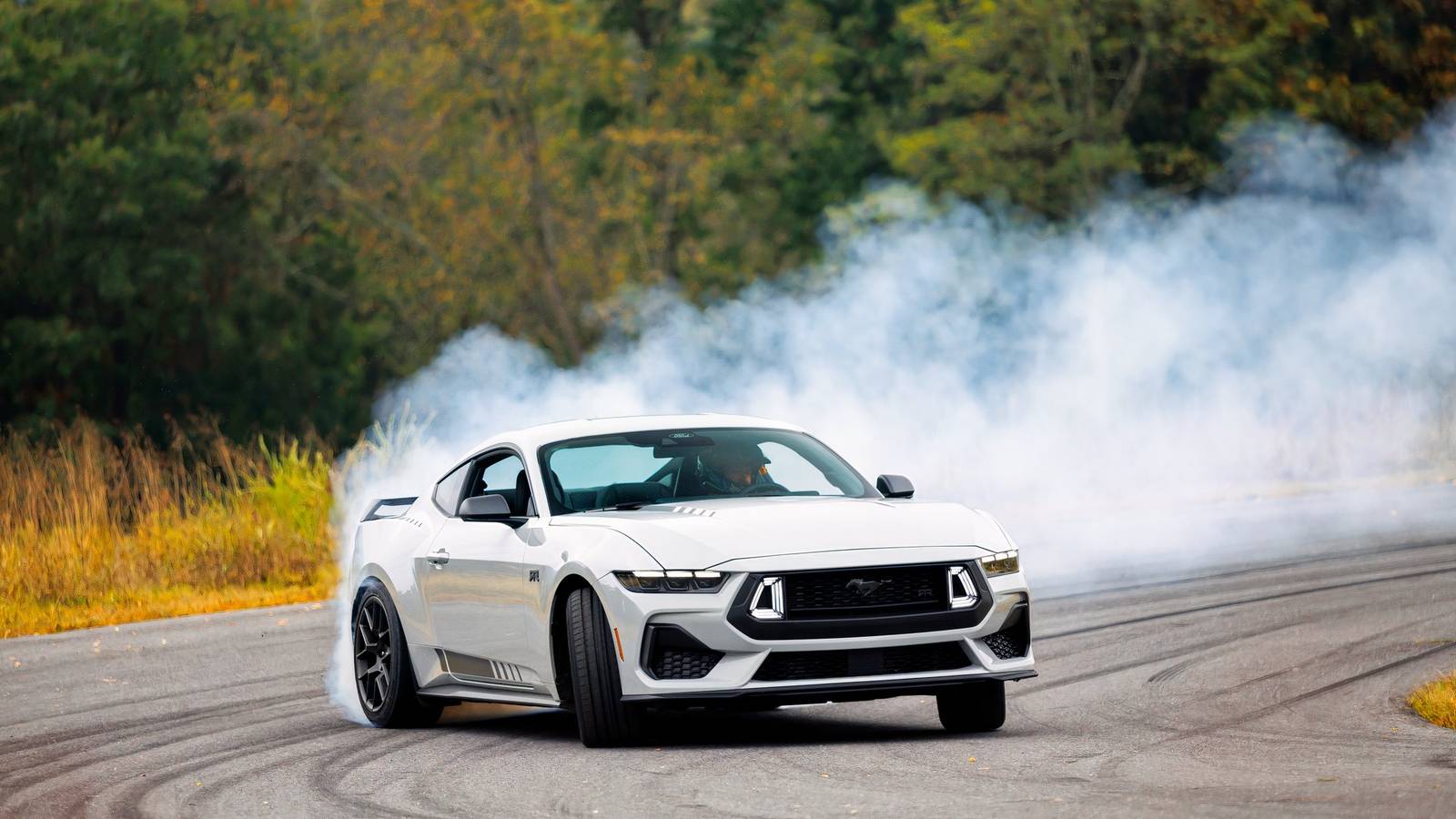
The latest-generation 2025 Ford Mustang arrived with all the ingredients enthusiasts wanted: sharper styling, a fully digital cockpit, and perhaps most importantly, a naturally aspirated V8 that refused to bow out in an era increasingly dominated by downsizing and electrification. Yet as with any new car, the real story begins not at the dealership, but in the used market, where depreciation reveals what buyers truly value.
Now that the 2025 model has had time to circulate through the market, early resale data and real-world classifieds listings offer a clear snapshot of its financial trajectory. Some versions have already lost a substantial portion of their original value, while others are proving far more resilient. That split highlights a deeper truth about modern performance cars, where emotional appeal and mechanical identity matter more than ever. With original MSRPs ranging from just under $34,000 to over $65,000, and used examples already dipping well below those figures in certain cases, the 2025 Mustang has entered a new phase where it’s becoming a calculated buy on the second-hand market.
From MSRP To Market Reality: How Much The 2025 Mustang Has Already Lost

At launch, the 2025 Mustang lineup was clearly stratified. The EcoBoost entered the market at $31,920, positioning itself as the most accessible way into Mustang ownership. The GT raised the bar significantly with a starting price of $46,560, while the Dark Horse topped the range at $64,380, offering a more track-focused interpretation of the platform.
One year later, the gap between those original prices and current market values tells a revealing story. Base EcoBoost models have experienced the steepest decline, with current resale values typically ranging between $23,400 and $24,800 for clean, low-mileage examples. That represents a loss of roughly $9,000 to $10,000 in a single year, placing depreciation in the 25 to 30 percent range. Real-world listings support this trend, with many early cars appearing in the mid-$20,000 bracket depending on mileage and condition.

Moving up the range, the GT tells a different story. Early used examples are now commonly listed between the low and mid-$40,000 range, with better-equipped GT Premium models pushing closer to the $50,000 mark. That indicates a far gentler depreciation curve, especially when considering that many buyers negotiated below MSRP at purchase.
At the top of the lineup, the Dark Horse remains the most stable. Most examples currently sit between $58,000 and $62,000, depending on specification and mileage. In some cases, that places them only a few thousand dollars below their original purchase price, underscoring their stronger market position.

The Ford Mustang Dark Horse Is Awesome, But The GT Offers More Value
It’s fine to lust after this 500-horsepower overachiever. It’s also fine to pencil out the cost-benefit of sticking with the GT instead.
EcoBoost vs GT vs Dark Horse: Which 2025 Mustang Holds Its Value Best?

The differences in depreciation across the 2025 Mustang range are rooted in what lies beneath the hood. The EcoBoost is powered by a 2.3-liter turbocharged inline-four engine producing 315 horsepower and 350 pound-feet of torque. It delivers respectable performance and decent efficiency, but it lacks the emotional appeal that defines the Mustang legacy. That distinction becomes critical in the used market. EcoBoost models are produced in higher numbers and attract a broader audience, which increases supply and softens demand. As a result, they depreciate quickly, behaving more like conventional coupes than enthusiast vehicles.

The GT, by contrast, benefits from its 5.0-liter naturally aspirated V8, which produces 480 horsepower and 418 lb-ft of torque. This engine is central to the Mustang’s identity, and its presence immediately elevates the car’s desirability. Buyers in this segment are often more emotionally invested, and that translates into stronger resale values. Even after a year, depreciation remains relatively modest, particularly for well-optioned examples.
The Dark Horse takes this formula further, offering a 500-horsepower version of the same V8 along with track-focused upgrades. Its more limited production and specialized positioning give it an edge in value retention. Unlike the EcoBoost, which competes in a crowded segment, or even the GT, which balances performance and accessibility, the Dark Horse occupies a niche that is increasingly rare. That rarity is reflected in its minimal depreciation and consistent demand.

Mustang GT 0-60: Is It fast Enough To Beat Its Rivals?
The C8 Corvette, Toyota GR Supra, Chevy Camaro, and more challenge the Mustang in the sports coupe arena. Here’s how the GT holds up.
The First-Year Depreciation Hit: Why Base Models Drop Faster Than V8s

The steep drop in value experienced by base Mustang models during their first year is not unusual, but it is particularly pronounced when compared to V8 variants. The reasons for this are both practical and psychological. EcoBoost models are built in higher volumes and often find their way into fleet and rental channels. This creates an immediate influx of used inventory, which drives prices down. At the same time, buyers shopping in this segment tend to be more price-sensitive and less brand-loyal, further increasing downward pressure on values.

In contrast, V8-powered Mustangs appeal to a more focused audience. These buyers are not simply looking for transportation; they are seeking a specific driving experience defined by sound, power delivery, and heritage. That emotional connection helps sustain demand even as the car ages. There is also a broader market dynamic at play. Naturally aspirated V8 engines are becoming increasingly rare, particularly in affordable performance cars. As competitors exit the segment, the Mustang GT and Dark Horse stand out as some of the last remaining options. This scarcity adds a layer of long-term value that base models simply cannot match.

No Turbos, No Batteries: Why The Dark Horse Keeps It Real
When it does to American naturally-aspirated V-8 muscle, the Mustang Dark Horse is the last one standing and as real as it gets.
What Actually Moves Used Mustang Prices Today
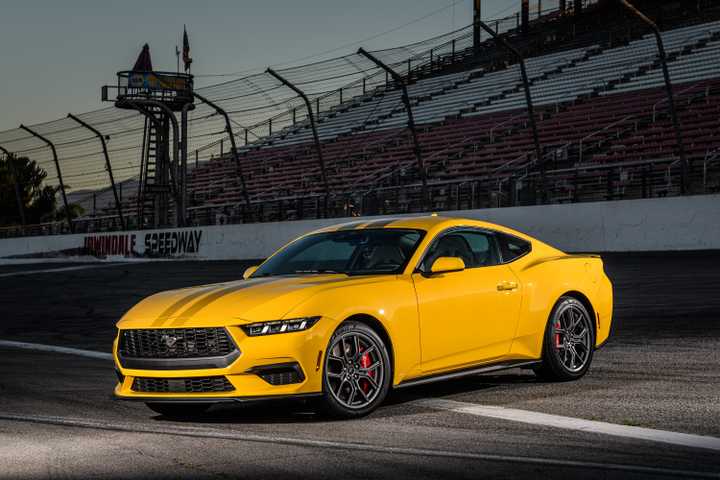

- Base Trim Engine
-
EcoBoost 2.3L ICE
- Base Trim Transmission
-
10-speed automatic
- Base Trim Drivetrain
-
Rear-Wheel Drive
- Base Trim Horsepower
-
315 HP @5000 RPM
- Base Trim Torque
-
350 lb.-ft. @ 3000 RPM
- Base Trim Fuel Economy (city/highway/combined)
-
21/32/25 MPG
- Base Trim Battery Type
-
Lead acid battery
- Make
-
Ford
- Model
-
Mustang Coupe
While age and mileage play a role in determining resale value, they are far from the only factors influencing the price of a used 2025 Mustang. In many cases, specification and configuration matter just as much. Mileage still has an impact, but the difference between a car with 5,000 miles and one with 15,000 miles is often smaller than expected. Because the platform is still new and most examples remain under warranty, buyers are less concerned with moderate usage.

Options, on the other hand, can significantly influence pricing. Performance-focused upgrades such as the Performance Pack, MagneRide adaptive suspension, and Brembo brakes add tangible value in the eyes of enthusiasts. A well-equipped GT Premium can command several thousand dollars more than a base GT, even with similar mileage.

Transmission choice has also emerged as a key differentiator. Manual transmission cars are becoming increasingly rare, and that rarity has translated into higher demand among enthusiasts. In some cases, manual-equipped GT and Dark Horse models command a noticeable premium over their automatic counterparts.
Another factor shaping the market is the way these cars were purchased new. Some early buyers secured substantial discounts, particularly on GT models. This effectively lowers their depreciation curve, allowing them to resell the car at a competitive price while still minimizing their own financial loss. At the same time, stable pricing for newer model years has helped support used values, preventing a more dramatic drop.
Used Bargain Or Future Classic? Why Some 2025 Mustangs Already Look Like Smart Buys

The 2025 Mustang now occupies a unique position in the market, straddling the line between depreciated used car and potential future classic. For buyers, this creates two very different opportunities. At the lower end of the spectrum, EcoBoost models already represent strong value. With prices in the mid-$20,000 range, they offer over 300 horsepower, modern technology, and everyday usability at a relatively accessible price point. For someone seeking a stylish and capable coupe, the value proposition is undeniable.

However, it is the V8-powered models that present the more compelling long-term case. The GT, with its naturally aspirated 5.0-liter engine, embodies a type of performance that is becoming increasingly scarce. As the automotive industry continues its shift toward electrification, cars like this are likely to become more desirable rather than less. The Dark Horse builds on that foundation with a more focused and exclusive approach. Its higher output, track-oriented components, and limited availability give it the strongest potential for future collectibility. While it has not yet reached that status, early signs suggest it could follow a similar trajectory to past special-edition Mustangs that have appreciated over time.
Sources: Ford U.S. & Cars.com