
Look at pricing trends in the past decade, and you’ll know that price cuts are rather rare in the liter-class superbike segment. Each update–even if it’s a color–usually brings some sort of price hike, making these bikes even harder to attain for the masses. However, in 2026, Kawasaki has well and truly shocked us all. The Japanese bikemaker has slashed the base price of the 2026 Ninja ZX-10R, even though there are notable updates. This has made it one of the most well-priced bikes in the segment, especially compared to European competition. Things aren’t as rosy when you dive deeper, though.
The 2026 Ninja ZX-10R Is Down On Power

As good as the ZX-10R is, there are some things that might drive you away. For starters, emission norms have increased their chokehold on the ZX-10R. The power has dropped by a whopping six ponies from the previous year, down to 190 horsepower. Even the torque is almost two pound-feet down. That might not sit right with a lot of enthusiasts, and in turn, it also means you’ll have to set some money aside for an ECU flash/exhaust to earn back the crucial horsepower.
The Visual Charm Has Gone Down

Another reason you might not want this is the new design. For the longest time, liter-class superbikes have had stunning designs that pave the way for smaller middleweights. But here, the 10R goes the opposite way, taking inspiration from the ZX-6R. In fact, it looks exactly like a 6R, albeit with wings slapped on. Sort a half-hearted effort if you ask us.
Its Curb Weight Is Over 460 Pounds

Last but not least is the heft. While ZX-10Rs have always been a bit porky, the latest-gen bike sets a new record. The curb weight of the ABS model is 463 pounds, which is 10 up from the 2025 model. It is also nearly 20 pounds up from the average figure in the superbike segment. Add the horsepower drop here, and you’re looking at a considerably lower power-to-weight ratio for the MY26 bike.
Luckily, There Is A Honda Sports Bike Alternative For A Cheaper Price Than The ZX-10R

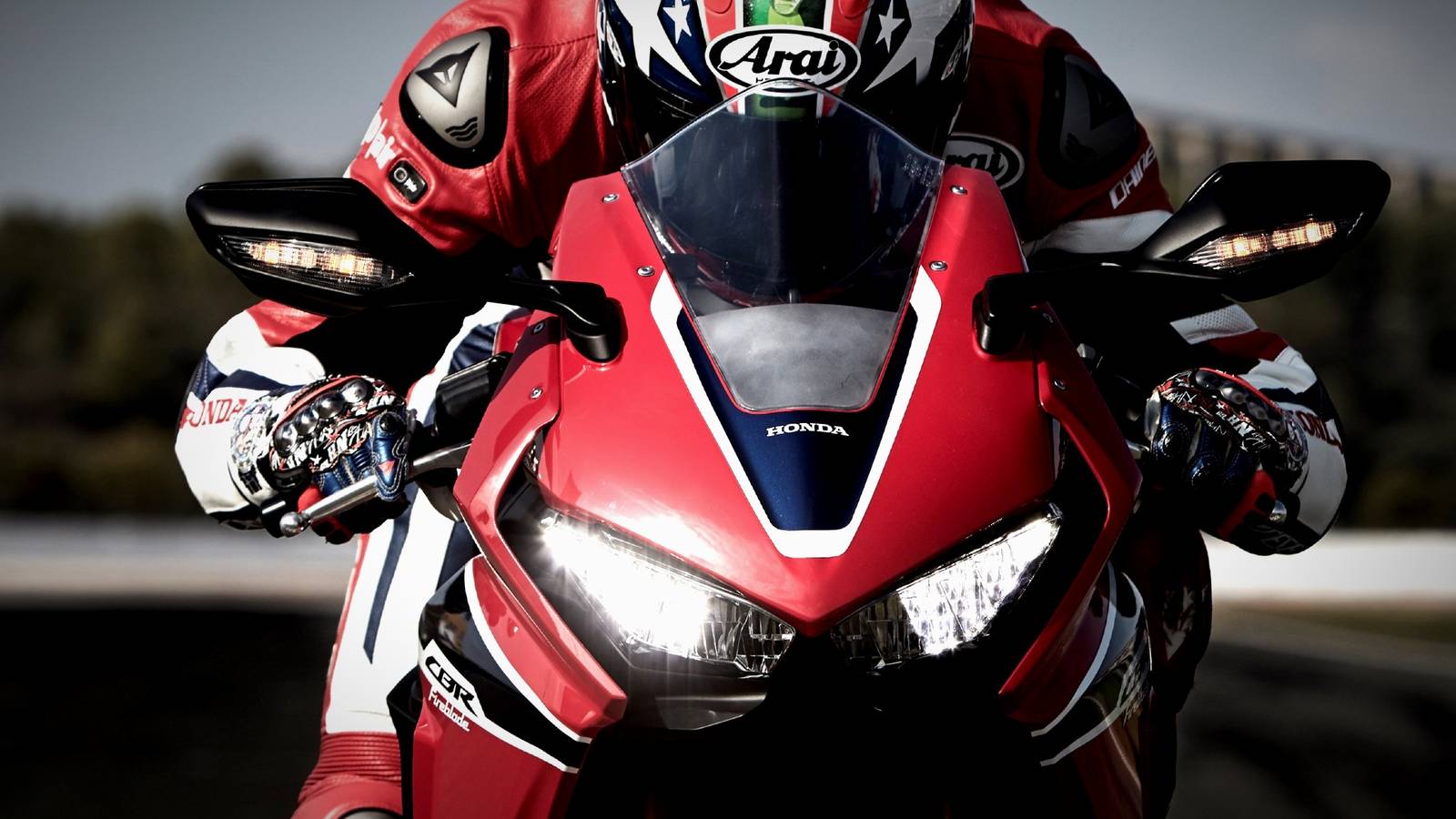
If all of those reasons seem crucial to you, you’ll be glad to know there is one Honda CBR sports bike that can do everything the ZX-10R can, while promising you similar power at a lesser price. Of course, we’re talking about the CBR1000RR (not to be mistaken with the CBR1000RR-R Fireblade SP). It has a starting price of $16,999–exactly the same as the base ZX-10R. But the ABS variant costs $17,299, which is a solid $700 less than the ZX-10R’s ABS variant. That money can get you a slip-on exhaust and a bubble windscreen while still saving you a few bucks!

The Bulletproof Honda Engine Everyone Talks About
Honda’s 1,833cc flat-six engine is considered bulletproof, combining unmatched smoothness, low-stress performance, and real-world reliability
The CBR1000RR Is A Well-Balanced Superbike

To address the elephant in the room, yes, the CBR1000RR is essentially the same model that debuted in 2017. However, that doesn’t mean it will feel dated in any way. All the necessary items come standard, be it sharp underpinnings or a handful of electronic aids to keep you upright. Let’s take a look at them.
A Screaming Inline-Four Engine Powers The CBR1000RR

At its heart, the CBR1000RR boasts a proper inline-four superbike engine. The mill displaces under 1,000cc, featuring a 76 mm bore, 55.1 mm stroke, and a 13:1 compression ratio. This edition also brought a handful of updates over the previous-gen RR, such as a higher rev ceiling, new valve lift, aluminum clutch cover, lighter exhaust, and a magnesium ignition cover. All the ensures 190 horsepower and 82 pound-feet, both of which are under 13,000 RPM. That means the output is right in the ballpark of the new ZX-10R.
Built Around A Race-Proven Chassis

The engine sits inside a race-derived twin-spar chassis. This has aluminum construction, and you’ll find the same material on the subframe and swingarm. At the time, Honda claimed these came straight from the WSBK racebike to improve handling and reduce weight. So the chassis had 10 percent more flexibility, lower weight, and thinner walls than the previous-gen bike.

Official Giveaway
🔥 Limited Time
Enter The Weekly Giveaway
Win Car Guy Gear
Sign up to our newsletter to enter. Follow on socials for more entries.
New giveaways every 2 weeks
No purchase necessary. Open to US residents 18+. Full giveaway details on the page.
A Curb Weight Of Well Under 440 Pounds

Speaking of weight, the CBR1000RR tips the scales at just 432 pounds (434 pounds with ABS). That is a whopping 30 pounds less than the new ZX-10R. To make matters sweeter, the wheelbase is almost 2 inches tighter and the rake is 2 degrees sharper as well. All this means you’re getting a much more compact and friendly sports bike than the Kawasaki.
Adjustable Showa Suspension Comes Standard
As for suspension, the CBR and Ninja have the same suppliers. You get Showa 43 mm Big-Piston forks and a Showa BFRC (Balance Free Rear Cushion) shock. Each end has full adjustability while being attached to 17-inch cast aluminum wheels. The CBR shows its age in the braking department, though. There are 2x 320 mm front disc brakes and a 220 mm rear rotor, all with Tokico caliper system. The ZX-10R has 330 mm discs with Brembo monobloc calipers, in comparison.
The Electronic Aids Are Impressive For Its Age

Since 2017, the ZX-10R has had two big overhauls. Yet, if you look at its feature list, it isn’t too far from what the CBR1000RR offered in 2017. Speaking of which, Honda has equipped the RR with a five-axis IMU and throttle-by-wire setup. These enable a nine-level traction control system, rear lift mitigation, wheelie control, and cornering ABS. Engine power modes, engine braking modes, and ride modes further help improve the usability.
Interestingly, you also have a TFT instrument cluster. It’s a bit smaller than the ZX-10R and has no smartphone connectivity or dedicated track layout. But having used this setup in person, I can confirm it’s quite readable and simple to use. The lack of a quickshifter and autoblipper is a serious miss, however.
Source: Honda Powersports