
Most motorcycles feel solid when they’re new. Tight tolerances, fresh components, and modern engineering can make almost anything seem dependable in the short term. The real test comes later, after years of heat cycles, vibration, and miles that expose every weak point in the design.
That’s where the conversation around durability starts to shift. It stops being about specs or features and becomes about what actually holds together over time. Some bikes age gracefully. Others slowly accumulate problems that turn ownership into a series of repairs. Harley-Davidson has built plenty of machines that look the part, but fewer that consistently deliver long-term durability in real-world conditions. Once you filter for that standard, the list gets surprisingly short.
To ensure accuracy, this article draws on Harley-Davidson technical documentation, service materials, and recall data across Honda, Kawasaki, Yamaha, Suzuki, and Harley-Davidson. That baseline is reinforced by experience as a certified Harley-Davidson mechanic, along with certification and hands-on work across the Big Four Japanese manufacturers. This includes real-world exposure to common failure points, service intervals, and long-term ownership trends. The result is an evaluation grounded in verified data and what consistently holds up in everyday use.
The Only Harleys That Truly Stand The Test Of Time
Real Longevity Is Earned Over Decades

Not every Harley earns the right to be called long-lasting. The ones that do have already proven it the hard way, over decades of real use, across thousands of owners, in conditions no test lab can replicate.

To qualify here, a platform needs more than a good reputation. It needs a long, uninterrupted production run and enough mechanical consistency to build a real-world track record. It should also span multiple engine generations, even if some versions missed the mark, because durability is measured over time, not in isolated peaks.

Simplicity matters just as much. Less bodywork means less weight, fewer failure points, and reduced strain on the frame, bearings, and suspension components that quietly determine how well a bike ages.
The List Of Long-Lasting Harleys Gets Short Fast

That immediately narrows the field. The Evolution-powered Sportster 883 and 1200 fit the brief in many ways, but the earlier Ironhead engines were less dependable, and the newer Revolution Max platform simply hasn’t been around long enough to prove anything yet.

The Road King makes a strong case on durability alone, but it falls outside the cruiser category. The Low Rider S represents the modern Softail at its best, but it is still too new to have earned its place here. Even the Dyna Super Glide, a longtime favorite, is now far enough removed from production that it no longer reflects a continuous, evolving platform. By this point, the list is no longer about what qualifies. It is about what remains once everything else has been ruled out.

The American Heritage Bike Built For Old-School Souls
A rare, authentic, and satisfying balance that’s hard to find these days.
The One Harley That Actually Delivers On Longevity

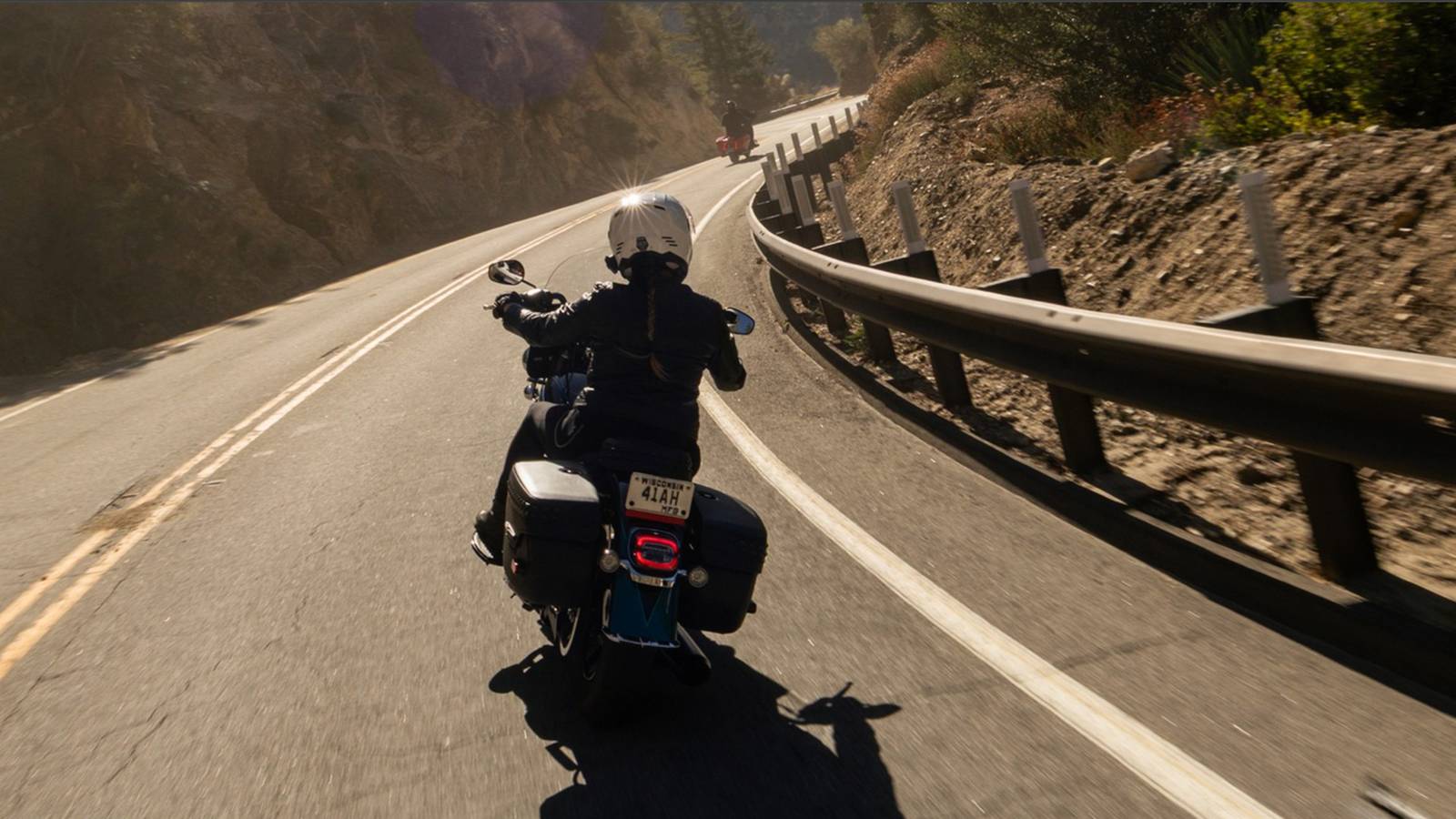
By the time the field narrows this far, one platform keeps meeting every requirement without compromise. The Heritage Classic from the Softail lineup is not just a strong candidate. It is the one that consistently holds up when real-world longevity is the standard.

Introduced in 1986 alongside the Evolution Big Twin and the original Softail frame, it combined a proven engine with a design built to endure. The look nodded to the postwar era, but the real value was underneath. It stayed simple where it mattered and durable where it counted.
Proven Engines, Known Weak Points, And Real Fixes

The Evolution engine remains one of Harley-Davidson’s most dependable powerplants. It was not replaced because it failed in the field, but because emissions standards and displacement limits forced the next step forward. In real ownership, it earned a reputation for going the distance with fewer internal issues than many of the engines that followed.

The Twin Cam 88 that replaced it did have early cam chain tensioner wear issues, but that problem is well documented and was effectively addressed with the later hydraulic setup. Once sorted, it proved to be a strong, long-running engine that carried the platform forward without breaking its durability advantage.
A Platform That Evolved Without Losing What Made It Last

What makes the Heritage Classic stand out is not just one engine or one generation. It is the continuity of the platform. The Softail chassis has evolved over decades, refining comfort and handling without abandoning the core simplicity that supports long service life. That balance between proven design and incremental improvement is what long-term durability actually looks like.
2026 Harley-Davidson Heritage Classic Engine And Performance Specifications
|
Engine |
Milwaukee-Eight® 117 Classic |
|
Displacement |
1,923 cc |
|
Power |
98 HP @ 4,600 RPM |
|
Torque |
120 LB-FT @ 2,500 RPM |
|
Transmission |
6-Speed Cruise Drive® |
|
Top Speed |
110 MPH |

The Cruiser That Balances Big Torque, Comfort, And Long-Distance Stability
This Harley-Davidson cruiser is packing the iconic Milwaukee Eight, seamlessly blending performance and versatility.
Why The Heritage Classic Lasts Longer In The Real World
Less Strain, Smoother Operation, And Smarter Load Management

Longevity starts with one factor most riders overlook. Load. The less strain a machine carries mile after mile, the longer its components tend to last. The Heritage Classic benefits from that in a very real way. Without a large front fairing, the engine is not constantly pushing against excess wind resistance.

That reduction in drag translates directly into less sustained stress on the drivetrain. At the same time, lower overall load means less wear on suspension components, wheel bearings, and chassis mounting points that quietly determine how well a bike ages over high mileage.
Reducing Load Is The First Step To Long-Term Durability

That mechanical advantage carries through the drivetrain. The addition of a slipper clutch reduces back-torque under deceleration, smoothing out shock loads that would otherwise travel through the engine, primary, and transmission. Over time, that kind of load management helps preserve internal components that typically see cumulative wear.

Modern rider aids add a secondary layer of protection. ABS and traction control help prevent abrupt tire slip under braking and acceleration, which can extend tire life under normal riding conditions. Tire pressure monitoring further supports that by reducing the chances of running underinflated, a common cause of accelerated wear and instability.

What sets the Heritage Classic apart is how all of this works together. It is not just about strong components. It is about a design that consistently avoids unnecessary stress, allowing the bike to age more gradually with fewer cumulative penalties.

10 Harley Motorcycles That Last Practically Forever
From touring models to cruisers, all of these Harley-Davidson bikes are built to last.
The New Heritage Classic Delivers On All Counts

The Heritage Classic stands out because it does not rely on any single advantage. It succeeds by combining several traits that consistently reduce wear over time. It is built on a platform that has been refined, not reinvented, allowing known issues to be addressed without introducing unnecessary complexity.
Its engine lineage — from the Evolution to the improved Twin Cam designs to the modern Milwaukee-Eight— has proven itself across decades of real ownership rather than short-term impressions. That kind of consistency matters more than peak performance when the goal is longevity.
Durability Comes From What a Bike Avoids, Not Just What It Adds

Just as important, the design avoids placing excessive strain on its own components. With less aerodynamic drag than fully dressed touring models and smoother load management through the drivetrain, it simply asks less of itself mile after mile. That reduced stress adds up, preserving the parts that typically wear out first on heavier, more complex machines.

In the end, durability is not about which bike feels the most advanced. It is about which one keeps working with the fewest interruptions. By that standard, the Heritage Classic earns its place as the Harley cruiser that holds up best over time.