
Adventure motorcycles have changed a lot in the U.S. market. What used to be a fairly narrow space for big, intimidating machines has become a full spectrum, from smaller entry-level dual-sports to middleweights that can genuinely tour, commute, and play in the dirt without feeling like a freight train. That shift matters because the middleweight class has gone from “nice compromise” to one of the most sensible places to spend your money. And in Honda’s case, there is a bit of sibling rivalry going on, too.
The Legend Vs. The Logic

The Honda Africa Twin is one of the benchmarks if you want a premium, big-tank, big-presence adventure bike with real credibility. For 2026, Honda lists the base Africa Twin at $15,199, with the 1084cc parallel-twin, 510-pound curb weight, 34.3-inch seat height, cruise control, and a 6.5-inch TFT touchscreen all part of the package. It also carries Honda’s six-axis IMU electronics on the standard model, which puts it squarely in the high-spec end of the segment.

That is the legend. The logic is different. Once you move into the sub-$12,000 zone, the question is no longer whether you can buy an adventure bike. It is whether you can buy one that feels modern, capable, and easy to live with without paying a premium simply for the badge and the extra cubic centimeters. That is exactly where Honda’s latest middleweight ADV has landed, and it is why the bike makes such a compelling argument against the Africa Twin’s price tag.
The Honda Transalp 750 Makes The Africa Twin Look Overpriced

The 2026 Transalp 750 E-Clutch starts at $10,199, while the 2026 Africa Twin starts at $15,199. Even if you use the 2025 Africa Twin’s $14,799 starting price, the gap is still massive. In practical terms, that is roughly $4,600 to $5,000 more for the Africa Twin before you even start adding accessories. And that gap is why the Transalp feels like the smarter buy.
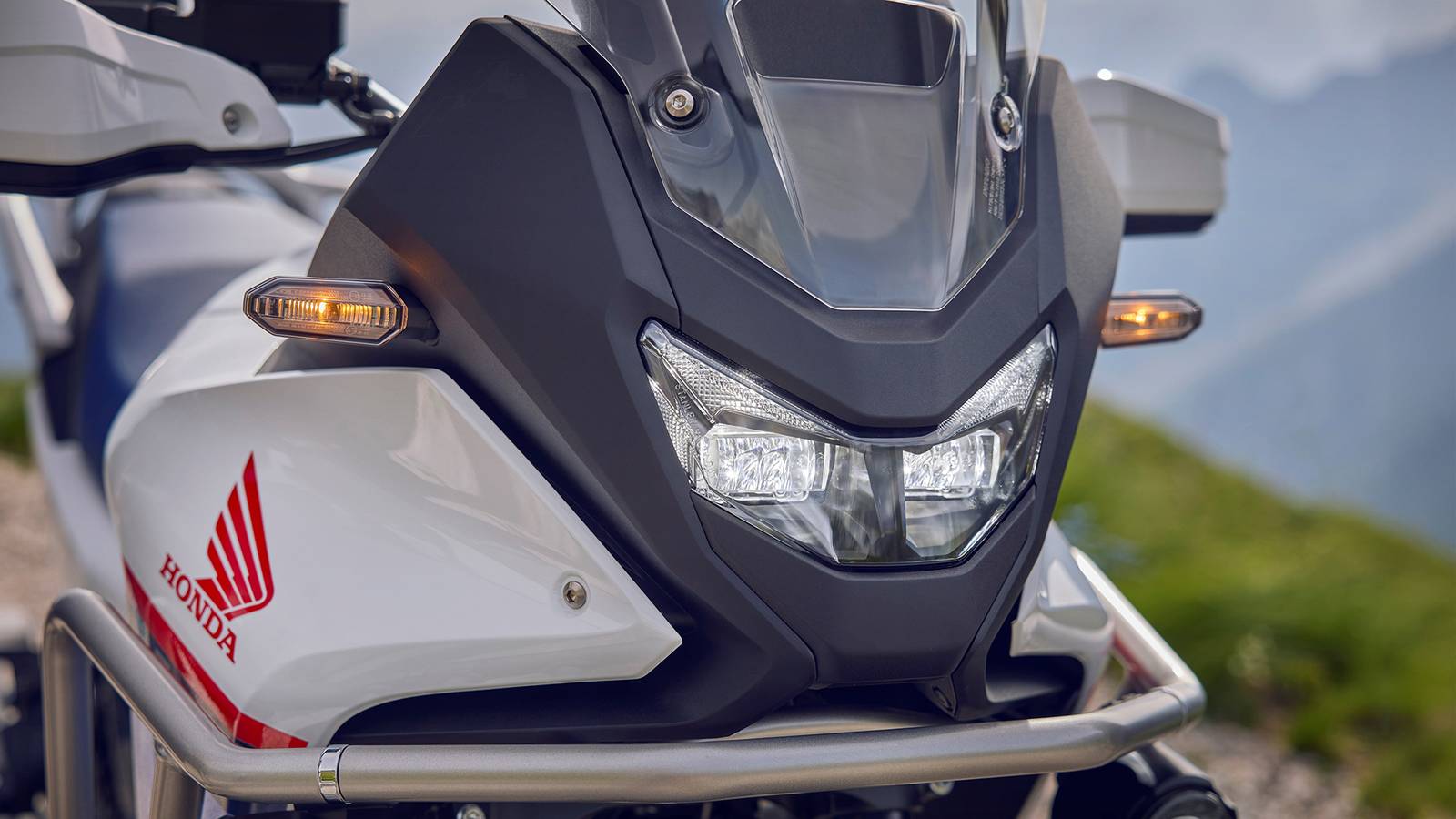
It does not pretend to be a stripped-out budget bike. Honda gives it a 755cc engine, 21-inch front and 18-inch rear spoked wheels, a rally-style fairing, ride modes, and on the 2026 model, the E-Clutch technology comes as standard, too. That is not a bargain-basement kit; instead, it’s a proper middleweight adventure recipe with just enough polish to feel special.
The Value-to-Performance Ratio

Yes, the Africa Twin’s bigger engine brings more grunt, and yes, it feels more like a premium machine. However, the key question is whether that extra displacement is worth the cost of nearly another used motorcycle. For a rider who mostly wants a serious all-rounder for commuting, weekend travel, and mixed-surface exploring, the Transalp already covers the essentials with far less financial pain. The Africa Twin is richer; the new 2026 Transalp is wiser. That difference matters more than brochure bragging rights.

The Adventure Motorcycle That Makes Long Trips Feel Effortless
The Harley-Davidson Pan America combines a powerful V-twin, semi-active suspension, and modern tech to make long rides feel effortless.
One Of The Most Powerful Motorcycles For The Price

Honda has clearly tried to make the Transalp feel like part of the same family as the Africa Twin, not a cheaper copy. The Transalp uses Honda’s Unicam SOHC design, paired with a 270-degree crank and compact engine layout. Both of these help the bike maintain that narrow, manageable ADV feel. The result is a middleweight that does not feel bloated when the road gets tight or the dirt gets rough.

Honda describes the engine as a narrow parallel twin that delivers torque across the rev range, with stronger low-rpm response and easy open-road cruising. In layman’s terms, that means it does not need to be thrashed to feel lively, and it does not collapse into dullness when you short-shift through traffic or climb a gravel grade. It feels eager, not exhausted.
No Lack Of Real-World Power

On paper, the Africa Twin still owns the big-number bragging rights. A commonly cited figure for the Africa Twin is 102 hp, while the global Transalp is quoted at 91 hp. Although the Africa Twin has more outright punch, the Transalp is still a properly quick, usable, and entertaining bike rather than some watered-down compromise. That’s also helped by the massive weight difference between them.
The Transalp Has An Agility Advantage

This is where the Transalp starts to look especially clever. Honda lists the 2026 Transalp E-Clutch at 468 pounds, whereas the 2026 Africa Twin sits at 510 pounds. That is a meaningful gap of roughly 42 to 47 pounds, and on an adventure bike, that difference is not theoretical. It shows up when you are paddling around a parking lot, catching a foot in ruts, or trying to turn around on a sloping dirt trail.
The Transalp is also slightly lower in the saddle, with a 33.7-inch seat height compared with the Africa Twin’s 34.3-inch standard position. Six-tenths of an inch sounds minor until you are on uneven ground, wearing boots, or fatigued after a long day. The lower, lighter bike simply feels more approachable, especially for riders moving up from street bikes or smaller dual-sports.

The Honda Built For Riders Who Want It All
A true all-rounder, the Africa Twin Adventure Sports ES merges rugged capability with refined touring features for riders who demand more
The Electronics Suite: IMU Vs. Essential Aids

The Africa Twin’s electronics are undeniably richer. Honda gives the standard Africa Twin a six-axis IMU, cruise control, a 6.5-inch touchscreen display, selectable ABS modes, and the option of DCT on other trims. The Transalp answers with five ride modes, Honda RoadSync, a 5.0-inch display, Honda Selectable Torque Control, and, for 2026, E-Clutch. That is a very good package, but it is deliberately less complex.
That restraint is part of the Transalp’s appeal. It gives you the tools you actually use most of the time, rather than a feature list that feels engineered to justify a bigger sticker. In the real world, a clean interface, sensible ride modes, and predictable throttle response matter more than having every possible electronic assistant turned on and ready for brochure duty.
The Africa Twin definitely feels more premium on the move. Honda’s own pages highlight cruise control and the larger touchscreen on the Africa Twin, while the Transalp keeps things simpler with a smaller TFT and Honda RoadSync connectivity. That is the trade-off. You surrender a little luxury and some high-end touring polish, but you do not surrender capability in any meaningful way for most buyers.
The E-Clutch Is A Neat Trick

Honda’s E-Clutch is the Transalp’s neatest trick. It allows clutchless up- and down-shifts while still preserving a conventional clutch lever, which means you get extra convenience without giving up control. Honda says it helps reduce stalling in tough terrain and makes the bike more versatile on and off road. For riders who do not want the full automatic feel of DCT, but do want a lighter touch in traffic and on trails, it is a very appealing middle ground.
The Aftermarket Ecosystem

Then there is the fun part. The price gap between the Transalp and Africa Twin leaves room for upgrades that many owners would make anyway: suspension tuning, luggage, protection, better tires, and small comfort add-ons. Honda’s own accessory list and current reviews point toward exactly that kind of practical personalization, which means the Transalp can be built into a very complete machine without turning into an expensive commitment.

The Time Japan Made A Better Adventure Motorcycle Than The Rest Of The World
This Honda adventure bike offers the best balance of performance, capability, and smart pricing.
The Rational Choice For The Modern Adventurer

The Africa Twin is still the icon. It is bigger, more powerful, more luxurious, and more technically advanced. But the Transalp is the one that makes the clearest sense for a huge chunk of American riders. It is lighter, lower, cheaper, easier to manage, and still fully authentic as an adventure motorcycle, with 21/18 wheels, real off-pavement intent, and enough performance to cover serious miles. Honda has made the rational choice look surprisingly exciting.
That is why the Transalp 750 feels like the bike that embarrasses the Africa Twin a little, at least in value. The Africa Twin remains the premium halo machine, and some riders will always be happy to pay for that. However, for buyers who care about agility, usability, and financial freedom, the Transalp is the smarter adventure bike and, in a very real sense, the one that makes the Africa Twin look expensive.
Source: Honda Powersports