
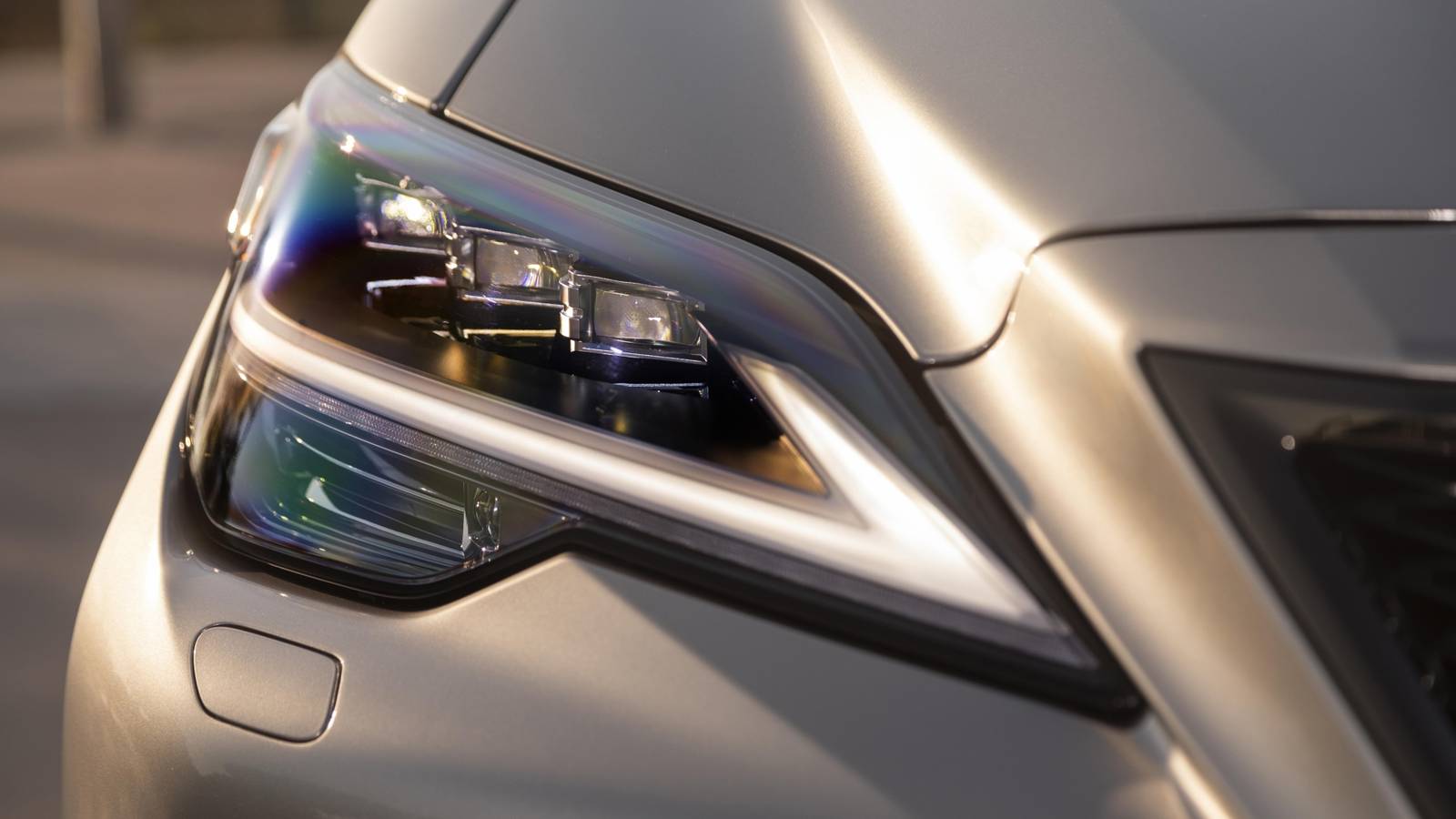
Luxury cars in 2026 are expected to be less popular than in previous years because of declining affordability. Although demand is niche, wealthier consumers expect their cars to deliver unparalleled luxury and practicality. The gradually declining demand means that competition in the segment has become much more aggressive, resulting in some formerly popular models falling into obscurity on dealership lots.
Crossovers and SUVs in the premium and luxury segments also continue to command stronger demand, further relegating their sedan counterparts to the bottom end of the quarterly sales charts. Due to a declining demand and other factors, buying a used luxury sedan typically results in the best value that you can enjoy today.
Why Buying Used Luxury Is A Smart Decision

American consumers often find superior value in the used luxury market because these vehicles suffer from aggressive initial depreciation. These models frequently lose 40 to 50 percent of their original MSRP within the first three years. This allows a buyer to access high-end materials, advanced safety technology, and superior driving dynamics at a price point comparable to a brand-new economy car. By letting the first owner absorb the steepest financial hit, you can often afford a higher trim level or a more prestigious badge than their budget would otherwise permit in a new-car showroom.
Furthermore, many of these vehicles are available through Certified Pre-Owned programs. This includes manufacturer-backed inspections and extended warranties that mitigate some of the risks of buying used. However, this decision carries notable downsides, including higher out-of-warranty maintenance costs, more expensive specialized parts, and the gradual obsolescence of older infotainment and driver-assistance software.
Why Luxury Sedans Struggle With Value Retention

Full-size luxury sedansare the biggest victims of depreciation. They represent the intersection of high initial MSRPs and rapid technological obsolescence, even when comparing them to some mass-market electric vehicles. In the secondary market, the status premium that first owners pay vanishes as soon as they drive off the dealership lot.
Used buyers are typically more practical, and they are often turned off by the astronomical out-of-warranty repair costs associated with complex air suspensions, high-output engines, and bespoke electronics created specifically for these models. As of 2026, demand is notably lower than the supply of short-term purchases and lease returns.
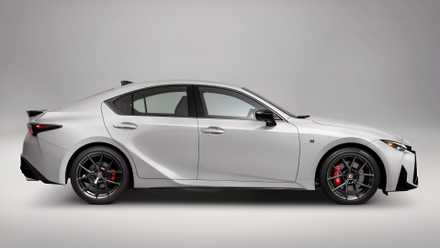
The Lexus Sedan That Quietly Became America’s Most Dependable Car In 2026
Lexus’s entry-level rear-wheel-drive sedan remains a reliability king.
The 2021 Lexus LS Is A Great Investment

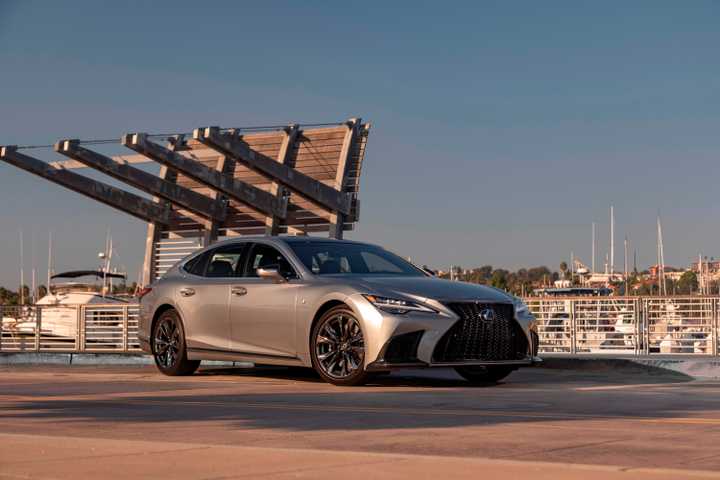
The 2026 model year marks the end of an era as the final Lexus LS 500 rolls off the assembly line, effectively shuttering the chapter on one of Japan’s most storied flagship sedans. For enthusiasts and pragmatic luxury buyers alike, this end-of-the-line status creates an immediate sense of urgency. The Lexus LS 500 suffers steep depreciation in the U.S. because it doesn’t benefit from favorable long-term structural or market trends. If anything, it is a product that combines a series of traits that directly contribute to a poor value retention proposition.
With the nameplate heading toward retirement, the used market is the only remaining path to secure a vehicle that has defined more than three decades of engineering excellence. Currently, a 2021 LS 500 can be found for roughly $51,703. When new, you would have paid $99,280. This near-50 percent price drop represents a massive value disruption, offering a hand-pleated, ultra-luxury experience for less than the cost of a modern, well-equipped Toyota Crown.
How Lexus Beats The Germans In Depreciation

While the Mercedes-Benz S-Class continues to command a premium on the secondary market, the LS 500 positions itself as the significantly smarter play over its other European contemporaries. A 2021 BMW 7 Series or Audi A8 L can often be scooped up in the low $40,000 range, but that lower barrier to entry is a warning sign rather than a bargain.
Lexus typically benefits from one of the best reputations for reliability across all segments, thanks to its ability to leverage Toyota’s long-standing drivetrain technologies. For this exact same reason, the LS doesn’t carry the same prestige as the top German flagships.
These German rivals depreciate more aggressively precisely because their astronomical out-of-warranty maintenance costs erode buyer confidence. In contrast, the Lexus holds a higher floor, backed by a staggering 4.9/5 reliability rating and Toyota-grade dependability. Choosing the LS 500 isn’t just about the initial $50,000 savings from MSRP. You also get the benefit of owning a flagship that makes the ownership costs of a 7 Series look reckless by comparison.
The 2026 Hybrid SUV That Feels Like A Lexus Without The Price Tag
Hybrids are great, luxury hybrids are better. Can you have the best of both worlds in a standard vehicle for a standard price?
No Shortage Of Standard Features

The 2021 Lexus LS 500‘s interior experience is still impressive by modern standards. The cabin features a 12.3-inch touchscreen with 16-way power-adjustable heated and ventilated front seats, a power rear sunshade, and seamless smartphone integration through Apple CarPlay and Android Auto. The true flagship experience is found in the options list.

Upgrading to the Luxury Package adds 28-way power-adjustable front seats with multifunction massage, four-zone climate control with infrared sensors, and a 7-inch rear-seat touchscreen controller. Models fitted with the Executive Package benefit from a power-retractable right-rear ottoman, heated and massaging outboard seats, and the Kiriko cut-glass door trim. You also get to enjoy a 23-speaker Mark Levinson Quantum Logic Immersion 3D surround sound system.
A Punchy Turbocharged Engine

The heart of the 2021 Lexus LS 500 is a 3.5-liter twin-turbocharged V-6 producing 416 horsepower and 442 pound-feet of torque. This engine is mated to a class-exclusive 10-speed Direct-Shift automatic transmission, optimized for smooth shifts and precise gear selection.

- Base Trim Engine
-
3.5L Twin-Turbo V6 Gas
- Base Trim Transmission
-
10-Speed Automatic
- Base Trim Drivetrain
-
Rear-Wheel Drive
- Base Trim Horsepower
-
416 hp
- Base Trim Torque
-
442 lb-ft @ 1600 rpm
- Fuel Economy
-
18/29 MPG
- Make
-
Lexus
- Model
-
LS
- Segment
-
Midsize Luxury Sedan
The rear-wheel-drive flagship sprints from 0 to 60 MPH in 4.6 seconds, increasing slightly to 4.8 seconds with all-wheel drive. Both drivetrains have an electronically limited top speed of 136 MPH. Efficiency is equally respectable for a 4,700-pound sedan, with the rear-wheel drive model earning an EPA-estimated 18/29/22 MPG on the city/highway/combined cycle. Thanks to its generous 21.7-gallon fuel tank, the LS 500 offers a substantial cruising range of 477 miles. The all-wheel drive model changes this to 17/27/21 MPG and 456 miles of range.
The Japanese SUV That Rivals German Luxury For Less
The 2026 Lexus RX 500h is a performance hybrid SUV that rivals German luxury SUVs with smooth acceleration, efficiency, and everyday usability.
Appealing Long-Term Ownership Costs

While niche, those who have experience owning the 2021 LS hold the luxury sedan to a very high standard. It currently has a 4/5 average score on the Edmunds consumer review section, with its key strengths being the interior comfort, reliability, and manufacturing quality, and driving experience.
iSeeCars indicates that the model will have an average lifespan of 13.6 years or 147,960 miles, with a 22.8 percent probability of reaching 200,000 miles. On the depreciation front, you can expect the luxury sedan to lose $41,437 or 42.4 percent of its value over five years.
The Edmunds True Cost To Own calculator reveals that the base rear-wheel drive model will cost you $69,391 to own over the same period. The most noteworthy costs include $10,350 on maintenance, $3,395 on repairs, $25,799 on depreciation, and $13,035 on fuel.
Specific repairs, as listed by RepairPal, include $252 on a stabilizer bar link kit, $517 on spark plug replacements, $1,718 for a new fuel pressure sensor, $3,124 for a new exhaust manifold, and $1,853 for new stabilizer bushings. Replacing the camshaft can set you back by as much as $3,983.
How To Keep The LS Reliable

Maintaining a 2021 Lexus LS 500 requires a strict 5,000-mile or six-month service interval. These alternating visits focus on tire rotations and multipoint inspections, while the more substantial 10,000-mile interval introduces full synthetic 0W-20 oil and filter changes. Major milestones occur every 30,000 miles, requiring the replacement of the engine air filter and brake fluid, followed by spark plug replacement at the 60,000-mile mark. Despite its complex twin-turbocharged heart, the LS 500’s projected 10-year maintenance cost is roughly $6,661, which is a figure that significantly undercuts the luxury segment average.
Regarding its reliability record, the 2021 model has remained largely robust, though it was included in a notable 2024 recall involving the Occupant Classification System. On specific vehicles equipped with the Executive Package, interference between internal front passenger seat parts could cause incorrect occupant detection. This potentially leads to improper airbag deployment. Additionally, while earlier years of this generation faced widespread fuel pump recalls, the 2021 model mostly avoided those headlines, though owners should still verify their VIN for a 2024 software update related to the Panoramic View Monitor, which addressed an issue where the rearview camera image would fail to display promptly when shifting into reverse.