
When we think of Mitsubishi, we think about rallying, AWD performance, modern SUVs, and the legendary 1990s JDM scene. Not only that, but one of the defining rivalries of the past 50 years in the automotive industry is the classic Subaru vs Mitsubishi debate, a topic on which people have been passionately debating for decades. Like most manufacturers, though, there has always been the hunger to broaden their appeal one step further and tread into unknown territory with a model that defies expectations of what the brand is all about.
Unknown to most people, Mitsubishi took a similar risk in the 1980s. If there was one thing that the brand was at that time, it was engineering-obsessed. Many of us still view Mitsubishi’s previous hero cars as being all about grit and mechanical exhilaration. While many of them were, Mitsubishi was addicted to the idea of beating out the Germans with their prestigious BMW and Mercedes models. Taking all of their innovation and effort into one vehicle that was meant to slice through the market, they released a worthy competitor into the executive sedan lineup.
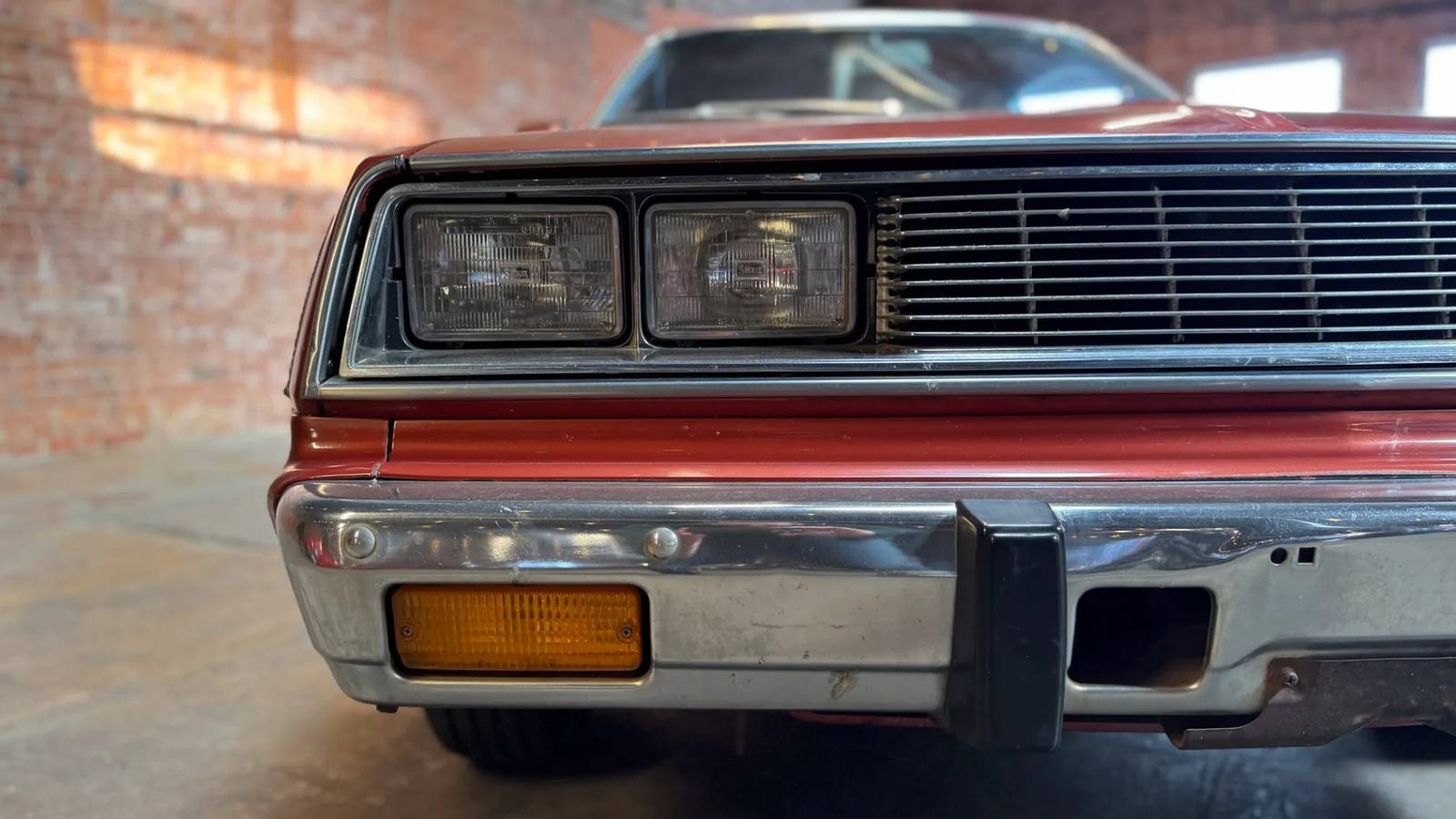
Due to the rarity of this model, images of the U.S. version, the 1978 Plymouth Sapporo, were used throughout this article.
Why Did People Buy A Mitsubishi In The 1980s?

Mitsubishi has never appealed to a huge audience; instead, through a mixture of rallying expertise, gadget-focused design, and turbocharged innovation, the brand gained a comparatively small but loyal fanbase. While not as lavish as a Bimmer, vehicles like the Starion and Galant showed a value-oriented path to the performance-focused consumer. Not only that, but the gizmo-oriented flair of Mitsubishi at the time, combined with the reasonable price tags, meant the average consumer was able to buy a vehicle far more advanced than cars of similar money on the market.
The Niche, But Incredibly Advanced Mitsubishi Sapporo

When entering an unknown market saturated by heavy hitters like BMW and Mercedes, typically a manufacturer will try to aim for similar performance at a reduced cost to gain market share. Mitsubishi took a far riskier approach. In a quest that felt more like proving to the Germans who’s the boss of bleeding-edge gadgetry rather than outright sales performance, Mitsubishi set about offering technology that was years ahead of its competitors. The fifth-generation Sapporo was produced between 1987 and 1990 and offered electronically controlled suspension, which adjusted damping and ride height in real time based on the road conditions. It was a marvel of technology but proved softer than expected, with the dedicated sport mode tightening it up to a more acceptable degree.

They had also implemented speed-sensitive steering, which was becoming more commonplace on German sedans, and it meant that steering would become heavier at higher speeds for stability. On twisty city roads or for tight parking situations, the system would lighten the steering for ease of use. One of the most obvious examples of the brand’s lust for the future is shown with the Sapporo’s digital climate controls, the overhead buttons, and the single-spoke steering wheel. The entire vehicle feels like it was ready for a Japanese remake of Back to the Future, with a Sapporo instead of the famous DeLorean.
The Powertrain And The Performance

Unfortunately, two of the most essential architectural elements that were on BMWs at the time were missing from the Sapporo: a smooth and muscular six-cylinder engine and rear-wheel drive. Beyond technology, these were two of the main reasons consumers opted for a German sedan. Instead, the Sapporo opted for front-wheel drive and a four-cylinder engine, which didn’t help given that Mitsubishi was already viewed as a budget-oriented brand compared to Mercedes and BMWs.

However, Mitsubishi’s 2.4-liter engine housed counter-rotating balance shafts, the idea being that it could replicate the civilized nature of a six-cylinder in a smaller powertrain. The results were impressive at the time. Typically, in the 1980s, four-cylinders were synonymous with a primitive and rattly experience, but this was a four-cylinder that bridged the gap between the smoothness of an inline-four and an inline-six engine.
1988 Mitsubishi Sapporo Specifications
|
Powertrain |
2.4-liter inline-four |
|
Transmission |
5-speed manual or 4-speed automatic |
|
Power |
129 horses |
|
Torque |
141 pound-feet |
|
0-60 mph |
9.6 seconds to 10.2 seconds |
The Mitsubishi Sapporo established a middle ground between the BMW 320i inline-six and the inline-four Mercedes 190E. It wasn’t quite as punchy as the inline-four Mercedes 190E, but it did offer a more refined engine that was closer in nature to BMW, with which it is essentially tied in performance. There was also a Sapporo Turbo from the early 1980s, which produced a muscular 156 horsepower and would embarrass either the BMW or Mercedes.
The German Sports Car With Toyota Reliability And Ferrari-Level Handling
2010’s supercar performance, a Toyota-backed heart, yet untouchable in its German attention to detail.
The Magic Of BMW And Mercedes At The Time

The Mitsubishi Sapporo was supposed to be a high-tech disruptor in this segment, but Mitsubishi had the monumental task of trying to sway executive perception towards it. The BMW 320i and Mercedes 190E were seen as reasonably quick sedans that had an element of prestige that no other brand could rival. The 190E introduced a five-link rear suspension setup, which created an absurd level of stability that, paired with the substantial build quality and refined poise, made for a mature vehicle that consumers desperately aspired to. Even with all the high-tech wizardry of Sapporo, consumers knew that gadgets didn’t necessarily mean quality.
Concerns With BMW And Mercedes
- The 320i required a new timing belt every 50,000 miles
- The 320i NiCad batteries would leak, causing a roster of dashboard lights
- BMW’s of this era were notorious for oil leaks
- The 190E was complex and costly to repair
- The Mercedes were strong, but the head gaskets were known to leak
The BMW was an astonishing all-rounder. It had that classic mechanical flair which can be found in the bloodline of M-series cars and 3 Series cars alike, which are more tuned into dynamics and road feel compared to the 190E. It was the manner in which it balanced driving experience with opulence that made the 320i a special car and one that just gave more confidence to its owner than the Mitsubishi Sapporo.
10 Japanese Cars That Are More Fun To Drive Than A Porsche 911
The Porsche 911 is the gold-standard of sports cars, but it might not be the most fun car to drive. These ten Japanese sports cars might be more fun.
The Legacy Of The Mitsubishi Sapporo
In 1988 alone, BMW sold over 50,000 3 Series cars in the US, with Mercedes selling roughly half of that. Mitsubishi was nowhere to be seen and now acts as a cult hero to resemble what wonderful and eccentric vehicles can be made through commitment to trying to beat out top-tier competitors. With showrooms full of rugged SUVs, there was nothing compelling about buying a luxurious Mitsubishi for the average consumer when it was seen as a value-driven brand that specialized in rugged Monteros and cheap Mirages.

In 1990, the Sapporo was replaced by the Diamante, which was styled to resemble the BMW 5 Series‘ side profile and featured a competitive 3.0-liter V6 but kept the bleeding-edge feature set of the outgoing vehicle. This meant it was more executive-looking, had a larger, smoother engine, still possessed an incredible roster of gizmos, and resulted in genuine sales success.
The Verdict Of The Innovative Sapporo

No, the Sapporo couldn’t beat its German competitors. But when you look back on the brand’s commitment to cutting-edge technology, it is clear Mitsubishi saw the future of premium sedans as one of immense innovation and capabilities, which is exactly the world we live in today. It also paved the way for a more successful Mitsubishi Diamante, acting as the philosophical platform for the manufacturer’s future success in the segment. It was hard to appreciate vehicles like this when they were released, but at least its cult following has given it the praise it deserves in the modern era.
Sources: Mitsubishi, Bring a Trailer