

Mitsubishi Australia will launch its first electric vehicle (EV) in 14 years before the end of 2026, and it’s undergoing extensive local testing to prepare it specifically for Australia and New Zealand.
The Japanese brand’s electric SUV will be sourced from Taiwanese manufacturer Foxtron, a joint venture between iPhone manufacturer Foxconn and automaker Yulon, making it the second-ever electric Mitsubishi in Australia after the i-MiEV hatch, which was sold from 2010 to 2012.
While this as-yet-unnamed model has largely been developed by Foxtron under the watchful eye of the Mitsubishi Motors Corporation (MMC) in Japan, Mitsubishi’s local product strategy general manager Bruce Hampel confirmed that Australia has had a big part to play in its tuning and setup.
“Foxtron had a lot of focus on coming down to Australia, doing a lot of their development testing in Australia, to really make sure they understand the Australian customer and the Australian conditions,” he told CarExpert.
Looking for your next car? We’ll help you research and compare so you choose with confidence.
“They’ve done that independent of us [Mitsubishi Australia], but we have been invited to some joint evaluation tests with MMC and [Foxtron], which we can then evaluate and provide our input as to how we think the vehicle is performing versus the competitors.
“And they’ve taken that on board. The final evaluation test that we did really demonstrated that they had listened to our recommendations and have made significant improvements that put it into a really good position.”
Mr Hampel also confirmed that “Australia and New Zealand are the only markets to get this vehicle from a Mitsubishi perspective”, which likely refers only to the Mitsubishi-badged and tuned version of the SUV, and not the vehicle in general.
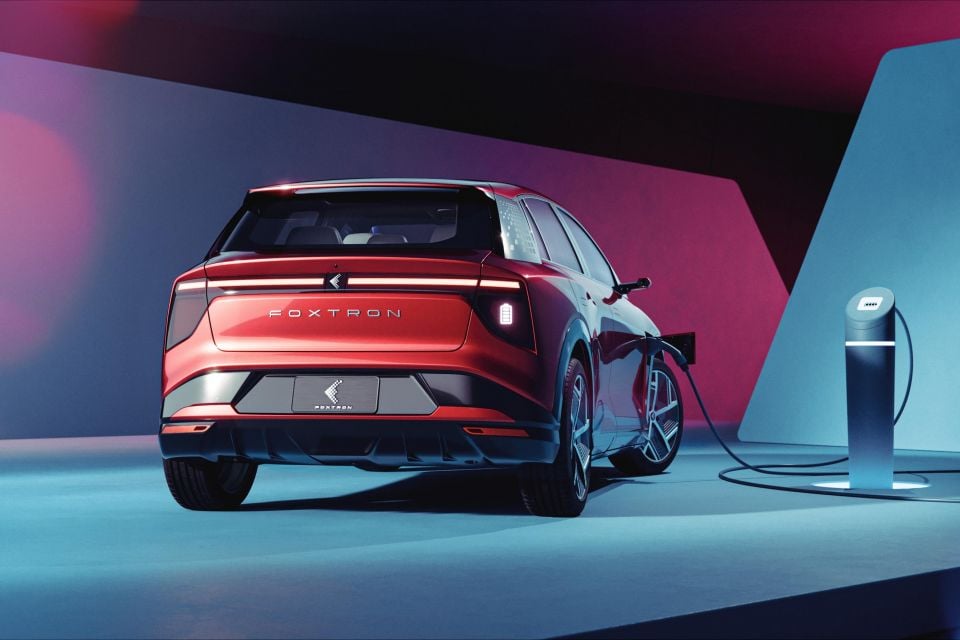
Indeed, Foxtron already sells an EV in Taiwan called the Bria, which could serve as the basis for Mitsubishi’s EV. Concrete details on this arrangement aren’t expected to surface until August 2026, but Mr Hampel says the new model will unmistakably be a Mitsubishi.
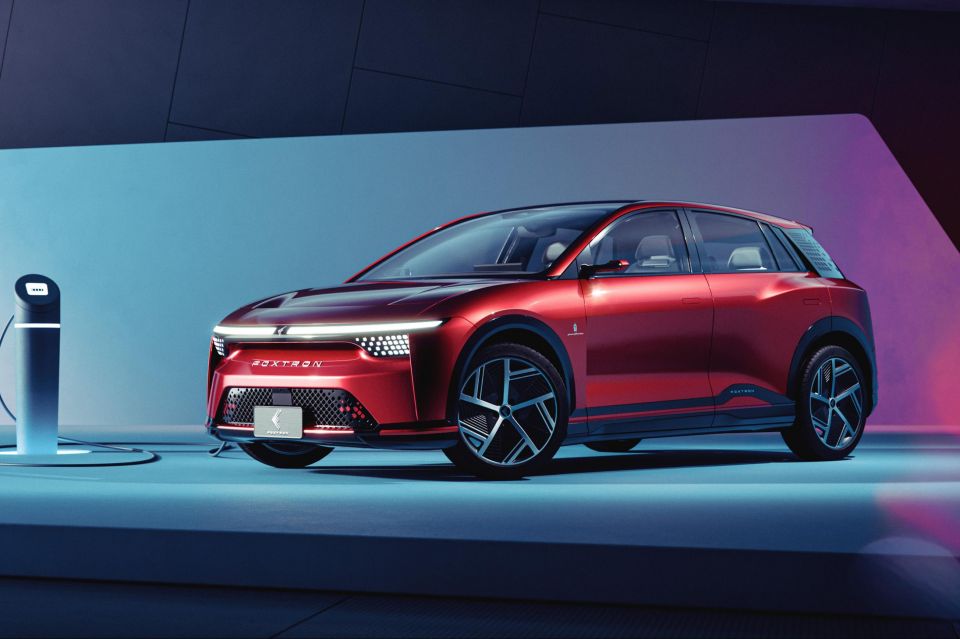
“It’s essentially based on an existing Foxtron platform, mixed with Mitsubishi’s unique branding, obviously. Some styling elements, as well, will bring out the Mitsubishi-ness of the model,” he told CarExpert.
“I think the main unique selling point, based on evaluation drives we’ve conducted with Foxtron here in Australia, versus the competitive set we had at the time, is the ride and handling. That’s the big thing that sets it apart from the rest.
“It’s a very attractive vehicle, it’s got competitive performance versus what is out there at the moment, but really it’s the fun-to-drive element, and that confidence to really tackle [Australian] conditions will set us apart in the market.”
If it’s based on the Bria, it’ll be a huge improvement over the old i-MiEV in terms of performance and range.
The base Elegant uses a 57.7kWh lithium iron phosphate (LFP) battery with a claimed NEDC driving range of 516km, and is powered by a 171kW rear-mounted electric motor.
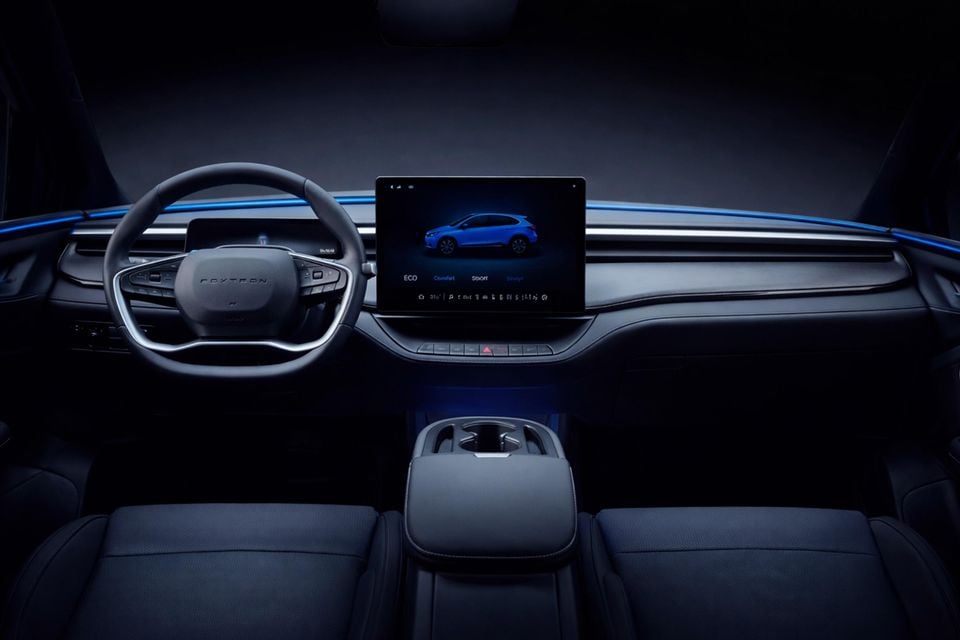
The top-spec Pioneer uses the same battery but gets a dual-motor all-wheel drive powertrain, reducing NEDC range to 466km. It gets significantly more power, though, producing up to 299kW for a 0-100km/h time of 3.9 seconds.
Mitsubishi’s decision to partner with Foxtron on this EV is interesting, given that there are several electric models produced within the Mitsubishi-Renault-Nissan Alliance it seemingly could have borrowed instead. After all, Mitsubishi rebadged the Renault Captur to create the second-gen ASX.
But when asked whether Mitsubishi Australia would be interested in additional Alliance models, such as the Renault Scenic E-Tech for example, Mr Hampel said the new Foxtron model’s Australian angle made it far more appealing.
“We’re lucky because we’re part of the Alliance that we have the choice from Renault, from Nissan, and now from Foxtron to consider their offerings,” he told CarExpert.
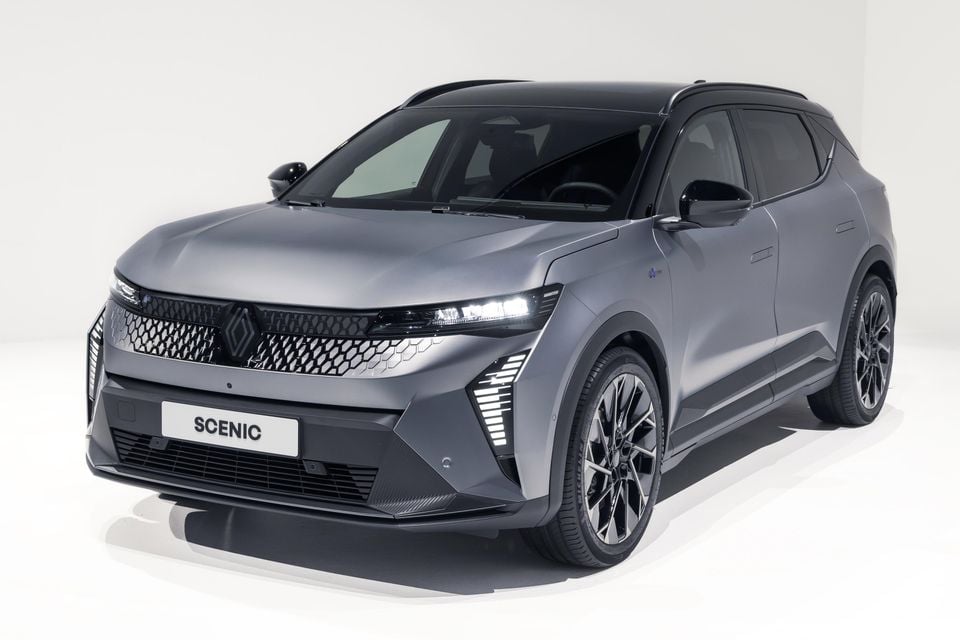
“We’ve considered all of them, we’ve looked at them, we’ve studied the business cases, but at this stage, the Foxtron is the most attractive one for the near-term.
“That has the benefit for Foxtron and for MMC [because it’s an] EV essentially solely for Australia and New Zealand. A lot of effort has gone in to make sure that this vehicle is tuned and developed to meet Australian conditions and Australian customer expectations.
“We’ve been lucky in that case. Rather than picking up something that has been developed for a global market, this one has been more targeted for the Australian consumer.”
While Mitsubishi was relatively quick to adopt plug-in hybrid (PHEV) technology and remains strong in that area, it has lacked a competitive EV. That’s despite being an early pioneer with the original i-MiEV.
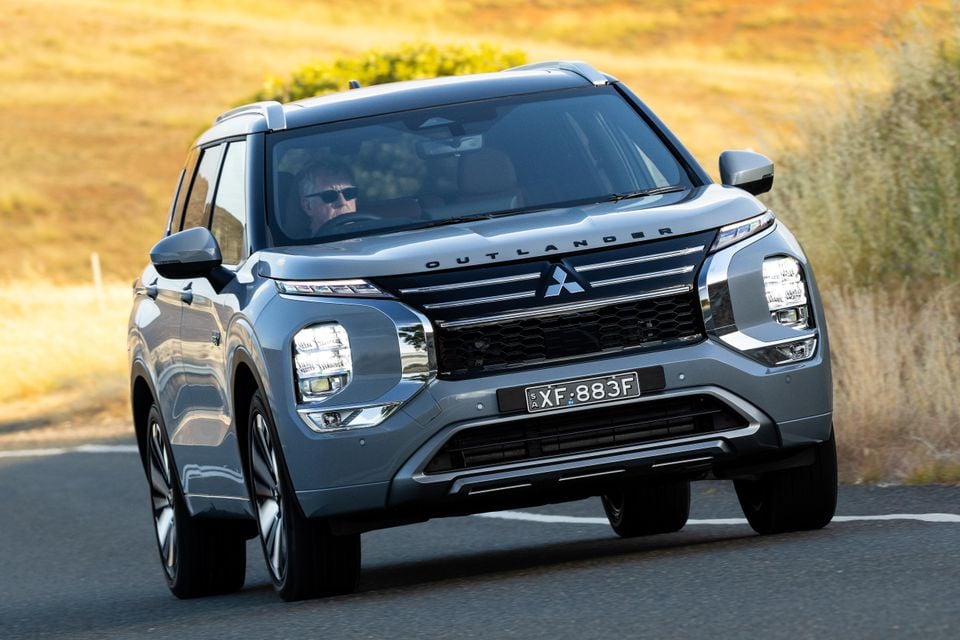
Given the pressures posed by Australia’s New Vehicle Efficiency Standard, now is a critical time for brands to push further into low-emission, electrified vehicles. Mitsubishi recently updated its Outlander PHEV with more power and electric range, and the Foxtron EV will be the next electrified cab off the rank.
Mitsubishi has yet to announce future plans for EVs and hybrids, though Mr Hampel confirmed that the brand is “studying the full range of powertrains from ICE, HEV, PHEV, and EV” for the eventual replacement for the Outlander.
For now, he says the Foxtron EV – which could be named ASX GT-e or ASX VR-e, based on local trademark applications – will be used to gauge Australian sentiment towards Mitsubishi EVs.
“That’s really where we’re pushing on the electrification phase in the immediate term – full EV – to see if the timing’s right in the market to enter in with that type of powertrain option,” he told CarExpert.
MORE: Australia-bound Mitsubishi SUV could pack 300kW powertrain
MORE: Explore the Mitsubishi showroom