
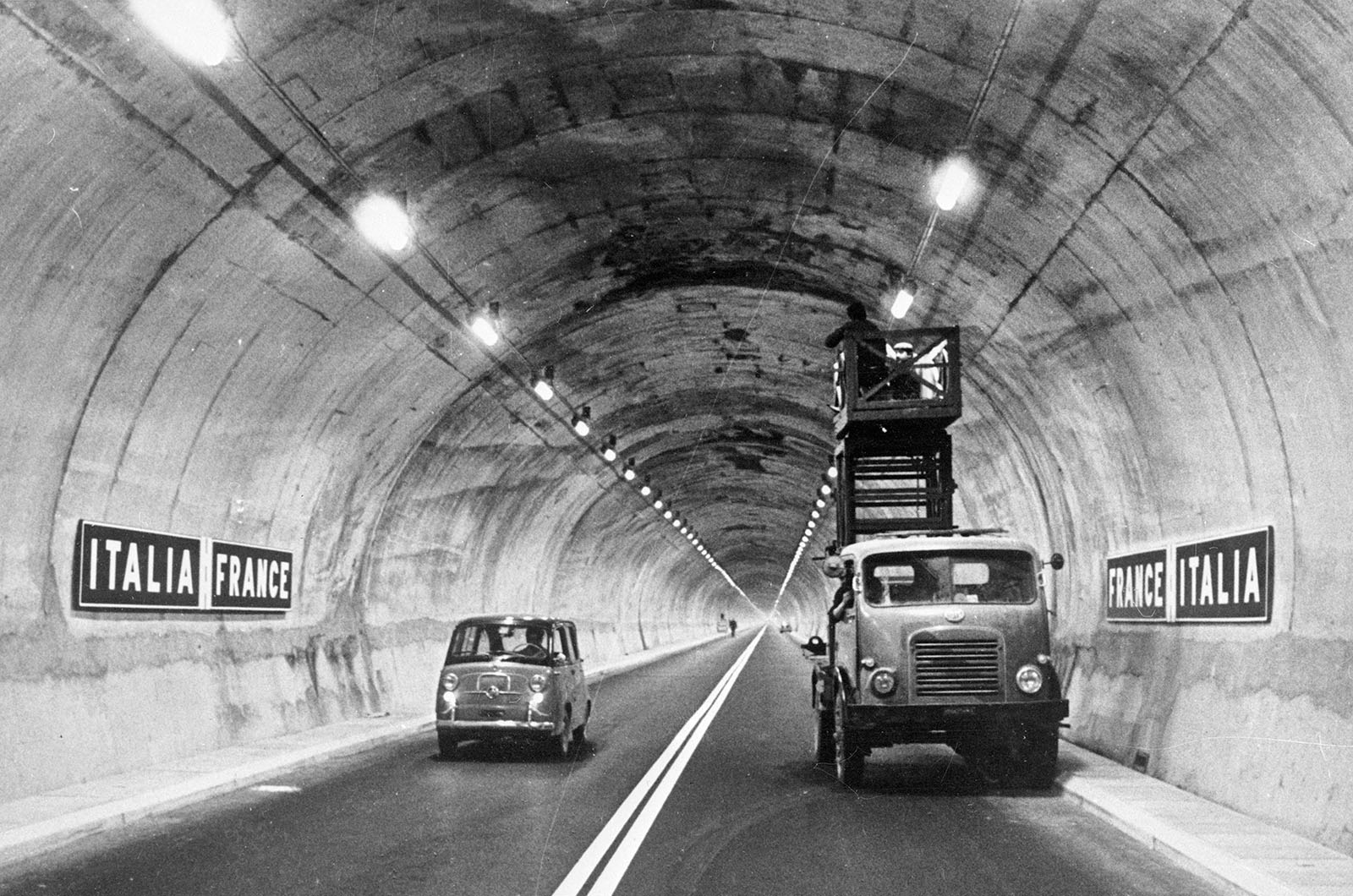
“Before the final charge, a small hole was drilled through from the Italian side, and Italian wine was piped to Swiss colleagues, who responded by feeding back cigarettes” – treats they had certainly earned, as “grave engineering difficulties had been encountered”.
We elaborated: “The mountain is superficially made of the best kinds of rock, but inside there proved to be a lot of rotten stuff and cracked strata, and far more water than had been expected. At one bad patch, the Italian engineers took about six months for 300 yards or so.”
It was finally opened to traffic in March 1964, “a very special Fiat 2300S with Pininfarina coupé bodywork, built for the occasion, first through from the south”, while “from the north there was a convoy of British cars”, which had arrived from Southend via Geneva aboard a British United Air Ferries Carvair.
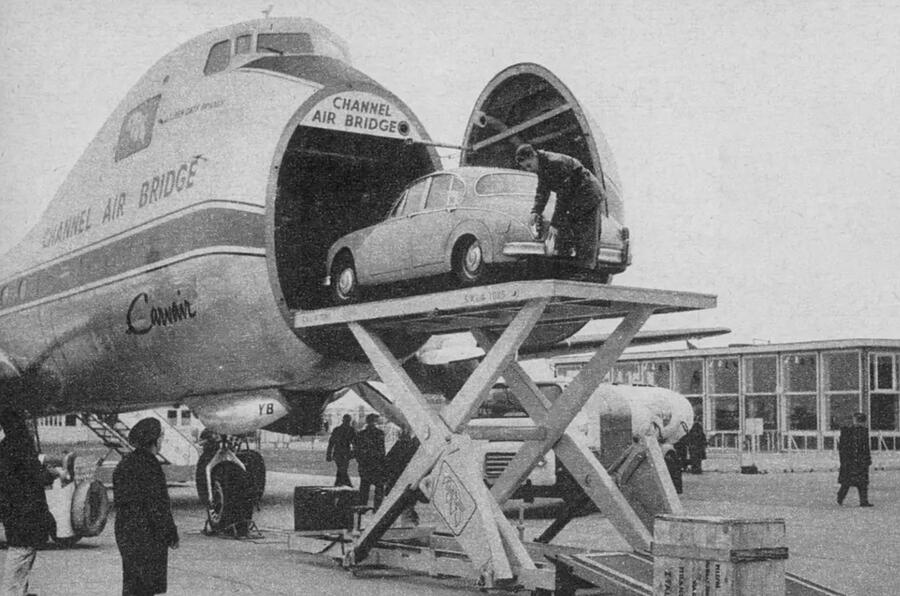
These aircraft – successors to the Silver City Bristol Freighters that had taken drivers across the Channel in the 1950s – enabled a driver to escape London for the Mediterranean in just three hours and at a cost of about £30 (£540 now).
A third Alpine connection was announced at the inauguration of the Mont Blanc Tunnel in 1965, due to link Turin to southern France through the Mercantour Massif. At 7.5 miles long, it was expected to take five years and cost £14m.