
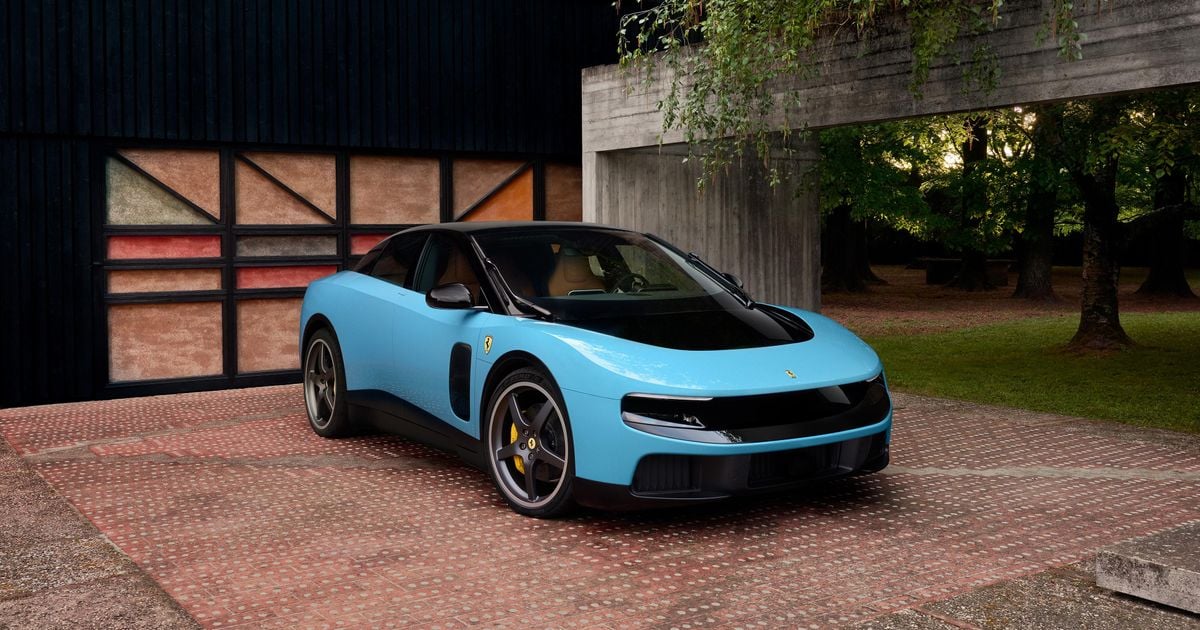
The Ferrari Luce has been revealed at an event in Rome overnight, and it’s the most significant model launch from Maranello in years.
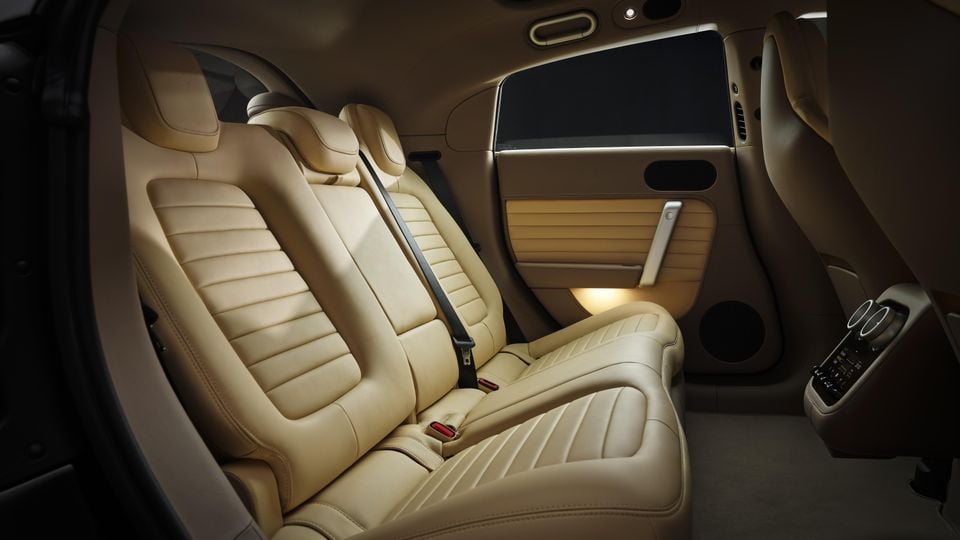
It isn’t just Ferrari’s first EV. It’s also the first five-seat Ferrari ever built, and only the second four-door model after the Purosangue SUV.
The location was no accident. Ferrari chose Rome because it’s where the brand scored its first race win back in 1947, with the 125 S. Seventy-nine years on, it’s using the same city to mark the start of its electric era.
Looking for your next car? We’ll help you research and compare so you choose with confidence.
Ferrari is adamant the Luce isn’t simply “the electric Ferrari”. It says it’s the next step in the brand’s multi-energy strategy, which means petrol, hybrid and now fully electric Ferraris will sit side by side in the range. The combustion cars aren’t going anywhere.
The Luce involved more than 60 new patents, and like every Ferrari before it, the motors and battery are designed and built in-house at Maranello.
Perhaps the biggest talking point is who designed it. The exterior and the cabin interface were led by LoveFrom, the creative collective founded by former Apple design chief Sir Jony Ive and Marc Newson. It’s the first time Ferrari has handed the lead design of one of its cars to a studio outside its own in-house team, run by Flavio Manzoni.
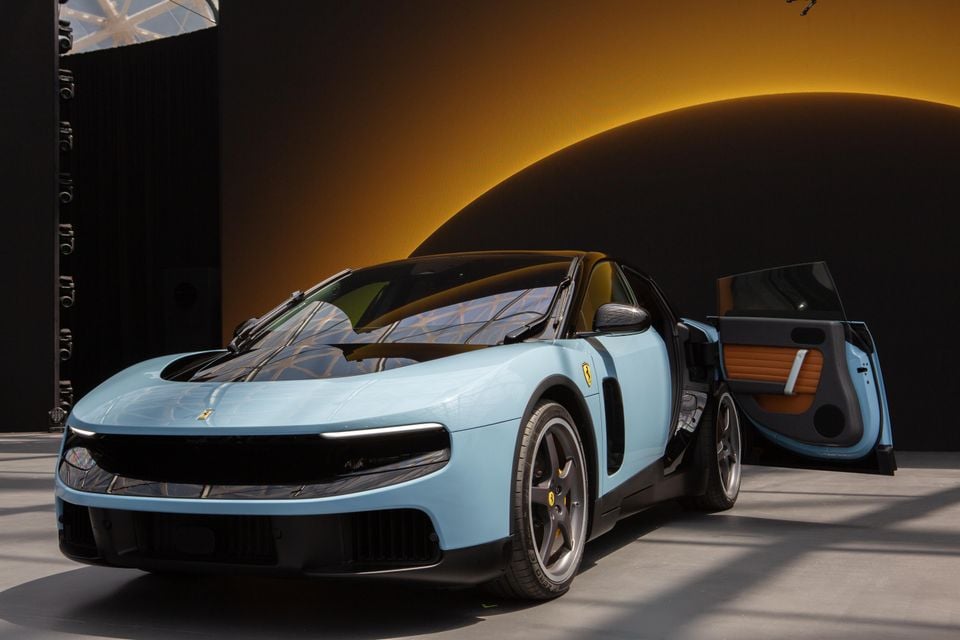
The way it came together is just as unusual. Ferrari brought LoveFrom on board, walked the team through the project, then sent them away. The designers went quiet for around six months with no contact at all, before returning with no slideshow and no renderings, just two books laying out their vision. Ferrari says those early ideas weren’t far off what’s been revealed today.
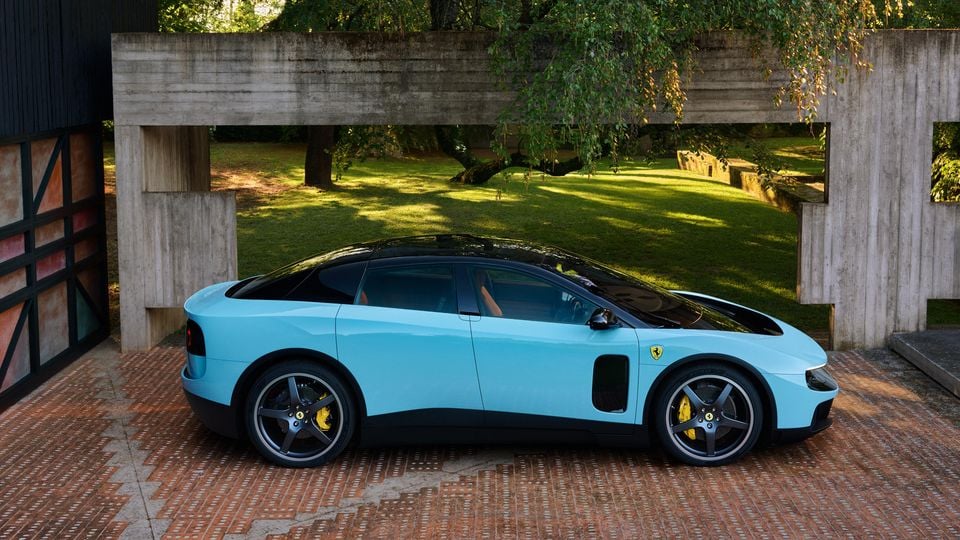
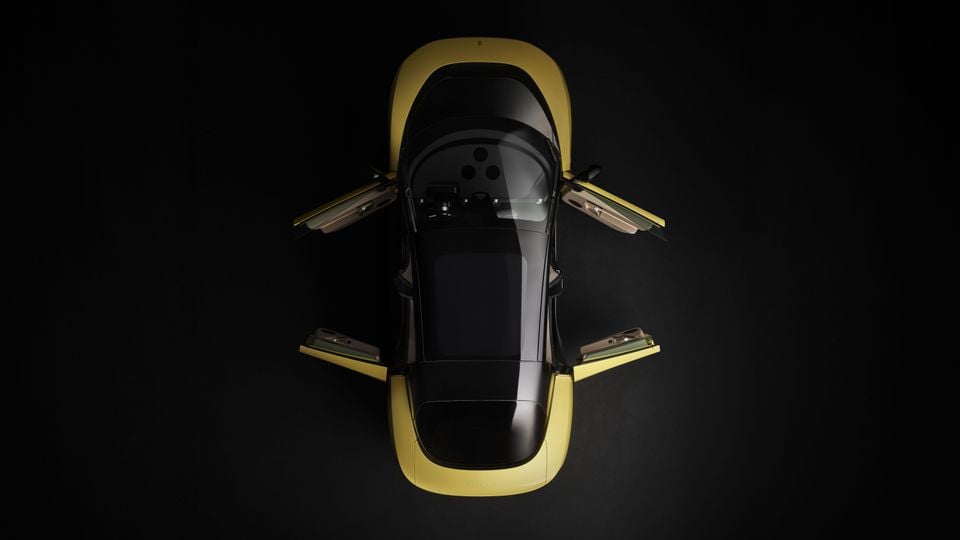
The result is a strikingly clean shape built around what Ferrari calls the “glass house”, a large glazed cabin area with the body and a pair of floating aerodynamic wings wrapped around it.
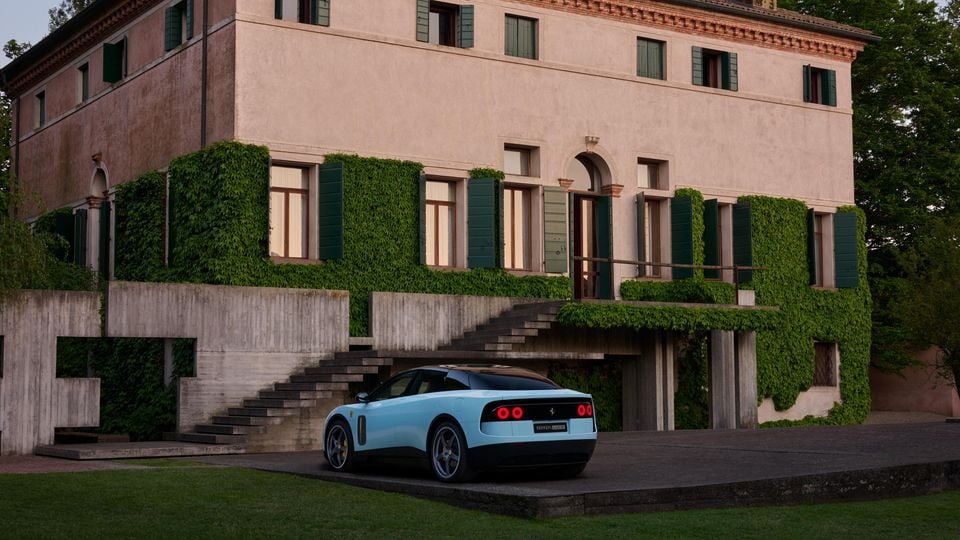
One of the more interesting ideas is what Ferrari calls “permeability”, where air is allowed to flow through the car rather than just around it, using channels between the wings and the bodywork. The light panels are transparent and recede when switched off, while the tail-lights are a deliberate nod to the 360 Modena and 458 Italia.
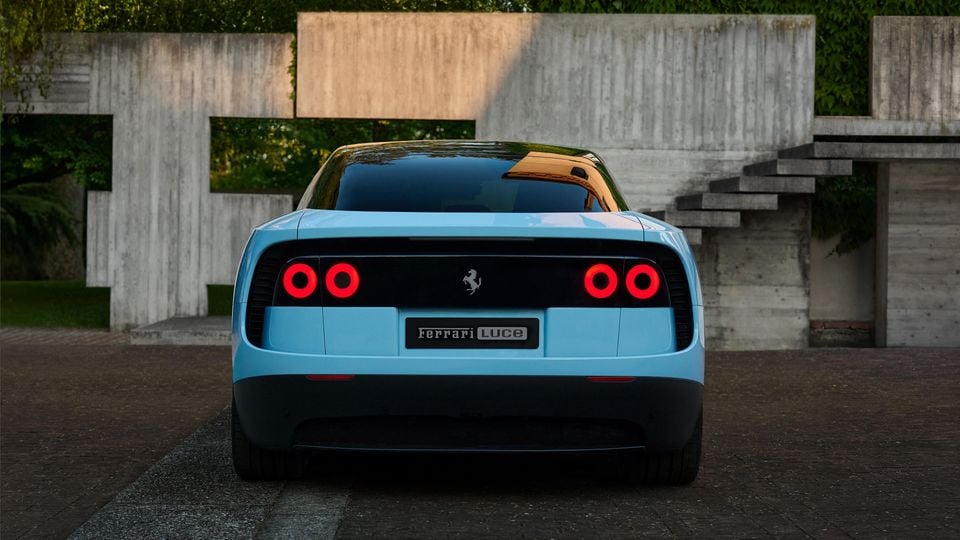
It rides on the largest staggered wheels ever fitted to a production Ferrari, measuring 23 inches at the front and 24 inches at the rear. There are two designs: a lighter forged five-spoke wheel and an aero-optimised turbine style.
The latter helps make the Luce the most aerodynamic road car Ferrari has ever built, with a drag coefficient of just 0.254Cd. Launch colours include a new yellow paint called Giallo Luce, drawn from the historic Ferrari logo.
Underneath, the Luce uses four electric motors, one for each wheel, which makes it the first all-wheel drive electrified Ferrari. It has 772kW of power and 990Nm of torque. Ferrari quotes a peak of 11,500Nm at the wheels once the axle reduction is taken into account, but the motors themselves produce 990Nm.
There are three power modes to choose from via a new e-Manettino dial. Range mode caps things at 320kW and even disconnects the front axle to save energy, Tour mode lifts that to 460kW, and Performance mode unlocks 725kW. Engage Launch Control and the system briefly peaks at the full 772kW, or 1050cv in the old money.
Performance is what you’d expect for the badge. Ferrari claims a 0-100km/h time of 2.5 seconds, 0-200km/h in 6.8 seconds and a top speed of 310km/h, and that’s despite a kerb weight of 2260kg.
Because the battery sits low in the floor, Ferrari says the Luce has a much lower centre of gravity than the Purosangue and changes direction like a car around 400kg lighter than it actually is.
Power comes from a 122kWh battery running on an 800V electrical architecture. Ferrari claims a range of more than 530km, and the Luce can charge at up to 350kW, topping up 70kWh in around 20 minutes on a suitably quick charger. Ferrari has also designed the battery so the cells can be swapped for newer technology down the track.
One of the cleverest details is the sound. Rather than pipe a fake soundtrack through the speakers, Ferrari captures the real vibration of the motors and gears using an accelerometer in the rear axle, then filters and amplifies it into the cabin.
The company likens it to the way an electric guitar pickup works, and it’s audible outside the car too. It only ramps up when you’re driving hard.
The Luce also introduces a new way of driving an EV hard. A pair of paddles behind the wheel let you step the power up or dial in more regenerative braking, which Ferrari describes as a new torque language rather than a fake gearbox. The traction control is clever too, and Ferrari says it learns your driving style, raising its limits as you prove you can handle them.
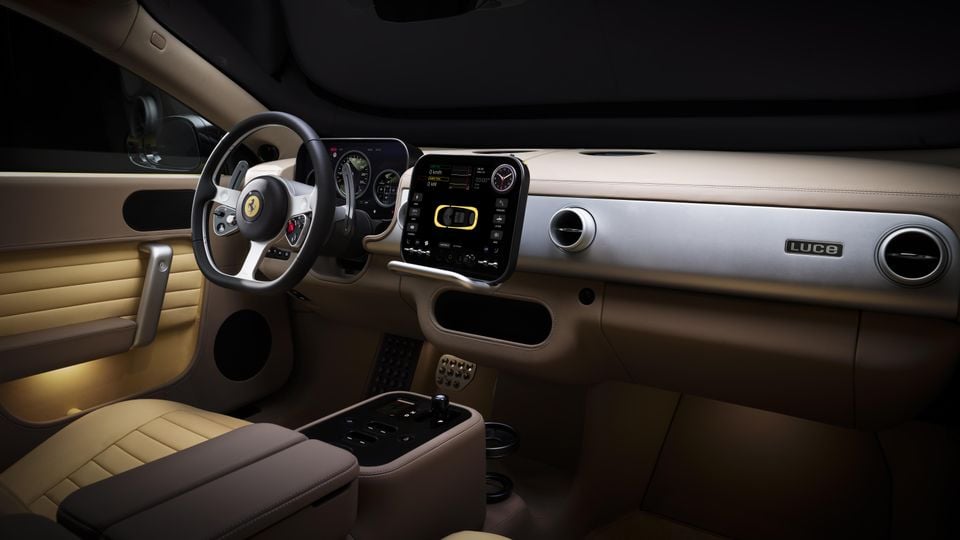
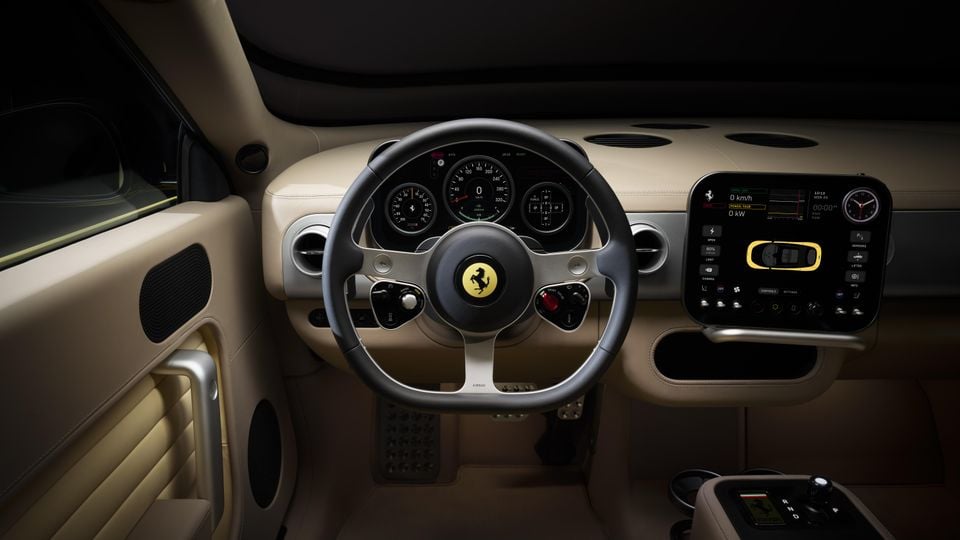
Inside, Ferrari has leaned back into physical controls. There’s a three-spoke steering wheel machined from recycled aluminium, the familiar five-position Manettino dial sitting alongside the e-Manettino, and a binnacle that combines real dials with OLED screens.
Materials are kept honest, with anodised aluminium and Corning Gorilla Glass throughout, plus a 21-speaker sound system. Even the key is special, using an E Ink display that Ferrari says is an automotive world-first.
Ownership is covered by Ferrari’s seven-year maintenance program, with a separate eight-year warranty on the electric components.
Importantly for local buyers, Ferrari has confirmed the Luce is coming to Australia. Local pricing and timing are yet to be announced.
For Ferrari customers here, it opens up an entirely new type of car from Maranello: one with five seats, four doors and the everyday usability of an EV, all without the brand giving up on the V8s, V12s and hybrids that made it famous.