
Stellantis has taken the unusual step of publishing a press release confirming the Alfa Romeo brand will continue to receive investment, after it confirmed it wouldn’t be one of its four core global brands.
The automotive giant had already outlined its product plans at its Investor Day, where CEO Antonio Filosa described Alfa Romeo as a ‘regional’ brand along with Chrysler, Citroen, Dodge and Opel.
These brands will “leverage assets” launched under Stellantis’ four core brands “and make them distinctive for their own customers”.
Stellantis’ four core global brands – Fiat, Jeep, Peugeot and Ram – will be “natural first launchers” for all of the automaker’s “new global assets”.
Looking for your next car? We’ll help you research and compare so you choose with confidence.
On a separate tier are DS and Lancia, which will be “specialty” brands managed by Citroen and Fiat, respectively.
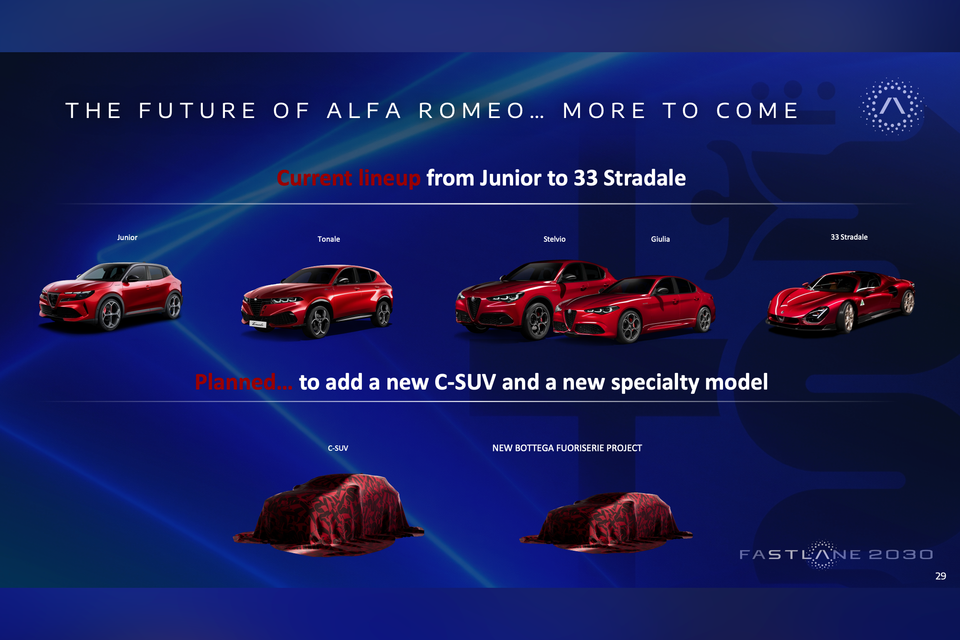
In the Investor Day presentation, Alfa Romeo had only previewed two new models in its slide deck: a C-SUV, indicating a new mid-size SUV; and a ‘New Bottega Fuoriserie Project’, suggesting a customised or bespoke low-volume vehicle.
Now, Stellantis has filled in some of the blanks, though some questions remain.
“With reference to what was presented at the Stellantis Investor Day 2026 on May 21, and in particular to the information shared about the Alfa Romeo brand, we would like to provide some further clarifications,” reads a statement from a Stellantis spokesperson.
Its product plans see it focusing on more affordable, mainstream segments.
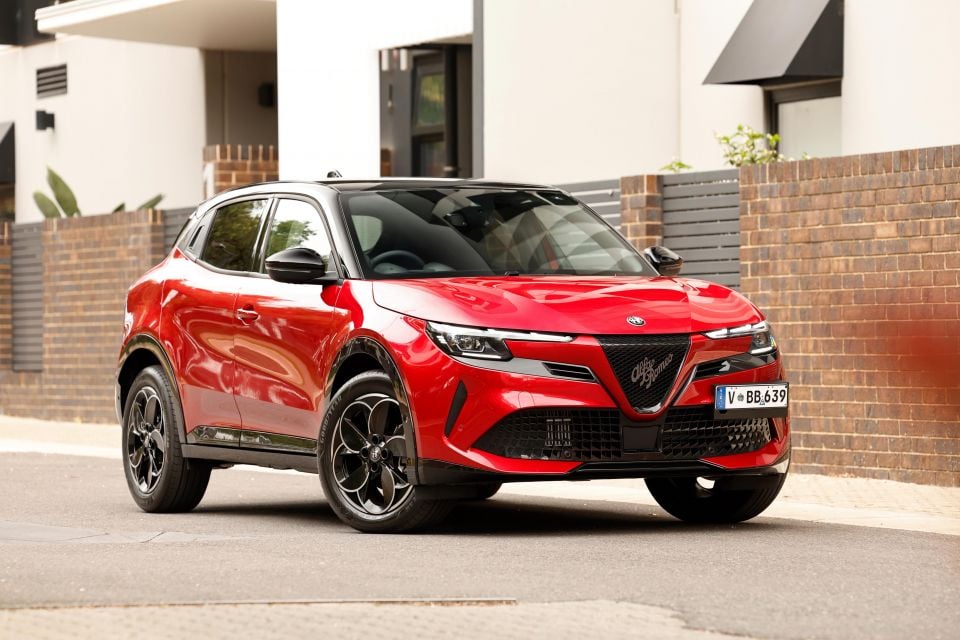
Stellantis has confirmed the Junior, launched in 2024, will continue to open the Alfa Romeo lineup and will receive a refresh during its lifecycle.
A new C-segment (ie: Toyota Corolla-sized) hatchback will join the Italian brand’s range, based on the STLA One ‘multi-energy’ architecture.
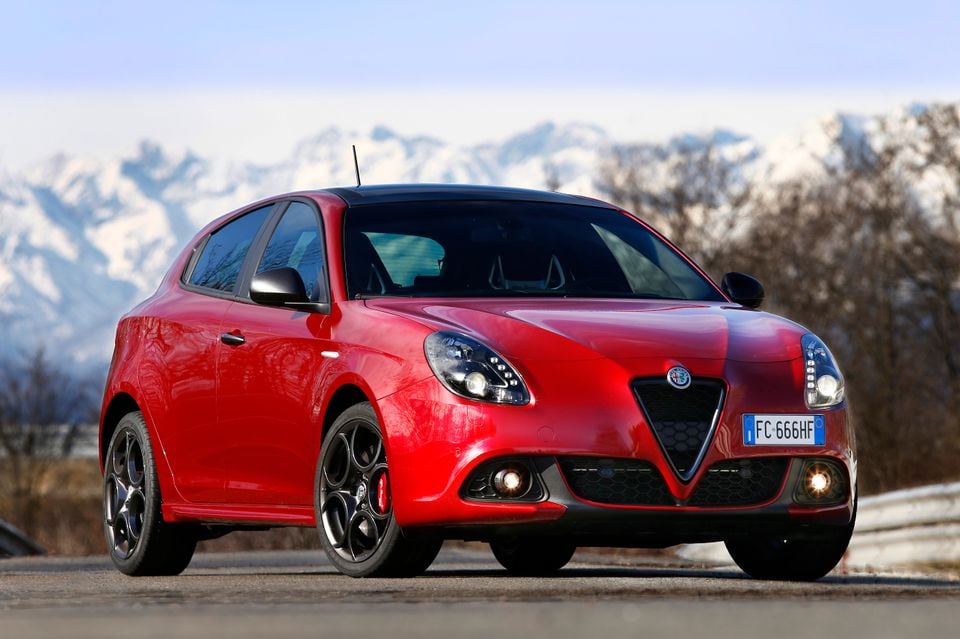
It’s set to launch after 2027, and Alfa Romeo says it will “build on icons” like the 147 and Giulietta. Alfa Romeo has a long history of small hatchbacks, dating back to the Alfasud, but it left the segment when it ended Giulietta production in 2020.
A new ‘C-SUV’ (ie: Toyota RAV4-sized) will be based on the ‘STLA M’ platform, featuring a range of powertrain types.
Stellantis spent much of its Investor Day touting its new STLA One architecture, which appears to be a consolidation of its STLA Small, STLA Medium and STLA Large platforms announced in 2021.
It says this modular, scalable architecture will use common interfaces, with targeted cost efficiencies of 20 per cent. It’s unclear how different this new STLA M-based Alfa Romeo will be from models based on the existing STLA Medium platform, such as the Peugeot 3008.
It appears this new C-SUV will sit above the Tonale small SUV, which Stellantis calls a “strong pillar” and “key global model” in the Alfa Romeo lineup.
Alfa Romeo says it will develop a new, exclusive “few-off” project with the Bottega Fuoriserie team, “building on the success of the 33 Stradale”.
When it comes to the Giulia and Stelvio, things look a little murkier.
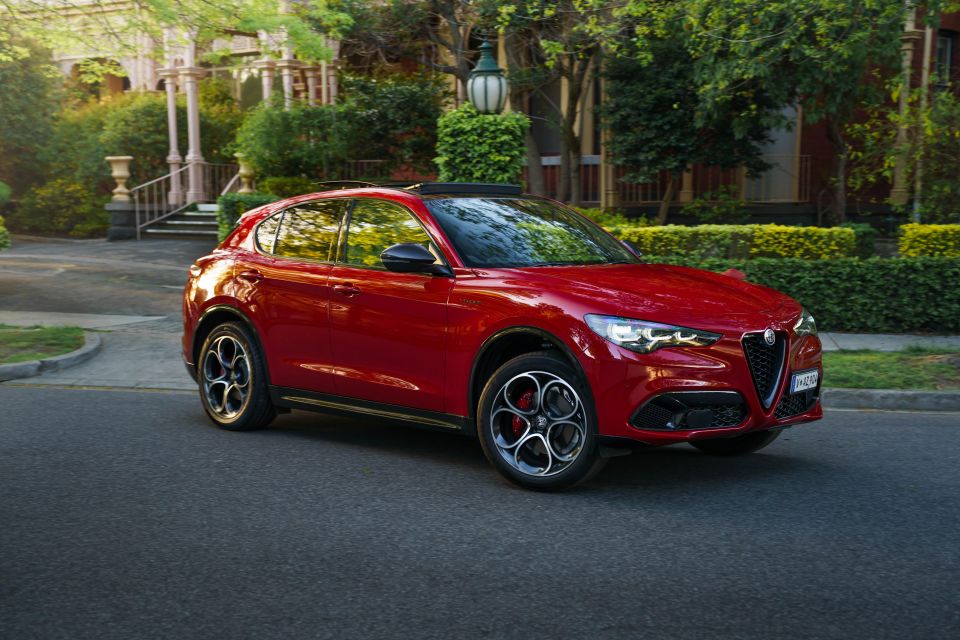
The current sedan and SUV, based on the Giorgio platform, had been due to be replaced by electric-only successors based on the STLA Large platform in 2025 (Stelvio) and 2026 (Giulia).
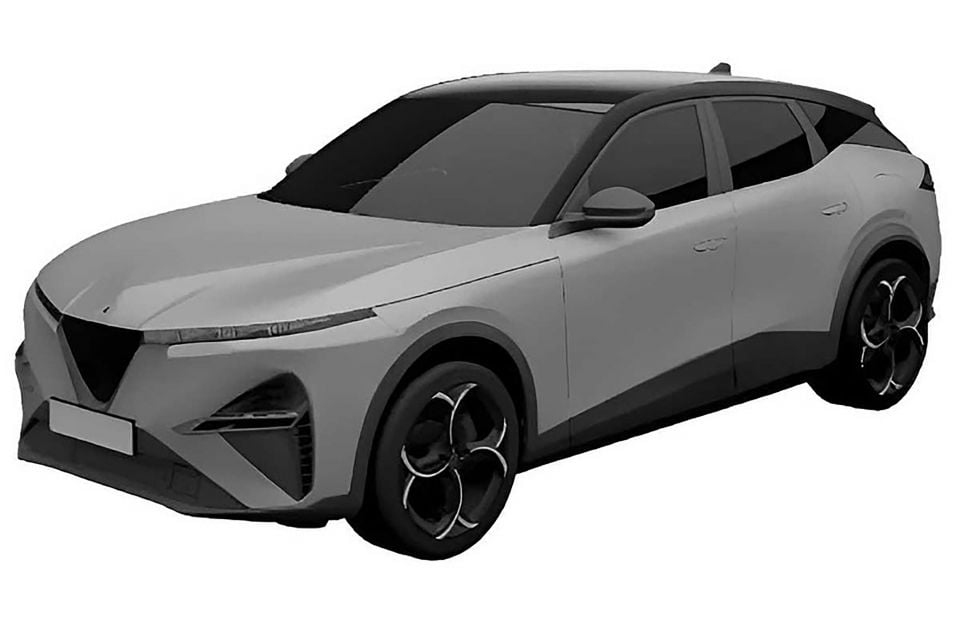
Patent images of the next-generation Stelvio surfaced in April 2025, before Alfa Romeo confirmed in October 2025 the current models would continue to be produced until 2027.
It confirmed it was looking to engineer available combustion powertrains following a move away from its previously stated goal of an EV-only lineup by 2027.
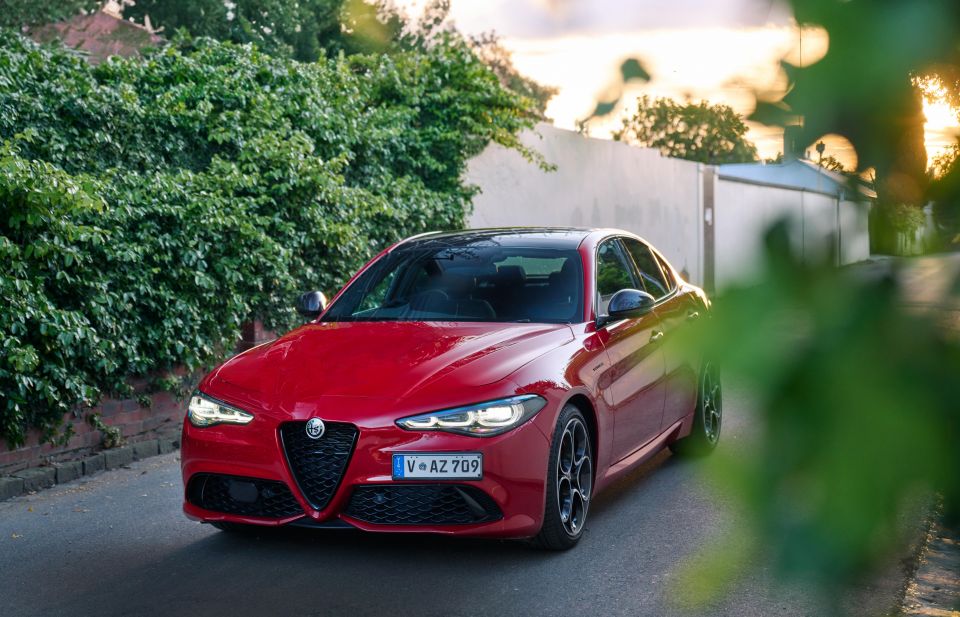
An Autocar report from last month suggested the new models, offering electric, mild-hybrid and plug-in hybrid powertrains, will now arrive in 2028.
The current cars will continue to be produced until next year, including their hot twin-turbocharged petrol V6 Quadrifoglio variants. However, Stellantis has provided no indication of launch timing for the new models.
“Alfa Romeo is studying solutions to continue competing in the D segment with new interpretations of the current line-up made of Giulia and Stelvio, remaining true to its performance-driven DNA while adapting to market evolution,” said the Stellantis spokesperson.
“The brand will leverage flexible platforms to progressively introduce multi-energy solutions, including hybrid and electric powertrains. Further details will be communicated at a later stage.”
No mention was made of a flagship ‘E-SUV’ which Alfa Romeo had previously spoken of. It appears to be the latest large Alfa Romeo model to be cancelled before seeing the light of day, with BMW 5 Series and X5 rivals being scrapped from the brand’s pipeline in 2018 when it was part of Fiat Chrysler Automobiles.
Alfa Romeo will continue to sit below Maserati, which will produce two new E-segment (large) models: a passenger car and an SUV.
“Looking ahead, Alfa Romeo will leverage Stellantis’ global scale while differentiating its offering to continue developing authentic Alfa Romeos, further strengthening its distinctive positioning as a unique and iconic Brand,” said a Stellantis spokesperson.
Ultimately, this isn’t a complete departure from Alfa Romeo’s previously announced product plans since Stellantis was established in 2021. Models like the Giulia and Stelvio, for example, had already been set to move to corporate platforms; the current, roughly decade-old models are based on the Giorgio platform, which only spawned a non-Alfa Romeo model around seven years into its run.
However, it’s yet another example of Stellantis having to issue a statement to confirm one of its many brands wasn’t in danger – something it did for Maserati in 2024.
MORE: Stellantis to launch 60 new models by 2030 in new turnaround plan
MORE: Explore the Alfa Romeo showroom