
Sports cars in 2026 are in a bit of an odd space. There are some models that fully embrace the future of electrification and ultra-aerodynamic design elements, while others remain as simple and straightforward as possible. Those that fall under the latter category can sometimes be criticized for feeling outdated and historical when compared to key rivals, but there is one dedicated roadster that still looks new even after a decade.

- Base Trim Engine
-
2.0-liter I4
- Base Trim Transmission
-
6-Speed Manual
- Base Trim Drivetrain
-
Rear-Wheel Drive
- Base Trim Horsepower
-
181 HP @7000 RPM
- Base Trim Torque
-
151 lb.-ft. @ 4000 RPM
- Make
-
Mazda
- Model
-
MX-5 Miata
- Segment
-
Sports Car
The 2026 Mazda MX-5 may be getting on in years, but to many, it still looks and drives like a car that was only very recently designed and manufactured. The Japanese brand built this driver-focused two-seater with longevity in mind, both mechanically and aesthetically. While its market remains incredibly niche, no one can deny that it is still a timeless sports car that’s bound to turn heads.
UPDATE: 2026/03/03
This article has been updated with more information on the Mazda MX-5 Miata’s pricing, rivals, and the future.
Mazda’s Timeless Compact Sports Car — The ND MX-5 Miata

From a visual standpoint alone, it’s incredible to learn that the ND-generation Mazda MX-5 Miata is now 10 years old, as it still looks like something that could have left the design department today. The 2026 Mazda MX-5 Miata represents the peak of the ND3 evolution, refined under the watchful eye of Global Design Chief Masashi Nakayama, who served as the chief designer for the original ND generation.

Adhering to Mazda’s Soul of Motion Kodo philosophy, the design focuses on sensual motion and eliminates unnecessary character lines to maintain a timeless and muscular silhouette, which is why it is aging so gracefully. While Mazda prioritizes Jinba-Ittai, reflecting the oneness between car and driver, above clinical aerodynamics, the 2026 model achieves an impressive drag coefficient of 0.35 for the soft-top and 0.36 for the Retractable Fastback. The RF’s aerodynamic profile is optimized for stability at higher speeds with the top closed.
Minor Alterations Throughout The Decade

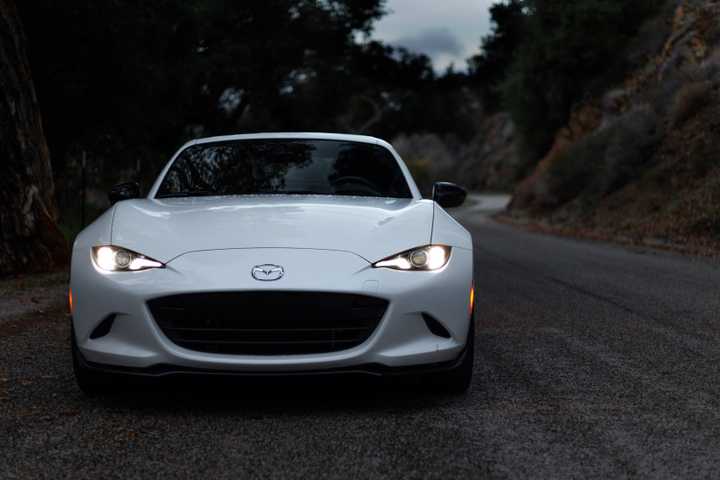
Visually, the 2026 model has seen several distinct but subtle visual updates since the ND first launched in 2016. The most striking change is the move from the dotted LED daytime running lights to a more sophisticated, integrated LED signature within the headlamp housing itself, providing a sharper gaze.

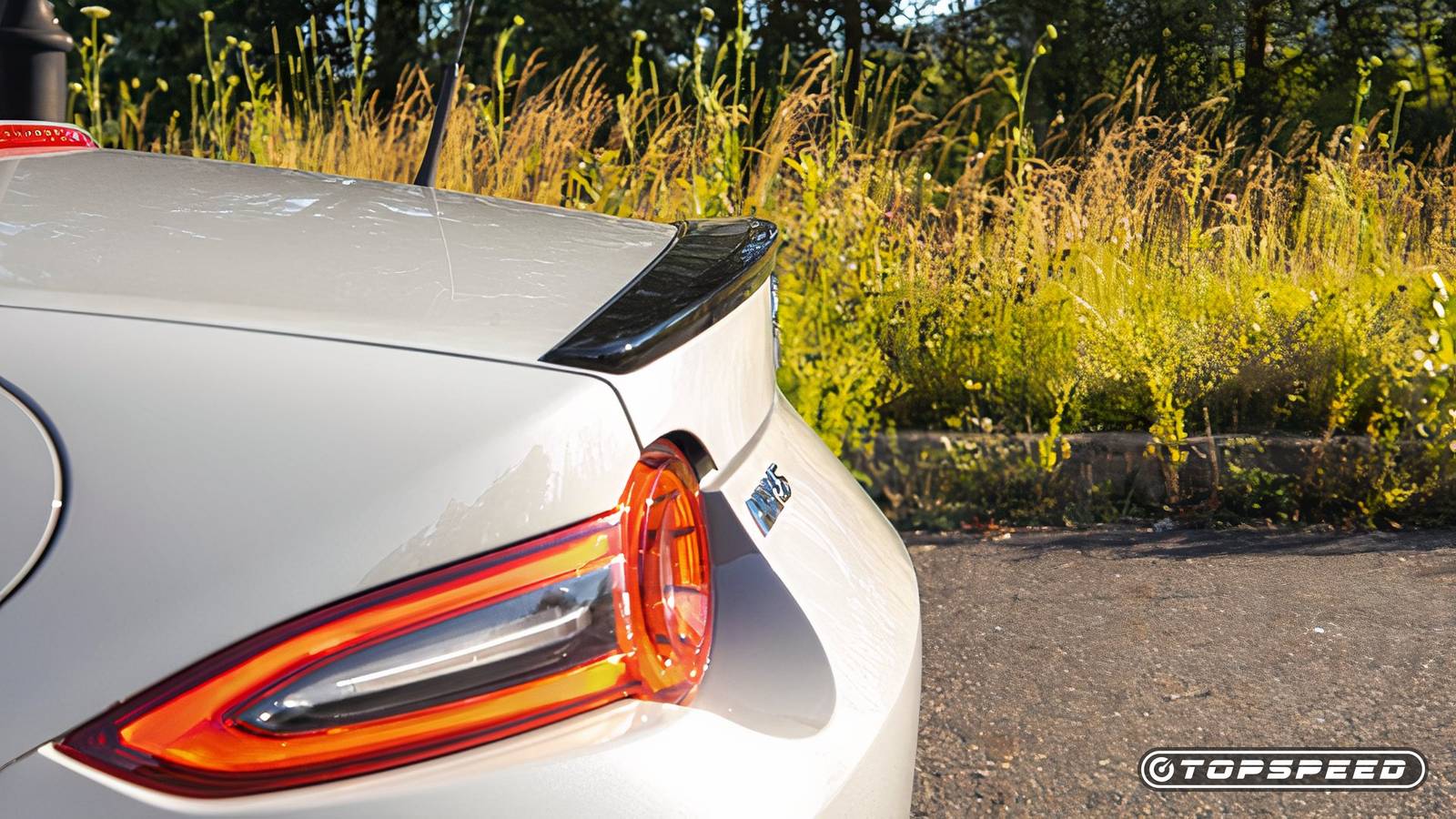
At the rear, the circular taillights have been modernized with a 3D LED effect to differentiate the ND3 from earlier ND1 and ND2 versions. Additionally, the wheel designs have been updated to include new 17-inch alloys that emphasize lightness. To keep the decade-old platform contemporary, Mazda introduced the high-end Aero Package and new premium paint finishes like Aero Grey and Artisan Red Premium, which use Takuminuri painting technology to accentuate the car’s curves.

Which Miata Is Right for You? A Look at Every Generation
Most of us love the Mazda Miata, but which of the four generations is right for you? We look at each generation to help you decide.
An Interior Designed For The Driver

The 2026 Mazda MX-5’s interior is what most would consider a masterclass in human-centric design, which is a philosophy championed by interior lead Julien Montousse and manager Masato Ogawa during the ND’s inception. Their duo’s original vision of erasing the boundary between inside and out is preserved through body-colored upper door trim that visually extends the hood into the cabin.

The interior design language is often described by many as a no-frills experience, which is fitting considering its segment and compact proportions. However, it has matured significantly since 2016. The most notable evolution is the departure from the original 7.0-inch floating screen to a more dominant 8.8-inch frameless infotainment display, which now features touch-screen capability specifically for smartphone mirroring.
An Interior With Attention To Detail

Materials have seen a premium shift since the early ND1 era, with the 2026 model incorporating soft-touch Alcantara across the dashboard and center console in high-performance trims. Functional ergonomics have been modernized through the replacement of USB-A ports with dual USB-C inputs and the addition of Alexa Built-In for voice-activated cabin controls. For 2026, the gauge cluster has been subtly revised for better legibility, though it famously retains its three-pod analog-heavy layout to satisfy purists.

The 35th Anniversary Edition specifically introduces a distinctive tan Nappa leather and beige colorway, including floor mats and stitching, marking a stark contrast to the monochromatic black interiors of the early ND generation. These updates, overseen by the current design team, follow the legacy of the late Tom Matano, who birthed the MX-5 product line in the late 80s, and ensure that the cockpit feels contemporary without sacrificing the snug-fit sports car, which remains a fundamental principle of the interior experience.

The Next Mazda MX-5 Miata Will Be The Best Ever And Here’s Why
Mazda revealed some details about the next MX-5. And it’s time to get excited.
Small But Timeless Cockpit

The Mazda MX-5 Miata features a very compact cabin space, so there isn’t a lot of space for too many pieces of equipment. Regardless, the brand is able to fit all the necessities in, making it a fairly comprehensive cockpit. The base Sport trim, priced at $30,430, includes manual air conditioning, power windows with driver’s and passenger’s one-touch-down feature, driver’s and passenger’s vanity mirrors, a 12-volt power outlet in the floorwell, and a mesh aero board wind blocker.
The $33,930 Club adds seat heating, while the Grand Touring includes a Frameless auto-dimming rearview mirror with HomeLink. The Sport’s interior is upholstered in black cloth, while Mazda applies leather touches to the steering wheel, shift knob, and parking brake handle. The Club features suede inserts on the seat, while the $35,730 Grand Touring gets full leather seats, which can be upgraded to Nappa leather for an additional fee. This trim also features black doorsill treat plates with stainless steel inserts.

All MX-5 Miatas feature Mazda’s older 8.8-inch touchscreen display with HD Radio and Pandora, together with a three-year trial to the Mazda Connected Services package. The unit accommodates Android Auto and Apple CarPlay, Amazon Alexa, two USB-C ports, and a six-speaker audio system. The Club features the upgraded Bose nine-speaker premium audio system, wireless Apple CarPlay, and a three-month trial to SiriusXM. Only the Gran Touring features navigation.
A Curated Chassis Creates A Modern Drive

The 2026 Mazda MX-5 Miata features a sophisticated lightweight chassis that its dedicated engineers designed for precision handling. Its suspension configuration features an independent double-wishbone setup with a stabilizer bar in the front and an independent multi-link arrangement with a stabilizer bar in the rear, complemented by Mono-tube Bilstein dampers if you specify the higher-performance trims.

The braking system consists of power-assisted ventilated front discs and solid rear discs, with high-performance Brembo four-piston front calipers available as an upgrade. Standard rolling stock includes 17-inch aluminum alloy wheels wrapped in high-performance summer tires, though base models may utilize 16-inch wheels.

The MX-5’s curb weight is a fundamental principle of its design. The roadster maintains a featherweight reputation with a curb weight of 2,332 to 2,403 pounds for the soft-top manual, depending on specification, while the Retractable Fastback variant measures in at 2,460 pounds. Mazda achieves a nearly perfect 50/50 front-to-rear weight distribution, a balance specifically tuned to be exact when a driver is seated. This gram-focused strategic engineering ensures the vehicle’s rotational center remains near the driver’s hip, facilitating the iconic Jinba Ittai connection between car and pilot.

If I Had One Week Left To Live, The Mazda MX-5 Is The One Car I’d Drive
The MX-5’s simplicity and cheerfulness allows it to be the one car that brings happiness to its driver’s heart.
An Engine That’s Aging Just As Well

The Mazda MX-5 is only available with the brand’s naturally aspirated 2.0-liter four-cylinder gasoline engine option, including a standardized distributor-less ignition Skyactiv-G dual-overhead cam 16-valve powertrain, featuring variable valve timing. The end result is a low but apt 181-horsepower and 151-pound-feet output to the rear wheels.

You have a choice of a traditional six-speed manual or automatic transmission, both of which sprint from zero to 60 MPH in a claimed 5.7 seconds and hit a 137 MPH top speed. Tests indicate the automatic Retractable Fastback model to be a bit slower, with confirmed times as high as 6.5 seconds, but the manual Roadster easily hits its claimed time. The limited-slip differential is a first for the MX-5 since the second-generation NB. The asymmetrical system consists of a conical clutch and redesigned cam mechanisms that can take in different inputs during acceleration and braking events, improving stability through tight corners.
The MX-5 Loyalists Remain Unwavering

Despite its age, the MX-5 earns an incredible level of love from reviewers and owners alike. J.D. Power issues this model with a 79/100 consumer-verified overall score, including 76/100 for quality and reliability, 77/100 for the driving experience, 85/100 for resale, and 82/100 for the dealership experience. Edmunds lists 28 owner reviews for this generation of the MX-5, with a 4.7/5 average rating. Key strengths include its driving experience, striking exterior design, and competitive value, but it earns some criticism for lacking comfort, having a small interior, and poor outward visibility. iSeeCars issues this model with an 8.8/10 overall score, including 8.9/10 for reliability and 8.7/10 for retained value.
Mazda MX-5 Miata offers A Pure Sports Car Experience For $30,430 Starting

The Mazda MX-5 Miata starts at $30,430 for the base model and $38,450 for the RF model. And this might be the cheapest way to experience a pure sports car in 2026. Don’t get us wrong, the Miata isn’t the only good sports car under $40k. It has some serious contenders, including the 228-horsepower Subaru BRZ and Toyota GR86, the 315-horsepower Ford Mustang EcoBoost, and the 300-horsepower Toyota GR Corolla. Spend a few thousand dollars more, and you can access the Nissan Z, which offers 400 horsepower from its twin-turbo V6 engine.

These cars prove that you don’t need to spend a bomb to experience a good sports car, but still, none strike the balance of being lightweight, with near-perfect weight distribution, rear-wheel drive, and an N/A engine with a manual transmission. You can argue that 181 ponies isn’t enough in an age of over 250-horsepower crossovers, but it’s only around 2400 pounds. It still has a good power-to-weight ratio, and that matters more. That’s why the MX-5 Miata, despite being a bit long in the tooth, is going strong.
What The Future Holds For The Miata

The MX-5 Miata is getting old, so what does the future hold for it? Last year, reports were flying around that the next-generation Miata would be powered by a 2.5-liter engine to get through emissions standards without losing performance. It was also said that the new Miata would retain a manual transmission and be lighter, potentially under 2,200 pounds. While that sounds like the dream for pure analog sports car enthusiasts, that might not actually be the case for the NE generation of the Miata.

In an interview with a Dutch auto publication, AutoRAI, Mazda Europe’s executives revealed that the next Miata is at least a few years away, as the manufacturer is still trying to figure out the right powertrain. While it hasn’t settled on any particular one just yet, the executives believe that it will have some form of electrification, probably a mild hybrid to keep the weight down while adding some of the benefits of a 48-volt system assisting the engine.

Where the MX-5 Miata will go from here is yet to be seen, but if the interview is of any consolation, Mazda knows how important the Miata is, not just for enthusiasts but for the company itself. The company expects to retain the lightweight, fun roadster nature that the Miata has always been known for. For many enthusiasts, the Miata has always been the answer, and fingers crossed, the next generation of the Miata will retain that quality.
Sources: J.D. Power, Edmunds, AutoRAI, and iSeeCars