
As humans, we all crave things that can be trusted. Whether it’s your laptop or a watch, you want something that doesn’t disappoint. This becomes even more prevalent when the stakes are high. For instance, with motorcycles. If things go south, you might end up in a ditch with broken bones.
It becomes truer for sports bikes, which are usually used to go really fast around a racetrack and push the limits of man and machine. If you’re someone who agrees and is looking for a reliable sports bike, this article is precisely for you. On that note, here’s the Japanese sports bike that sets the standard for reliability.
Why Japanese Sports Bikes Are More Reliable Than Their European Counterparts

Japan is known for its reliable bikes. And somehow, Japanese giants have managed to maintain this even with their high-strung sports bike engines. This is largely thanks to the overall simplicity. We rarely see these bikemakers infuse game-changing tech in their engines and stick to getting the basics bang on.
Even today’s Japanese flagship (the CBR1000RR-R SP) has a relatively simple inline-four engine without any variable valve timing. Heck, it doesn’t even breach the 1,000cc ceiling, like its European rivals (we’re looking at you, Ducati and Aprilia). Similarly, the sports bike that sets the standard for reliability today follows the norm without doing anything out of the ordinary.

The Honda That Feels Lightweight, Lively, And Surprisingly Powerful
This Honda superbike weighs under 435 pounds and produces 190 horsepower to promise a kick in the pants like no one else
The Honda CBR600RR Is The Japanese Sports Bike That Sets The Standard For Reliability

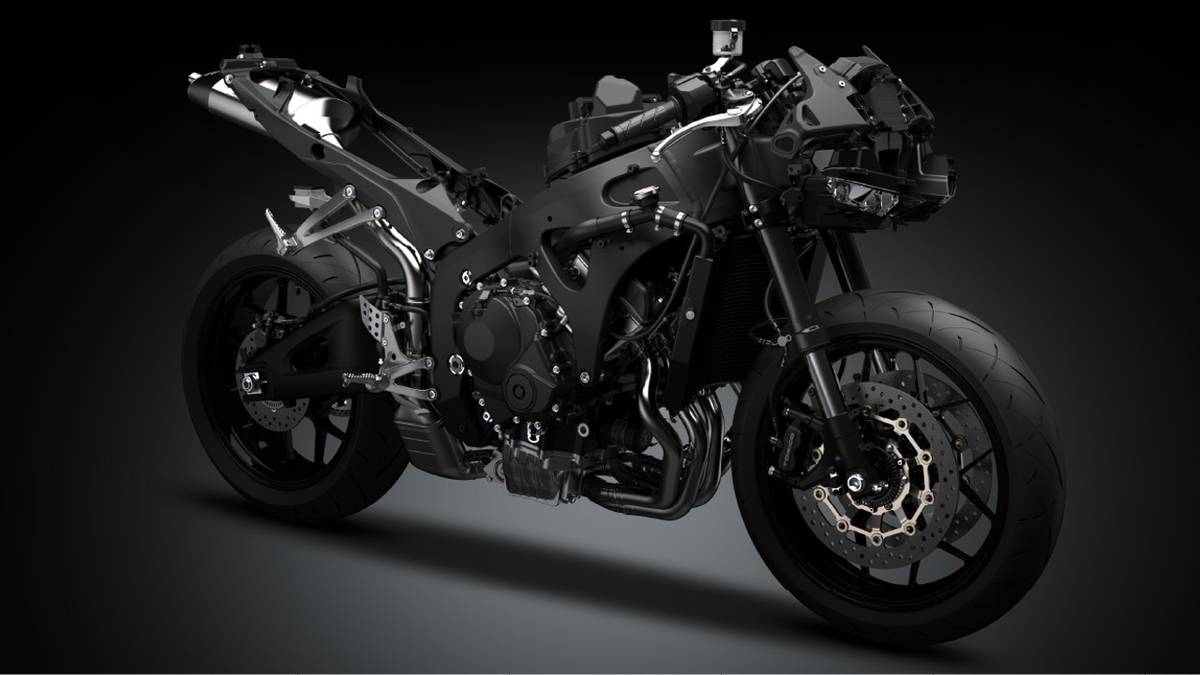
Given the plethora of reliable sports bikes on offer, it is quite hard to pinpoint one name. But we feel the Honda CBR600RR deserves this title the best. Why, you ask? Well, there are a few reasons. First, this is one of the oldest platforms without major internal overhauls. This iteration of the four-cylinder engine has been largely unchanged for almost 25 years.
Plus, the 600RR sold in the US has been exactly the same since 2013. So you best believe whatever issue you can think of will already be known. And it’s not like there is a lack of support or the company has neglected this platform. Honda is still very much stocking OEM parts, offering proper warranty, and issuing recalls in case of potential issues.

Secondly, if you go through ownership portals and Reddit, you’ll find several people claiming this is technically an unbreakable motorcycle. As long as you do basic maintenance, the four-pot mill can keep going for over 80,000 miles without major expenses. That is scarcely believable for what is essentially a high-compression, track-friendly engine. Speaking of track, bonus points go to the CBR because its engine was used in Moto2 for a long time. Even with full racing abuse, breakdowns were rare.
There Are Other Reliable Japanese Sports Bikes On Offer

What about alternatives, you ask? Well, we’ll try to segregate by segment here. The Yamaha YZF-R3 comes to mind in the entry-level space, as its 321cc engine is known to take on oodles of abuse and keep running flawlessly. Yes, the Ninja 500 is there, too, but its 451cc mill is fairly fresh.
Then, the Kawasaki Ninja 650, Honda CBR650R, and Honda CBR500R deserve a shoutout in the middleweight space. Finally, if we think of full-spec liter bikes, the Honda CBR1000RR (not the Fireblade SP) and Suzuki GSX-R1000 both come to mind. Between these, the CBR should be more reliable since it has less power and no innovative VVT.
Powered By A Screaming 599cc, Inline-Four Engine

Diving into the CBR600RR’s details, we have to start with the engine. This is one of the rare pure-bred screaming inline-four engines on offer today, spooling up beyond 15,000 RPM and at a compression ratio of 12.2:1. These ensure an output of just over 115 horsepower and 47 pound-feet.
You’ll have to rev to 13,500 RPM for the former to kick in, while the latter comes at 11,500 RPM. A six-speed transmission puts the power down. Keep it pinned long enough, and you’ll see speeds over 160 miles per hour.

10 Most Practical Sports Bikes Of 2025
The level of practicality in some of the sports bikes in this list is insane. One is even without a clutch lever for better urban riding.
Honda CBR600RR Key Engine Highlights
- PGM-DSFI (Programmed Dual Sequential Fuel Injection System) optimizes power and torque
- Two injectors per cylinder (up to a certain level of RPM, only the lower injector operates, but when the throttle is more than 25 percent open and the engine’s operating at more than 4,800 RPM, the upper injector comes into play)
- DAIS (Direct Air Induction System) smoothly channels a large volume of air
- Large polypropylene and fibreglass intake port extension saves weight
- IACV (Intake Air Control Valve) tuned to cover all RPM ranges
Track-Focused Underpinnings With Fully Adjustable Suspension

The CBR600RR is one of the true track-focused supersports. And the underpinnings follow the same brief. A twin-spar aluminum chassis takes centerstage, paired with an aluminum swingarm. This is topped with Showa 41 mm USD forks and a Unit Pro-Link rear suspension, both with full adjustment.
The latter has no shock top mount on the frame and mounts to the upper part of the swingarm, claimed to “deliver superb traction and turning ability”. As for brakes, the package is quite basic: 310 mm front disc brakes with Tokico calipers and a 220 mm rear disc with a Nissin caliper.
The CBR Has Compact Dimensions

Its track focus shows in the dimensions, too. The wheelbase is 53.9 inches, the curb weight is 419 pounds, and the rake is 23.9 degrees. We also think the seat height is quite accessible by sports bike standards at 32.4 inches. Dual-channel ABS takes the weight to 434 pounds, however. 17-inch cast aluminum wheels with a 12-spoke design complete the package.
The CBR600RR Is As Raw As Supersport Bikes Come


The Sports Bike With Honda Reliability And Ducati-Level Handling
This Japanese sports bike has a proven inline-four engine, along with cutting-edge riding dynamics proven on track
We’ve already told you how old this CBR is. So it shouldn’t come as a surprise that this has some really basic features. This includes a semi-digital instrument cluster, fuel injection, a slipper clutch, and an electronic steering damper. You don’t get any traction control, ride modes, or quickshifter. And no, the latter is not even on the accessories list. Serious bummer, we know.