
In an era where modern performance cars are increasingly defined by dual-clutch gearboxes, hybrid assistance, and ever-stricter emissions regulations, the analogue purity of a proper six-speed manual sports car has never been more valuable. Enthusiasts are no longer just chasing horsepower figures; they are chasing feel, mechanical honesty, and rarity. As automakers phase out manual transmissions and naturally aspirated engines in favor of efficiency and outright speed, the remaining three-pedal performance machines are rapidly becoming collector darlings.
History has shown us that limited-production, enthusiast-focused models, especially those marking the end of an era, tend to appreciate the strongest. Air-cooled 911s, gated manual Ferraris, and first-generation Acura NSXs are all proof that engagement and scarcity drive long-term value. Today, we’re seeing similar patterns forming around a handful of modern sports cars that combine serious performance numbers with the declining availability of manual gearboxes.
The five cars on this list are not speculative long shots. They are data-backed, enthusiast-approved machines that blend strong production credentials, performance credibility, and emotional appeal. Ten years from now, don’t be surprised if these are trading for significantly more than they are today.
Porsche 911 (997) Turbo

The 997-generation 911 Turbo occupies a very special place in Porsche history. Produced from 2006 to 2012, it represents the last era of relatively compact, hydraulic-steering 911 Turbos before the platform grew larger and more technologically complex. Under the rear decklid sits a 3.6-liter twin-turbocharged flat-six derived from the legendary Mezger engine architecture, an engineering lineage tied directly to Porsche’s Le Mans-winning GT1 program. Output was rated at 480 horsepower and 460 pound-feet of torque, with overboost pushing torque to 505 pound-feet.
Performance figures remain formidable even by 2026 standards. Porsche quoted 0-60 mph in 3.7 seconds for the manual coupe, with real-world testing often dipping closer to 3.4 seconds. Top speed was rated at 193 mph. Power was sent to all four wheels through a six-speed manual transmission, making it one of the last all-wheel-drive, manual, Mezger-powered Turbos ever built.

The key investment factor lies in that gearbox. While many buyers opted for the Tiptronic automatic early in the 997’s lifecycle, manual examples have become increasingly sought after. As Porsche transitioned fully to PDK dual-clutch gearboxes in later generations, three-pedal Turbo models effectively disappeared. Today, low-mileage manual 997 Turbos consistently command premiums over their automatic counterparts, and values have steadily climbed over the past five years.
Add in bulletproof Mezger durability, everyday usability, and one of the most recognizable silhouettes in automotive history, and you have a blue-chip modern Porsche. As the 911 Turbo moves further into hybridization and digitalization, the relatively analog feel of the 997, combined with limited manual supply, positions it as one of the safest appreciation plays on this list.
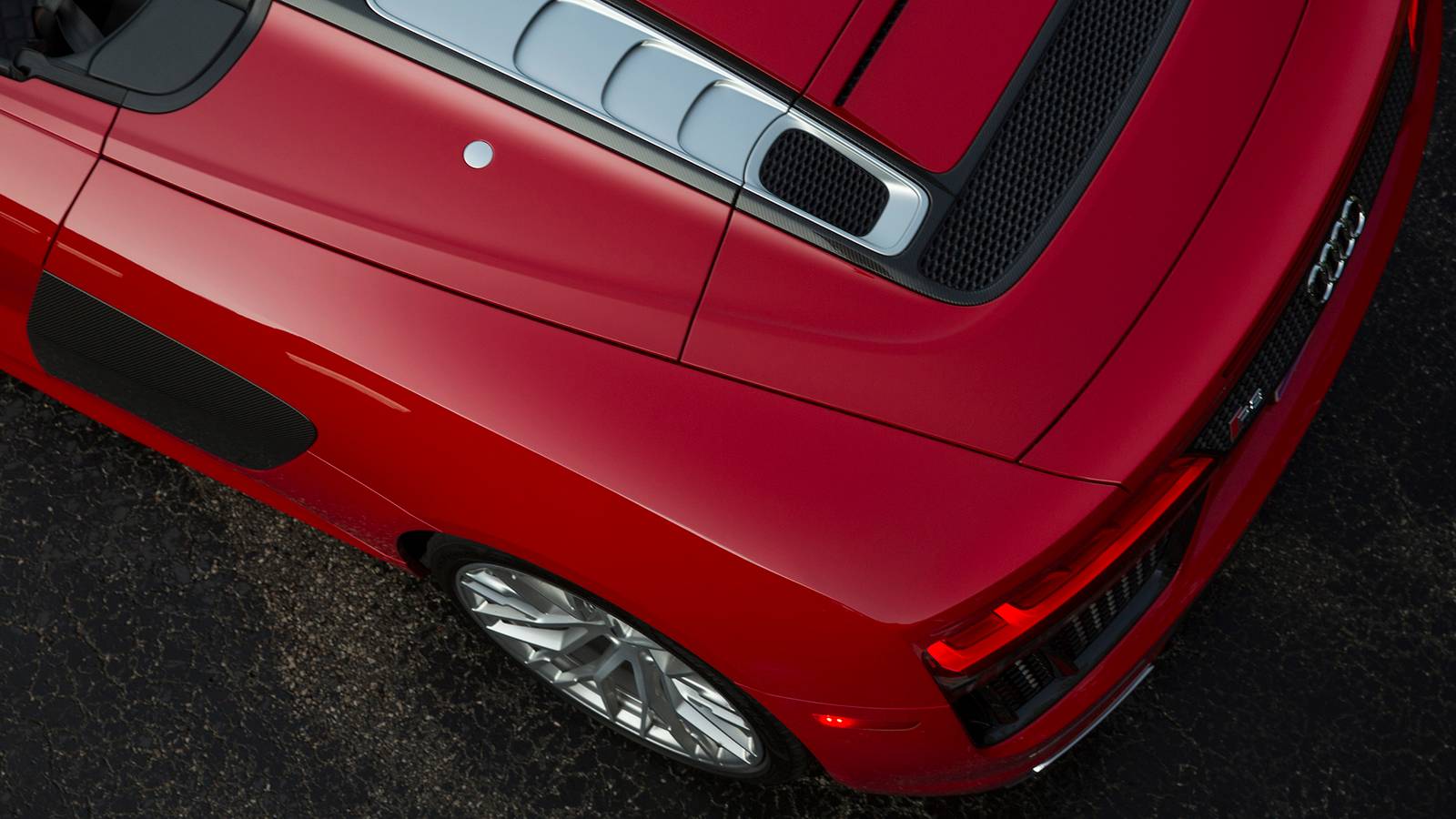
Audi R8 V10

When the first-generation Audi R8 debuted in 2008 with the 5.2-liter V10, it immediately redefined what a usable supercar could be. Sharing its engine architecture with the Lamborghini Gallardo, the R8 V10 produced 525 horsepower and 391 pound-feet of torque in early form, launching from 0-60 mph in roughly 3.7 seconds with a top speed just shy of 196 mph.
But numbers alone don’t explain its investment appeal. The real story is the exposed, metal-gated six-speed manual transmission. In an age when Ferrari and Lamborghini were rapidly abandoning traditional manuals for automated systems, Audi offered enthusiasts one of the last true gated shifters in a mid-engine V10 supercar. The tactile “click-clack” sensation of rowing through gears has become a defining characteristic collectors are now willing to pay a premium for.

Production data indicates that manual V10 R8s represent a fraction of total output, as most buyers opted for the quicker R-tronic automated manual. As a result, surviving manual examples, especially low-mileage coupes, have seen noticeable upward pressure in the collector market. Over the past several years, auction results have shown strong appreciation relative to earlier market lows.
With Audi having ended R8 production and the brand moving aggressively toward electrification, the naturally aspirated V10 manual R8 stands as a final chapter in analog German supercar engineering. Its combination of daily drivability, reliability compared to many Italian exotics, and shrinking supply makes it one of the most compelling long-term holds in today’s performance market.

10 Fastest Cars With Manual Transmissions You Can Buy Today
Can you still get a fast car with a manual transmission? There are fewer than ever, but enough still exist for you to have fun, power, and speed.
Lamborghini Gallardo LP560-4

Introduced in 2008, the Lamborghini Gallardo LP560-4 represented a significant evolution of the original Gallardo formula. Its revised 5.2-liter naturally aspirated V10 produced 552 horsepower and 398 pound-feet of torque. With all-wheel drive and a curb weight of approximately 3,400 pounds, the LP560-4 sprinted from 0-60 mph in just 3.5 seconds and carried on to a 202 mph top speed.
By this stage in Lamborghini’s production cycle, the overwhelming majority of buyers chose the E-gear automated manual transmission. As a result, true six-speed manual LP560-4 cars are exceptionally rare. That rarity has created a significant divergence in market values, with gated manual examples commanding substantial premiums over E-gear variants.

The Gallardo also represents a transitional model for Lamborghini. It predates the brand’s current hybrid trajectory and captures the final era of relatively compact, naturally aspirated V10 supercars without turbocharging or electrification. The exposed metal gate shifter, aggressive styling, and high-revving engine deliver a rawness that newer models simply cannot replicate.
Collectors increasingly recognize that manual Lamborghinis are finite in supply. Earlier manual Murciélagos and Diablo models have already appreciated dramatically. The LP560-4 manual follows the same formula: limited numbers, iconic brand appeal, and a drivetrain configuration that will never return. Over the next decade, expect clean, documented examples to move firmly into blue-chip exotic territory.
Toyota GR Supra A91-Edition

The reborn Toyota GR Supra has already carved out a strong enthusiast following, but the A91-Edition equipped with the six-speed manual stands apart as the purist’s choice. Powered by BMW’s B58 3.0-liter turbocharged inline-six, the Supra produces 382 horsepower and 368 pound-feet of torque in manual form, delivering 0-60 mph times in approximately 3.9 seconds.
The A91-Edition adds unique design elements, limited color availability, and performance-oriented enhancements that distinguish it from standard trims. More importantly, the manual transmission was introduced later in the model’s lifecycle, making manual A91 examples comparatively limited relative to earlier automatic-only Supras.

Japanese performance cars have demonstrated strong appreciation trends over the past decade. Fourth-generation Toyota Supras, Nissan GT-Rs, and Acura NSXs have all seen dramatic increases in value as millennials and Gen-X enthusiasts revisit the cars of their youth. The GR Supra benefits from that lineage, wearing one of the most storied nameplates in Japanese automotive history.
As internal combustion performance cars face increasing regulatory pressure, limited-run manual variants from major manufacturers are becoming modern collectibles almost immediately. The A91 manual blends brand heritage, strong aftermarket support, and modern reliability. While it may not reach exotic-car price levels, percentage-wise, it could deliver one of the strongest returns over the next ten years.

10 Cheap Sports Cars That Could Skyrocket In Value Soon
Now could be the best time to collect one of these performance cars while they are still reasonably priced and enjoy all the fun on offer.
Lotus Emira V6

The Lotus Emira V6 marks the end of an era. As Lotus transitions toward electrified platforms, the Emira stands as the final internal combustion sports car developed under the brand’s traditional lightweight philosophy. Powered by a supercharged 3.5-liter Toyota-sourced V6 producing approximately 400 horsepower and 310 pound-feet of torque, the Emira V6 manual accelerates from 0-60 mph in around 4.2 seconds and tops out at roughly 180 mph.
Unlike many modern sports cars, the Emira retains hydraulic steering and a strong emphasis on chassis balance over outright power. Weighing in at approximately 3,100 pounds, it maintains Lotus’s long-standing commitment to driver engagement. The six-speed manual transmission enhances that purity, offering a direct connection rarely found in today’s performance landscape.

First Edition V6 manual models, in particular, have generated strong demand. As production shifts and Lotus embraces electric platforms, the Emira becomes historically significant as the brand’s final petrol-powered sports car. History suggests that “last of its kind” models often see long-term appreciation, especially when paired with enthusiast-focused specifications.
While it may not yet command exotic auction premiums, the Emira V6 manual checks every investment box: limited production relative to global demand, brand heritage, analog driving feel, and end-of-era significance. Ten years from now, it could very well be viewed as the car that closed the chapter on traditional Lotus performance.
Sources: Various Manufacturers