
For decades, the station wagon was a common sight on American roads. It was the go-to family car, the everyday workhorse that offered ample room and cargo versatility. But nowadays, it almost seems as though wagons have disappeared, replaced by SUVs and the crossover trend.
In reality, there wasn’t anything wrong with the wagon formula. Truth be told, it was highly practical, with car-like qualities and the bonus of space. But buyers have shifted their priorities in the market. This goes back to the early 2000s; as SUVs gained popularity, the idea of an elevated seating position, rugged styling cues, and a perception of greater safety ultimately sealed the deal for most consumers.
Why Wagons Vanished From American Showrooms
The SUV Boom And Shifting Buyer Preferences

Buyers quickly embraced the change. As time went on, ride height stopped being just a practical factor and started to actually take a turn, reflecting lifestyle and identity. With the arrival of crossovers, the appeal broadened further, drawing in those who liked the SUV look and feel but not the usual hard-bodied nature of body-on-frame SUVs.

Car manufacturers have slowly adapted to changing buyer preferences. Wagon lineups shrank, and even automakers known for their long wagon traditions redirected their focus to taller vehicles. By 2010, wagons in the U.S. had shrunk into a niche choice, admired only by enthusiasts and loyal fans but largely ignored by mainstream buyers. But there were the odd few American wagons that fought back more vigorously against the narrative and shifted the tide; some emphasized performance, others versatility, but most were ultimately swept aside by the same market realities.

Why European Wagons Are Still Cool—Even If Americans Don’t Want Them
The station wagon is still a big deal over the Atlantic and automakers are still refining the same classic recipe of power, style, and hauling ability
Dodge Magnum: When Dodge Tried The Muscle Wagon Formula
Big Engines, Bold Styling, And A Short Production Life

Few modern wagons captured American muscle and bravado quite like the Dodge Magnum. It was launched in 2005; it was anything but subtle — low, long, and styled with a level of aggression rarely associated with family-oriented cars. The Dodge Magnum was based on the Chrysler LX platform and offered wagon-like qualities with classic rear-wheel-drive performance. Engines came in V6 variants, at the centerpiece of the models’ appeal: a potent HEMI V8. Several V8 options were offered, headlined by the Magnum SRT8 and its 6.1-liter Hemi V8, which delivered 425 horsepower.

It was an interesting package: a wagon with muscle car attitude and, in SRT8 guise, performance to back it up. But sadly, the Magnums’ run was short-lived. Built between 2005 and 2008, it fell victim to shifting corporate priorities and tough market conditions. While it was unique, it never achieved the sales success Dodge wanted. By that stage, wagons were out of the equation and no longer aligned with mainstream buyer preferences.


Find 2008 Dodge Magnum SRT8 and more cars for sale on our Marketplace
The Perfect Muscle Wagon For Buyers On A Budget

In today’s market, the Magnum remains attainable, typically ranging from about $7,000 to $18,000, depending on mileage and wear and tear. V8 variants tend to carry a premium price, while well-sorted SRT8 examples can exceed that bracket and edge toward collector status. In hindsight, what looked like it at the time now feels like a glimpse of an era when American manufacturers were still willing to take risks and challenge the trends shadowing the motoring sphere.

Speed And Practicality: The Fastest Wagons Of The Last Decade
The fast wagon niche promises excellent practicality with the kind of power and fun that you’d normally expect from a sports sedan or sports car.
Cadillac CTS Wagon: A Performance Car Ahead Of Its Time
Luxury, Power, And Surprising Rarity

If the Magnum was all about attention-grabbing theatrics and bravado, then the Cadillac CTS Wagon took on a far more restrained approach; it was understated. It arrived in 2010. Its design cues reflected a subtle European-inspired take on the longroof, pairing clean lines with an upmarket premium feel, even though the wagon segment was losing relevance.

Engines-wise, in standard form, the CTS Wagon used V6 powerplants and a polished driving character aligned with Cadillac’s brand identity. However, the real story belongs to the CTS-V Wagon. Behind its classy silhouette lived a mighty, supercharged 6.2-liter V8 pushing out 556 horsepower; it was monstrous, and these numbers placed it in serious company.
Find 2014 Cadillac CTS-V Wagon and more cars for sale on our Marketplace
A True Ugly Duckling Scenario

The most exciting aspect was the option of a manual transmission, which was a rarity among high-performance luxury cars at the time. The combination seems out of this world: a forced-induction V8, throw in wagon practicality and three-pedal engagement, and there you have a match made in heaven. Car enthusiasts would later regard the CTS wagon as one of Cadillac’s most audacious efforts. But market numbers told a different story. Built between 2010 and 2014, the CTS Wagon remained a low-volume offering, and sadly, it ultimately faded from the lineup. Nonetheless, time has been kind to this car’s reputation.

Yes, at the time, it was a slow seller, but now it’s firmly established as a collector’s favorite. Prices are not cheap; they range from $55,000 to $90,000, while pristine examples can command well into six-figure territory. Standard models remain within reach, but it is the V that shaped the vehicle’s legacy — the proof is in the pudding, as they say. In this case, there was proof that rarity and character often gain appreciation long after production ends.

What Happened To American Station Wagons, And Can They Make A Comeback?
What was once a staple on the market has all but disappeared. Here is what happened to the American station wagon and what it needs for a comeback.
Buick Regal TourX: A Modern Wagon Buyers Overlooked
Practical Design Lost In An SUV-Dominated Market

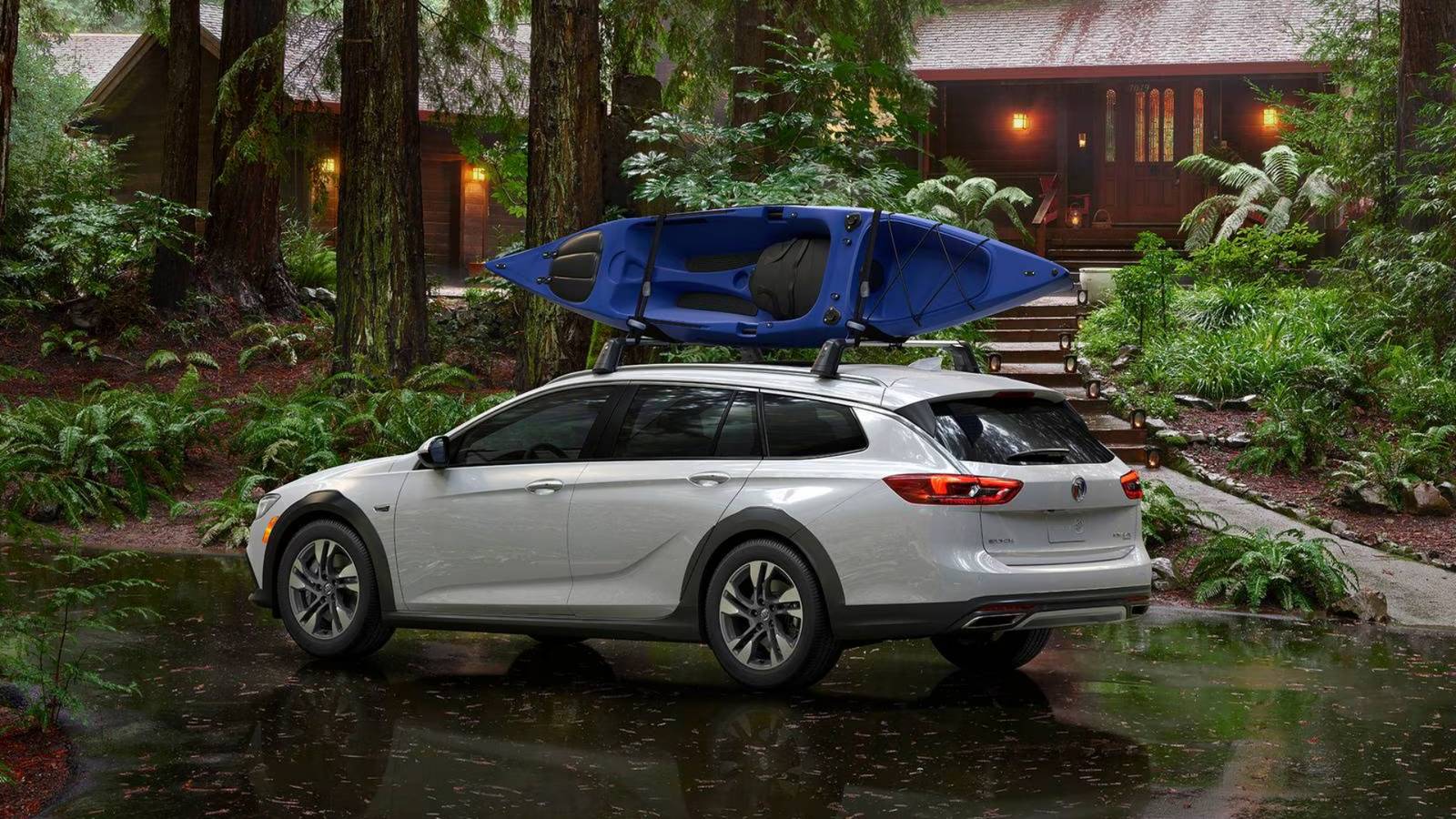
The Buick Regal TourX arrived with a different mission. Rather than chasing outright performance theatrics, Buick positioned the TourX as a contemporary, versatile wagon tailored for everyday usability. Introduced for the 2018 model year, it represented one of the few modern wagon entries from a mainstream American brand. Underneath its understated styling lay a turbocharged 2.0-liter four-cylinder engine producing 250 horsepower, paired with standard all-wheel drive.

The TourX offered generous cargo space, comfortable handling, and a driving experience more closely aligned with European wagons than with traditional American offerings. Objectively, it was a competent and practical vehicle. Yet timing proved unforgiving. By the late 2010s, SUVs had cemented their dominance, and demand for wagons remained limited. Buyers seeking versatility gravitated toward crossovers, often bypassing wagons entirely, regardless of value or capability.
Find 2020 Buick Regal TourX and more cars for sale on our Marketplace
The TourX Came And Went Before Anyone Noticed

Production lasted from 2018 to 2020, after which the TourX quietly disappeared. Sales volumes never gained significant traction, and the model became another entry in the long list of wagons unable to overcome shifting market preferences. On the used market, however, the TourX has developed a quiet appeal. Average prices typically range from $14,000 to $22,000, making it an intriguing alternative to similarly priced crossovers. For buyers who prioritize space and comfort without the bulk of an SUV, it is a rational, if overlooked, choice. Its story underscores a recurring theme: market sentiment often outweighs product competence.

The Best Station Wagons You Can Still Buy New In 2025
Before the popularity boom of the SUV, classic station wagons used to define the American road trip. With these modern versions, wagons could again.
How Much Are These American Wagons Worth Today?
Used Prices, Rarity, And Collector Appeal

If you look at all of these stunning cars side by side, the Dodge Magnum, Cadillac CTS Wagon, and Buick Regal TourX highlight how differently American wagons have navigated the SUV era. The Magnum sits largely as an affordable curiosity. Values remain relatively low, reflecting higher production volumes and the model’s uneven reception when new. While well-kept SRT8 versions draw stronger interest, most examples remain within budget-minded buyers’ reach.

And the Regal TourX takes on a different narrative, modern enough to feel current and with the times, and has, quietly under the radar, become a smart choice for practical buyers seeking space and comfort without the whole crossover hype. Depreciation has made it appealing to those willing to look beyond mainstream trends. The CTS-V Wagon, meanwhile, has undergone a dramatic revelation. What was once a nice, slow-selling product now commands attention in the eyes and wallets of car collectors. Due to limited numbers and unusual performance, it’s reshaped its own reputation, with costs driven more by security and this unique demand than by everyday usability.
A Thriving Enthusiasts Landscape

In an interesting twist, the very forces that pushed the wagons aside have also strengthened the appeal of the survivors. As SUVs came to dominate the landscape, wagons became increasingly distinctive. Rarity, nostalgia, and evolving enthusiast tastes continue to redefine their market position. Wagons may no longer occupy center stage in America, but their character and significance persist — preserved by the few models bold enough to resist prevailing tastes.
Sources: Hagerty, Edmunds, KBB, Classic.com