
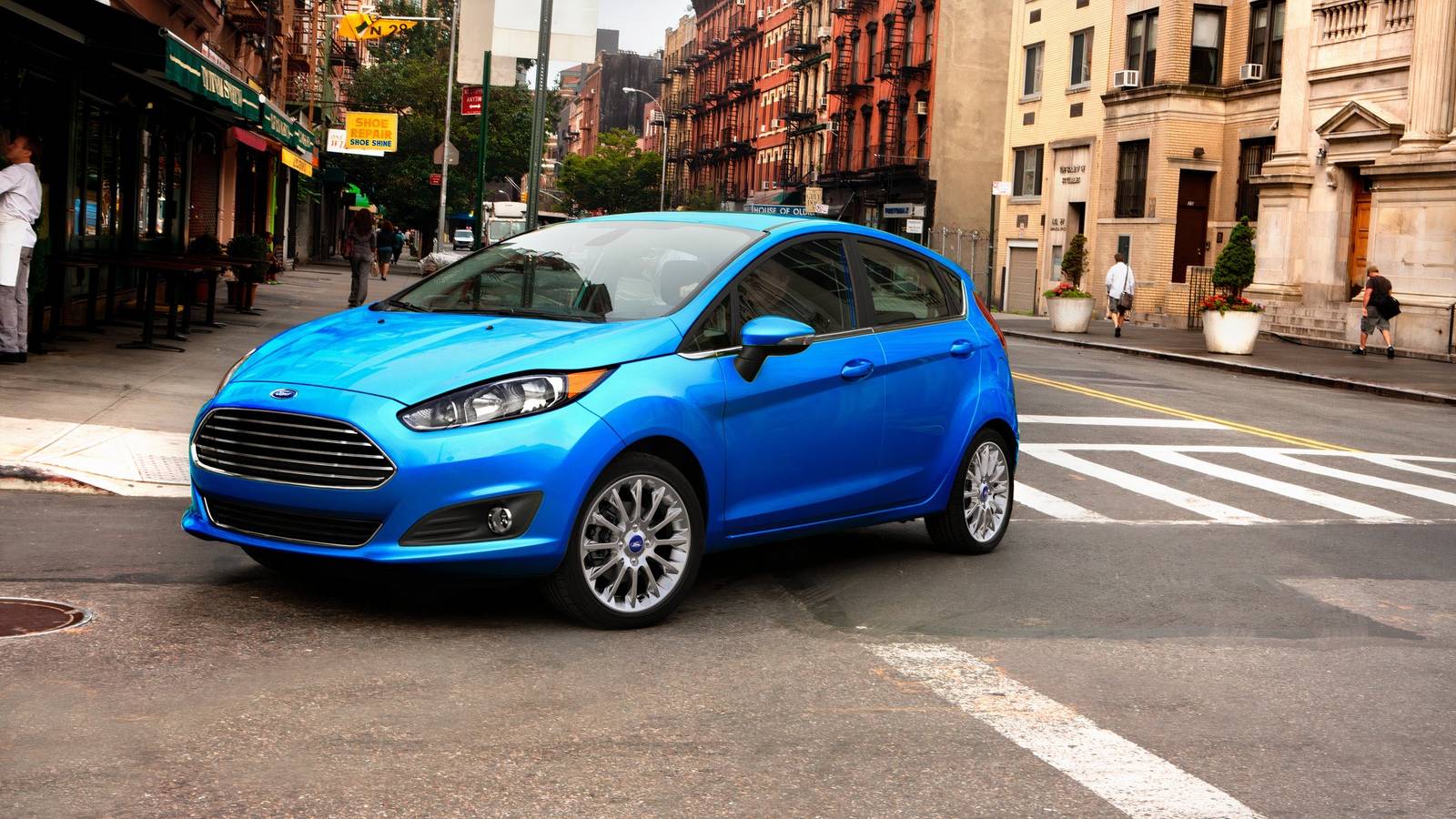
Remember the Ford Fiesta? The sixth-generation model, which was once part of the “One Ford” strategy, was sold from 2010 for the 2011 model year, till 2019—a solid nine-year run consisting of eight model years. The Fiesta was a subcompact car that competed with the likes of the Mazda2-based Toyota Yaris, Honda Fit, and Nissan Versa, just to name a few.
Today, the subcompact car market has disappeared completely. The final surviving subcompact car was the Nissan Versa, which was discontinued in the 2025 model year. It also marked the end of the sub-$20,000 new cars in the United States. Though the Ford Fiesta was discontinued in North America in 2019, it managed to survive until 2023 in the European market.
Yet despite its discontinuation, we think that there’s still a lot to like about the Ford Fiesta—even if certain models and configurations had teething problems. When properly configured, the Fiesta was a brilliant subcompact car—one that didn’t feel like a penalty box if it was all you could afford. Here’s why this car still feels so right in 2026 if you ever still own one.
But First, Its Controversies

The sixth-generation Ford Fiesta is a well-designed car, for the most part. That’s because behind its brilliance are some issues that led to wide-scale recalls and lawsuits involving Ford’s sporty subcompact car.
PowerShift Isn’t PowerShifting

Its biggest controversy lies with one of its transmission choices—the PowerShift dual-clutch transmission (DCT). I can guarantee you that if you haven’t had a full transmission replacement yet, you are bound to need one in the future. You see, DCTs were commonly used in high-performance sports cars at the time, so for the PowerShift DCT to debut in the Ford Fiesta was considered innovative. It wasn’t used solely for quick shifts, though – fuel economy was also a primary goal. Because this isn’t a torque converter automatic, it had actual double clutches being controlled by a robot.
Of course, a robot’s mind won’t operate the same as a human, so the clutch packs can slip—which can be tolerated by a transmission to a point. Unfortunately, there was a problem. Ford somehow thought it was a good idea to use a dry clutch instead of having it bathed in oil. As a result, when one of those two clutches slips, the tolerance of the transmission to handle those slips isn’t high, and this causes sensations like shuddering and overheating – particularly in stop-and-go traffic – resulting in premature failure. The PowerShift DCT also had faulty transmission control modules (TCM) and leaking seals. Suffice to say, it’s better to avoid Fiestas with the PowerShift DCT like the plague.
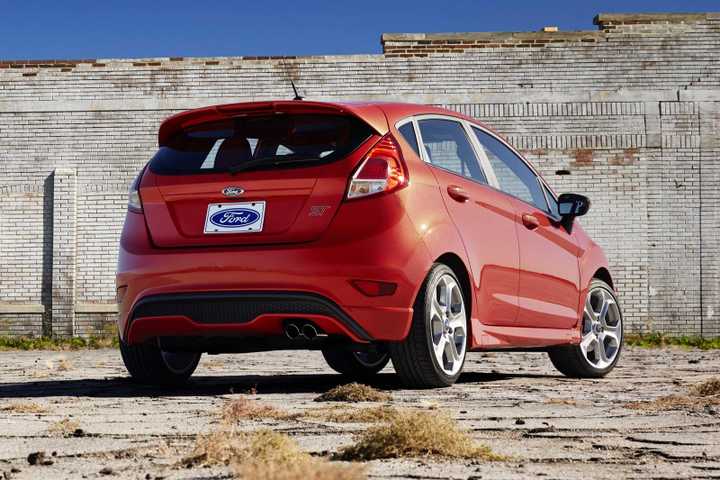

- Base Trim Engine
-
1.6L Turbo Inline-4 Gas
- Base Trim Transmission
-
6-Speed Manual
- Base Trim Drivetrain
-
Front-Wheel Drive
- Base Trim Horsepower
-
197 hp
- Base Trim Torque
-
202 lb-ft @ 4200 rpm
- Fuel Economy
-
25/32 MPG
- Make
-
Ford
- Model
-
Fiesta ST
- Segment
-
Subcompact Hatchback
The Revelation And Other Issues

Making matters worse is a very comprehensive investigative report by The Detroit Free Press. To cut the story short, Ford’s engineers and lawyers knew about the quality and safety concerns of the transmission, yet the transmission was still pushed to market with mechanical updates throughout its production life – but they were mostly band-aid solutions to a wide-scale problem. When The Detroit Free Press investigation finally went out in 2019, Ford extended the transmission’s warranty coverage to 600,000 owners. By 2020, Ford had an updated settlement of a minimum of $30 million in cash reimbursement. Depending on the severity, the settlement to the affected owner could go as far as buying back the vehicle itself.
Other, less catastrophic issues could be experienced by those who opted for the 1.0-liter three-cylinder EcoBoost turbo engine. It was supposedly a marvel of engineering due to its compact size and robust power. These engines, however, suffered from a wet timing belt that can degrade prematurely. Eventually, the wet timing belt was recalled for the US market in 2024.
Otherwise, The Fiesta Was Great

Despite the teething mechanical issues surrounding the PowerShift DCT and a few, more minor gripes with the 1.0-liter EcoBoost engine, the Fiesta was an excellent subcompact car. In fact, it was one of my favorites when it comes to driving dynamics.
It Was The Most Dynamic In Its Class

Again, cars at this price point tend to put affordability at the center, but the Ford Fiesta was known for its sportiness. You see, the Fiesta was mostly catered to the European market, but thanks to the One Ford strategy, North American consumers finally got the brilliant hatchback with which the European market had been spoiled. The Ford Fiesta was well-loved for its sportiness; it was a common college car among my friends. So yes, I got to drive numerous Fiestas with my college buddies, and I swapped cars at some point.
Anyway, the Ford Fiesta accelerated, steered, and handled unlike anything else. The closest you could get to the Fiesta’s handling brilliance was the Mazda2 (which became the North American Toyota Yaris from 2016 to 2020) and the Honda Fit, but the Fiesta delivered it in a way that truly felt European. That was no coincidence, though, because the Fiesta was primarily developed in Europe, so it had the driving dynamics that made it so popular in their market, and then eventually adapted to North American preferences.
It Also Redefined Expectations

Let’s just hope those expectations weren’t a durable automatic transmission, but otherwise, the Fiesta exceeded a lot of expectations. From a design perspective, the Ford Fiesta looks unlike anything else in the segment. At a time when most vehicles in the segment had uninspiring looks, the Fiesta was a stylish vehicle. It was the flagbearer of Ford’s Kinetic Design era, which was characterized by a wide grille with slim headlights, a steeply raked window line for a dynamic side profile, as well as fluid lines and stylish curves.
That same level of design effort was placed inside the Fiesta. Again, versus other subcompact cars in the segment, the Fiesta had a futuristic interior that was well-built. What redefined expectations was the sheer amount of standard kit offered, such as one of the earliest implementations of Ford SYNC Bluetooth and USB smartphone connectivity. Depending on the model year, the center screen had a dot matrix display or a full-color LCD. Still, whichever variant you got, the rakish dashboard featured a mobile phone-like layout for the physical controls, which was a novelty at the time. The Fiesta in 2011 offered features you never expected in a car at its price point.

Fastest Used Cars Under $20,000
In an age of ridiculously inflated used car prices, these high-performance bargains are true gems that can all be yours for less than $20,000
How Much A Fiesta Costs Today

If, for some reason, this article gave you an itch to get a used Ford Fiesta, here’s what you need to know about its resale value. Likewise, if you own a Fiesta today, here’s how much you’ll earn back if you sell it on the used market.
A 2019 Model Year Costs $6,375 On Average

As mentioned, 2019 was the final year of the Ford Fiesta, so we’ll be using this model year as a reference point. Numerous variants of the Fiesta have been sold, ranging from the base S, all the way to the posh Titanium variant and even the sporty ST high-performance version.
On average, a 2019 Fiesta will set you back $6,375, according to Kelley Blue Book, so understandably, older model years will be even cheaper. On a per-variant basis, Kelley Blue Book also has even more precise data—once again for 2019 model year vehicles. Take a look at the table below to see what each version of the Fiesta costs, but do note that certain variants only lasted for select model years, such as the Titanium being discontinued in 2018 in favor of the ST-Line (different from the full-blown ST).
|
Original MSRP |
KBB Fair Purchase Price (national avg.) |
|
|---|---|---|
|
S Sedan 4D |
$15,235 |
$7,425 |
|
S Hatchback 4D |
$15,535 |
$7,275 |
|
SE Sedan 4D |
$16,465 |
$8,925 |
|
SE Hatchback 4D |
$16,765 |
$7,900 |
|
ST Line Hatchback 4D |
$18,695 |
$10,950 |
|
ST Hatchback 4D |
$23,110 |
$12,950 |
How It Fares Versus Rivals

When compared to their rivals like the Honda Fit and Toyota Yaris (the Mazda2-based final version), the two Japanese subcompact cars hold their values much better. In fact, comparing the 2019 model year vehicles of its Japanese rivals, they’ve pretty much hit their bottom resale value in 2025. Now, prices for the Fit and Yaris are actually rising by a couple of hundred dollars, and unfortunately, in the Fiesta’s case, its resale value is still expected to slide in the coming years. Here’s how the Fiesta compares to the other Asian subcompact stalwarts.
|
Original MSRP |
|
|---|---|
|
2019 Ford Fiesta |
$6,375 |
|
2019 Honda Fit |
$9,875 |
|
2019 Toyota Yaris |
$9,800 |
|
2019 Nissan Versa |
$5,423 |
|
2019 Kia Rio |
$7,150 |
|
2019 Hyundai Accent |
$9,450 |