
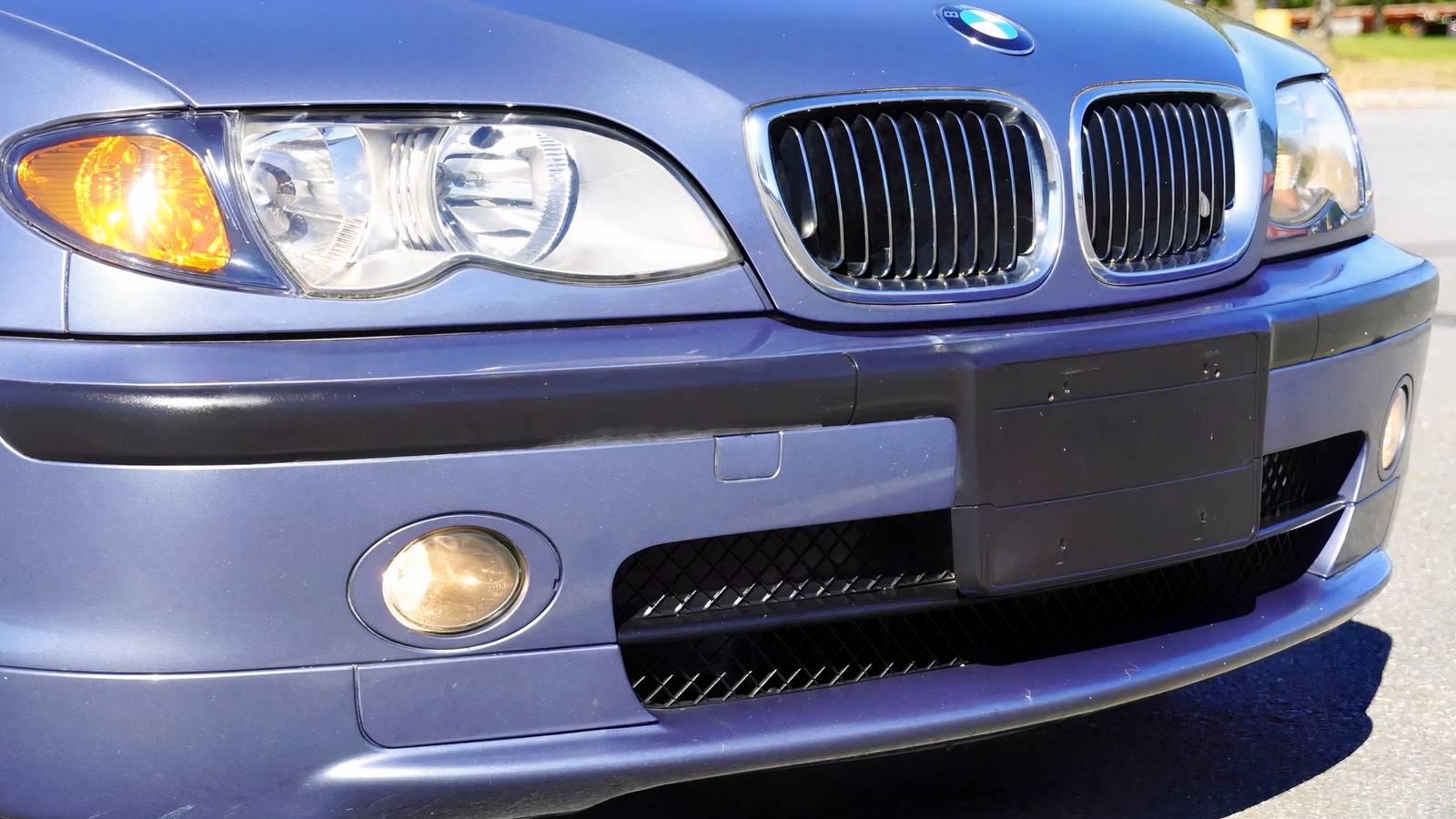
At a time when modern sports cars are defined by turbochargers, software, and ever-increasing complexity, the BMW E46 330i stands as a reminder of when balance and mechanical integrity mattered just as much as outright speed. Two decades on, this unassuming sports sedan continues to earn praise for a straightforward reason: its silky-smooth inline-six engine refuses to quit.
Powered by BMW’s naturally aspirated M54 3.0-liter inline-six, the E46 330i has built a reputation for running smoothly well past 300,000 miles—without drama, without gimmicks, and without asking for anything more than routine care. Of course, upkeep costs more than the average Toyota, though with this mill, shop visits happen less than one might expect from a precision German performance engine.
Why Germany Mastered The Inline-Six
Engineering Balance Over Brute Force

In hindsight, the inline-six layout was driven not by nostalgia but by physics, which led German automakers—BMW in particular—to excel with it. The inline-six motor required fewer compromises. In theory, there’s a single-cylinder head, consistent, evenly distributed airflow across all cylinders, a simpler exhaust and cooling layout (which is paramount), and a mechanically straightforward design. All of these factors reduce mechanical stress and improve long-term durability.

For BMW, refinement was always the key—not an optional choice. The brand’s identity was cemented on engines that felt effortless at speed and could sustain long Autobahn journeys where high-speed cruising was the norm. Instead of downsizing or adopting V6 layouts for packaging convenience, BMW continued refining the inline-six, which ultimately became a defining trait of its performance sedans. That engineering philosophy, established during the E46 era, continues to influence the brand’s performance models today. By the time the E46 330i arrived, BMW’s mastery of the inline-six was complete.

Here’s Why The E46 BMW M3 Is A Driver’s Car For The Ages
With a redline at 8,000 rpm, a balanced chassis and an unmistakable exhaust note the E46 M3 is arguably the best M3 ever made.
The Engine That Earned Its Reputation
BMW’s Formula For Longevity

What lies beneath the hood of the E46 330i is BMW’s M54B30, a delightful 3.0-liter inline-six. Power outputs are not mind-blowing but are adequate for fun and maintaining composure, with 225 horsepower and 214 pound-feet of torque. Yes, by no means are these figures headline-grabbers, but when putting the power down, it felt strong and unstrained during daily commuting. One could also applaud BMW, as at a time when induction was beginning to creep into the segment, BMW stayed committed to a more straightforward, naturally aspirated set-up.

Without turbochargers adding heat and mechanical complexity, the M54 delivers power in a smooth, linear fashion. It was reviewed as having immediate responsiveness and urgency when subjected to hard acceleration. One thing to add is that the engine accelerates progressively through the rev range, which reduces stress on components and the drivetrain. BMW was also on the fence about aggressive tuning and didn’t implement it; they opted for a conservative output relative to displacement, which helped keep operating temperatures under control and components working comfortably within their limits.



That Restraint Paid Off Over Time

Rather than being engineered around peak numbers, the M54 was built for durability, which is why the E46 330i earned a reputation as an easy long-term ownership proposition. With regular maintenance, many examples continue to run smoothly well past 200,000 miles, reinforcing the engine’s reputation for longevity in real-world use.

In its era, the E46 330i faced stiff competition and had notable contenders, such as Mercedes-Benz, which leaned toward supercharged and V6 powerplants geared toward straight-line performance. At the same time, Audi favored more compact V6 layouts for packaging efficiency.

The Japanese marque Lexus took a different path with the IS 300, pairing bulletproof reliability with a softer, less engaging drive. What set the BMW apart was balance—the M54 inline-six delivered smoothness, responsiveness, and durability without relying on forced induction or excessive complexity, giving the E46 330i a uniquely well-rounded character in its segment.
The M54 Catered To BMW’s Sporty Demeanor Without Compromising Mechanical Integrity

During its time on sale, the E46 330i occupied a sweet spot in the compact luxury performance segment. It wasn’t positioned as a full-blown performance model, yet it delivered enough power and refinement to appeal to drivers seeking more than just a comfortable daily sedan. BMW’s approach stood in contrast to some of its key rivals, many of which chased either outright performance or outright reliability at the expense of driver engagement.

The E46 330i struck a different balance. Its naturally aspirated inline-six delivered usable performance without excessive mechanical stress, while the chassis and drivetrain encouraged driver interaction without demanding constant attention. Over time, that positioning explains why the E46 330i has aged so gracefully—it was engineered not just to impress on day one, but to remain satisfying years and miles later.

The Last Naturally Aspirated BMW M Car You Can Still Buy For Cheap
The E46 M3 stands as the ultimate opportunity to own a piece of BMW’s golden era.
Smoothness That Defined The Driving Experience
What Made The E46 330i Feel Different

Slide behind the wheel of a BMW E46 330i today, and the first thing you notice isn’t the numbers. The car is often described as feeling connected, almost as if it works in harmony with the driver. Throttle response is immediate, with no turbo lag or artificial tuning to dull the interaction between driver and machine. What sets the E46 330i apart is consistency. The engine feels refined at low speeds and remains just as composed near the redline, reinforcing the sense that it was designed to operate comfortably across its entire rev range.

It’s the kind of smoothness that doesn’t demand attention at first, but becomes more apparent the longer you live with the car—especially on extended drives where the engine settles into an easy, unstrained rhythm. Even by modern standards, the M54-powered E46 delivers a level of smoothness many newer engines struggle to replicate. That smoothness also affects how the E46 330i ages.
The E46 330i Doesn’t Lose Its Refinement With Age

Even with higher mileage, the engine rarely feels coarse or tired, instead retaining a sense of mechanical cohesion that’s missing in many newer powertrains. There’s no sudden change in character as the miles add up—just the same calm, linear delivery that made the car appealing when it was new, which helps explain why so many owners choose to keep them long-term.

10 Used BMW M Models That Are Affordable In 2025
The used market offers plenty of opportunities for enthusiasts to experience BMW’s Motorsport engineering without breaking the bank.
Built To Last
Why 300,000 Miles Isn’t Unusual

High-mileage BMW E46 330i examples are surprisingly common, particularly among owners who have maintained their vehicles. Engines surpassing 200,000—or even 300,000—miles without internal rebuilds are far from rare. As with any car, especially one engineered in Germany, consistent maintenance is essential. But here are some common faults to note. When problems arise, they are typically well-known and manageable.

Cooling system components, crankcase ventilation systems, and VANOS seals are recognized weak points—but none are terminal if addressed proactively. The bottom end remains robust, compression holds firm, and oil consumption stays reasonable when serviced correctly. This predictability is what makes the E46 330i such a compelling long-term ownership proposition. There are no hidden surprises—just a clear roadmap to longevity for owners willing to follow it.
Why The BMW E46 330i Still Matters Today: Legacy, Relevance, And Long-Term Appeal

Modern six-cylinder engines are faster, cleaner, and more efficient, but they’re also more complex. Turbochargers, high-pressure fuel systems, and increasingly sophisticated electronics introduce new long-term ownership considerations. The E46 330i represents a different era—one in which mechanical balance and durability were prioritized over absolute efficiency.

That philosophy continues to resonate today, particularly in the used market, where clean examples remain highly sought after. For enthusiasts, the E46 330i isn’t just a nostalgic choice—it’s a benchmark. It proves that smoothness, reliability, and driving enjoyment don’t have to be mutually exclusive. Two decades on, its reputation isn’t built on hype. It’s built on miles—hundreds of thousands of them.
Sources: Consumer Reports, CarEdge, BMW