
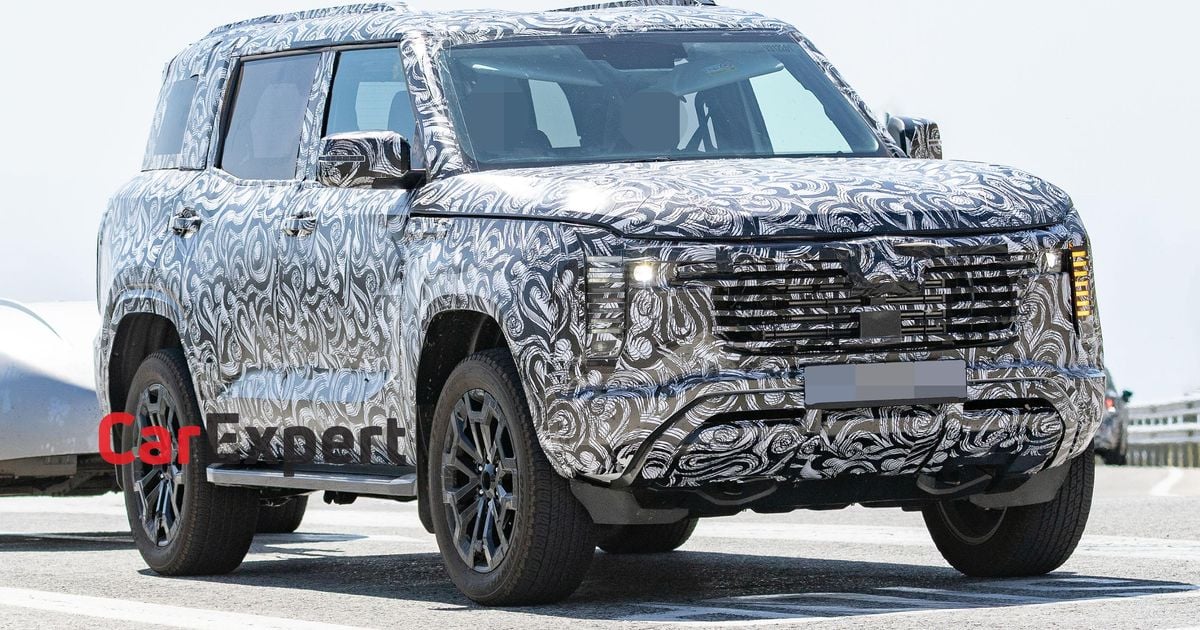
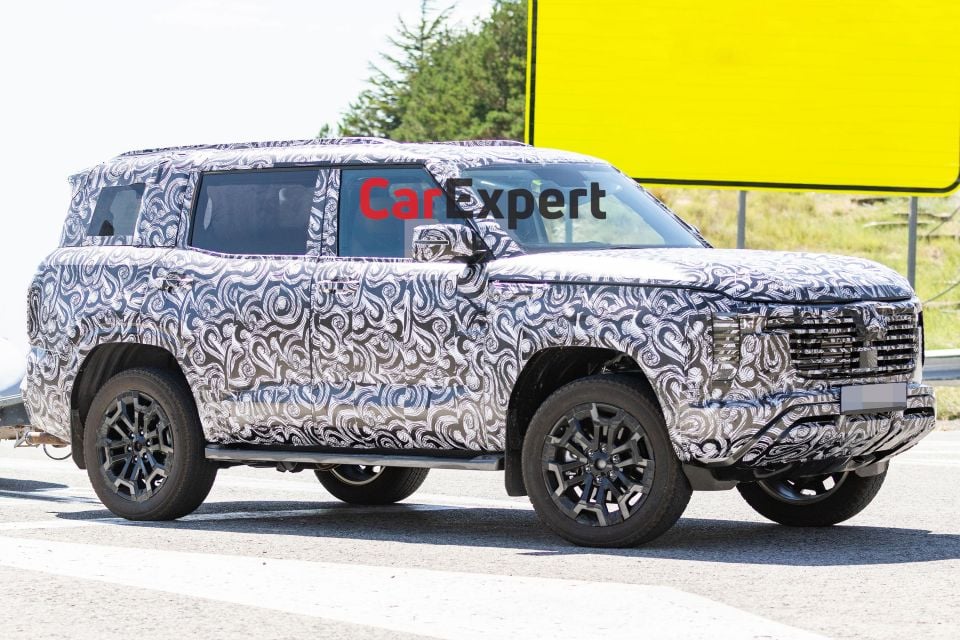
Mitsubishi has shown the new Pajero to dealers in North America ahead of the Triton ute-based SUV’s scheduled arrival in Australian showrooms by the end of 2026, with the new model set to grow in size, offer a “spacious” third row, and potentially get a hybrid powertrain down the line.
According to Automotive News, dealers were shown the new Pajero – a Ford Everest and Toyota LandCruiser Prado rival – at a Mitsubishi dealer conference in the US state of Illinois, which drew around 180 dealers from the US and Canada and outlined the company’s Momentum 2030 strategy.
Mitsubishi has only issued teaser images of the new Pajero to the public so far, but according to the outlet, dealers who attended the briefing described the new model as “like a [Toyota] LandCruiser” – the name given to the LandCruiser Prado in the US – with dimensions that could make it the largest Pajero yet.
Looking for your next car? We’ll help you research and compare so you choose with confidence.
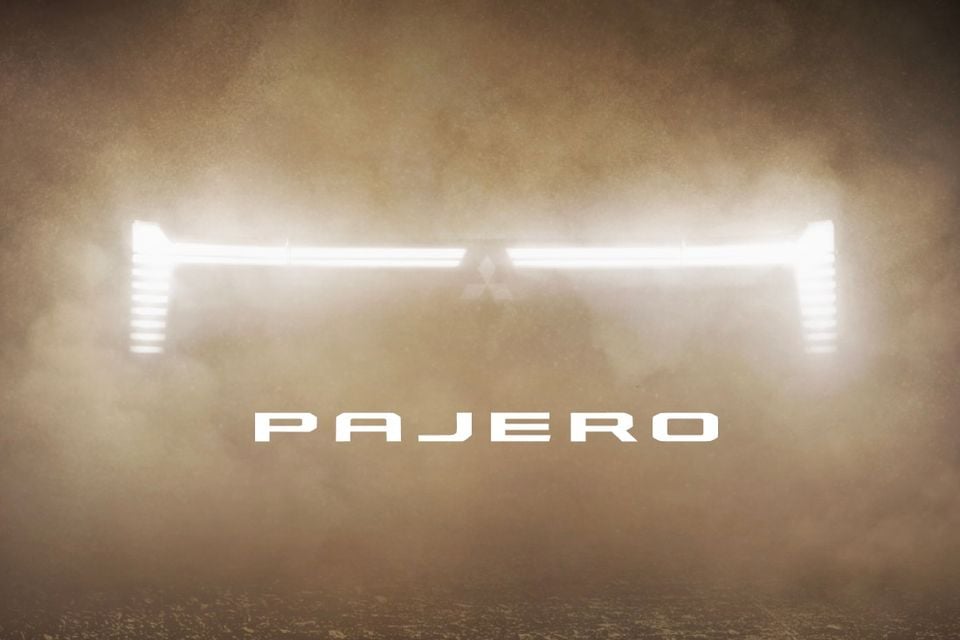
Dealers said the Pajero will be significantly larger than the current Mitsubishi Outlander – the Toyota RAV4-sized SUV that is currently the biggest SUV in the automaker’s lineup – which measures 4720mm long and 1745mm tall.
For reference, the current Toyota LandCruiser Prado measures 4990mm in length, while the previous full-size ‘NX’ Pajero sold here until 2022 (as opposed to the smaller Pajero Sport) used a 2780mm wheelbase and measured 4900mm long.
The outgoing Pajero Sport rode on a 2800mm wheelbase and measured 4825mm in overall length.
Mitsubishi has confirmed the returning Pajero will use the Triton ute’s ladder-frame chassis, much as the previous Pajero Sport was based on the contemporary Triton. The current Triton features a 3130mm wheelbase and, in dual-cab ute form, an overall length of 5320mm.
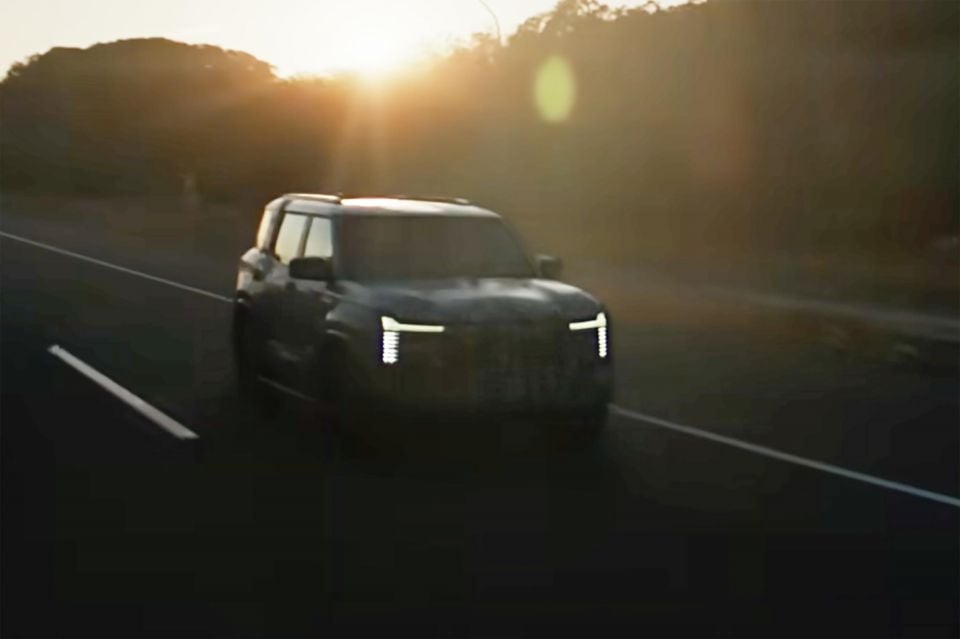
The new Pajero will also reportedly offer 12 inches (305mm) of ground clearance, more than the Triton’s 228mm, the Everest’s 229mm, and the LandCruiser Prado’s best of 221mm.
That is also significantly more than the previous Pajero’s 225mm ground clearance, suggesting the new model could be the most capable version yet off-road.
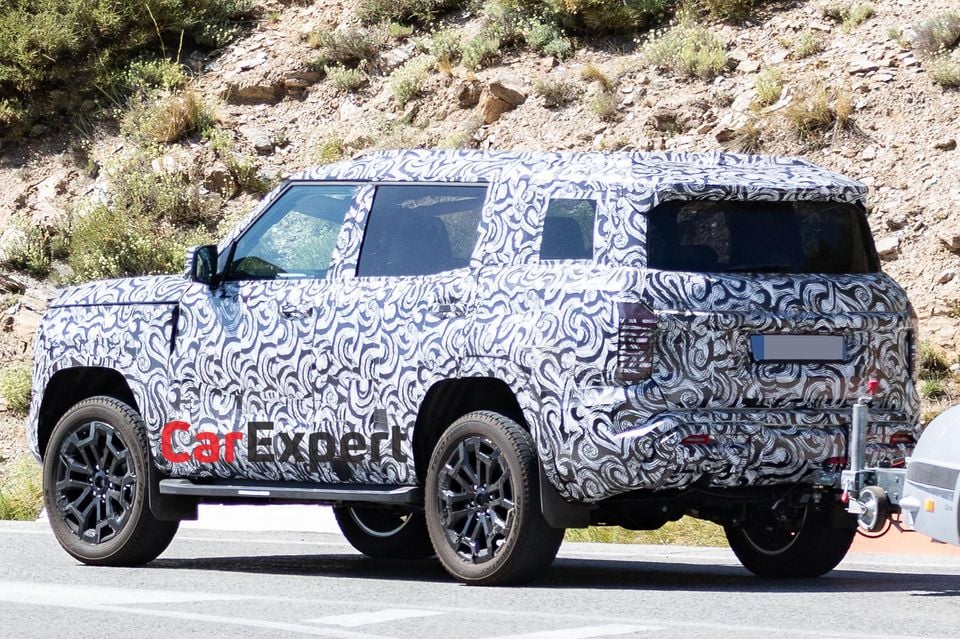
Dealers also reportedly said the new Pajero offers a “spacious third row”. As seen in previous spy photos, the new Pajero will follow the Pajero Sport in featuring a hatch-style rear tailgate, instead of a side-hinged tailgate with an externally mounted spare wheel like previous Pajeros.
The cabin was described as “premium and modern”, featuring digital instrumentation, a larger central infotainment screen and a ‘compact’ steering wheel design that could be rolled out across other Mitsubishi models.
There was no mention of powertrains or other equipment details for the Pajero, which is expected to use the Triton’s 2.4-litre four-cylinder turbo-diesel producing 150kW and 470Nm, paired with a six-speed automatic transmission, in markets such as Australia.
While the new model has been confirmed for Australia, the Pajero has not yet been locked in for North America, where it was sold as the Montero and discontinued in 2006.
However, Mitsubishi is considering launching the new Pajero there, and a hybrid powertrain could be in the offing as a source told Automotive News all new vehicles launched in the US will be electrified-only. While the new SUV will arrive in Australia by the end of the year, US buyers may have to wait until 2030.
According to the outlet, the Chicago event was held to reinvigorate the brand’s dealer network after a 13.7 per cent sales decline in the US during 2025, which was blamed on an ageing model range. The same issue has also affected Australian sales, which fell 17.9 per cent over the same period.
The Momentum 2030 plan includes a new fifth-generation Outlander – Mitsubishi Australia’s top-selling model – due in North America during the second half of 2028, though it has not yet been officially confirmed for Australia.
Dealers were also shown a more off-road-focused Outlander variant, building on the Trail Edition sold in North America but not offered locally. It features a recalibrated all-wheel drive system, upgraded suspension and tyres, as well as chunkier front and rear bumpers.