
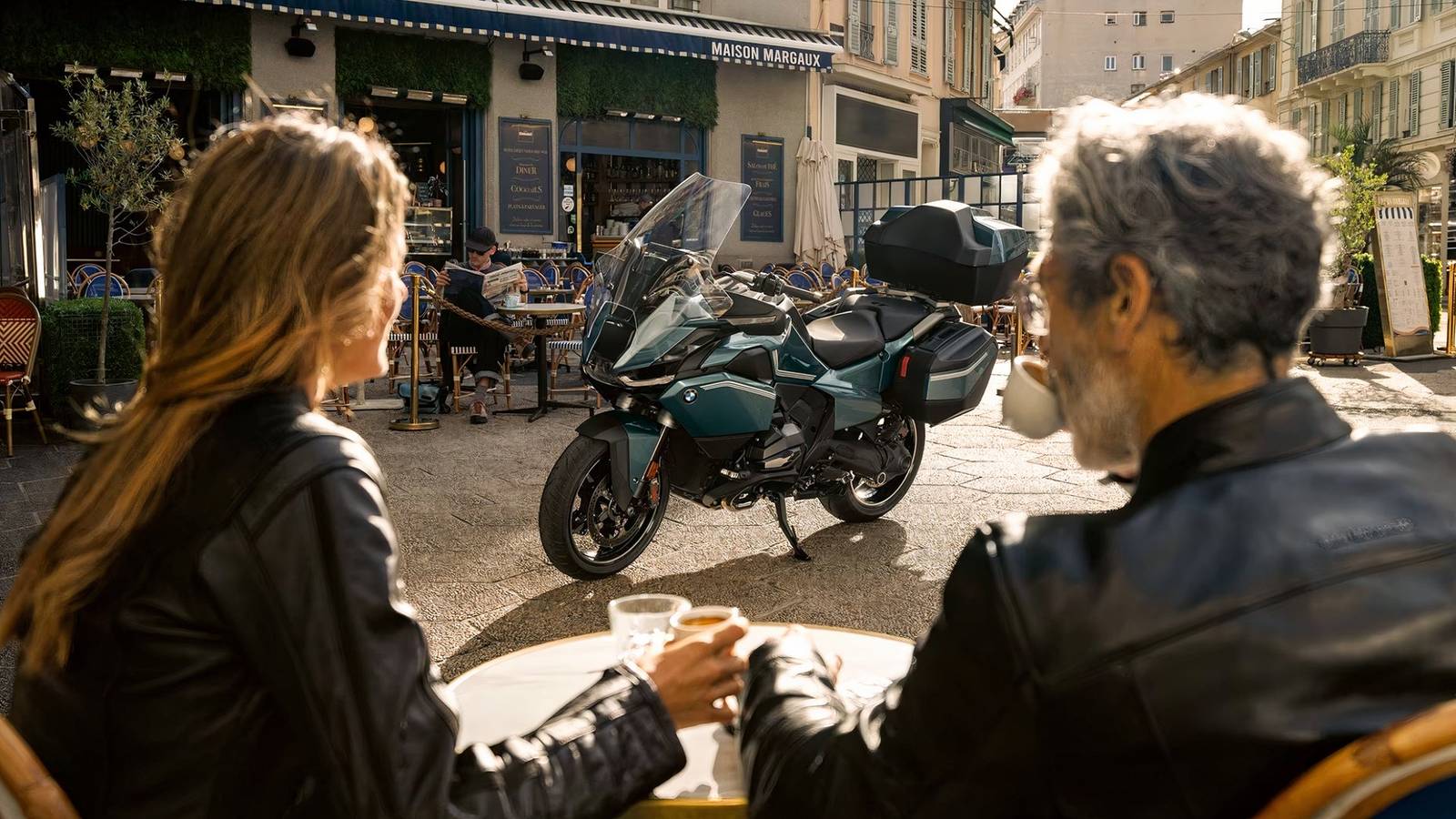
The issue is that modern touring bikes can sometimes feel like they’re trying too hard. Massive engines, endless menus, and layers of tech can get in the way of what really matters. Instead of making riding easier, they can make things feel heavier, more complicated, and occasionally exhausting. The irony is that a bike designed for covering distance shouldn’t feel like work.
The Real Benchmark Is Effortless Distance, Not Power

There’s a certain point in long-distance riding where power stops being the priority. Once you’ve settled into a rhythm on the highway, what matters more is how relaxed the bike feels. Stability at speed, wind protection, seat comfort, and smooth power delivery all start to matter more than outright performance. That’s what separates a fast bike from a truly great touring machine.
A lot of bikes can do distance in short bursts. They feel impressive for an hour or two, then start to wear you down. Heat management becomes noticeable, vibrations creep in, and ergonomics that seemed fine at first begin to feel like compromises. Over time, these small issues stack up and turn what should be an enjoyable ride into something you endure rather than enjoy.
Why Comfort, Stability, And Usability Matter More Than Spec Sheets

Comfort isn’t just about a plush seat or an upright riding position. It’s about how everything works together. The way the suspension absorbs imperfections without feeling floaty. The way the engine delivers power without constant input. The way the bike holds a line at speed without making you think about it. These are the things that define real-world usability.
Stability is another big factor, especially when you’re dealing with long highway stretches or unpredictable road conditions. A good touring bike should feel planted and predictable, even when fully loaded. It shouldn’t get unsettled by crosswinds or rough pavement. More importantly, it shouldn’t require constant correction from the rider just to stay composed.

Usability ties everything together. Controls should feel intuitive, not overwhelming. Adjustments should be easy to make on the fly. And the bike should adapt to the rider, not the other way around. When all of these elements come together, the result is something that feels natural and effortless. That’s the real benchmark, and it’s surprisingly rare.

The Bike That Feels Right No Matter Where You Ride
There are no wrong situations when it comes to the Honda Africa Twin Adventure Sports!
The BMW R 1300 RT Is The Benchmark No One Talks About Enough

There are bikes that grab headlines with bold styling or outrageous performance numbers, and then there are bikes that quietly go about their business and end up setting the standard anyway. The BMW R 1300 RT is one of those machines. It doesn’t rely on shock value or hype. Instead, it focuses on getting the fundamentals right in a way that few others manage.
A Boxer Engine That Feels More Refined Than Ever

At its core is a 1,300 cc air and liquid-cooled boxer twin that produces 145 horsepower and 110 pound-feet of torque, making it the most powerful RT to date. Those numbers are strong, but what really stands out is how that power is delivered. It’s smooth, immediate, and predictable, with a broad spread of torque that makes passing and cruising feel effortless rather than dramatic.
BMW’s ShiftCam technology plays a big role here, adjusting valve timing and lift to optimize performance across the rev range. The result is an engine that feels flexible and responsive at low speeds while still pulling hard when you need it. It doesn’t feel stressed or strained, even when you’re covering serious distance at highway speeds.

Paired with a six-speed transmission and shaft final drive, the powertrain feels polished and low-maintenance. The gearbox is precise, and the optional ASA automatic shifting system adds another layer of ease for long rides. There’s also an assist and slipper clutch that keeps things stable under hard deceleration while reducing effort at the lever.
|
Engine |
1,300 cc air/liquid-cooled DOHC boxer twin |
|
Output |
145 horsepower @ 7,750 rpm / 110 pound-feet @ 6,500 rpm |
|
Transmission |
6-speed manual (optional ASA automated shifting) |
|
Final Drive |
Shaft Drive |
Chassis And Electronics That Work With You, Not Against You

The chassis is built around a two-part frame with the engine as a stressed member, improving rigidity while keeping weight centralized. Wet weight sits at roughly 620 pounds, which is competitive for a fully equipped touring bike. Suspension duties are handled by BMW’s EVO Telelever up front and EVO Paralever at the rear, paired with Dynamic ESA. This system actively adjusts damping and even riding attitude depending on conditions, delivering stability without sacrificing comfort. It’s seamless enough that you rarely think about it.
Electronics are extensive but well integrated. You get multiple riding modes, traction control, engine braking control, and cornering ABS as standard. The 10.25-inch TFT display integrates navigation and connectivity, while available radar-based features like adaptive cruise control and blind spot monitoring bring real-world usability rather than gimmicks.

Braking is handled by dual front discs with four-piston calipers and a rear single disc, all supported by BMW’s Integral ABS Pro. The bike runs on 17-inch wheels front and rear, wrapped in 120/70 and 190/55 tires. Fuel capacity sits at 6.3 gallons, giving it serious range between stops.
|
Frame |
Two-part steel main frame with aluminum rear subframe, engine as stressed member |
|
Suspension |
Front: EVO Telelever, electronically controlled | Rear: EVO Paralever with Dynamic ESA |
|
Wheels and Tires |
Front: 120/70 ZR17 | Rear: 190/55 ZR17 |
|
Brakes |
Front: Dual discs, 4-piston radial calipers | Rear: Single disc, ABS Pro |
|
Wet Weight |
620 pounds |
|
Electronics And Safety |
10.25-inch TFT display, navigation, connectivity, Dynamic ESA, optional adaptive cruise control, blind spot monitoring, heated grips and seats |
A Tried And Tested Platform That Simply Works
One of the most interesting things about this bike is how understated it feels. It doesn’t try to impress with aggressive styling or over-the-top design elements. Instead, it focuses on functionality. Every panel, every control, and every feature has a purpose, and that purpose is to make long-distance riding easier and more enjoyable.
That approach extends to the riding experience itself. There’s no drama, no unnecessary noise, and no sense that the bike is trying to prove something. It simply works, and it works incredibly well. Over time, that consistency becomes more valuable than any headline-grabbing feature.

10 Touring Bikes With The Longest Riding Range
If you want go the farthest on a single tank of fuel, look no further than these 10 touring bikes
The Bike That Makes Everything Else Look Like They Fall Short

Once you’ve spent enough time on a machine like this, it changes how you evaluate other touring bikes. Suddenly, small annoyances become more noticeable. Wind protection that isn’t quite right. Engines that feel a bit too busy at speed. Electronics that require too much attention. It’s not that other bikes are bad, but they start to feel less complete.
The Touring Bike Others Aspire To Be

This is the kind of bike manufacturers secretly benchmark against when developing their own touring models. It sets a standard not through marketing, but through execution. It also highlights where some fast sport-touring alternatives don’t quite hit the mark. Bikes like the Kawasaki Ninja ZX-14R and Suzuki Hayabusa bring huge power and straight-line performance, but they approach distance from the wrong angle. They’re built to go fast for long stretches, not necessarily to make those stretches feel effortless.

On those bikes, you’re dealing with a more aggressive riding position, less wind protection, and suspension setups that prioritize performance over comfort. They can absolutely cover miles, but they demand more from the rider while doing it. Over time, that effort adds up. This is where the RT separates itself. It doesn’t just cover distance quickly; it makes distance feel easy. You can push it when the road opens up, or settle into a relaxed cruise without changing your riding style. That balance is what makes it such a complete package.
Premium Price Tag, Premium Features

Of course, all of this comes at a price. In the US, base MSRP sits at $22,645, and like most BMWs, it climbs quickly once you start adding options. But this isn’t just about ticking boxes. You’re paying for how everything works together. The refinement, the seamless integration of tech, and the way the bike just disappears beneath you on a long ride all add up to something that feels genuinely premium, not just expensive. In the end, this isn’t a bike that shouts for attention. It doesn’t need to. It just does everything right, and in doing so, sets a benchmark that others are still trying to reach.
Source: BMW Motorrad