
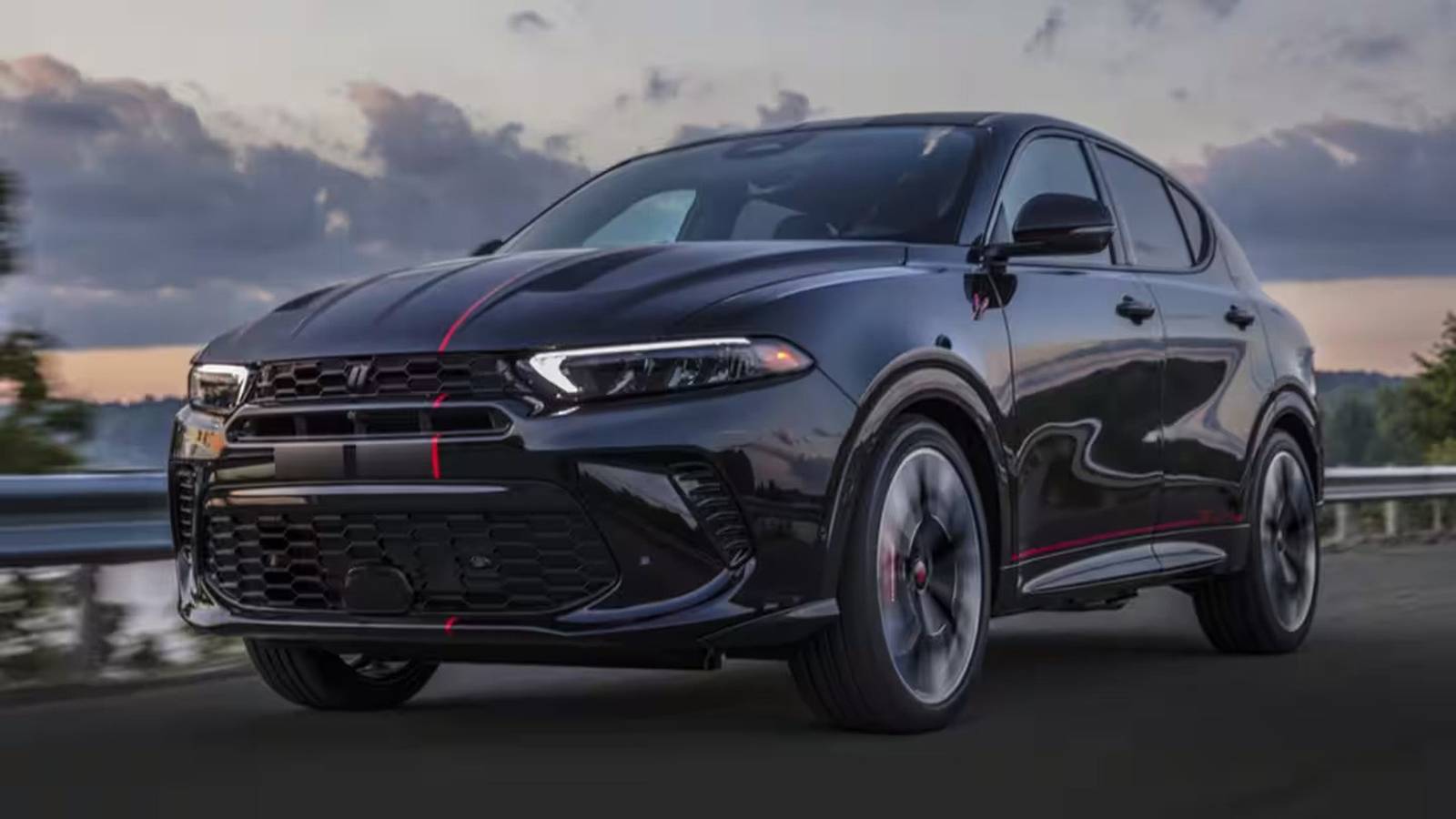
The Dodge Hornet carries the legendary trademark that originated with the 1951 Hudson Hornet, which dominated NASCAR in the early ‘50s. Yes, it’s the same original Hornet from the movie Cars. The new Hornet, however, was a compact crossover SUV from Dodge, selling from 2023 to 2025.
The Hornet was positioned as Dodge’s smallest and most affordable model, but due to the marketing mismatch with the brand’s fanbase, the sales were quite slow. Import tariffs only made things worse for the Hornet, leading to its eventual discontinuation in August 2025. Back then, the Hornet didn’t make much sense, but just a year after its discontinuation, the Hornet could be a smarter pick in the segment for some buyers.
The Dodge Hornet Attracted Plenty Of Criticism

The Dodge Hornet was produced in Italy, and it was essentially a rebadged, restyled version of the Alfa Romeo Tonale. Both SUVs were based on the Stellantis Small Wide 4×4 LWB platform, shared with the Jeep Compass, and the Hornet distinguished itself with its lower sticker price than the Tonale. It was also only offered with all-wheel drive and sold exclusively in North America, as opposed to the Tonale, which was offered with front-wheel drive and sold globally.
The Alfa Romeo Missed Connection

As good as the Hornet was on paper, though, it attracted quite a bit of criticism. The first of which was its connection to the Tonale and its sticker price. Buyers saw the Hornet as just a rebadged Tonale, and it was seen as a bit too expensive for a Dodge. While the platform sharing was intended to be a selling feature, the high pricing diluted things for the Hornet. It didn’t exactly feel value for money, especially when you consider just how crowded the compact SUV market is with the likes of the Mazda CX3, Chevrolet Trailblazer, and Ford Bronco Sport.

For instance, in 2023, you could theoretically get an entry-level Hornet GT AWD for around $31,000; the top-spec R/T PHEV with AWD started at around $45,000. That’s already expensive, and the prices only crept up the following year, made worse by dealer markups and limited stock availability. As a result, a $31,000 Hornet was hard to find, and the SUV ended up becoming significantly more expensive than its competitors. And not everyone wanted to pay the premium for what was essentially seen as a rebadged Tonale.
Not Athletic Enough For A Dodge, Not Practical Enough For An SUV-Buyer

Another problem came with the Hornet’s positioning in the segment. Dodge products tend to attract enthusiast drivers to the showroom, and this demographic isn’t exactly looking for SUVs. On the other hand, typical SUV buyers want to buy something because of familiarity, brand trust, and practical space, not emotional factors like style or performance. The Dodge Hornet missed the mark for both of these demographics.

Even if some SUV buyers prefer something sporty, the Hornet doesn’t exactly stand out due to its connection to Alfa Romeo. Buyers looking for a sporty compact SUV would rather go for something like the Mazda CX-50 or the Honda CR-V, which offer a much better balance of driving feel, practicality, and reliability. Meanwhile, the Hornet faced many problems early on, which earned it a “Fair” reliability rating from J.D. Power.

10 Hybrid SUVs That Hold Their Value Best
Here are 10 hybrid SUVs that not only save you money in fuel costs, but will pay you back well when you go to sell them.
The Dodge Hornet Makes More Sense A Year Later, Though

As imperfect as the Dodge Hornet was, it all came down to it just being too expensive for the segment. But after its discontinuation, it seems like it could be a very smart purchase, especially used. The Hornet is still a fun-to-drive SUV with a unique European design and strong performance credentials. Throw in dealer discounts, if you’re buying new or already-depreciated used models, and you can get this fun package for quite a bargain. More on this later.
The Hornet Is Still A Fun Compact SUV

The Hornet was launched when Dodge’s future looked very different from its V8-powered legacy. Every manufacturer was looking toward electrification, so when Dodge took that leap by introducing the Hornet with its turbocharged 2.0-liter engine amid a flood of last-call Hemi Chargers and Challengers, it created an interesting dichotomy in the brand’s lineup. Still, Hornet wasn’t as underpowered as online critics would have you believe.

In its base trim, the Hornet’s 2.0-liter turbocharged four-cylinder engine produced 268 horsepower and 295 pound-feet of torque, which was only slightly behind the entry-level V6-powered Charger. In the higher-spec R/T trim, the plug-in hybrid powertrain pumped out 288 horsepower and 383 pound-feet of torque for short bursts, which was enough for a 0 to 60 miles per hour time of5.6 seconds. That’s quite respectable for what is supposed to be a budget SUV with a sporty flair.
Tonale-Derived Cabin With Plenty Of Tech All Around

On the inside, the Hornet carried over much of the Tonale’s interior design, which was spacious for front-seat drivers but tight for those in the back. The styling was also pretty similar between the two SUVs, with primary controls and the infotainment system slightly turned toward the driver. The standard trim came with black cloth and synthetic leather upholstery with red stitching, but the higher trims had leather upholstery and even faux suede for those who ordered with the optional Track package.

On the tech front, all Hornets featured a 10.3-inch infotainment touchscreen and a 12.3-inch digital gauge display. The infotainment system ran the Uconnect 5 system and supported wireless Apple CarPlay and Android Auto, as well as Amazon Alexa. Higher trims also brought a 14-speaker Harman/Kardon stereo and in-dash navigation. All Hornets also came with a host of driver-assistance features, including automated emergency braking, blind-spot monitoring, and parking sensors.

10 Midsize SUVs With Incredible Resale Value
Some SUVs are renowned for holding their value well, but these 10 models are the best mid-size SUVs for resale value.
Buying The Dodge Hornet In 2026: The Reason Why It Finally Makes Sense

As good as the Hornet may be for enthusiasts looking for something practical and a Dodge badge, the Hornet’s biggest drawback was its pricing. But many months after its discontinuation, you wouldn’t feel that anymore if you go for the Hornet. Remember, the Hornet was a low-demand and abandoned product with a poor reputation, so not many people bought it. In fact, iSeeCars’ December 2025 report showed that of all unsold 2024 model year units across the country, the Dodge Hornet PHEVs made up more than 82 percent of them.
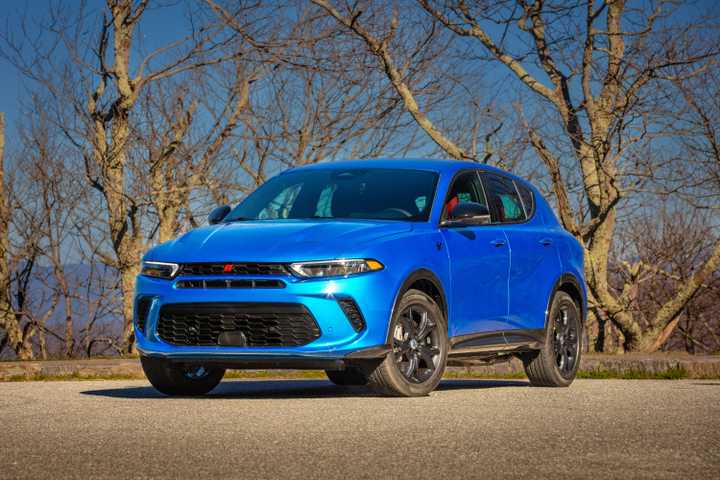

- Base Trim Engine
-
2L Hurricane I4 ICE
- Base Trim Transmission
-
TorqueFlite 9-speed automatic
- Base Trim Drivetrain
-
All-Wheel Drive
- Base Trim Horsepower
-
268 HP
- Base Trim Torque
-
295 lb.-ft.
- Base Trim Fuel Economy (city/highway/combined)
-
21/29/24 MPG
- Base Trim Battery Type
-
Lead acid battery
- Make
-
Dodge
- Model
-
Hornet

This high supply and low demand means there are plenty of deals to be had if you buy one of the leftover Hornets in 2026. So, if you plan on buying that, call some Dodge dealers and ask if they have any leftover Hornets around. Make sure you mention that it’s an abandoned leftover of a dead product with a poor reputation, and you can negotiate a great deal for what is essentially a brand-new car with full warranty protection. Most dealers are usually willing to offer discounts and offers on such leftover products.
Go For A Used Model If You Want To Save Thousands

If the Hornet still feels expensive, you can even look for a used model and save thousands of dollars. A brand new 2025 Hornet GT starts at $29,995, but J.D. Power estimates an average used selling price for used 2023 and 2024 Hornets at $20,600 and $22,275, respectively. Similarly, the 2025 Hornet GT Plus starts at $35,985, but its 2024 model goes for around $25,550 in the used market. The same for the R/T trim, which starts at $41,645, is estimated at $25,325, saving you over $10,000.

You should still be mindful when buying a Hornet, though. It has a not-so-stellar reputation for many reasons, one of which is its reliability. J.D. Power gives the 2024 Hornet a “Fair” rating of 66/100, and CarEdge estimates a ten-year maintenance and repair cost of $10,897, which is $2,731 over the industry average. There’s also a 32.01% chance that the Hornet will require a major repair in those ten years. If you plan on buying a used Hornet in 2026, you should check its service history and make sure the recalls have been honored. And if you want to avoid the hassle entirely and don’t mind spending a bit more, you can’t go wrong with a brand-new 2025 model.

The Hornet was a misunderstood product from a manufacturer that’s known for producing V8 performance cars, not SUVs. And for an SUV, it seemed too expensive when it was new. Today, that’s no longer the case. The Hornet still lives up to Dodge’s performance-first focus, albeit without a V8, while being much cheaper than it was before its discontinuation. That’s why, for enthusiasts who don’t mind compromising a bit on rear-seat space for performance, the Hornet can be a great bargain.
Source: Dodge, J.D. Power, iSeeCars, CarEdge