
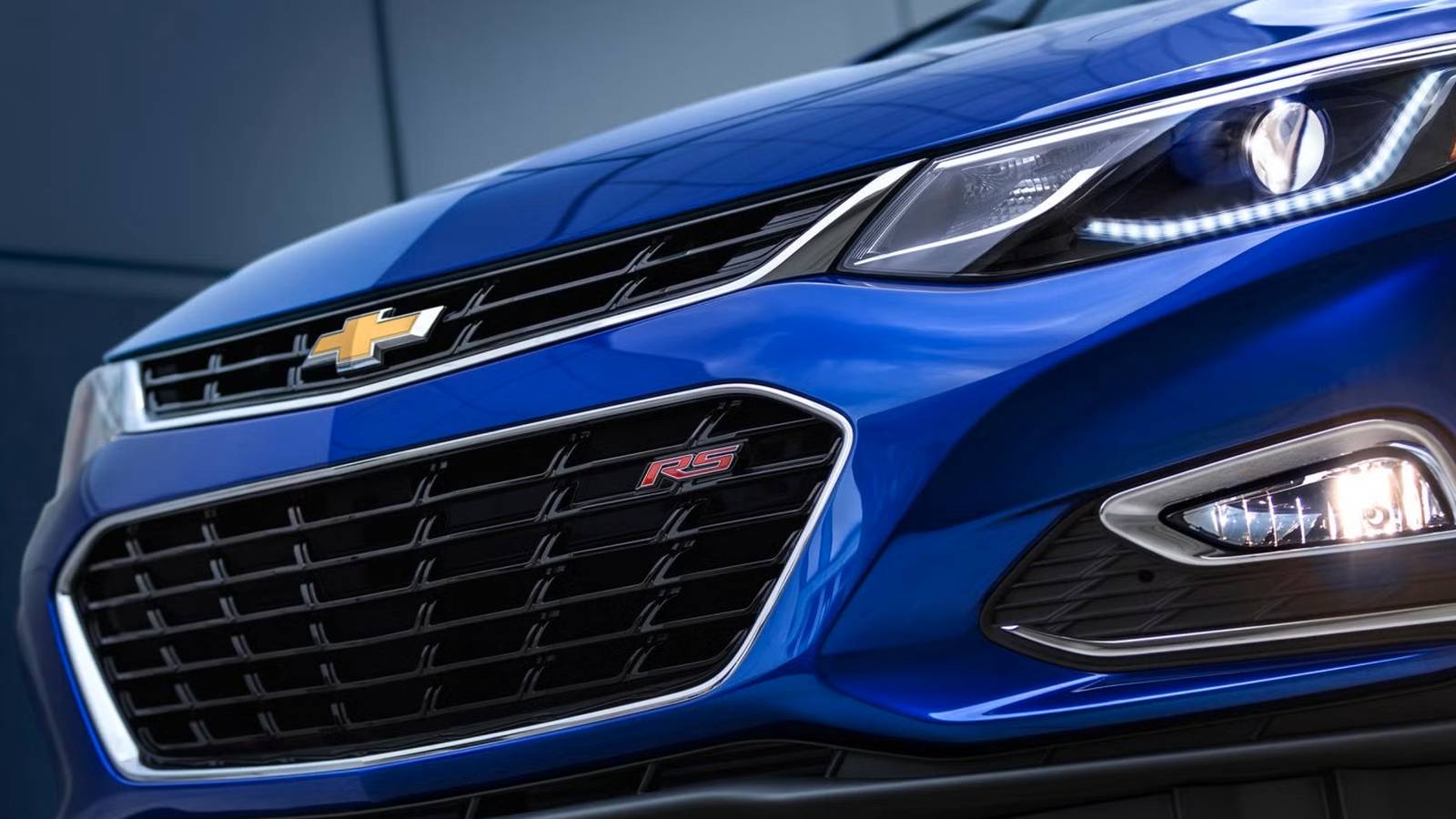
It’s never been harder to find a worthwhile, affordable car than it is today. Most shoppers want something economical, fuel-efficient, relatively modern, and reliable. Ticking off those four checkboxes has become increasingly elusive, however. We are here to present you with an often overlooked candidate that fits the bill most people are looking for: the second-generation Chevrolet Cruze. Although it was only produced from the 2016 to 2019 model years, this American sedan is one of the most complete budget buys on the market today. Let’s break down everything you need to know about the second-generation Chevy Cruze so you can decide whether it should be on your shopping shortlist.
The Second-Gen Cruze Was A Clean-Sheet Design

The Chevy Cruze was first introduced in North America during the 2011 model year. When the second-gen debuted in the 2016 model year, it wasn’t a mild refresh; it was an entirely new and better vehicle.
The Major Powertrain And Chassis Upgrades

Despite being more spacious than its predecessor, the second-gen Chevy Cruze shed about 250 pounds from its curb weight, a change that paid dividends both in responsiveness and fuel economy. All Cruze models came equipped with the same engine: a new 1.4-liter turbocharged inline-four, which was a major upgrade compared with the anemic naturally aspirated EcoTec inline-four that preceded it. This turbo-four produces 153 horsepower and 177 lb-ft of torque on 87-octane fuel and can be paired with either a six-speed manual or six-speed automatic. Chevy even made the body more aerodynamic than before, reducing its drag coefficient. Fuel efficiency also increased significantly with the addition of a start-stop system.
A Focus On Fuel Economy

Despite offering much more power and torque than its predecessor, the most significant performance upgrade to the Chevy Cruze was its fuel economy. In LS or LT trim with a six-speed automatic, the Cruze earned ratings of 30 mpg city, 42 mpg highway, and 35 mpg combined. For a 2016 model year vehicle, these numbers aren’t just good; they are among the best in the compact class. For additional context, the 2016 Hyundai Elantra and 2016 Nissan Sentra both achieved 32 mpg combined. For the 2017 model year, Chevy also added a turbo diesel variant of the inline-four, which achieved a stellar 52 mpg highway even when equipped with the manual transmission. These figures rival those of modern hybrids; for example, the 2026 Toyota Prius achieves 54 mpg highway.

Best Gas Mileage SUVs For 2026
A surprising choice tops the list of fuel-efficient SUVs for 2026, boasting an impressive 49 mpg combined.
The Interior And Tech Features Are Better Than You Think

Though Chevy made meaningful leaps and bounds in terms of the powertrain and chassis, the interior overhaul of the second-gen Cruze was just as significant.
A Solid Revamped Interior

Chevy took inspiration from its larger sedans, like the Chevrolet Malibu, for the interior of the second-gen Cruze. As a result, compared to the segment average, the Cruze’s interior looks a step above many of its rivals. It wasn’t just the quality that improved, however. Functionality did too, as the passenger room increased overall, especially in the rear seating area. Ergonomics also improved with straightforward climate, steering wheel, and audio controls. An even more spacious hatchback variant was later added in the 2017 model year and provided 47.2 cubic feet of cargo space with the rear seats folded.
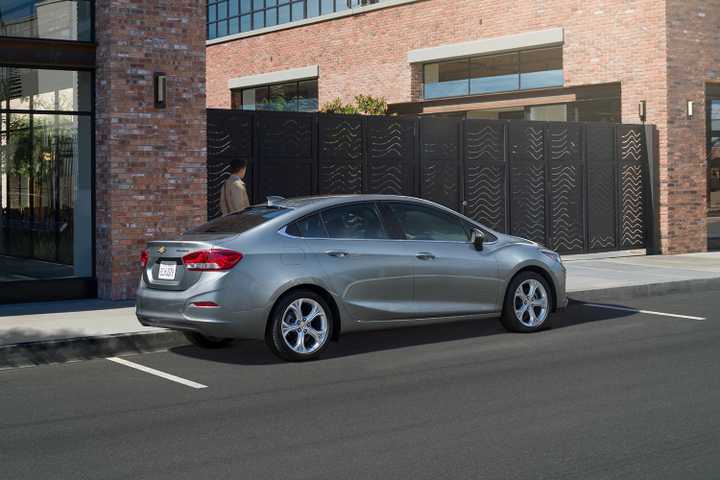

- Base Trim Engine
-
1.4L Turbo Inline-4 Gas
- Base Trim Transmission
-
6-Speed Automatic
- Base Trim Drivetrain
-
Front-Wheel Drive
- Base Trim Horsepower
-
153 hp
- Base Trim Torque
-
177 lb-ft @ 2000-4000 rpm
- Fuel Economy
-
28/38 MPG
- Make
-
Chevrolet
- Model
-
Cruze Sedan
- Segment
-
Compact Sedan
Strong Standard Connectivity And Tech

All second-gen Chevy Cruze models came standard with a seven-inch infotainment system that provided more functionality than most at its price point. Apple CarPlay and Android Auto were standard, which at the time was a big deal and uncommon for vehicles in this class. Although this infotainment system may not be cutting-edge by today’s standards, it still does the trick and provides you with all the features you may desire, except for wireless CarPlay. If you want wireless compatibility, your options are a USB wireless CarPlay adapter or an aftermarket head unit that features built-in wireless CarPlay.

If you are considering this vehicle for your teenager, there is also the integrated Teen Driver technology. The fully configurable safety suite enables parents to set driving limits for teen drivers via a dedicated key/profile; restrictions are protected by a user-generated PIN.

These Are The First 10 Production Cars In History With Factory Turbochargers
We may love a good turbo today, but they had to start somewhere – here are the first 10 production cars to boast a turbocharged engine under the hood.
How Much A Second-Gen Cruze Costs Today

Now that you know what the mechanical foundation and interior features of the second-gen Chevy Cruze are, it’s time to learn why this American sedan is still worth buying today. The primary reason to consider it is its value relative to its rivals on the used market.
The Current Market Price Of A Second-Gen Cruze

According to Consumer Reports, a 2016 Chevrolet Cruze is worth $4,675 to $7,325 depending on trim level, mileage, condition, and location. The final model year, 2019, has an average retail price of $6,150 to $10,975. Even for the most well-equipped and newest options, the Cruze is still well within the territory for a solid budget buy. Let’s remember what we are getting at this price point: a quick turbo engine, standard CarPlay, generous interior space, and 42 mpg on the highway. If you want a Japanese or Korean competitor with the same features, it typically costs several hundred to several thousand dollars more. For the ultimate practical configuration, the 2017+ hatchback model is a clear standout for its functionality.
The Second-Gen Cruze Next To Its Primary Competition

If you are considering a Chevy Cruze, some of the notable alternatives include the Honda Civic, Toyota Corolla, and Hyundai Elantra GT. The Civic and Corolla will, on average, cost more than an equivalent Cruze as a result of their strong long-term reliability standards. However, in everyday usability, there isn’t much difference between the Cruze and these Japanese alternatives. The Elantra GT, a hatchback, hovers around the same price as the Cruze, but offers less fuel economy and lacks the availability of a diesel option. The Cruze also beats most of its rivals with its standard connectivity features. If you are a commuter who primarily tracks highway miles and has a strict budget, the second-gen Cruze should be among your top considerations.

10 Midsize SUVs That Get Over 25 MPG On The Highway
These gas-powered midsize SUVs achieve better than 25 mpg on the highway, a feat previously exclusive to compact vehicles.
Common Issues And What To Look Out For

The second-gen Chevy Cruze offers a compelling value proposition, but it is not without its caveats. The first-gen was plagued by lackluster quality and reliability issues, while the second-gen is a lot better in both regards.
The Considerations Surrounding Early Model Years
We only got four years of production from 2016 to 2019 for the Chevy Cruze, and reliability went up with every passing year. A notable issue with the 2016 and 2017 model years is cylinder #1 of the turbo-four engine, which could crack under certain situations. This issue is directly related to the Low-Speed Pre-Ignition (LPSI) system utilized in this turbo engine. It is possible to mitigate this issue by using specific high-quality synthetic oils and 91 octane fuel to reduce the potential for engine knock. If you are shopping for a 2016 or 2017 model year, it is imperative to ensure the cracked piston issue has been addressed before committing to a purchase. Despite this issue, the 2016 and 2017 model years both earned an 88 out of 100 reliability score from J.D. Power, which was a top-performing score for all vehicles in its class.
The Best Model Years To Consider

If you want the absolute most reliable Cruze available, your best bet is to buy as new and as low-mileage an example as possible. The 2018 and 2019 model years are, by far, the most reliable and refined. By the final model year, Chevrolet had ironed out most of the issues that had plagued this generation. These later model years also improved the braking components, electronics, and transmission behavior. The 2019 model year is the most reliable option, but regardless of model year, any Cruze should be carefully inspected. We wouldn’t trust any Cruze without a well-documented service history.

If there is the option of an extended powertrain warranty, we would opt for it. A warranty will provide you with extra peace of mind and will surely pay dividends down the road. Though it requires a bit more due diligence, a second-gen Cruze provides a level of value that is essentially unheard of at this price point. You won’t find too many practical cars that also provide 40+ mpg highway and also cost less than $10,000. Throw in the additional functionality of the hatchback model, and you can see how this American option can provide you with considerably more value than the equivalent Toyota Corolla.
Sources: OEMs, Consumer Reports, NHTSA, Fueleconomy.gov, Kelley Blue Book