
In an era increasingly shaped by electrification, the high-revving internal combustion engine has become something of a mechanical rebellion. EV powertrains deliver staggering acceleration, but they lack the rising mechanical intensity that comes from chasing a redline. For enthusiasts, the thrill of an engine screaming toward its limit remains one of the most visceral sensations in driving, and in reality, it’s what makes the motoring world move round and round.
Modern performance engines face significant constraints. Emissions regulations, efficiency targets, and turbocharging trends have pushed many power plants toward lower-RPM torque rather than high-RPM theatrics. From turbocharged four-cylinders to naturally aspirated V12s that spin like racing engines, these cars prove that the pursuit of RPM is far from extinct. Each of these engines represents a different engineering philosophy, but they share one defining characteristic: they love the top end of the tachometer.
Mercedes-AMG C63 S E Performance | Turbocharged Four-Cylinder
6,750 RPM — A High-Tech Engine That Still Loves To Rev

Few engines on this list sparked as much debate as the one found in the latest Mercedes-AMG C63 S E Performance. AMG replaced the traditional V8 that defined previous C63 models with a highly sophisticated hybrid powertrain centered around a turbocharged four-cylinder. The engine itself is a 2.0-liter turbocharged inline-four, known internally as the M139l. On its own, it produces 469 horsepower and 402 pound-feet of torque, making it the most powerful production four-cylinder engine ever installed in a road car. Combined with an electric motor mounted on the rear axle, total output climbs to 671 horsepower and 752 pound-feet of torque.

Despite its hybrid complexity, the combustion engine still spins to 6,750 RPM. It remains eager to rev, thanks in part to its Formula 1-inspired electric turbocharger, which eliminates traditional turbo lag by using an electric motor to keep the turbo spinning. The result is an engine that behaves very differently from most turbocharged units. Power builds cleanly toward the redline rather than fading at higher RPM. And yes, behind the wheel, it’s not going to evoke the mighty thrill that you’d get from a V8. Instead, it’s game-like and indeed lacks the theater. Visually, the Mercedes-Benz C63 S E Performance still carries AMG’s muscular styling. Flared wheel arches, large air intakes, and an aggressive grille ensure the car still looks every bit like the performance sedan it has always been.
Notable Features And Aspects
- It’s the most powerful four-cylinder ever fitted to a production car, yet it replaces AMG’s legendary V8 — one reason the model sparked huge debate among enthusiasts.
- The turbocharger uses electric assistance derived from Mercedes’ Formula 1 program, allowing the engine to build boost almost instantly.
- The car’s hybrid system adds a rear-mounted electric motor, effectively turning the C63 into an electrified performance sedan with supercar-level power.
Honda Civic Type R | Turbocharged 2.0-Liter Four-Cylinder
7,000 RPM — Proof That Turbo Engines Can Still Be Playful

Turbocharged engines often prioritize mid-range torque, but the Honda Civic Type R demonstrates that forced induction doesn’t have to eliminate top-end excitement. The latest Civic Type R uses a 2.0-liter turbocharged inline-four, producing 315 horsepower and 310 pound-feet of torque. Power flows through a six-speed manual transmission, reinforcing the car’s enthusiast-focused identity. The engine spins happily to 7,000 RPM, delivering a satisfying surge of power as it approaches the upper range of the tachometer. Honda’s engineering philosophy plays a large role here.
At the same time, the 2.0-liter turbo’s tuning in the FL5 is more ferocious. It delivers power more aggressively than the FK8 when you provoke it, with turbo lag being more minimal than ever.
– Isaac Atienza for TopSpeed

The engine maintains excellent throttle response despite its turbocharger, and the power delivery is geared towards being progressive rather than abrupt. The Type R’s aggressive yet purposeful styling reinforces its track-focused character. Large air intakes, a functional rear wing, and wide fenders emphasize performance without sacrificing everyday usability. Combined with razor-sharp chassis tuning, the engine’s willingness to rev makes the Civic Type R one of the most engaging performance cars available at any price.
Notable Features And Aspects
- The Civic Type R remains one of the last high-performance cars sold exclusively with a manual transmission, reinforcing its enthusiast focus.
- Honda engineered the chassis and suspension, so the front-wheel-drive platform can handle track use without overwhelming torque steer.
- The car has repeatedly set lap records for front-wheel-drive production cars at circuits around the world.
Mercedes-AMG GT Black Series | Flat-Plane V8
7,200 RPM — Racing DNA In A Road-Going Monster

The Mercedes-AMG GT Black Series represents the most extreme road-going AMG ever produced. Its engine is a heavily reworked version of AMG’s familiar 4.0-liter twin-turbo V8, but with a crucial difference: a flat-plane crankshaft. This configuration allows the engine to rev more freely than traditional cross-plane V8s while improving throttle response.

The result is 720 horsepower and 590 pound-feet of torque, with a redline of 7,200 RPM. Flat-plane V8s produce a distinctive, high-pitched sound compared with the deeper rumble of conventional V8s. In the Black Series, that soundtrack becomes a ferocious mechanical roar. The exterior of the GT Black Series looks equally aggressive. A massive adjustable rear wing, enormous front splitter, and large hood vents give the car a visual presence that borders on race-car territory. Every aspect of the vehicle is tuned for extreme performance, and the engine’s high-revving character plays a central role in its personality.
Notable Features And Aspects
- The Black Series represents the most extreme road-going AMG ever produced, developed with heavy influence from the brand’s GT racing program.
- Its aggressive aerodynamics, including a massive adjustable rear wing, generate serious track-level downforce.
- The flat-plane crankshaft changes the engine’s character completely, giving it a higher-pitched sound more like a Ferrari than a traditional AMG V8.

12 Sedans That Can Outrun The Porsche 911 In A Straight Line
The quickest sedan on this list that can outrun a Porsche 911 does 0-60 in under 2 seconds.
McLaren | Twin-Turbocharged 4.0-Liter V8
8,500 RPM — Turbocharging Without Killing The Drama

McLaren’s modern supercars rely on a remarkably versatile engine platform: a 4.0-liter twin-turbocharged V8 used across models such as the 720S, 765LT, and Artura-derived variants. Depending on the model, the engine produces between 710 and 755 horsepower while revving to an impressive 8,500 RPM. Turbocharged engines rarely spin this high, but McLaren engineers worked extensively to preserve a high-revving character. The engine builds power progressively rather than delivering a sudden torque spike, encouraging drivers to chase the upper half of the rev range.

The lightweight carbon-fiber construction of McLaren’s chassis amplifies the effect. With minimal weight and razor-sharp handling, the engine’s explosive top-end power becomes even more dramatic. Visually, McLaren’s sculpted bodywork is designed as much for aerodynamic efficiency as for aesthetics. Large air channels and flowing surfaces direct airflow through the car rather than around it. The result is a supercar that feels equally comfortable on the road and track while retaining the excitement of a high-revving engine.
Notable Features And Aspects
- McLaren designed the engine to be extremely compact and lightweight, helping the company achieve its famously low vehicle weights.
- In models like the 720S and 765LT, the engine delivers explosive acceleration while maintaining a surprisingly smooth power curve.
- The engine sits inside a carbon-fiber monocoque chassis, a feature borrowed from Formula One-style construction.
Ferrari 296 GTB | Twin-Turbo Hybrid V6
8,500 RPM — Electrification Meets Ferrari’s Rev-Happy Character

Ferrari’s 296 GTB demonstrates how hybrid technology can enhance rather than dilute driving excitement. The car combines a 3.0-liter twin-turbocharged V6 with an electric motor to produce 819 horsepower. Despite its hybrid nature, the combustion engine still revs to 8,500 RPM.

Ferrari engineered the V6 to deliver a sound and response reminiscent of the brand’s traditional naturally aspirated engines. The electric motor fills in torque gaps and sharpens acceleration, allowing the engine to focus on delivering high-RPM drama. Visually, the 296 GTB combines modern aerodynamic solutions with classic Ferrari design cues. The result is a sleek supercar that looks both futuristic and unmistakably Italian.
Notable Features And Aspects
- The 296 GTB marks Ferrari’s first road car powered by a V6 engine, a major shift for a brand historically associated with V8s and V12s.
- The hybrid system allows the car to drive purely on electric power for short distances, something unheard of in older Ferraris.
- Ferrari engineers focused heavily on tuning the engine sound so it still delivers a distinctive Ferrari-style soundtrack despite turbocharging.
Lamborghini Huracán STO | Naturally Aspirated V10
8,500 RPM — One Of The Last True High-Revving V10s

In a world rapidly transitioning toward hybrid and turbocharged powertrains, Lamborghini’s naturally aspirated 5.2-liter V10 feels almost rebellious. In the Huracán STO, the engine produces 631 horsepower and 417 pound-feet of torque, revving to 8,500 RPM. Without turbochargers to muffle the experience, the V10 delivers a raw and emotional soundtrack that intensifies as the revs climb.

The STO is heavily inspired by Lamborghini’s racing program. Extensive carbon fiber reduces weight, while large aerodynamic surfaces generate significant downforce. The engine’s linear power delivery makes the driving experience incredibly immersive. As the tachometer climbs, the sound and intensity build together in a crescendo that few modern engines can match. For enthusiasts, the Huracán STO represents one of the last great celebrations of naturally aspirated performance.
Notable Features And Aspects
- The STO is heavily inspired by Lamborghini’s Huracán Super Trofeo race car, which explains its extreme aerodynamic design.
- Nearly the entire body is made from carbon fiber, dramatically reducing weight.
- Lamborghini intentionally kept the engine naturally aspirated to preserve the dramatic sound and linear power delivery enthusiasts love.

12 Affordable Alternatives To The Porsche 911 In 2026
These sports cars prove that you can still find the magic and thrill of a proper sports car for less than the price of a Porsche 911.
Chevrolet Corvette Z06 | Flat-Plane-Crank V8
8,600 RPM — America’s Exotic-Fighting Screamer

When Chevrolet unveiled the latest Corvette Z06, it stunned the performance world. The centerpiece is the LT6, a 5.5-liter naturally aspirated flat-plane-crank V8 producing 670 horsepower. Even more impressive is its 8,600 RPM redline, making it the highest-revving V8 ever installed in an American production car.

The flat-plane crankshaft allows the engine to breathe efficiently at high RPM, producing a piercing exhaust note that resembles European exotic cars. Combined with the Corvette’s mid-engine layout, the Z06 delivers performance that rivals far more expensive supercars. The aggressive design reflects that capability. Wide fenders, large cooling vents, and aerodynamic elements emphasize its track-focused mission.
Notable Features And Aspects
- The LT6 engine in the Z06 was inspired directly by Corvette Racing’s endurance engines.
- It produces one of the most exotic engine notes ever heard in an American car.
- The mid-engine layout of the current Corvette platform allows the Z06 to compete with European supercars costing far more.
Ferrari 812 Superfast | Naturally Aspirated V12
8,900 RPM — A Front-Engine V12 That Defies Physics

The Ferrari 812 Superfast represents the pinnacle of front-engine V12 engineering. Its 6.5-liter naturally aspirated V12 produces 789 horsepower and revs to 8,900 RPM. Unlike turbocharged engines that rely on forced induction, the V12 delivers a relentless surge of power that builds all the way to its extraordinary redline.

The engine’s soundtrack is equally dramatic, transforming from a deep mechanical growl into a soaring wail as it approaches maximum RPM. Ferrari’s aerodynamic design ensures the 812 Superfast remains stable even at extreme speeds, while the long hood and sculpted bodywork give it a classic grand-touring silhouette.
Notable Features And Aspects
- Ferrari describes the 812’s engine as the most powerful naturally aspirated V12 the company has ever built for a road car.
- The engine delivers a dramatic surge of power near the redline, creating one of the most thrilling acceleration experiences in modern grand touring cars.
- Despite its performance focus, the 812 remains a front-engine grand tourer designed for long-distance driving.
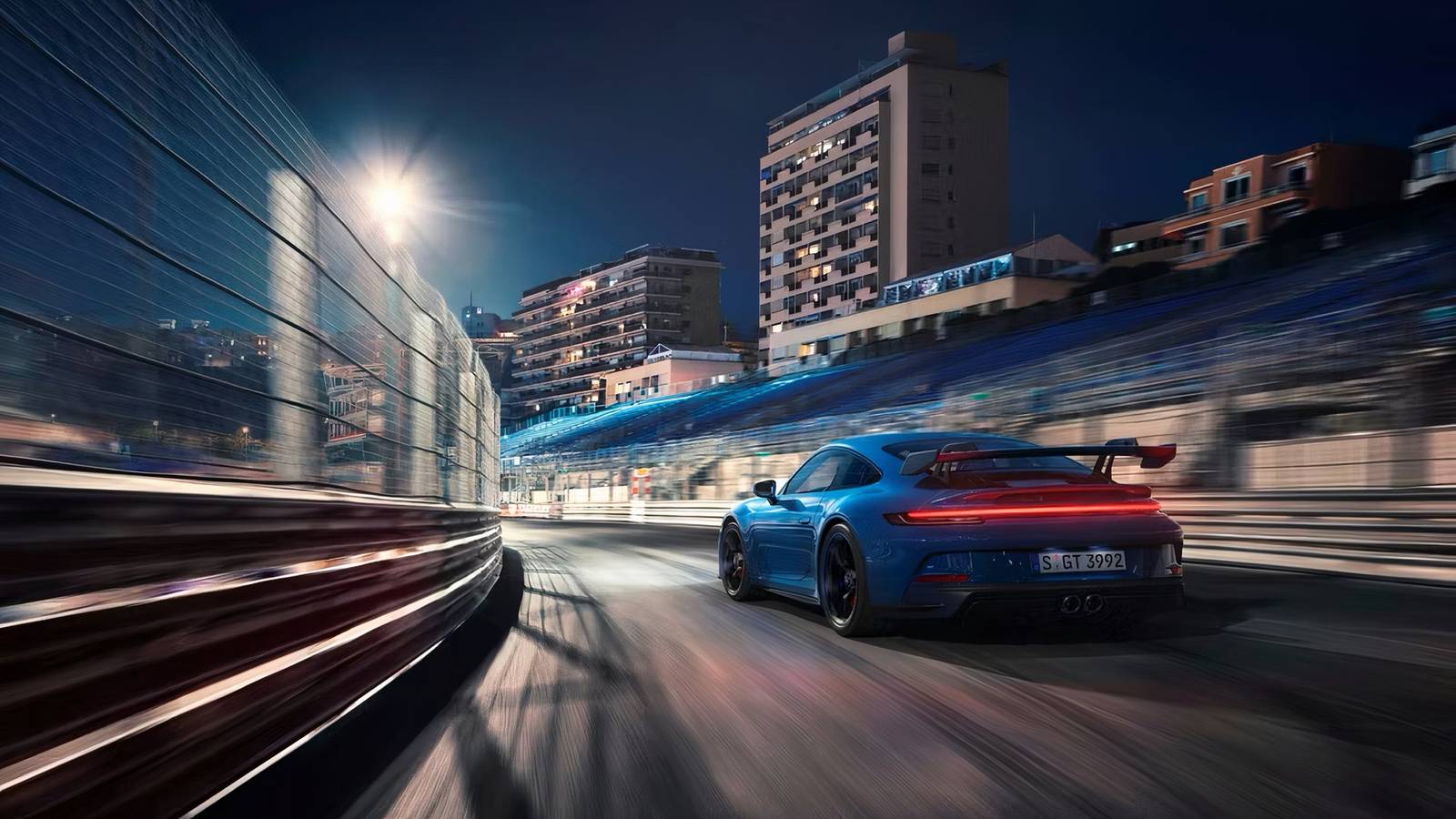
Porsche 911 GT3 | Naturally Aspirated Flat-Six
9,000 RPM — Still The Benchmark For Driver Engagement

Few modern engines capture the spirit of high-revving performance quite like the 4.0-liter flat-six in the Porsche 911 GT3. Producing 502 horsepower, the engine revs to an astonishing 9,000 RPM. Derived from Porsche’s motorsport program, the engine delivers razor-sharp throttle response and extraordinary mechanical precision.

Combined with the GT3’s lightweight construction and precise steering, the engine creates a driving experience widely regarded as one of the best available today. The GT3’s understated yet purposeful design reflects its track-focused mission, with aerodynamic elements integrated into the iconic 911 shape.
Notable Features And Aspects
- The GT3’s engine is closely related to the one used in Porsche’s endurance racing cars, emphasizing durability and track performance.
- Porsche intentionally kept the engine naturally aspirated to maintain its sharp throttle response and emotional sound.
- The GT3 has become widely regarded as one of the purest driver’s cars on sale today
Aston Martin Valkyrie | Cosworth-Built V12
11,000 RPM — Essentially A Formula One Engine For The Road

At the extreme end of the spectrum sits the Aston Martin Valkyrie. Its 6.5-liter naturally aspirated V12, developed by Cosworth, produces 1,000 horsepower and revs to an astonishing 11,000 RPM. This engine operates closer to a Formula-1 power unit than a traditional road-car engine.

The Valkyrie’s radical aerodynamic design, developed with input from Formula One engineer Adrian Newey, complements the engine’s extraordinary performance. Few road cars in history have pushed the limits of internal combustion this far.
Notable Features And Aspects
- Strives for mechanical perfection by limiting luxury and convenience cabin features.
- Has a higher-spec AMR Pro trim that extends its performance ceiling.
- Designed in collaboration with Red Bull.
Sources: Various Manufacturers, AutoEvolution