
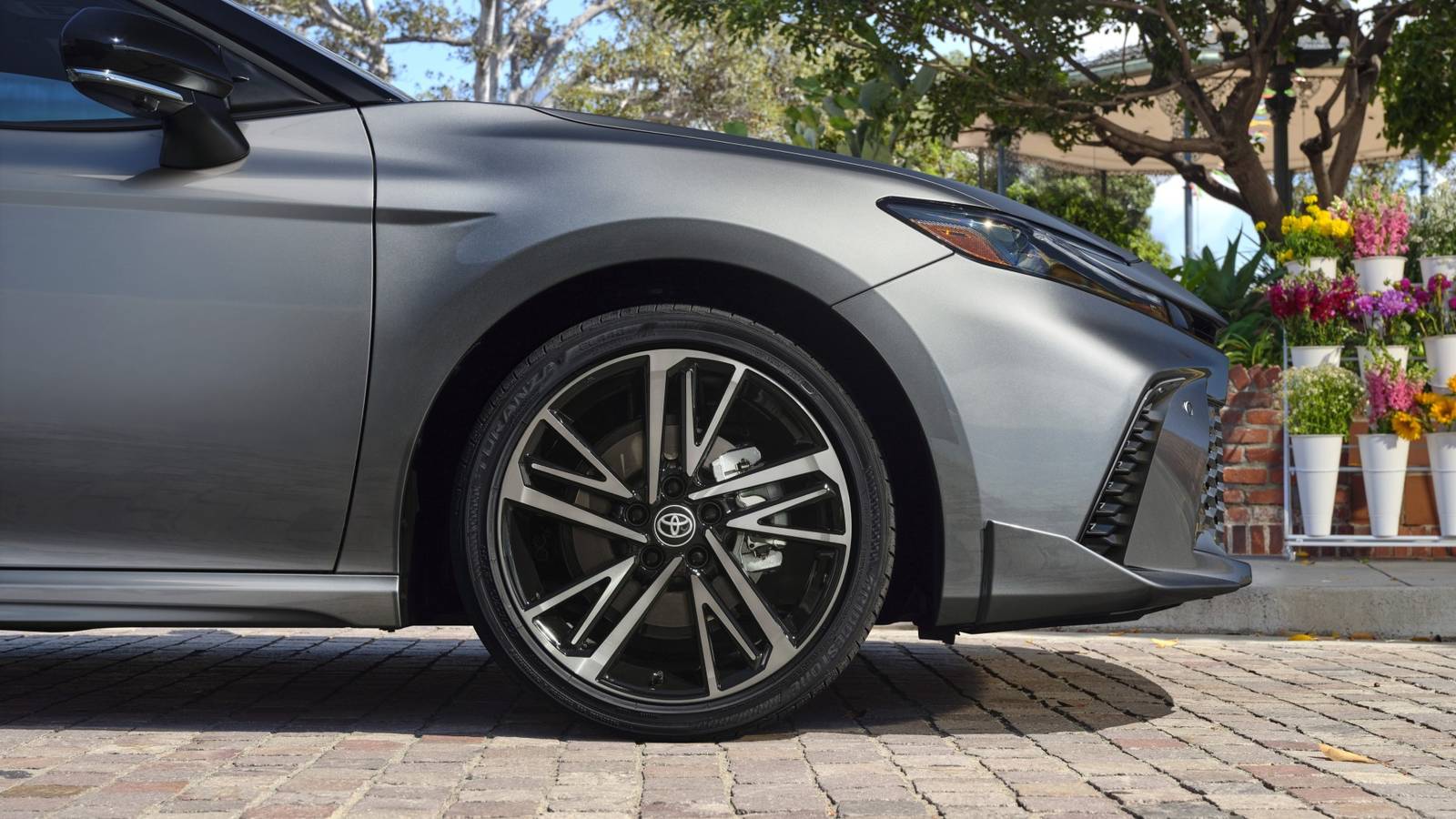
As of the first quarter of 2026, Japanese sedans continue to dominate the monthly sales charts and maintain a formidable stronghold on the U.S. market. Without fail, these dependable options account for a significant portion of the segment’s remaining volume due to a decades-long reputation for reliability and predictable value.
American consumers are drawn to these vehicles primarily as a decision that works against rising fuel prices and the increasing complexity of modern automotive repairs, valuing the total cost of ownership advantage that these brands have refined over the last few decades. Among these options, one specific midsize sedan remains the leader in reducing financial risk over long-term ownership.
The State Of Sedans In 2026

As the first quarter of the year draws to a close, the U.S. sedan market continues to put up a noteworthy fight against the overwhelming dominance of light trucks and SUVs. These more versatile and higher-riding alternatives currently command a staggering 82 percent market share of all new sales. The sedan segment’s overall market share has settled at around 18 percent. This may not be the majority, but it shows that sedans remain incredibly relevant as the primary gateway for affordability and efficiency in a market where the average new vehicle price has now surpassed $50,000.
Despite a slight year-over-year volume decline in early 2026 due to inventory recalibrations and economic headwinds, demand for traditional four-door models remains strong, with some popular hybrid and compact versions selling out faster than dealerships can restock them. This sustained interest is driven by cost-conscious buyers who don’t want to compromise on refinement, as sedans offer a premium driving experience by traditional standards, together with superior fuel economy and lower entry pricing compared to their high-riding counterparts. These benefits have prompted domestic manufacturers to even reconsider their previous exits from the segment.
Toyota’s Traditional Approach To The Sedan Market

Toyota has traditionally approached the sedan segment with a philosophy of continuously improving its product offerings, effectively not changing something that isn’t broken. The Japanese brand has always prioritized long-term mechanical durability and accessible entry pricing, resulting in strong favor among the mass market.
Toyota significantly lowers research and development costs and simplifies maintenance for the end consumer. It achieves this by utilizing over-engineered components and modular platforms that share parts across various vehicle classes. Doing so bolsters the industry-leading resale values that American buyers have come to rely on. This strategy centers on providing an easy ownership experience, where the vehicle is marketed as a dependable tool rather than a temperamental luxury, appealing to a pragmatic demographic that values a low total cost of ownership and predictable performance.

Ranking The Top 10 Toyota Camry Hybrid Models Years For Reliability
While many Camry years are known for their reliability, these model years stand out with the most reliable hybrid variants.
The Camry Wins Favors With The Consumer

The 2026 Toyota Camry continues its tenure as a cornerstone of the American automotive sedan segment, functioning as a primary volume-seller for the Japanese company. This is despite Toyota adopting an SUV and crossover-focused strategy. Toyota markets this model to a broad demographic of pragmatic buyers, including daily commuters and growing families who prioritize long-term value, reliability, and low maintenance costs over the rugged image of an SUV.
Toyota has pivoted the current-generation model’s strategy to focus more on electrification by adopting a hybrid-only powertrain offering. This evolves the Camry into a leader in efficiency and environmental consciousness without sacrificing its core reputation for durability. Toyota also manages to maintain a competitive entry price and offer optional all-wheel drive across every trim level.
Appealing Low Long-Term Running Costs

According to Edmunds‘ True Cost To Own calculator, you can expect a new base front-wheel-drive 2026 Toyota Camry LE to cost you $37,987 over the course of five years. This includes $10,239 worth of depreciation, $7,631 on insurance, $3,196 on maintenance, and just $773 on repairs. Your taxes and fees will also be incredibly low, with the calculator showing that you’re only likely to spend $3,617. If you opt to finance the base 2026 Camry, this will add $5,336 to your ownership costs, while fuel will cost you $7,195, based on average driving distances in the U.S.
According to CarEdge, you can expect to spend $36,433 on your Camry over the same period, which includes $14,274 on depreciation, $4,530 on fuel, and $1,512 on maintenance.

iSeeCars gives the Camry range an 8.2/10 overall score, including 8.1/10 for reliability, 8.6/10 for retained value, and 8.0/10 for safety. The publication indicates that the model will run for 13.1 years or 171,785 miles without encountering any noteworthy mechanical issues, together with a 31.7 percent probability of hitting 200,000 miles.
In terms of depreciation, the publication indicates that the model will lose $10,829 or 37.7 percent of its initial sale value after five years or 60,000 miles, which is a bit less than the average competitor in the midsize hybrid sedan segment.
J.D. Power issues the 2026 Toyota Camry model year with an 82/100 consumer-verified overall score, including 80/100 for quality and reliability, 82/100 for the driving experience, 92/100 for resale, and 76/100 for the dealership experience.

Generational Evolution Of The Toyota Camry Hybrid
The Toyota Camry is one of auto history’s best, and the Camry Hybrid has been a rock in the mid-size sedan class for 20 years. Here’s how it did it.
Optimizing Fuel Efficiency Results

The main reason why you’d even be considering a new Toyota Camry is to save fuel. The front-wheel-drive LE is the most efficient model, returning a 53/50/51 MPG consumption result on the city/highway/combined cycle, with a 663-mile range claim from the 13-gallon tank. The agency also indicates that this will save you up to $4,000 in fuel costs every five years and costs $1.59 to drive 25 miles.
The all-wheel-drive XSE is the least frugal model, but this is only by a fractional amount. The EPA indicates that it returns a 44/43/44 MPG result with a 572-mile range claim and suggests that this will save you up to $3,250 in fuel costs every five years and cost $1.84 to drive every 25 miles. Expect to pay $41 to refill the 13-gallon tank, featured in all variants.
Aggressively Competitive Starting Prices

Pricing is a key reason the Camry continues to set new sales records and dramatically surpass the rest of Toyota’s electrified catalog. Toyota kicks the range off at $29,100 for the base LE front-wheel drive model, making it the most competitively priced hybrid vehicle in the segment. A lower starting price point for a newer car is always going to be a strong strategy, which is a factor that is clearly evident in its sales results.
The most expensive Camry option is the XSE, which starts at $35,500. Toyota offers the all-wheel drive system across all trims for an additional $1,525. All of these prices exclude the brand’s $1,195 destination fee. There are some optional extras available across all trims, but they are relatively few and far between, as the brand prefers to take a more defined five-trim pricing strategy.

Why The Toyota Camry Should Be On The Top Of Your New-Car List
Bold new design meets hybrid power: the 2025 Camry is a masterclass in automotive evolution. Discover why it stands out.
Luxury-Level Standard Features

The 2026 Toyota Camry range consists of five unique trims, namely the LE, SE, Nightshade, XLE, and XSE. The base LE sets a high standard with dual-zone automatic climate control,
including rear vents, a seven-inch digital gauge cluster, and six-way manually adjustable front seats with fabric upholstery. On the entertainment front, you get an eight-inch touchscreen, a six-speaker audio system, wireless Apple CarPlay and Android Auto, and a standard Qi-compatible wireless charger.
Upgrading to the SE and Nightshade trims adds a sporty aesthetic with SofTex-trimmed seating and an eight-way electrically-adjustable driver’s seat, while also adding a leather-trimmed steering wheel and aluminum pedals.
Top-Notch Digital Instrumentation

The premium XLE and XSE trims significantly elevate the cabin experience by making the 12.3-inch multimedia touchscreen and 12.3-inch fully digital gauge cluster standard. Bolstering comfort are multi-stage heated front seats, a heated steering wheel, and acoustic noise-reducing front side windows for a quieter ride.
The XLE features a more premium and sophisticated leather and microfiber-trimmed upholstery, while the XSE adopts a shooting star perforated leather design. Both luxury trims also include an auto-dimming rearview mirror with HomeLink and ambient interior lighting, complemented by a nine-speaker JBL Premium system, ventilated seats, and a 10-inch Head-Up Display. Some of these are optionally available on the lower trims via packages and individual options.
Sources: The EPA, iSeeCars, Edmunds, CarEdge, and J.D. Power.