
For decades, American sports cars followed a familiar blueprint. Big engines sat up front, power was sent to the rear wheels, and straight-line speed often took priority over the delicate balance and precision handling associated with European exotics. It was a formula that produced icons, cars that defined affordable performance, and became symbols of blue-collar aspiration. Yet even as these machines delivered thunderous V-8 soundtracks and accessible horsepower, they also carried a reputation: incredible acceleration, but not always the same razor-sharp handling as the world’s best mid-engine sports cars.
That perception lingered for generations. American manufacturers refined their formulas year after year, pushing technology further while preserving tradition. Enthusiasts loved the rawness, the value, and the unmistakable character. But globally, the benchmark for ultimate sports-car dynamics increasingly came from a different architecture, one where the engine sat behind the driver rather than ahead.
Eventually, that gap between heritage and innovation became impossible to ignore. One iconic American nameplate would take the biggest gamble in its history, abandoning decades of tradition in pursuit of world-class performance. The result didn’t just change one model; it reshaped expectations for what an American sports car could be.
How America’s Front-Engine Sports Car Tradition Defined Generations Of Performance Expectations

The American sports car story has long been intertwined with a simple, effective mechanical formula. Large displacement engines mounted ahead of the driver delivered enormous power, while rear-wheel drive ensured dramatic acceleration and smoky burnouts. For decades, this layout defined the character of performance machines built in the United States, offering brute force in a package that was both accessible and relatively affordable.
That Approach Made Sense Historically

During the muscle-car boom of the 1960s and 1970s, straight-line speed dominated the cultural imagination. Drag strips, highway pulls, and quarter-mile bragging rights mattered more than apex speeds through tight corners. Engineers optimized cars for explosive launches and highway cruising rather than the precise weight distribution demanded by European racing circuits.

Even as suspension technology improved and chassis engineering advanced through the 1990s and 2000s, the core formula rarely changed. Front-engine American sports cars became increasingly sophisticated, but they remained rooted in tradition. That tradition created legendary machines beloved by enthusiasts, yet it also reinforced a perception that domestic performance cars excelled in power while European rivals focused on balance and precision.

Every Chevrolet Corvette Ranked From Best To Worst
The ultimate ranking of America’s most iconic sports car.
Why Global Mid-Engine Supercars Long Held The Handling Advantage Over Domestic Icons

While American sports cars focused on front-engine power, many European manufacturers pursued a very different design philosophy. By placing the engine behind the driver but ahead of the rear axle, engineers could dramatically improve weight distribution and centralize mass within the chassis. The result was sharper turn-in response, better balance during high-speed cornering, and a level of agility difficult to achieve with a traditional front-engine layout.

The mid-engine concept wasn’t new. It had proven itself repeatedly in motorsport, where engineers discovered that positioning the heaviest component, the engine, closer to the car’s center of gravity dramatically improved handling characteristics. Race cars adopted the layout decades ago, and many high-end road cars soon followed. Supercars from manufacturers like Ferrari built reputations on this architecture, blending explosive acceleration with extraordinary cornering ability.
A Clear Winning Formula Was Established

For years, this created a clear global hierarchy in the sports-car world. European mid-engine machines were often viewed as the pinnacle of engineering sophistication, while American performance cars were admired for power and value. Bridging that divide would require more than incremental improvements—it would demand a fundamental rethinking of the traditional sports-car blueprint.

10 Of The Best Engines Ever Built By American Carmakers
Yes, Germans are great at engineering cars, but that doesn’t mean Americans aren’t. Here are some examples.
The C8 Corvette: Chevrolet’s Radical Mid-Engine Gamble That Changed Everything

When Chevrolet unveiled the Chevrolet Corvette (C8), it represented the most dramatic transformation in the model’s history. For the first time since the sports car debuted in 1953, the engine moved from the front of the vehicle to a position behind the driver. This bold shift wasn’t simply a design experiment; it was a complete redefinition of what America’s flagship performance car could be.
The Mid-Engine Configuration Fundamentally Changed The Car’s Dynamics

By placing the V-8 engine closer to the center of the chassis, engineers achieved near-ideal weight distribution and improved traction under acceleration. The result was sharper cornering, greater stability at speed, and performance characteristics far closer to exotic supercars than traditional American sports machines.

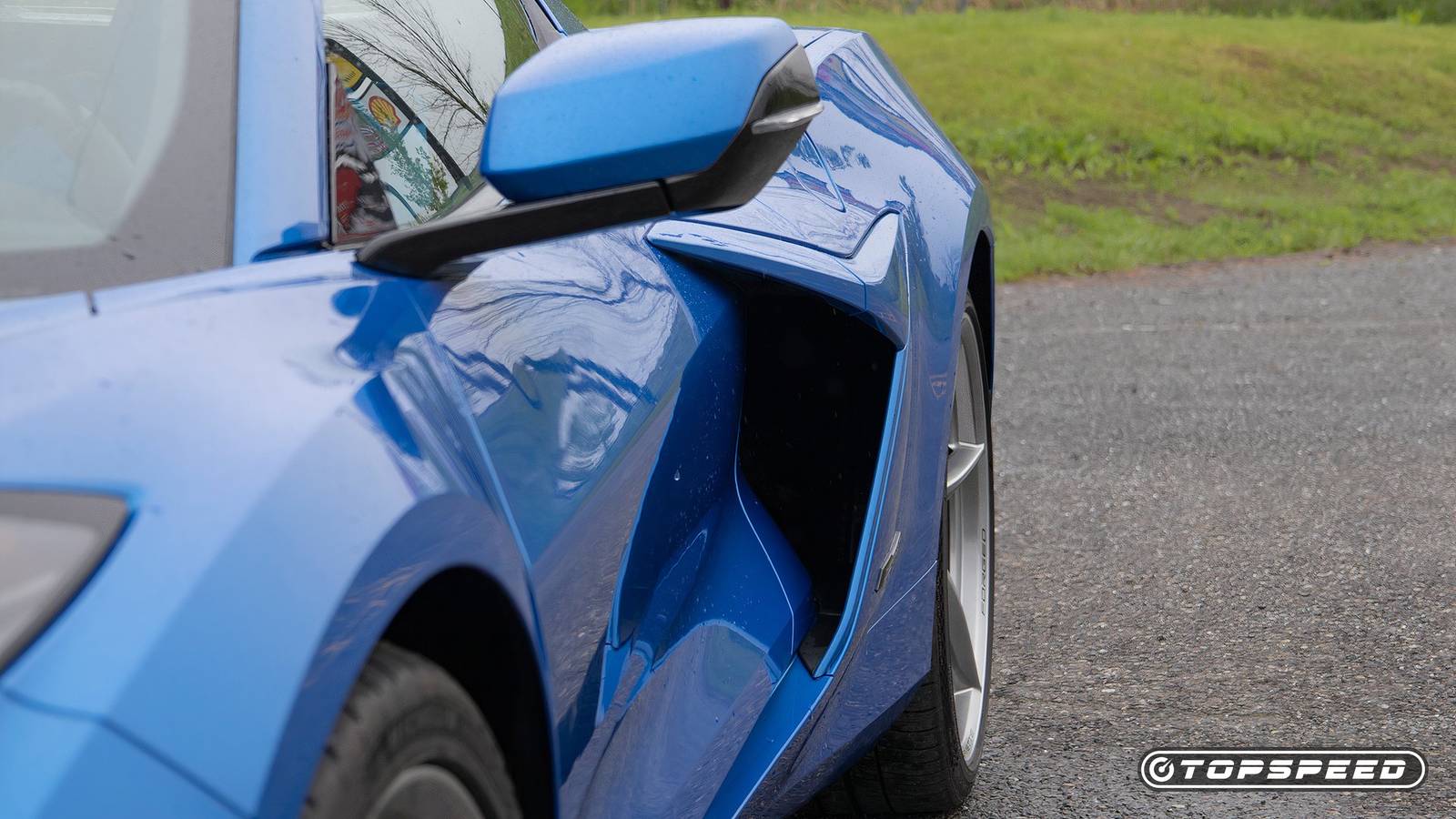
Yet what truly shocked the automotive world was how accessible this radical design remained. Despite its supercar proportions, dramatic side air intakes, and advanced engineering, the car retained a price point that was dramatically lower than most mid-engine rivals. Overnight, a vehicle that once symbolized attainable American performance began competing with machines previously considered far beyond its class.

The Most Affordable Mid-Engine Sports Car You Can Buy New In 2025
A mid-engine sports car doesn’t sound cheap, but for the last several years, a relatively affordable option has dominated the market.
From Blue-Collar Hero To Ferrari Fighter

For generations, America’s most famous sports car carried a reputation as the ultimate blue-collar performance bargain. It delivered thrilling speed for a fraction of the cost of European exotics. With its latest transformation, however, that value proposition evolved into something far more disruptive.

The new mid-engine platform enabled levels of acceleration and handling that rivaled cars costing several times more. Performance variants pushed the envelope even further, with advanced aerodynamics, electrified technology in hybrid versions, and power outputs that placed the car firmly in supercar territory. Suddenly, comparisons to European performance icons no longer seemed aspirational; they became inevitable.
The Wider Effects Of The C8’s Evolution

This shift had profound implications for the global sports-car market. When a mid-engine machine capable of supercar performance arrives with a comparatively attainable price tag, it forces competitors to reassess their own value propositions. Enthusiasts began asking a new question: why spend exotic-car money when an American alternative could deliver similar thrills?

10 American V8 Cars Under $30,000 That Are Still Worth Every Penny
These American V8 cars represent incredible value in the used market, combining timeless appeal, thrilling performance, and unmatched character.
What The C8 Means For America’s Sports Car Future

The transformation represented by this new generation extends beyond a single model. It signals a broader willingness among American manufacturers to challenge long-standing conventions in pursuit of global competitiveness. By abandoning tradition in favor of engineering innovation, the project proved that heritage and progress don’t have to be mutually exclusive.

In many ways, it also changed how the world views American performance engineering. For decades, European brands dominated conversations about precision handling and track-focused dynamics. Now, a car developed by engineers in the United States demonstrated that those capabilities could be achieved without sacrificing accessibility or character.

Looking ahead, the ripple effects of this transformation are likely to shape the future of sports cars built in America. Enthusiasts may continue to celebrate traditional front-engine machines, but expectations have evolved. Once the rules are rewritten and the boundaries expanded, there’s no going back, and the entire performance landscape becomes more exciting as a result.
Sources: General Motors