
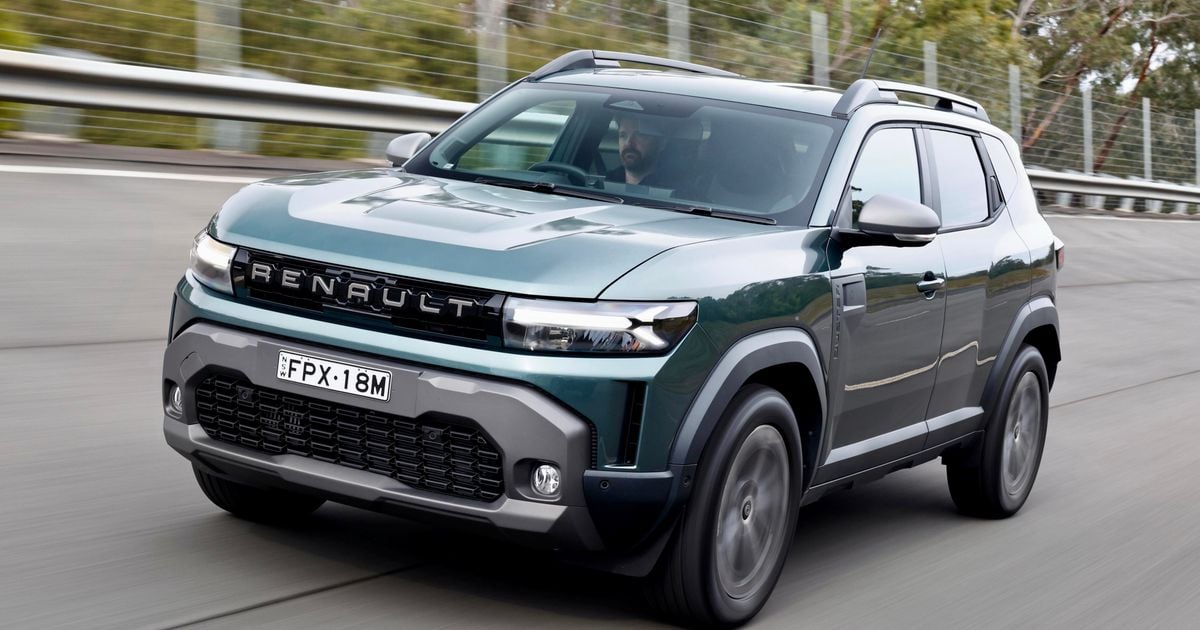
The Renault Duster hasn’t quite stormed the sales charts in the way we thought it would.
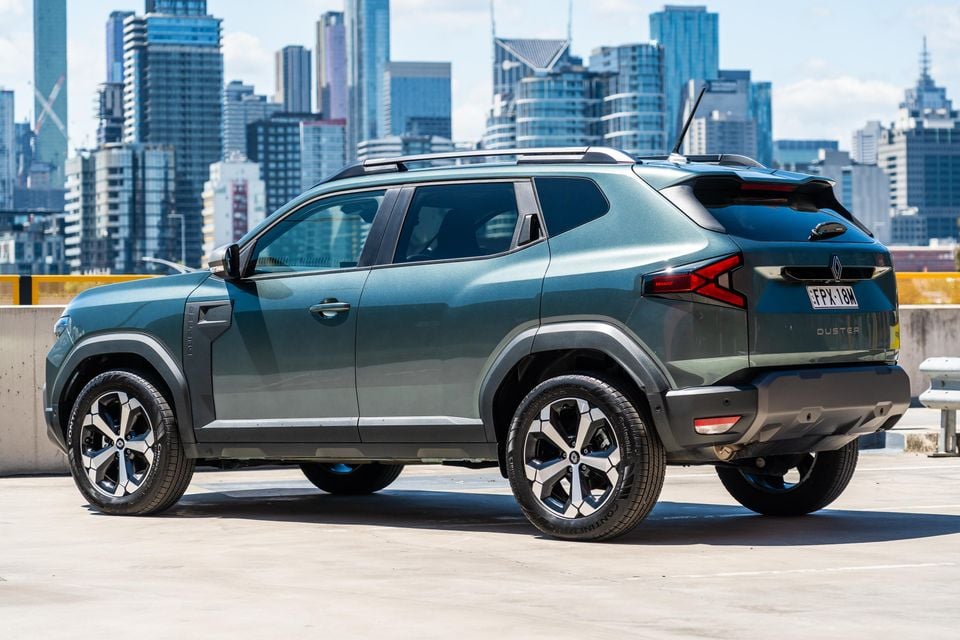
It’s been nearly a year since the lovable little Romanian-made small SUV was released in Australia with Renault badges, and the Dacia Duster certainly impressed us when we first hopped behind the wheel in August 2025, but the public has yet to flock to this rugged Euro crossover.
By the end of May, Renault had recorded just 258 Duster sales in 2026. For context, it’s been positively gazumped by its two main rivals in the Suzuki Jimny, which has found 3193 new homes so far this year, and the Subaru Crosstrek which has done even better with 3574.
That’s despite the Duster being considerably more sophisticated than the live-axle Jimny, and meaningfully more affordable than the Crosstrek while maintaining a healthy list of standard tech and equipment, including the rare option of a manual transmission to complement the automatic 2026 Renault Duster Techno 4×2 on test here.
So with all that going for it, why isn’t the Duster more popular with Aussies?
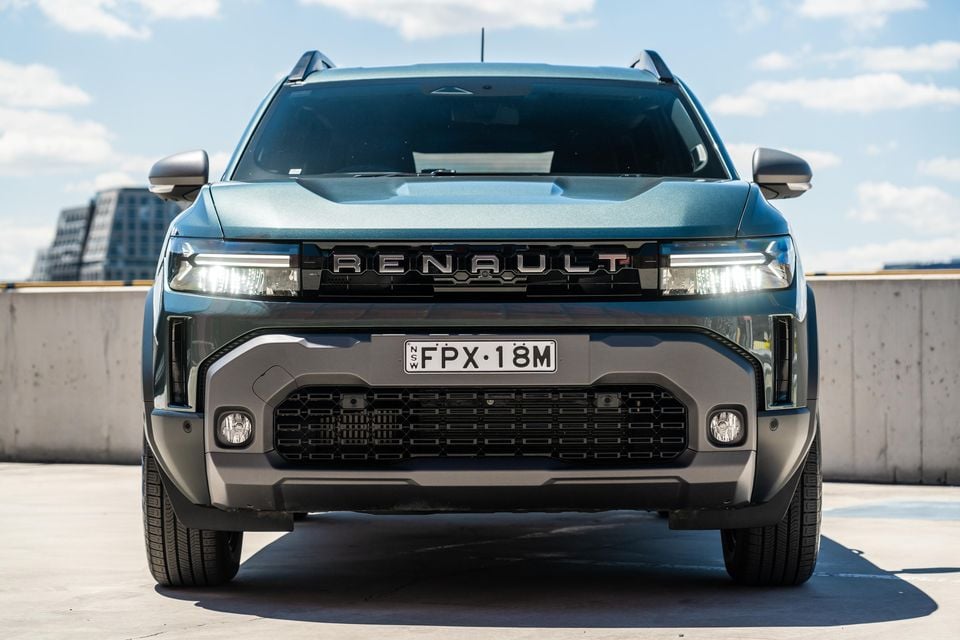
How much does the Renault Duster cost?
Our tester is the most expensive of the two automatic Duster variants on sale, priced at $36,990 before on-road costs.
|
Model |
Price before on-road costs |
|---|---|
|
2026 Renault Duster Evolution 4×2 auto |
$31,990 |
|
2026 Renault Duster Evolution 4×4 manual |
$36,490 |
|
2026 Renault Duster Techno 4×2 auto |
$36,990 |
|
2026 Renault Duster Techno 4×4 manual |
$37,990 |
Direct rivals are limited to the Jimny and Crosstrek, mostly because they’re the only other small SUVs that also offer at least some off-road capability. The automatic Jimny range starts at $36,490 before on-roads in three-door guise, or $37,490 plus on-roads for the five-door XL.
Find your perfect new car with CarExpert
Subaru’s all-wheel drive, automatic-only Crosstrek ranges from $36,490 to $47,590 plus ORCs. Importantly, the Duster we’re reviewing here is the only one of the bunch without any form of four-wheel drive.
To see how the Renault Duster stacks up against the competition, use our comparison tool
What is the Renault Duster like on the inside?
More substantial than a Jimny, but less cluttered than a Crosstrek. The Duster Techno is stylish yet robust, and retains a character that only Dacia and its Renault sister brand can pull off.
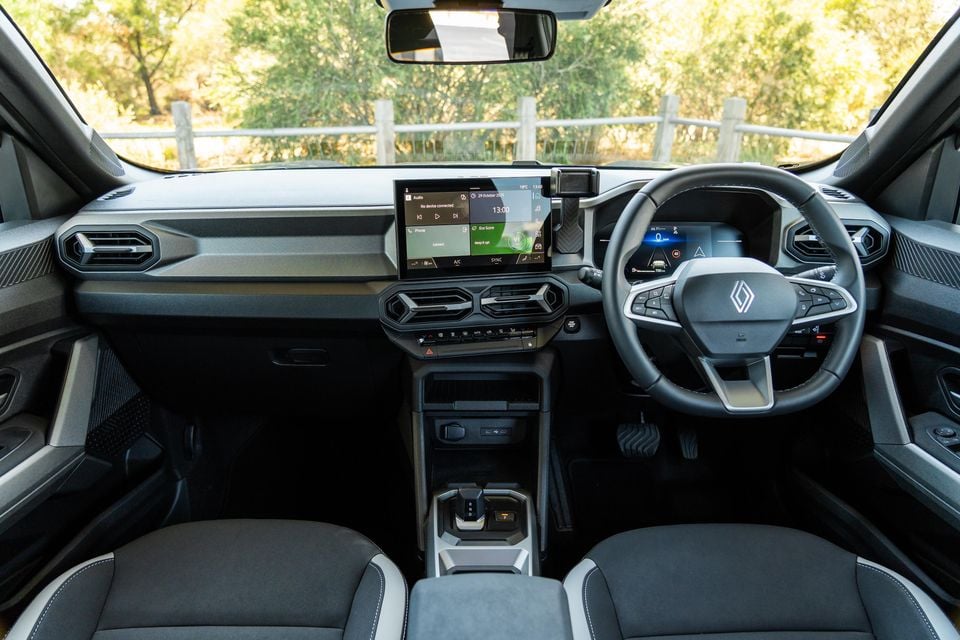
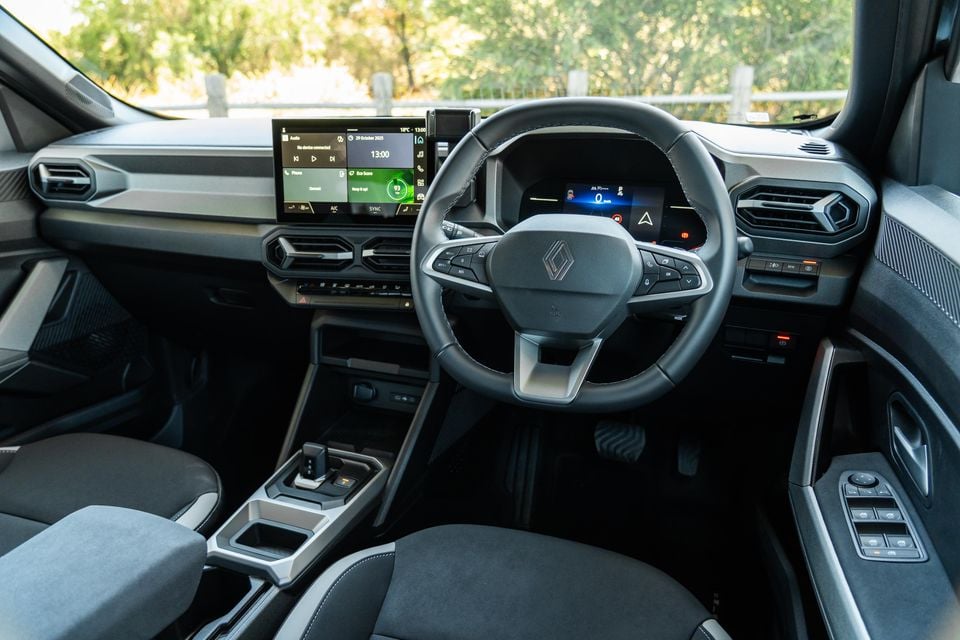
It may house a lot of hard, scratchy plastics inside, but given the Duster is pitched as a budget-friendly, durable all-rounder, everything here looks like it’s been fitted to serve that purpose. The edgy shapes and sharp angles are what make it distinctive.
The hard plastics aren’t really an issue either, because the key touchpoints are all soft. The armrests are reasonably well-padded, though not excessively, and items like the leather-wrapped steering wheel feel high-quality.
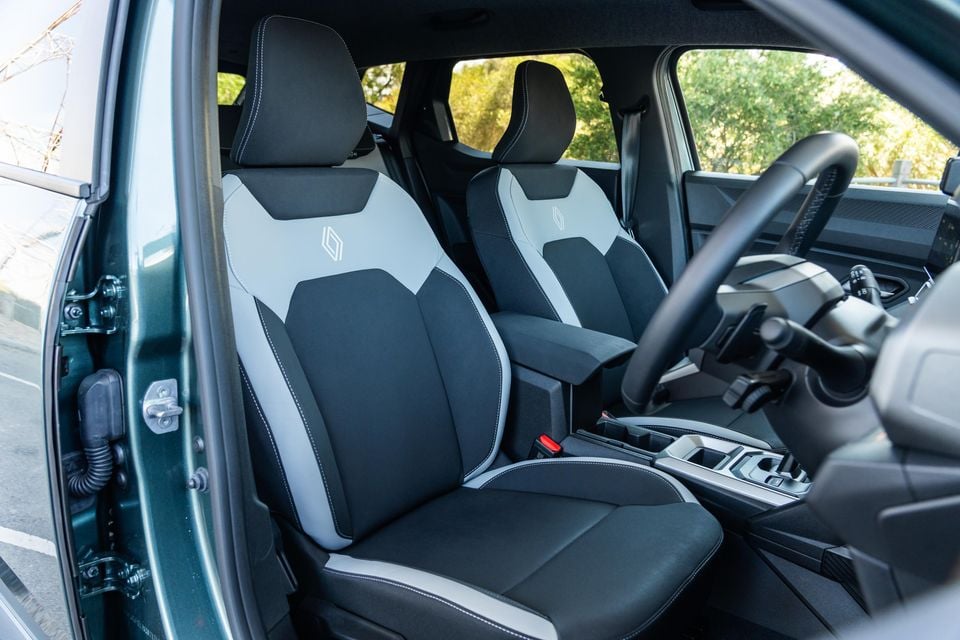
The seats, meanwhile, are comfortable and offer a broad range of manual adjustment. A distinction for the Duster Techno over the Evolution is its seat upholstery, which is a neoprene-like material that feels like a wetsuit.
It’s not quite as inviting as the plain old cloth trim seen at the bottom of the Duster range, particularly because it can be cool to the touch. That’s not ideal on cold mornings, and there’s no seat heating to make up for it – not that you’d expect that at this price point.
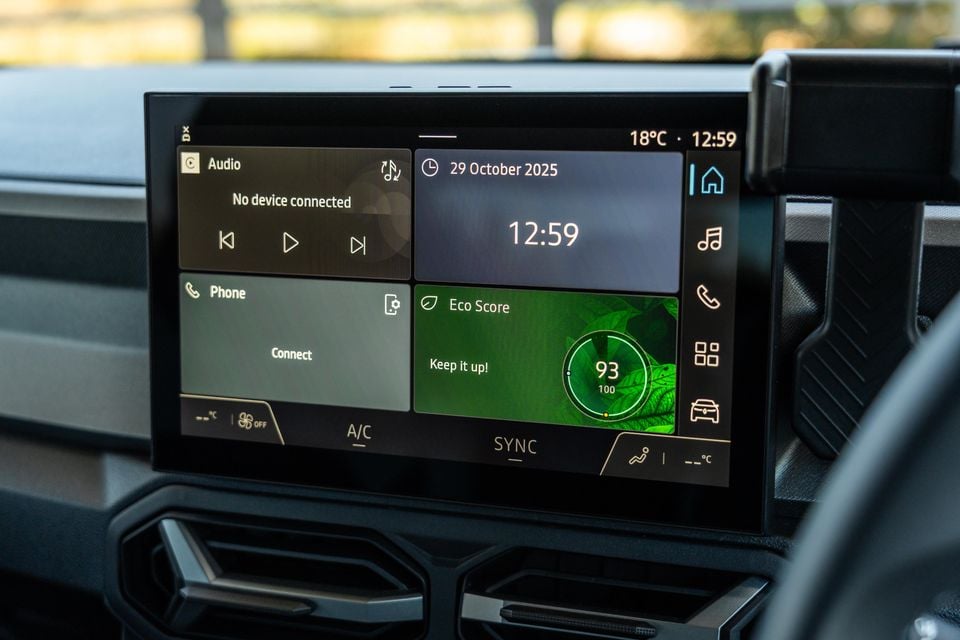
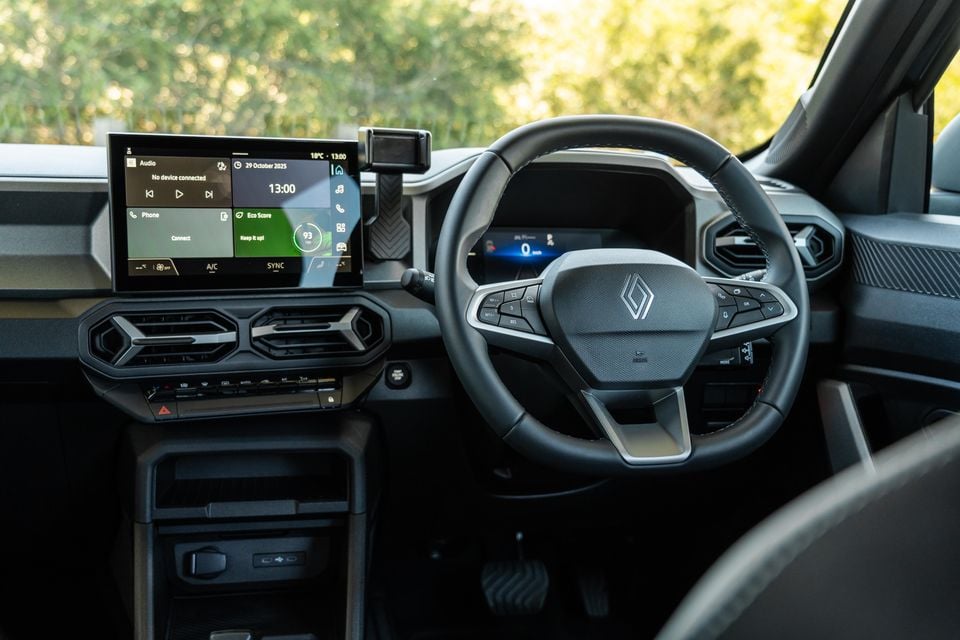
Tech-wise, the Duster doesn’t leave you wanting. It’s leagues ahead of the Jimny in this sense, and the presentation of its 10.1-inch infotainment system comes across as much more tidy than the Crosstrek’s vertical touchscreen.
It responds to inputs without delay, and its graphics have a clean character that makes the whole system easy to understand on the fly. Of course, there are still loads of menus and sub-menus to sift through depending on the function, but none of the basics require any undue brainpower.
That said, some climate control elements are still situated in a ribbon at the bottom of the screen. Thankfully, they’re accompanied by an array of physical switches below for most climate adjustments.
The infotainment system supports wireless Apple CarPlay and Android Auto as standard, and we had no connectivity issues in our week with the car. You might still be stumped by Renault’s characteristic audio controls, with volume and track-skipping done either via buttons above the screen or on the third steering-wheel stalk.
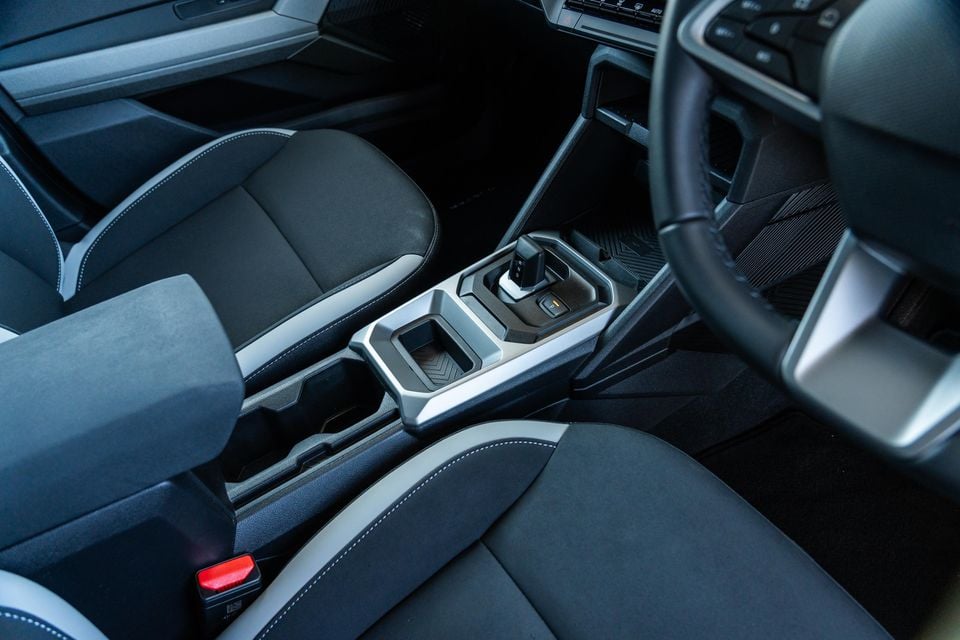
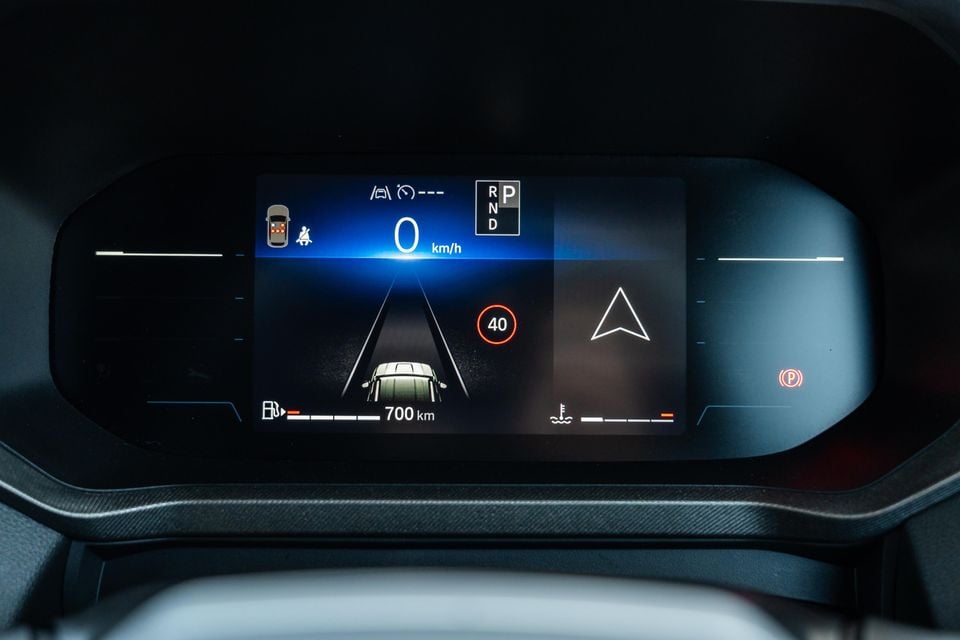
The instrument cluster takes the form of a 7.0-inch digital display. It’s graphically and functionally simple, with just three layout variations to scroll through using a steering-wheel button. There’s not much more to ask for here; it simply gets the job done.
All said, the Duster’s cabin is an enjoyable place to spend time in and it’s highly configurable via a selection of ‘YouClip’ points scattered around the interior. In the Techno, you’ll notice one on the left side of the steering wheel, which allows you to install a convenient phone holder.
Otherwise, all of the storage options are logical. There’s a tray below the climate system, a wireless phone charging pad below that, and a decently sized storage box under the central armrest. There are also two large cupholders and a tiny tray, which just about fits Renault’s obnoxiously sized key ‘card’.
Robust yet functional is how we’d describe the front of the Duster’s cabin. Plus, it’s far more spacious and modern than what’s offered in the ever-popular Jimny.
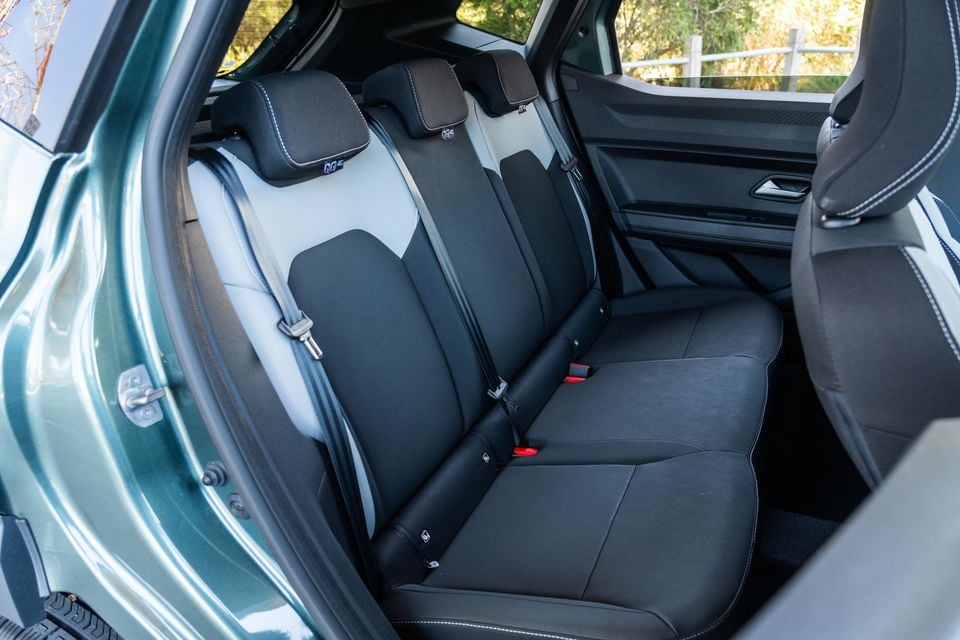
The second row is spacious enough but understandably limited given the Duster’s small SUV frame. There’s still plenty of headroom and legroom, and at 173cm I had no issue sitting behind my driving position.
The bench seat itself is serviceable, though it doesn’t hide the fact this is a budget-minded vehicle. The neoprene upholstery helps visually, but you don’t get many amenities to offset the cheaper vibe.
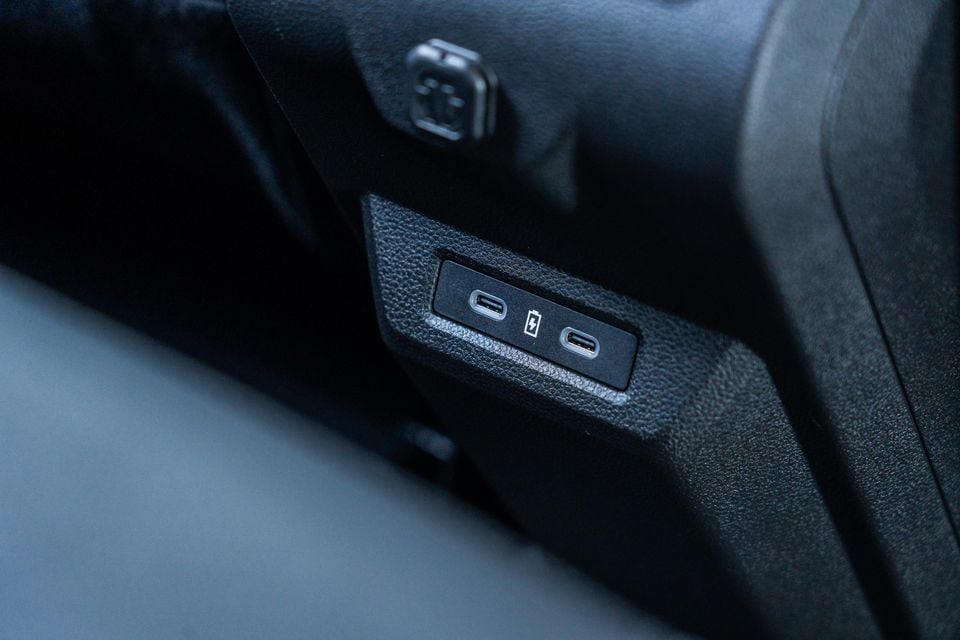
Mind you, it’s far more glamorous back here than it is in the rear of a five-door Jimny. Renault has fitted rear-facing air vents and two USB-C ports, and you can option a device holder that clips onto the back of the front head restraint if you like.
There’s no fold-down armrest, but you’ll notice another YouClip point on the back of the centre console. You can fit any compatible accessory here, including a single inelegant cupholder, to make up for the lack of storage elsewhere in the back.
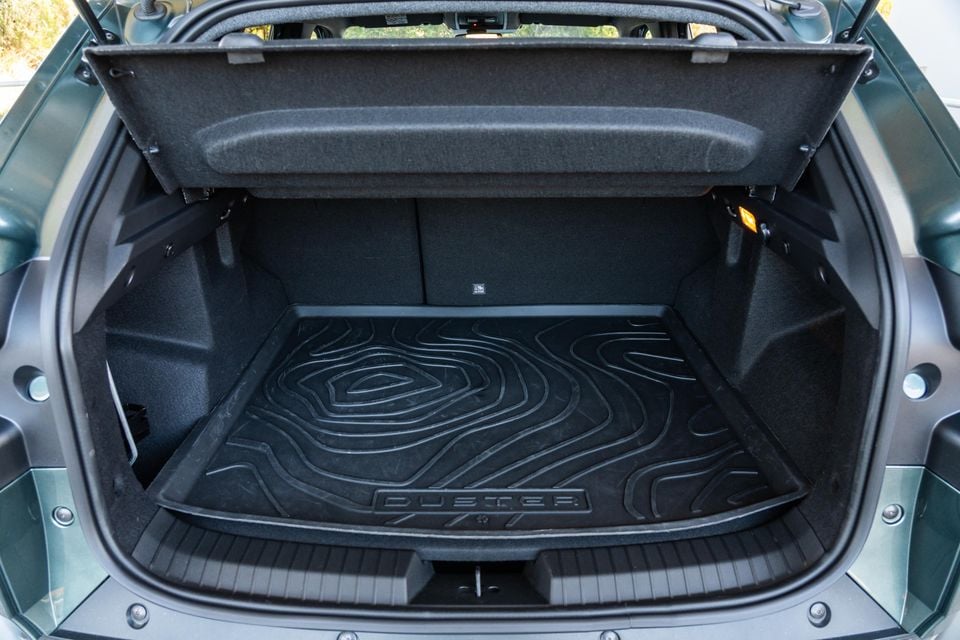
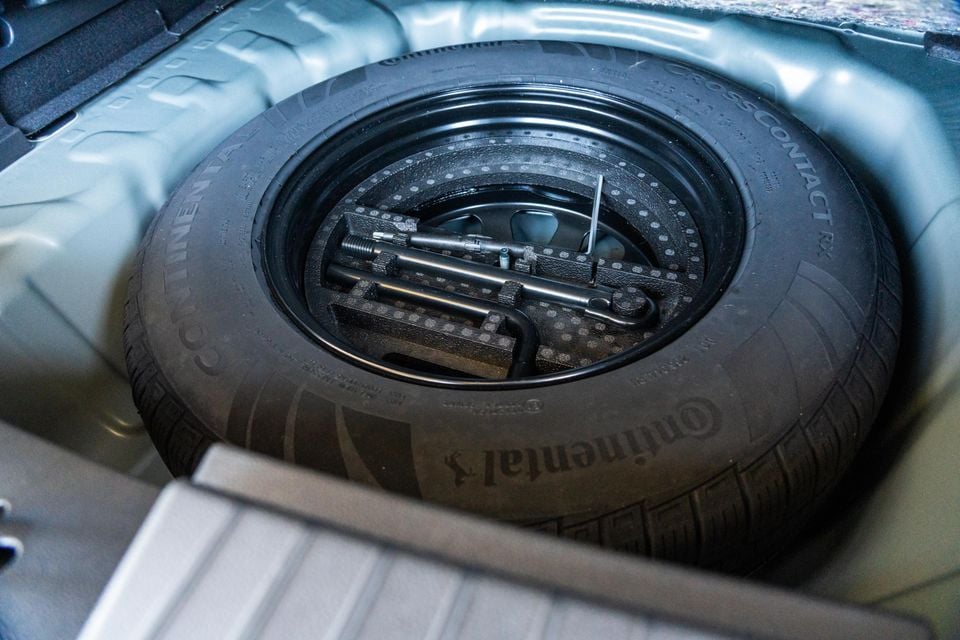
The boot is impressively large given the Duster’s diminutive proportions. Renault’s quoted 472 litres of cargo capacity is far larger than the Crosstrek’s 291L, and it’s possible to fit a medium-sized suitcase or two without struggle.
The load floor is almost perfectly square, and there’s no lip at the boot opening, making it easier to slide heavier things up and in. There are more YouClip points on both walls and inside of the tailgate, and an optional rubber mat for extra durability.
You’ll notice there’s a jack mounted awkwardly on the passenger side, but there’s a good reason for that. Under the floor is effectively a full-size spare wheel, matching the wheels on the car by having a larger tyre on a smaller 16-inch rim.
This is standard in both front- and all-wheel drive Dusters, and it’s one of the more impressive inclusions given how common space-savers and repair kits have become.
|
Dimensions |
Renault Duster 4×2 |
|---|---|
|
Length |
4345mm |
|
Width |
1813mm |
|
Height |
1650mm |
|
Wheelbase |
2658mm |
|
Cargo capacity |
472L (rear seats up) |
To see how the Renault Duster stacks up against the competition, use our comparison tool
What’s under the bonnet?
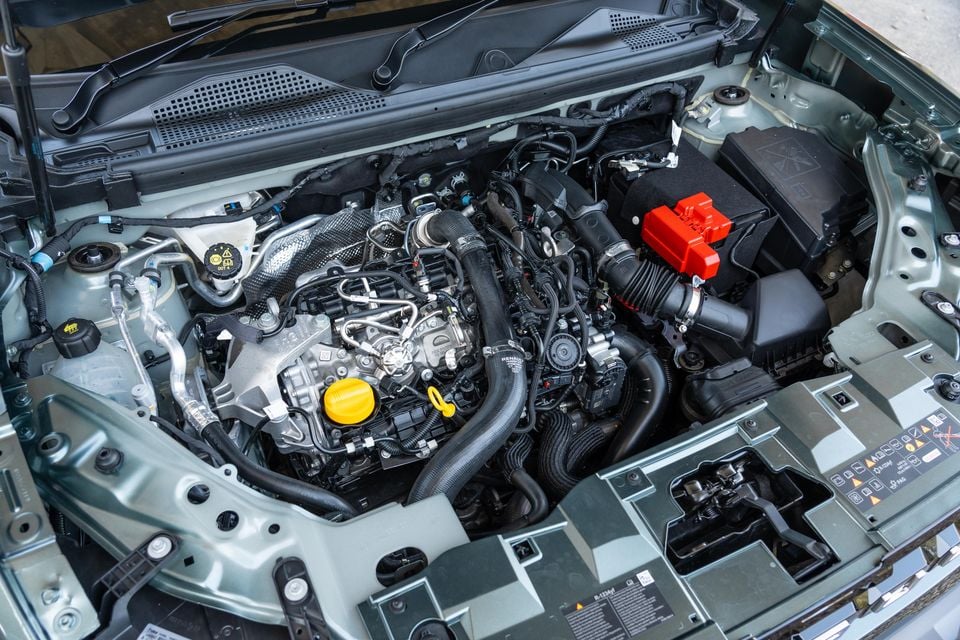
Automatic Dusters are exclusively available with a 1.3-litre turbocharged four-cylinder petrol engine, with drive sent to the front wheels through a seven-speed dual-clutch automatic transmission. Unlike the manual, there’s no mild-hybrid assistance here.
|
Specifications |
Renault Duster Techno 4×2 |
|---|---|
|
Engine |
1.3L 4cyl turbo-petrol |
|
Power |
113kW |
|
Torque |
270Nm |
|
Transmission |
7-speed dual-clutch auto |
|
Drive type |
Front-wheel drive |
|
Kerb weight |
1363kg |
|
0-100km/h (claimed) |
9.2 seconds |
|
Fuel economy (claimed) |
6.5L/100km |
|
Fuel economy (as tested) |
6.6L/100km |
|
Fuel tank capacity |
50L |
|
Fuel requirement |
91-octane regular unleaded |
|
CO2 emissions |
147g/km |
|
Emissions standard |
Euro 6 |
|
Payload |
482kg |
|
Towing capacity (unbraked) |
695kg |
|
Towing capacity (braked) |
1500kg |
Our week with the Duster involved a mix of highway commuting and urban errand-running. The time spent at higher speeds no doubt improved our overall fuel economy, and we’d expect it to become thirstier with more time spent in the city.
To see how the Renault Duster stacks up against the competition, use our comparison tool
How does the Renault Duster drive?
The Duster is a joyous little buggy, and the turbo-petrol engine of the 4×2 is way more peppy than the wheezy powerplant in the Jimny.
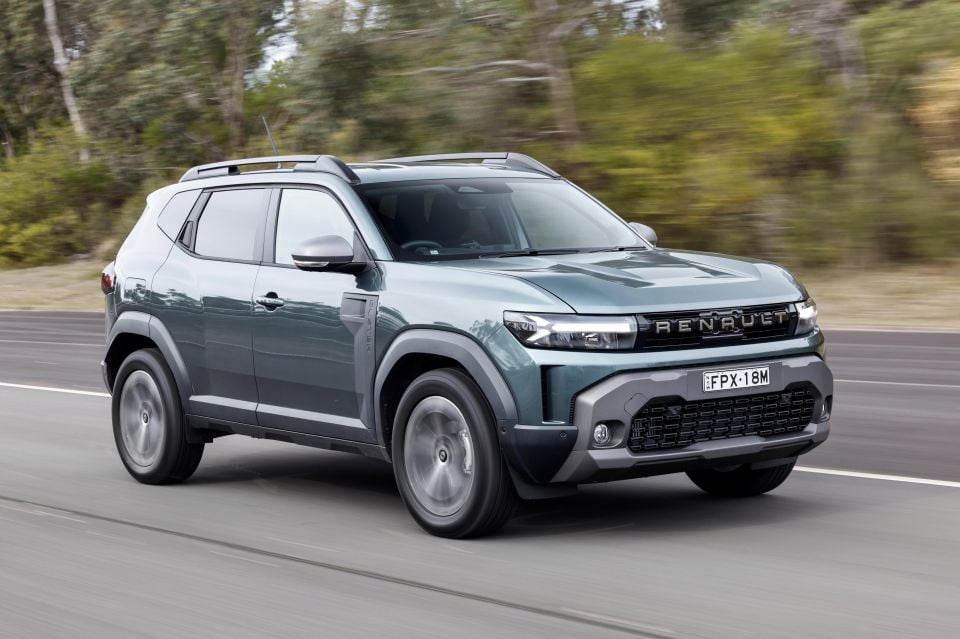
Power and torque outputs are appropriate for a vehicle of the Duster’s stature, and the fact that it lacks all-wheel drive means it’s reasonably light. It therefore feels somewhat lively when you lay into the throttle, and its outputs mean the front wheels have no issue getting the power down.
It’s just a shame that you’re forced into a dual-clutch transmission with this engine. It isn’t the smoothest DCT around, and it doesn’t feel particularly comfortable when crawling at low speeds.
We also found it to be easily confused, as any throttle inputs that aren’t perfectly smooth or ‘predictable’ will cause it to scramble for the right gear – using the paddle shifters to change gears manually can help. That’s the only tangible everyday downside to going for a front-drive Duster.
We could also complain that the lack of all-wheel drive makes it less capable off-road, but it really isn’t the end of the world. It’d be nice to have an automatic 4×4 option, sure, but it’s clear that the 4×2 auto is designed to be a characterful commuter, not a wannabe rock-crawler.
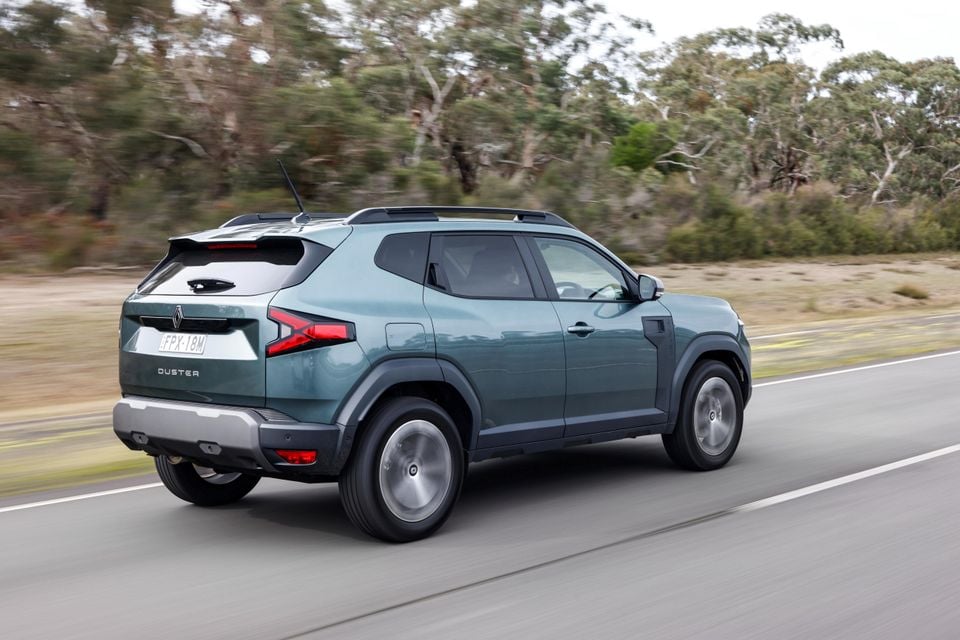
Apart from the transmission, it nails that brief. It’s enjoyable to cruise around in, and its peppy powertrain makes it far more engaging than most other small SUVs – not as engaging as a manual Duster, but that’s no big deal.
A key strength is the Duster’s suspension tune. It’s well-suited to Australian conditions and far more compliant on rough roads than is reasonably expected of cars in this segment. Even hitting high-speed dips and bumps doesn’t unsettle the car in any significant way.
Renault has confirmed that at least a basic level of local chassis tuning was done to the Duster before its Australian release. Regardless of how far that program went in terms of localised steering or suspension tuning, the Duster consistently shows it’s very well balanced.
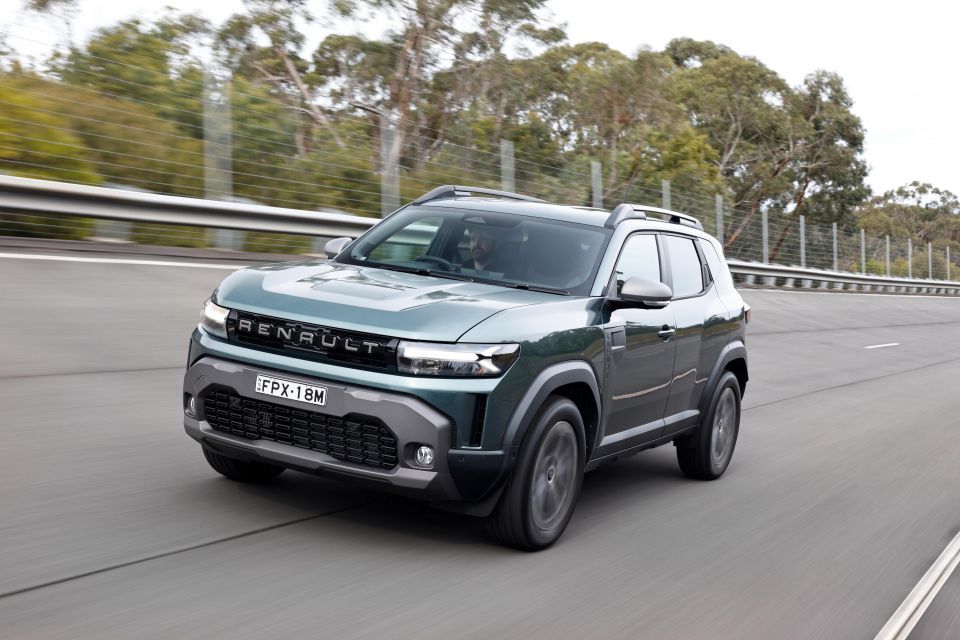
Naturally, it feels a little less planted at freeway speeds, but it’s way more liveable than the Jimny on the open road – mostly because its engine doesn’t sit at a grating 3500rpm when cruising at 110km/h.
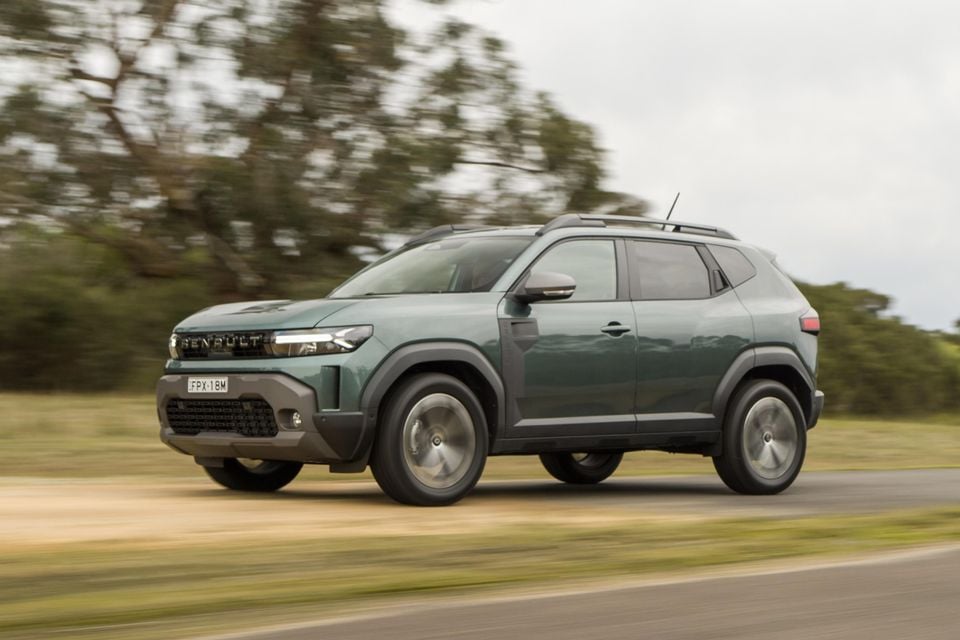
Supporting that is a nicely weighted steering setup. It’s lighter and more direct than the Jimny’s steering, but still feels substantial and gives you a decent idea of what the front wheels are doing. Body roll around turns is also at acceptable levels.
Road noise is on the louder side, something we suspect is exacerbated on the Techno’s 18-inch wheels. The Evolution’s 17s may be more palatable in this sense, but that may come at the expense of overall composure.
As is the case with most new Renaults, there are no real issues with the Duster’s safety tech. No driver monitors or speed limit warnings blare at you while you’re driving, with only the lane-keep assist system piping up if you stray too close to a lane marking.
That said, it’s disappointing there’s no adaptive cruise control, which does erode the go-anywhere vibe Renault is pitching with the Duster. A more sophisticated cruise function would make long driving stints during weekend getaways a tad more relaxing, provided you’re the type to use cruise control.
From expert reviews to the right deal
CarExpert brings together reviews, research tools and trusted buying support, guiding you from research to delivery with confidence.
Some of the car’s budget-oriented leanings are evident in systems like the reversing camera, which could do with slightly higher resolution. It’s still perfectly usable, and you can of course capitalise on the Duster’s strong outward visibility to help when parking. The Techno also gets parking sensors all around.
So, all up, the Duster 4×2 is quite good on the road. Off-roading is still possible, but it’s obviously less capable than the 4×4 alternative away from the blacktop. Apart from lacking AWD traction, ground clearance is 174mm instead of 212mm, and the tweaked front bumper design also reduces the car’s approach angles.
Still, this particular Duster serves brilliantly as a slightly left-field commuter, but still retains a subdued sense of adventure for those so inclined.
To see how the Renault Duster stacks up against the competition, use our comparison tool
What do you get?
The Renault Duster is available in two model grades.
2026 Renault Duster Evolution equipment highlights:
- 17-inch alloy wheels
- 16-inch spare wheel (with larger tyre)
- Auto LED headlights – low-beam
- Halogen headlights – high-beam
- Rain-sensing wipers
- Power-adjustable heated side mirrors
- Fixed roof bars
- Leather-wrapped steering wheel
- Steering wheel paddle shifters (auto only)
- Black and grey cloth seat upholstery
- Manual front seat adjustment
- 7.0-inch digital instrument display
- 10.1-inch touchscreen infotainment system
- Wireless Apple CarPlay and Android Auto
- DAB+ digital radio
- Bluetooth
- Wireless phone charger
- 2 x front USB-C ports
- 2 x rear USB-C ports
- Dual-zone climate control
- Rear air vents
- YouClip points:
-
- Rear centre console
- Boot sides
- Inside of tailgate
- Foldable key
- Eco drive mode
- Terrain control modes (manual only)
Duster Techno adds:
- 18-inch alloy wheels
- Auto high-beam
- Front fog lights
- Modular roof bars
- Power-folding side mirrors
- Black and grey ‘premium textile’ upholstery
- Height-adjustable front passenger seat
- Rear privacy glass
- Additional YouClip point:
-
- Left of steering wheel with phone holder
- Split-level boot floor (auto only)
- Hands-free key card
- Push-button start
- Auto walk-away locking
To see how the Renault Duster stacks up against the competition, use our comparison tool
Is the Renault Duster safe?
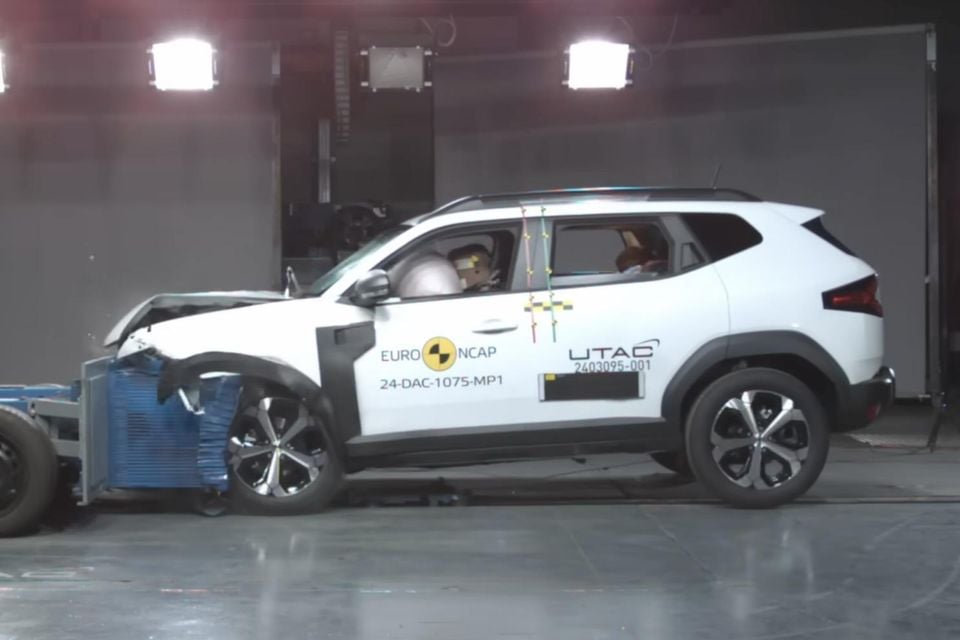
The Renault Duster has a three-star ANCAP safety rating based on testing conducted by Euro NCAP in 2024, primarily because it lacks a front-centre airbag, more advanced AEB and lane-keeping systems, and more effective pedestrian and driver’s chest protection, although it did score well for child occupant protection (see below).
|
Category |
Renault Duster |
|---|---|
|
Adult occupant protection |
70 per cent |
|
Child occupant protection |
86 per cent |
|
Vulnerable road user protection |
60 per cent |
|
Safety assist |
58 per cent |
Standard safety equipment highlights:
- 6 airbags, incl:
- Autonomous emergency braking (AEB)
-
- Pedestrian detection
- Cyclist detection
- Cruise control
- Driver attention monitoring
- Lane-keep assist
- Rear parking sensors
- Reversing camera
- Safety system personalisation
- Tyre pressure monitoring
Duster Techno adds:
- Blind-spot monitoring
- Front and side parking sensors
- Multi-view camera
To see how the Renault Duster stacks up against the competition, use our comparison tool
How much does the Renault Duster cost to run?
Renault Australia backs its lineup with a five-year, unlimited-kilometre warranty. Servicing for the Duster is required every 12 months or 30,000km, whichever comes first.
|
Servicing and Warranty |
Renault Duster 4×2 |
|---|---|
|
Warranty |
5 years, unlimited kilometres |
|
Roadside assistance |
5 years |
|
Service intervals |
12 months or 30,000km |
|
Capped-price servicing |
5 years |
|
Average annual service cost over 5 years |
$537 |
|
Capped price servicing cost |
$2685 |
Renault Australia’s individual service costs are detailed below:
|
Service |
Price |
|---|---|
|
12 months, 30,000km |
$319 |
|
24 months, 60,000km |
$649 |
|
36 months, 90,000km |
$399 |
|
48 months, 120,000km |
$999 |
|
60 months, 150,000km |
$319 |
Among its rivals, the Duster is the most expensive to maintain, despite its long-distance service intervals. Five years of servicing costs more than it does for the Crosstrek ($2444.04) and Jimny ($2265).
To see how the Renault Duster stacks up against the competition, use our comparison tool
CarExpert’s Take on the Renault Duster Techno 4×2
The Duster remains a characterful small SUV, and it’s a shame it isn’t selling better.
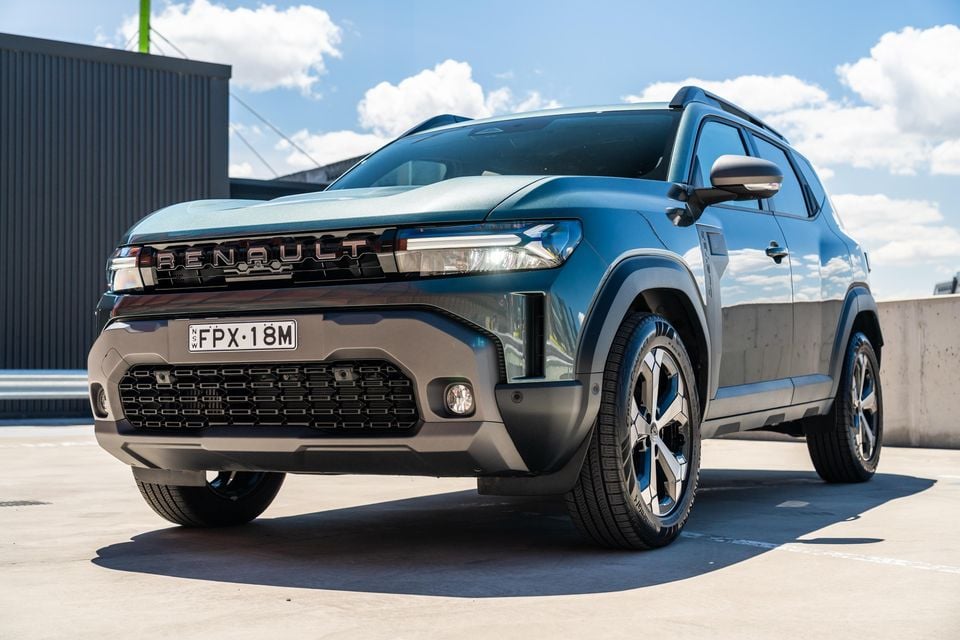
While the Techno 4×2 is far from the most logical choice in the range, it still offers the same quirky interior and composed driving experience that come as standard in Renault’s smallest SUV.
Its only real drawback is its dual-clutch auto, but the spritely turbo-four makes it a tad more palatable.
The Duster’s popularity is no doubt hemmed in by the Jimny’s cult-like following and Subaru’s superior brand recognition. ANCAP’s sub-standard safety rating won’t have done it any favours, either, even though it hardly feels like an unsafe vehicle.
All of these factors mean that buyers looking for a more adventurous small SUV probably won’t even consider the Renault Duster, despite its strengths and competitive price.
But the Duster is still a winner in our book. We prefer the 4×4 option, mostly because of its manual transmission and improved off-road capability, but the average commuter will still enjoy the front-drive auto – and the entry-level Evolution variant makes the most sense for the budget-conscious.
If you’re in the market for a small SUV that’s a little more daring than most, at least take the Duster for a test drive. There’s a fair to good chance you’ll find something you like.
CarExpert can save you thousands on a new Renault Duster. Click here to get a great deal.
Click the images for the full gallery