
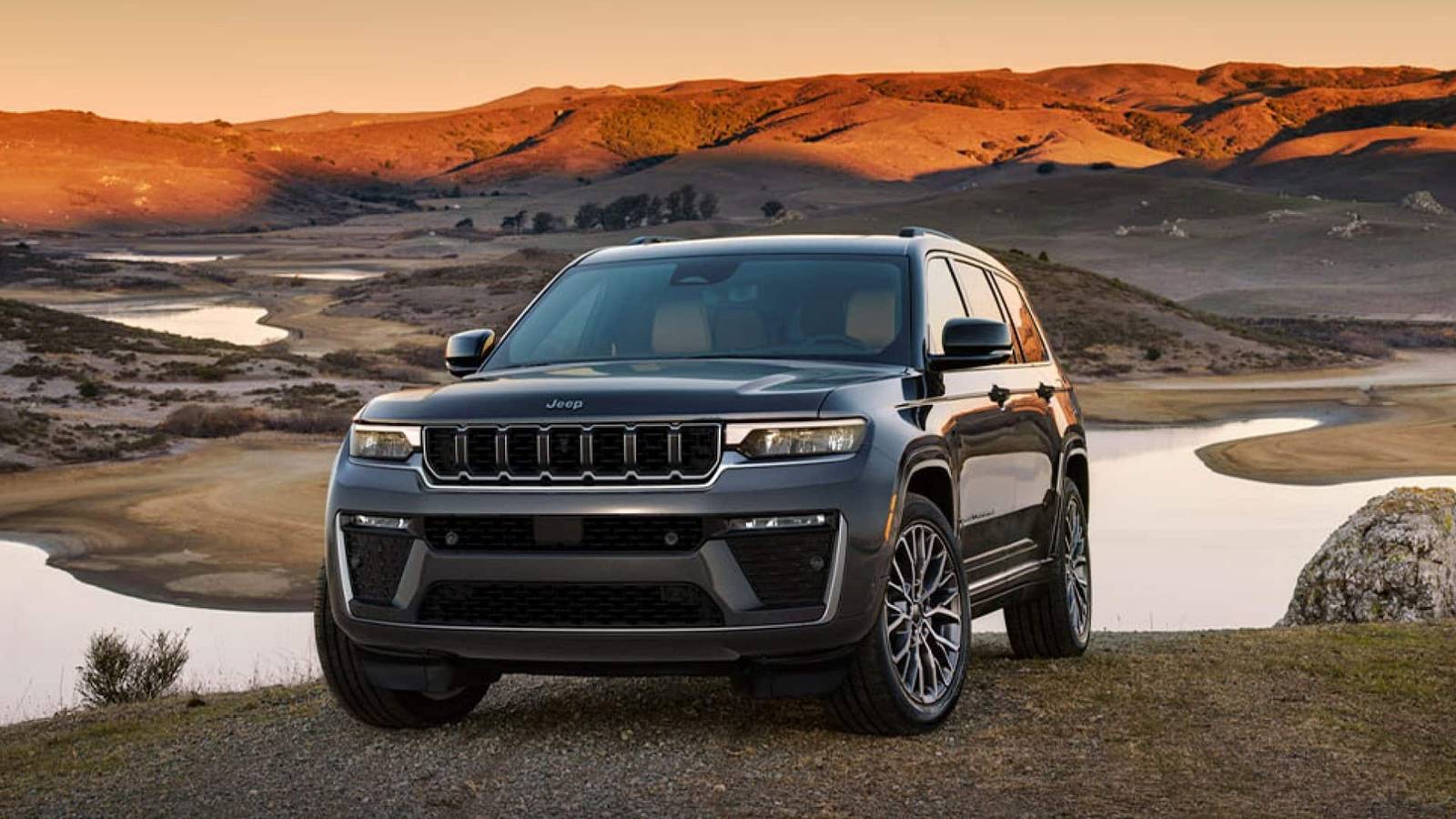
The current-generation Jeep Grand Cherokee has been on the market for four years now, with the 2026 model year introducing a mid-cycle facelift with refreshed styling and new tech. As it is now, the American premium midsize SUV remains one of the most advanced and aspirational options in its segment. Thanks to its arrival, the lightly updated model has been experiencing a demand increase over the first quarter of this year.
The Jeep Grand Cherokee has admittedly had its fair share of glitches and software-related problems, but this doesn’t seem to be enough to deter some of its die-hard fans. The brand’s decision to lean into the premium aesthetic without compromising on its athletic ability proves to be the right move and exactly what makes this the smartest midsize SUV purchase you can make in 2026.
Jeep’s Tech-Heavy Business-Class Interior

The 2026 Jeep Grand Cherokee pricing starts at $40,410 MSRP and consists of a lineup that emphasizes a steady progression from functional modern tech to ultra-premium luxury. Most models come standard with a larger 12.3-inch Uconnect 5.0 NAV touchscreen as standard equipment, featuring wireless Apple CarPlay and Android Auto. Comfort features across all trims include dual-zone automatic climate control and a 10.25-inch digital instrument cluster.
The Laredo serves as the foundational trim, offering premium cloth seating with an eight-way power driver’s seat and a six-speaker audio setup. Stepping up to the Laredo X for $43,080 introduces a single-pane sunroof, a wireless charging pad, and remote vehicle start capability. The $44,360 Laredo Altitude features Capri leatherette and suede upholstery along with a heated steering wheel and heated front seats.

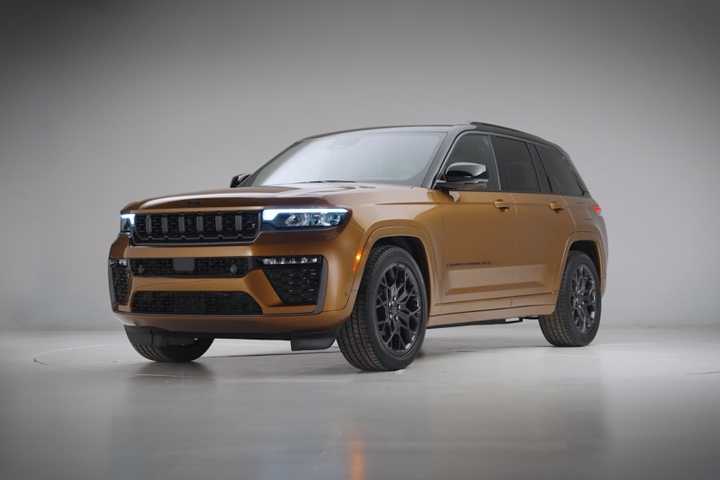
The $44,320 Limited trim also features Capri leather-trimmed seating and adds heated second-row seats and driver-seat memory settings. This trim upgrades the entertainment experience with a nine-speaker Alpine Premium Audio System, including a 506-Watt amplifier and active noise cancellation. The $50,415 85th Anniversary Edition builds upon the Limited’s luxury with unique 85th Edition leatherette seats featuring Mayan Gold accent stitching, 85th Edition Berber floor mats, and a standard dual-pane panoramic sunroof. It also integrates advanced convenience tech such as a digital rearview mirror and a power tilt-and-telescoping steering column with memory.

At the top of the range sit the $51,915 Limited Reserve and $60,600 Summit trims. The Limited Reserve features Nappa leather upholstery, ventilated front seats, and an available front passenger interactive touchscreen. The Summit boasts 16-way power-adjustable front seats with massage functions, four-zone automatic climate control, and a 19-speaker McIntosh high-performance audio system. Both trims include sophisticated ambient LED lighting and the option for a 10-inch Head-Up Display.

2026 Jeep Grand Cherokee Interior And Exterior Picture Gallery
The 2026 Grand Cherokee arrives with the Hurricane 4 Turbo engine, refreshed design, advanced technology, premium interiors, and enhanced efficiency.
Safety Is A Top Priority

- Base Trim Engine
-
2L I4 ICE
- Base Trim Transmission
-
TorqueFlite 8-speed automatic
- Base Trim Drivetrain
-
Rear-Wheel Drive
- Base Trim Horsepower
-
324 HP @6000 RPM
- Base Trim Torque
-
332 lb.-ft. @ 3000 RPM
- Base Trim Fuel Economy (city/highway/combined)
-
19/26/22 MPG
- Make
-
Jeep
- Model
-
Grand Cherokee
- Segment
-
Midsize SUV
The 2026 Jeep Grand Cherokee features a comprehensive safety suite covering heavy-duty passive protection and sophisticated active driver-assist technologies. Jeep builds the SUV on its high-strength steel safety cage and a standard eight-airbag system, which includes advanced multistage front airbags, driver and front passenger knee bolsters, and side-curtain airbags for all rows.

Every model comes equipped with the Jeep Safety Group as standard, providing full-speed forward collision warning with active braking, pedestrian and cyclist detection, blind spot monitoring with rear cross path detection, and active lane management. Additionally, it includes adaptive cruise control with stop and go and ParkSense rear park assist.
Stepping up to the Limited trim adds standard intersection collision assist, which detects vehicles approaching from the side at four-way stops and can engage emergency braking if a collision is imminent.

The 85th Anniversary Edition includes the 360-degree surround view camera system and the integrated off-road camera. This special edition also adds ParkSense front and rear park assist with stop and a side distance warning system. For enhanced visibility, it includes a digital rearview mirror and rain-sensing windshield wipers as standard equipment.
The Limited Reserve and Summit feature the active driving assist system, which combines lane-centering and adaptive cruise control for semi-autonomous highway driving. The Summit specifically standardizes hands-free active driving assist. These flagship trims also include drowsy driver detection, parallel and perpendicular park assist, and traffic sign recognition. A night vision camera with infrared sensors that detect pedestrians and animals in the dark is available as an option on these upper-tier models.
Old And New-Generation Engines

The 2026 Jeep Grand Cherokee is still available with the group’s tried-and-tested naturally aspirated 3.6-liter Pentastar V-6 across entry-level trims. This produces 293 horsepower and 260 pound-feet of torque, available in rear and four-wheel drive via an eight-speed automatic transmission. When equipped with the optional Trailer Tow Package, the V-6 tows 6,200 pounds. Performance-wise, you can expect a 0 to 60 MPH acceleration time of 7.4 seconds before hitting the electronically limited 117 MPH top speed.
The turbocharged 2.0-liter Hurricane 4 engine serves as the downsized high-performance replacement on higher trims, producing 324 hp and 332 lb-ft of torque. This engine utilizes advanced Turbulent Jet Ignition technology and a variable-geometry turbocharger pushing up to 35 psi of boost, allowing it to deliver 90 percent of its peak torque from as low as 2,600 RPM. Jeep mates it to an eight-speed automatic transmission, and it is available in both rear-wheel drive and 4×4 configurations.
Despite its smaller displacement, the Hurricane 4 maintains a maximum towing capacity of 6,200 pounds. In terms of performance, the Hurricane 4 cuts the Grand Cherokee’s 0 to 60 MPH acceleration time to anywhere between 5.5 and 6.5 seconds, depending on the specific trim and driveline. Top speed remains limited to 117 MPH.
Competitive Fuel Consumption Estimates

When looking at consumption, the 2.0-liter engine is the more efficient option of the two, but surprisingly not by much. Rear-wheel drive variants consume 21/27/23 MPG on the city/highway/combined cycle, while returning 529 miles of range from a 23-gallon tank. Adding four-wheel drive changes consumption to 21/26/23 MPG but does not affect the range. The Pentastar’s consumption comes in at 19/26/22 MPG for both drivetrains, and 506 miles of range.
When looking at fuel costs, the EPA indicates that the four-cylinder model will cost you $2,250 more in fuel over five years compared to the average new vehicle currently being sold in the U.S. You can also expect to spend $2,600 on fuel every year, $4.34 to drive 25 miles, and $92 to fill the tank up. The V-6 costs $2,750 more over five years, $2,700 to refuel every year, and $4.53 to drive 25 miles.

Jeep Tells 320,000 PHEV Owners To Park Outside Due To Fire Risk
A huge new recall affects the popular Jeep Wrangler 4xe and Grand Cherokee 4xe models.
Appealing Ownership Costs

As it is a new engine, Edmunds doesn’t currently have ownership cost data on the Hurricane-powered Grand Cherokee, but if you opt for the base Pentastar, you can expect to spend an additional $66,060 on running costs over five years. Some of these costs include $5,575 on maintenance, $1,665 on repairs, $22,511 on depreciation, and $16,946 on fuel.
iSeeCars estimates that the entire Grand Cherokee range, on average, will lose $19,002 or 50 percent of its value after five years, which is about four percent worse than the segment average. On the reliability front, you can expect the SUV to cover 10 years or 141,484 miles before facing serious mechanical issues, with a 12.4 percent probability of reaching 200,000 miles.
Jeep’s Warranty Has You Covered

The 2026 Jeep Grand Cherokee is backed by a standard three-year or 36,000-mile basic limited warranty and a five-year or 60,000-mile powertrain limited warranty, both of which are transferable to subsequent owners. For routine upkeep, Jeep applies an automatic oil change indicator system that typically signals for service every 7,500 to 10,000 miles under normal conditions, or as early as 3,500 miles for severe use like off-roading or heavy towing. Regardless of mileage, you should be conducting an oil change at least once every 12 months.
Standard maintenance intervals occur every 8,000 to 10,000 miles and include tire rotations and multipoint inspections, with more intensive services like engine air filter and spark plug replacements typically falling at the 30,000 and 60,000-mile marks, respectively. As an owner, you also benefit from the Jeep Wave program, which currently covers the first two to three oil changes and tire rotations within the first 24 to 36 months of ownership.
The Grand Cherokee’s Fair Share Of Recalls

Since its launch in 2022, the current generation of the Jeep Grand Cherokee has faced several significant recalls, with a heavy focus on the 4xe plug-in hybrid variants. A primary concern for owners of 2022 to 2026 4xe models involves a software communication error between the battery pack control module and the hybrid control processor, which can cause an unexpected loss of drive power while the vehicle is in motion.

Furthermore, over 300,000 hybrid units were recalled due to an internal battery failure that poses a fire risk even when the vehicle is parked. Mechanical issues have also surfaced, most notably a massive recall for incorrectly installed rear coil springs that could detach from the vehicle. Jeep initially addressed this in 2023, but a subsequent recall was issued in early 2026 to rectify inadequate previous repairs.

Safety concerns extended to towing and visibility as well, including a large-scale recall for a faulty trailer tow module that could cause a total failure of trailer lights and brakes. Additional software-related recalls have addressed inoperative windshield defrosting systems, rearview camera display blackouts, and malfunctioning digital instrument clusters. Smaller-scale mechanical recalls have also targeted specific issues like improperly locking second-row head restraints and steering column pinch bolts that were incorrectly tightened during assembly.