
Zeekr’s global vice president has responded to concerns around data privacy with Chinese cars, reaffirming the brand’s commitment to complying with “all the local laws”.
Speaking with Australian media at Zeekr Tower in Hangzhou, China, Zeekr International vice president Mars Chen said the Chinese luxury brand is “more than happy to support” local authorities with any potential changes to data privacy regulations.
“Number one, data privacy, right now our product has complied with all the local laws, or legislation, or rules,” Mr Chen said.
“So, if in the future the government or authorities want to upgrade [laws] because now we have too many intelligent cars, then I think we are more than happy to also support, to participate, in those regulations’ fulfillment.”
CarExpert can save you thousands on a new car. Click here to get a great deal.
“I think it’s a very sensitive question,” Mr Chen continued, after being asked about concerns of Chinese vehicles sending data or recordings back to China.
“When we entered Australia, we analysed end-to-end not just the regular car communication process, but also data connectivity and where the data can be stored.
“I’m coming from Huawei, I worked in Australia for 20 years, so I personally know these kinds of things very well. So for sure, the company, the car, is compliant.”
Earlier this year, two unnamed Asian automakers were put under investigation by the Australian Privacy Commissioner over potential breaches of privacy laws.
According to The Sydney Morning Herald, Privacy Commissioner Carly Kind revealed the investigations during a Senate estimates hearing on February 10, 2026, responding to a question from Nationals Senator Bridget McKenzie.
“We have open investigations against two separate entities. We conducted further preliminary inquiries against two separate entities, but did not decide to take them forward,” the commissioner said.
The latest investigations come after previous concerns both here and overseas about data collection in cars with internet connections – ‘connected cars’, as they’re often called – and how this information is used, sold, and even who legally owns it.
In 2024, concerns over ‘spying’ vehicles saw then US President Joe Biden move to ban software and hardware from China and Russia in cars sold there, which has helped lock Chinese car brands out of the lucrative US market – second only to China in terms of the number of new cars sold each year.
Similarly, in 2018 the Morrison Government in Australia banned Chinese brand Huawei from taking part in the rollout of 5G infrastructure over ‘national security concerns’.
Despite the above, a number of BYD and MG EV and PHEV models were added to the ‘Private Plated Vehicle Standard List’ for parliamentarians to use on a Commonwealth-funded (or taxpayer-funded) lease.
As of 1 April 2026, these include:
- BYD Atto 1
- BYD Dolphin
- BYD Seal
- BYD Sealion 6
- BYD Sealion 7
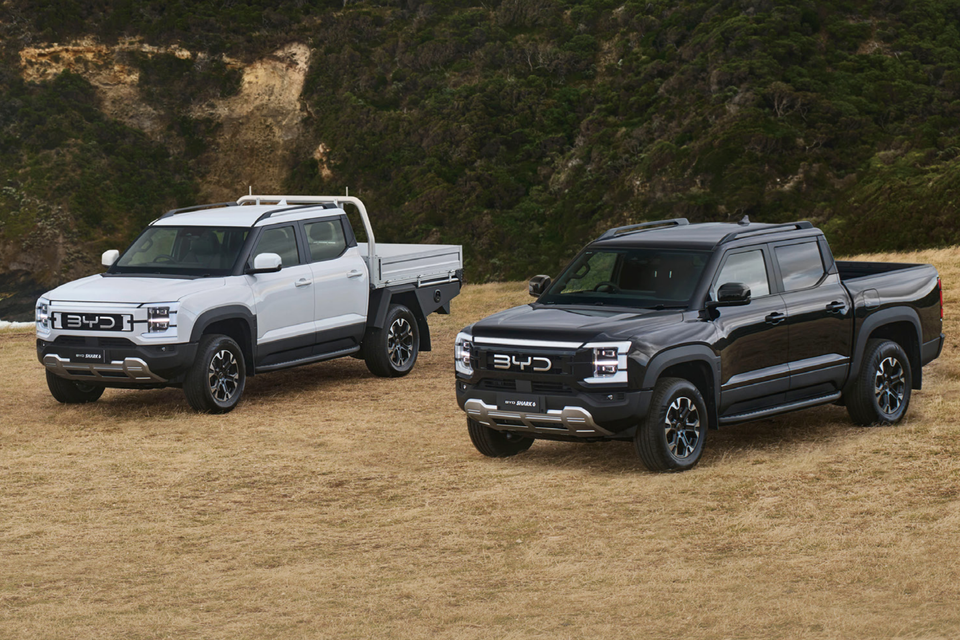
- BYD Shark 6
- MG S5 EV
These options are offered alongside the likes of vehicles from non-Chinese-owned brands, including the Kia EV3, EV4, EV5 and Tasman; the Tesla Model 3 and Model Y; Hyundai’s Elexio; the Subaru Solterra and Toyota bZ4X twins; the Mitsubishi Outlander PHEV and Triton; the Nissan Navara; and the Toyota HiLux and LandCruiser Prado.
Most vehicles on this list are able to be leased in any available variant, though the Kia EV9 Air is available solely in base Air trim to politicians on a taxpayer-funded lease, while the Toyota LandCruiser Prado is likewise restricted to GX and GXL variants.
Australian parliamentarians may request a Commonwealth-leased private-plated vehicle (PPV) as part of their remuneration package, or instead take an “additional electorate allowance” which is currently listed at $19,500 per annum.
Further, senators in the Northern Territory may request up to two ‘four-wheel-drive PPVs’ in addition to the standard PPV, while members of the House of Representatives with an electoral division of more than 300,000 square kilometres are also eligible for two additional 4WD PPVs.
Zeekr’s global VP says the company has “no special plan to enter the public servant category”, even as other premium brands like BMW have existing agreements with government departments and law enforcement agencies.
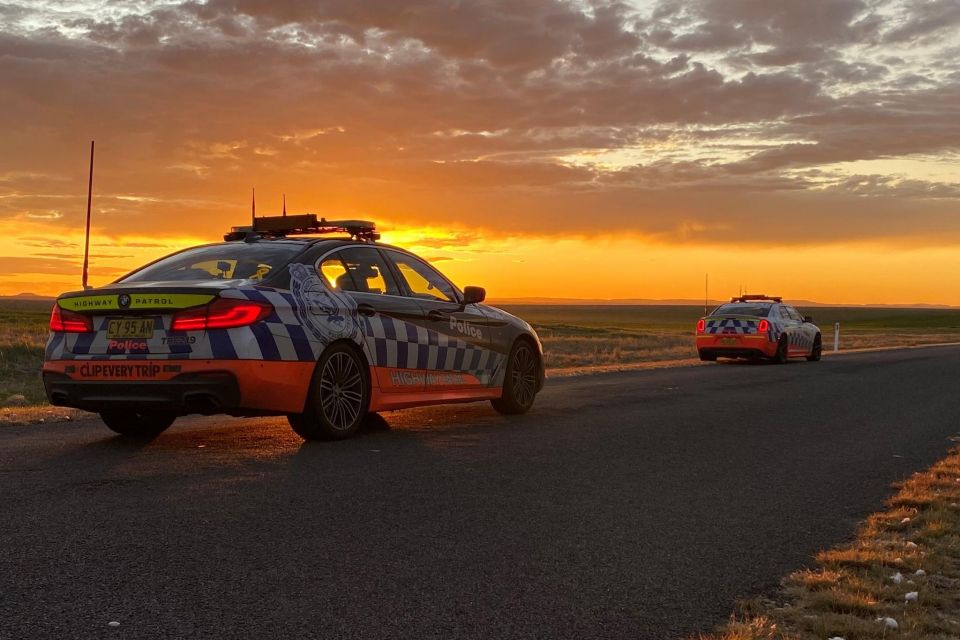
“Zeekr is a brand [that] in our eyes we say we only have two types of target: drivers and passengers,” Mr Chen continued.
“We are not some brands that want to go to public tender for the administration [official’s] use, to gain more [market] share – this is not Zeekr, we focus on individuals.
“If those customers from Canberra, the capital, would like one, fine. But we don’t, there’s no special plan to enter the public servant category.
“By the way, in many countries, [Zeekr’s models are] beyond the quota or the price [limit]. In China, there’s no way to enter the public tender, because the public servant cannot take [a vehicle] over a certain price.
In Australia, Zeekr’s cheapest model is the Zeekr X electric crossover, which kicks off from $48,900 drive-away. The larger 7X EV starts from $57,900 plus on-road costs.