
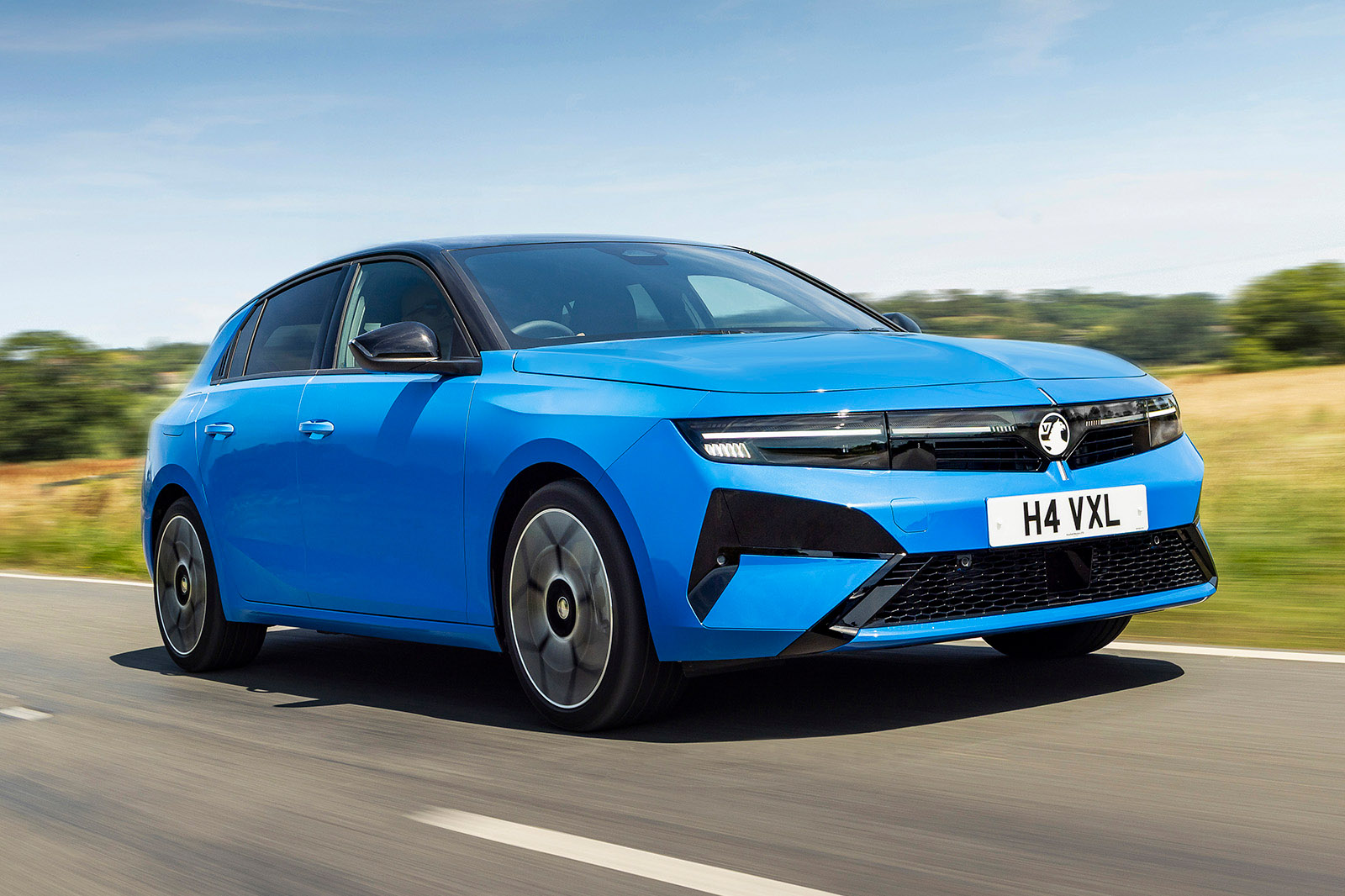
With the battery charged, the PHEV can drive largely on electric power, and it feels as smooth as its EV sibling.
If you demand more from the throttle pedal, the engine will soon kick in seamlessly, and the extra torque (265lb ft) compared with the EV allows for more urgent progress.
It possesses good body control through tighter bends and, provided you’re not being silly, there’s plenty of grip. The front wheels can scrabble a little if you floor it from a standstill, but this isn’t the kind of car that encourages such behaviour.
Indeed, the Astra isn’t so much fun as it is satisfying to push; it’s a good ‘flow’ car, handling intuitively and fostering a sense of trust when you’re preoccupied by hazard perception on unfamiliar routes.
The only major trade-offs if you go for the PHEV are a noticeable amount more fidget over brittle road surfaces (although it’s still within acceptable levels) and that reduced boot space.
It handles better than the EV too, with a touch more feel and verve. The ride is a little less composed, perhaps because the weight isn’t spread as evenly throughout the car as it is in the EV.
But again, it’s all very agreeable for a family hatchback or estate.