
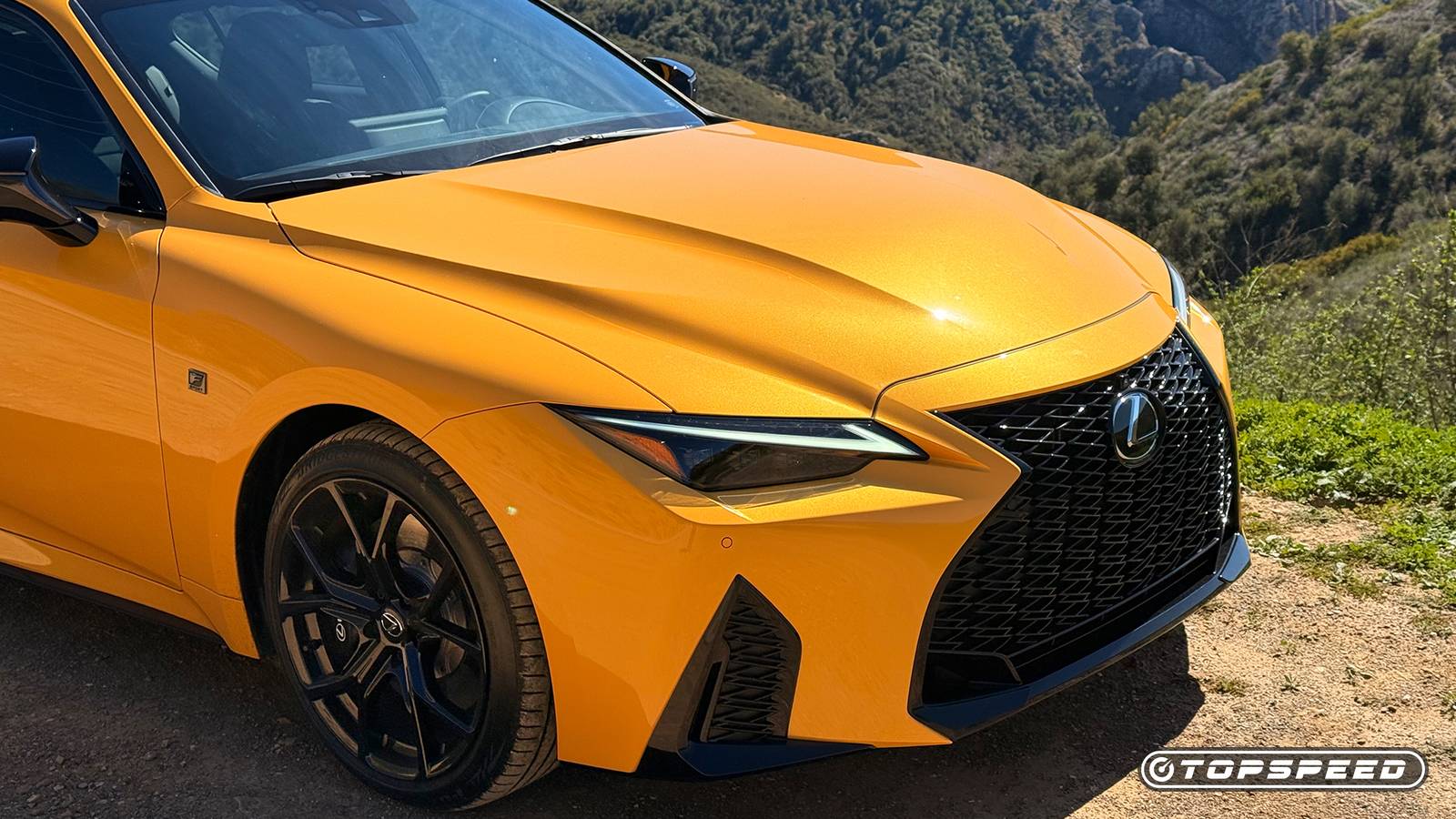
Sports sedans don’t look to be going anywhere soon. Some of our favorite auto brands are still turning them out with gusto; take BMW’s M sedan range, Mercedes-AMG sedans, the Cadillac CT5-V Blackwing, and the Hyundai Elantra N. They can all be driven hard, have an air of usability about them, and are comfortable for everyday driving.
Despite everything we love about them, something is missing in the modern sports sedan market. We can’t knock the progress the segment has made in the last five years because, let’s face it, it is now easier to drive fast and like you know what you’re doing than ever before. However, we do miss some of the old-school feel and uber-engaging guts we got from older models.
The Age Of The Turbocharged Sports Sedan

Today, almost every sports sedan leans on turbocharging. Cars like the M340i make for an excellent turbocharged option over the more expensive M3; you get a TwinPower B58 inline-six good for 386 horsepower and 369 pound-feet of torque, which is highly tuned, easy to floor, and silky-smooth. The Mercedes-AMG C43 once boasted a V6, but now gets a 2.0-liter M139I turbo-four with electric assist, and kicks out over 400 horses.
Even Lexus, a brand famous for doing things its own way, has joined the trend, dropped most of its naturally aspirated engines, and switched to turbocharging. We see why — with the evolution of turbo tech, powertrains have become more powerful, more efficient, and can get you up to speed quicker — but something is missing.
Why Modern Sports Sedans Don’t Have The Same Feel

If you don’t mind just looking down and seeing the needle flying up past 100 at intense speeds, however that speed is delivered, this won’t matter to you. While turbocharged engines offer brutal effectiveness in the real world, we think there is a slight disconnect with the driving. Models like the Audi S5 Sportback get a 3.0-liter turbocharged V6 that kicks out peak torque from around 1,300 rpm. The Alfa Romeo Giulia Veloce is equipped with a 306-pound-foot turbo-four, and they are both quick, with 0-60 mph times for both clocked at between 4.5 and 5.1 seconds. However, it is more about instant shove than building momentum.
Then there is the sound. A V8 gives out a nicely deep and rhythmic roar; turbocharged engines can sound good, but the turbos act like mufflers, making exhaust notes quieter and less raw. It isn’t rare to see modern sports sedans use synthesized audio through the speakers to create the effect, but compared to older high-revving naturally aspirated engines, it feels a bit manufactured. But one automaker bucked this trend with a car that brings back everything we’ve been missing.
Why The Lexus IS And ES Aren’t As Similar As You Think
Lexus’s two best-selling sedans have very different characters despite their similar price.
The Lexus IS 500 Feels Like A Dying Breed

We mostly love what the modern market has become and the speed that can be achieved, but there is little room for V8-equipped sports sedans left today. There are still a few left, but even the awesome CT5-V Blackwing has a supercharger. This is why the last model year of the Lexus IS 500 feels like a real rarity; it is a purebred sports sedan with a purist-built engine under the hood.
The first model year of the Lexus IS released in the U.S.A. was back in 2001, and came equipped with a 3.0-liter 2JZ-GE inline-six. Fast-forward to 2022, and Lexus released the Lexus IS 500, boasting the same engine found under the hood of the RC F, the LC 500, and the GS F. Initially released as the IS500 F Sport Performance, the IS 500 with this engine only lasted until 2025.
Today, we can buy the 2026 Lexus IS 300, and while it still comes equipped with a 311-horsepower/280-pound-foot naturally aspirated V6, it is not at the same level as the short run of the IS 500 sports sedan.
Naturally Aspirated V8 In A Turbocharged World

It has been less than a year since Lexus dropped the IS 500, so we have to applaud them for keeping hold of a large naturally aspirated V8 in a modern sports sedan, while most of its rivals opt for smaller turbo engines, but it is missed already.
2025 Lexus IS 500 Specs
|
Engine |
5.0-Liter NA 2UR-GSE V8 |
|
Transmission |
Eight-Speed Automatic |
|
Horsepower |
472 hp |
|
Torque |
395 lb-ft |
Old-School Character Modern Rivals Have Moved Away From

Alongside having the gear that sounds old-school, what really sets the IS 500 apart is how unapologetically old-school it feels in a segment that has largely moved on. The 5.0-liter 2UR-GSE V8 isn’t built to chase efficiency; FuelEconomy.gov says that the last MY can achieve just 20 combined mpg, but it is built to provide linear power and mechanical purity.
When you push the throttle, power builds progressively, and gives you confidence to wind it out rather than short-shift and ride a torque wave. It’s a completely different mindset compared to something like the Mercedes-AMG C63 S E Performance, which leans heavily into electrification and complex drivetrains, layering speed with tech rather than feel. The IS 500 is built differently: a big engine up front, rear-wheel drive, and an exhaust soundtrack that rises naturally with the revs. A recent review by Chris Chin says it best.
“And it’s still nothing short of absolutely spectacular. With no forced induction, there’s no turbo lag or loss of steam as found with a supercharger. It’s just pure, smooth, unbridled naturally aspirated V8 power, all the way to its lofty 7,000+ rpm redline. It’s still just so smooth and linear, it’s like getting cleanly smacked by a hammer made of top-grade Kobe beef.”
V8 power in sedans and SUVs is certainly missed in the modern market. These ten models are reminders of what once was but might never be again.
What Makes The Lexus IS 500 Really Land

It can’t just be the engine in a car that makes it, and Lexus is one of the finer brands at blending what really matters in its models. As we have seen multiple times over the decades, Lexus sports cars, sports sedans, and more mainstream iterations tend to get what we want the most from a luxury model, and the last model year of the IS 500 may well be the epitome of this.
IS 500 V8 Experience Is Rare Today

The driving character of the IS 500 really shows through how it uses the rev range rather than any single performance peak. Below 3,000 rpm, the V8 feels almost relaxed in the way it delivers unhurried power. Then, the change happens as you move through the mid-range, where the engine starts to feel more alive around 4,000–5,000 rpm, and you get a more tangible poke underfoot.
Instead of flattening or relying on a surge of mid-range torque, the V8 in the IS 500 constantly pulls up to its 7,300-rpm redline. This means the 5,500-7,000 rpm zone feels like the 2UR-GSE V8’s natural working zone instead of a brief power band.

The eight-speed automatic transmission also holds gears longer than you might expect, so compared to modern turbo-fours that give you sharp bursts of acceleration, the V8 in the Lexus IS500 gives you speed, power, and noise that builds smoothly on the way up. The IS 500 is by no means the fastest sports sedan in the world, with 0-60 times clocked around the 4.5-second mark and a top speed of 165 mph, but that is not what matters here.
Rear-Wheel Drive Balance That Still Feels Pure

The IS 500 is built on a high-strength steel unibody, has 55:45 front:rear weight distribution, and a rear-wheel drive layout. Up front, the IS500 has a MacPherson front strut, while the rear runs a multi-link setup, which allows each wheel to react more independently on rougher roads.
When you are driving normally, the front end keeps things breezy, with very direct and easy steering, while the rear multi-link setup does a lot of heavy lifting in terms of comfort. That’s why the IS 500 doesn’t feel unsettled despite sitting only 5.5 inches above the tarmac.

Where the setup comes into play, though, is when you start to drive faster. The slightly rear-leaning balance is what gives the IS 500 its natural stability when you want to push it, especially as weight transfers through corner entry and into mid-bend. The turn-in is clean and straightforward, and once you’re into a corner, the chassis doesn’t feel like it’s fighting for grip or constantly trying to adjust itself.
This combination makes it all feel very predictable and readable. The front end stays direct thanks to the strut, and the rear-end system keeps everything tied down when you’re flooring it. Nothing is designed to feel complex, and while adaptive dampers certainly help to control body movement, the core of the IS 500’s layout is built for a real hands-on and flowing feel.
The Comfort And Understated Styling That Hides Something Serious
The last model year of the IS 500 is by no means a large sedan; it measures in at just 187.3 inches in length by 72.4 inches in width, it rides on a 110.2-inch wheelbase, and weighs in at 3,800 pounds. However, despite this, you still get 44.2 inches of front legroom, 33.2 inches of rear legroom, and a maximum cargo capacity of 11 cubic feet. In typical Lexus fashion, the IS 500 has style, performance, and substance.
Inside, there are no flashy look-at-me features, just a refined and driver-centric design. The centerpiece is a 10.5-inch touchscreen that handles infotainment duties, paired with a 12.3-inch instrument cluster. Physical controls remain in place for climate, and Lexus-grade premium attention to detail — in the shape of nicely damped switchgear, a thick-rimmed, stitched leather steering wheel, metallic paddle shifters, metal trim accents, and a calm design that flows — makes the cabin feel plush.

The upper dash and doors are trimmed with soft-touch, stitched surfaces; Lexus has avoided using glossy plastics found in a lot of modern sedans and has opted for matte finishes, while the leather-covered seats are as comfortable and bolstered as you’d expect in an old-school reminder of a GT-turned-sports sedan.
While we see a lot of modern sports sedans and luxury sedans designed to feel and look athletic, which almost makes them feel clinical, the IS 500 feels athletic and calm at the same time without looking plastic. The long nose and short deck invoke sports car thinking; the muscular yet refined body lines and grille immediately announce it; the interior is comfortable and quiet, and the restrained attention to detail and classy additions in the cabin will ensure that it looks classy for a long time to come.
The Lexus V8 That Made German Luxury Brands Look Unreliable
This sedan took a different approach to luxury, focusing on consistency and reliability rather than flashy technology or aggressive performance.
Why The Lexus IS 500 Still Feels More Special Than It Should

What stands out about the IS 500 is how it drives and how it feels with everything else as a complete package without compromise. According to owner reviews on J.D. Power, the last model year of the IS 500 gets an overall rating of 86 out of 100, which includes a reliability rating of 91 out of 100 and a driving experience rating of 81 out of 100. Likewise, owner reviews on Kelley Blue Book have rated it 4.4 out of 5, with 83% of owners recommending it.
There are three grades of the 2025 Lexus IS 500: the IS 500 F Sport Performance, the IS 500 F Sport Performance Premium, and the IS 500 F Sport Performance Ultimate Edition (which acts as the top-tier final edition of this iconic sports sedan). Starting prices last year ranged from $60,815 to $71,495, so relatively expensive but not overpriced. Today, bearing in mind Lexus’ generally impressive value retention, used prices range from $60,200 to $70,800, but you do get a modern sports sedan that feels and acts like no other modern equivalent.

We can’t say we are surprised at the high ratings and high used prices, considering that this was the final iteration of a Lexus sports sedan that really hit the sweet spot for so many. The simple fact is that most automakers have moved on from the naturally aspirated V8, and with that goes the old-school feel of the best engine configuration that is lacking in the modern market.
In a segment that has increasingly been defined by technology and performance inflation, the IS 500 does things differently and hasn’t lost that old-school feel. It doesn’t act or feel like it’s trying to be a future-proof sports sedan; it just feels and acts like it has been designed to be a very engaging and good one. That is why, despite what you get from modern turbocharged sedans, the IS 500 is always going to be a go-to model for those of us who want some real bite to their drive.
Sources: Lexus, FuelEconomy.gov, and Kelley Blue Book.