
As of 2026, more car buyers in the U.S. are prioritizing daily drivers, specifically in the SUV and crossover segment. The need for a weekend car has essentially become redundant due to much more significant financial constraints, prompting mainstream brands to make their products more emotive and luxurious.
As a result, the new vehicle market is filled with well-rounded crossovers that can do it all. The best of the lot is a typically overlooked model by mass-market standards, despite it being one of the most balanced options out there. The Japanese brand offers it in an array of accommodating trims and two powerful and reliable engine options.
Why SUVs Are The New Norm In The U.S.

Crossovers and SUVs have effectively solidified their position as the definitive option in the American automotive market, now accounting for the vast majority of new vehicle sales while traditional sedans continue to fade into niche territory. This dominance is the result of a multi-decade evolution where the rugged, body-on-frame utility of 1990s SUVs merged with the refined, unibody platforms of passenger cars to create the modern crossover.
Modern SUVs offer a commanding high seating position and cargo flexibility that consumers now deem non-negotiable. Accelerating this is manufacturer profitability, since larger vehicles yield higher margins. Regulatory loopholes have also incentivized automakers to phase out compact cars in favor of larger models. Today, the segment has become the standard daily driver because it serves as a singular solution for diverse lifestyles, providing a perceived safety advantage and do-it-all capability that caters to everything from urban commuting to family hauling, even as the market faces new 2026 headwinds like inventory gluts and shifting interest in hybrid and electric powertrains.
How Mazda nails Affordable Luxury

Mazda’s strategic pivot toward a crossover-heavy portfolio has transformed the brand from a niche Japanese automaker into a serious premium contender in the North American market. By leaning into the high-demand SUV segment, the company has achieved record-breaking annual sales in recent years, including over 410,000 units in 2025. It continues this sales performance during the first quarter of 2026. This is a landmark performance that underscores the success of its retail evolution strategy.
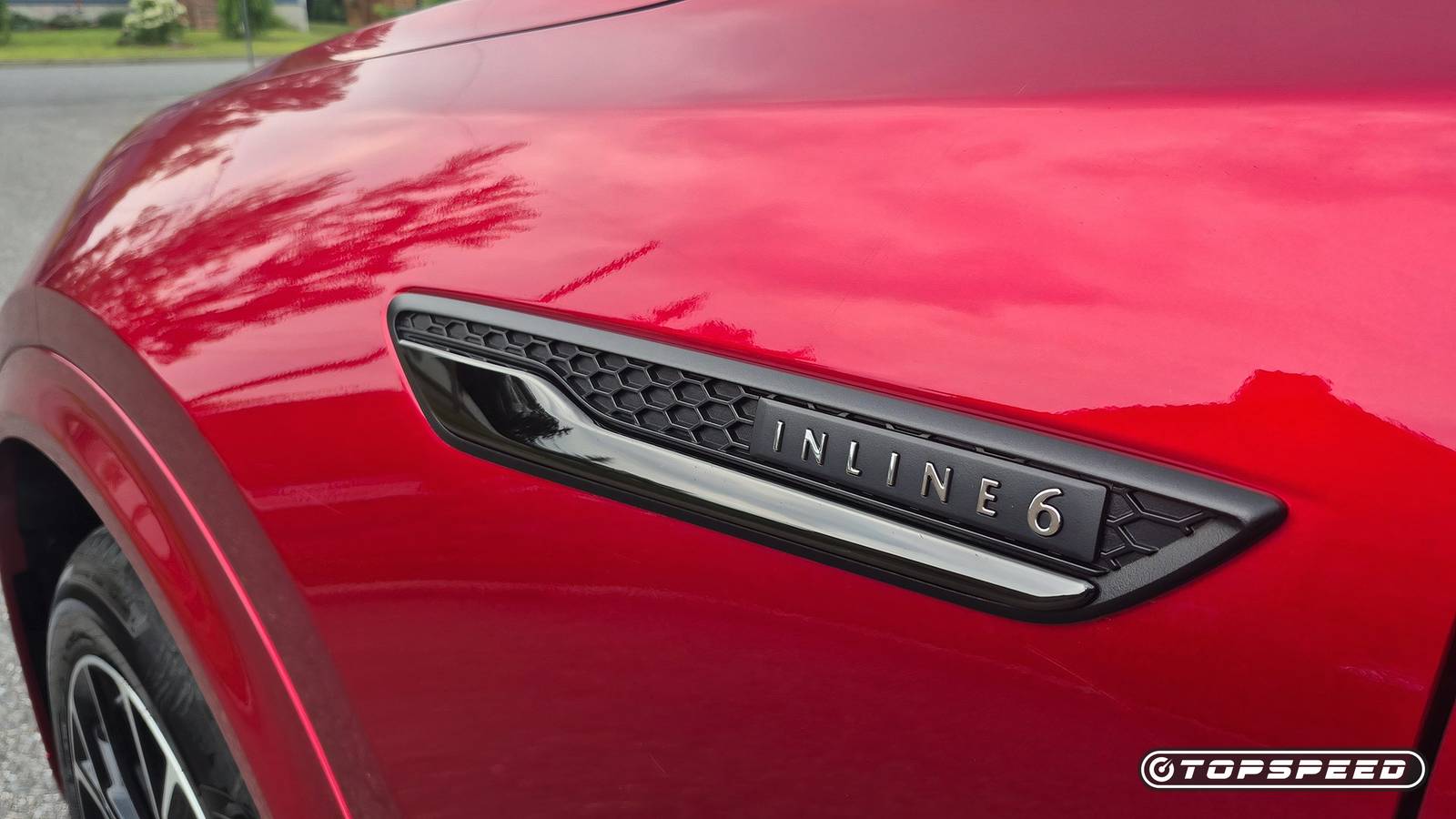
This strategy focuses on a calculated premium push that utilizes sophisticated engineering, such as new longitudinal platforms and smooth inline-six engines. In doing so, it has bridged the gap between mainstream and luxury brands. The results are evident in the company’s financial health and market perception, as their high-margin utility vehicles now represent nearly 90 percent of their total U.S. sales volume. By consistently earning top safety accolades across their entire elevated lineup and maintaining a reputation for driving dynamics that rival European counterparts, the brand has successfully captured a more affluent demographic that prioritizes both versatility and a refined, upscale experience.

The Mazda CX-70 Makes German SUVs Look Overpriced
This premium Japanese SUV is more than capable of throwing punches at BMW for a fraction of the price.
Mazda’s Most Complete Daily Driver

The 2026 Mazda CX-70 serves as the brand’s sophisticated two-row flagship, sitting on the same large-platform architecture as the three-row CX-90 but trading that extra seating for a more athletic profile and expanded cargo flexibility. It primarily targets active professionals who desire the presence and premium driving dynamics of a midsize luxury SUV. You can have this model with both high-output inline-six and plug-in hybrid powertrains, without a third row. Since its introduction, the CX-70 has been a critical component of the brand’s record-breaking sales momentum in the U.S.
The chic SUV has helped drive the company toward its landmark sales performance in 2025 by capturing a more affluent demographic that values near-luxury craftsmanship. This model fills a vital gap in the lineup for a spacious yet driver-centric utility vehicle. It has also solidified the brand’s reputation for punching above its weight class, effectively competing with both mainstream and entry-level European rivals.
Competitive Pricing And Comprehensive Standard Features

The 2026 Mazda CX-70 is offered in seven distinct configurations for the U.S. market, with base MSRPs starting at $42,250 for the 3.3 Turbo Preferred and scaling up to $56,670 for the 3.3 Turbo S Premium Plus. The electrified PHEV SC and SC Plus models occupy the middle bracket at $44,250 and $47,250, respectively, while all models require a $1,455 destination and delivery fee. Standard comfort and convenience features across the line include a 12.3-inch center display with Alexa Built-in, wireless Apple CarPlay and Android Auto, a power sunroof, and heated front seats.

Moving into the Premium and Premium Plus trims adds upscale amenities like a 12-speaker Bose Centerpoint surround system, a 360-degree view monitor, a hands-free power tailgate, and ventilated front seats with Nappa leather. The high-output S trims further elevate the experience with a 12.3-inch fully digital gauge cluster, driver seat memory, and signature LED lighting, while the flagship Turbo S Premium Plus features exclusive tan quilted Nappa leather, a suede-wrapped dashboard, and a 150-Watt cargo area power outlet. While most features are grouped by trim, standalone options are largely limited to premium paint colors such as Soul Red Crystal Metallic, Rhodium White, Polymetal Gray, Zircon Sand, or Melting Copper Metallic, each carrying a $595 surcharge.

2026 Mazda CX-70 Interior And Exterior Picture Gallery
For 2026, the CX-70 has been updated with refined design, premium interiors, advanced tech, three electrified powertrains, and enhanced performance.
Powerful And Refined Engine Options

The 2026 Mazda CX-70 features a rear-biased i-Activ all-wheel-drive architecture paired exclusively with an eight-speed automatic transmission, though its performance profile varies significantly across three distinct powertrain calibrations. The entry-level 3.3 Turbo models feature a 48-volt mild-hybrid inline-six producing 280 horsepower and 332 pound-feet of torque. If you prioritize performance, the high-output 3.3 Turbo S variants utilize a more aggressive version of the same engine to produce a robust 340 hp and 369 lb-ft of torque on premium fuel, enabling a 0 to 60 mph sprint in 6.5 seconds.
Alternatively, the PHEV model pairs a 2.5-liter four-cylinder engine with a 68-kW electric motor for a total system output of 323 hp and 369 lb-ft of torque. Thanks to the immediate delivery of electric torque, the PHEV is the quickest off the line with a 0 to 60 mph time of 5.9 seconds. Mazda electronically limits the top speed of these utility vehicles to 130 MPH.
Accommodating Fuel Consumption Estimates

Opting for the entry-level turbocharged variant yields an EPA-estimated fuel consumption of 24/28/25 MPG on the city/highway/combined cycle. Upgrading to the Turbo S only changes the city consumption to 23 MPG. With an 18.5-gallon fuel tank for the Turbo and a 19.6-gallon tank for the Turbo S, range estimates come in at 462 miles for both engines.
The EPA indicates that the base Turbo will have you spending $1,000 more on fuel compared to the average new vehicle sold in the U.S., together with a $1,700 annual fuel cost and a $2.81 cost to drive 25 miles. The Turbo S model will cost you $3,750 more in fuel over five years, $2,250 in fuel for the year, and $3.76 to drive 25 miles, with a $70 estimate to fill the tank.
The CX-70 PHEV is the model to go for if fuel savings are a priority. This earns an estimated 56 MPGe combined rating from the EPA, together with an all-electric range of 26 miles, transitioning to 25 MPG combined once the battery is depleted. This model features an 18.4-gallon tank and a total gas-electric range of 490 miles. You’ll still spend $1,250 more on fuel over five years and $1,750 on gas and electricity over a year. You can also expect to spend $2.23 to charge the battery, $3.76 to drive 25 miles on gasoline, and $69 to fill the tank up.

Hot Take: You Know, The Mazda CX-70 Is Quite The Looker
The Mazda CX-70, the CX-90’s little brother, puts the emphasis on design and refinement. It truly feels like a premium product.
Fans Love The CX-70 Ownership Experience

According to J.D. Power, the 2026 Mazda CX-70 holds a consumer-verified overall score of 77/100, which includes 83/100 for the driving experience, 82/100 for resale, and 82/100 for the dealership experience. Interestingly, it only earns 69/100 for quality and reliability. The model holds an outstanding 4.6/5 average rating on the Edmunds consumer review portal, with reliability and manufacturing quality, ride quality, and value being its strongest suits.
According to iSeeCars, the 2026 Mazda CX-70 will lose $18,180 or 43 percent of its value after five years of ownership, which is slightly better than the segment average of 46.3 percent.
CarEdge indicates that you can expect to spend $50,314 on the CX-70 over the same period, which includes accounting for $19,433 worth of depreciation. You’re also likely to spend $9,240 on fuel and $2,649 on maintenance.
Sources: The EPA, Edmunds, J.D. Power, iSeeCars, and CarEdge