

As of 2026, the U.S. sports car market is navigating a complex period defined by broader economic stabilization and a shifting landscape of consumer priorities. While the industry faces ongoing challenges from elevated price points and a long-standing market dominance by larger, more practical vehicle segments, there remains a resilient appetite for enthusiast-focused machines.
Buyers are currently weighing the allure of traditional combustion-powered performance against an increasing industry push toward electrification and advanced technological integration. Sports cars are still highly valued for their tactile engagement and heritage. Ultimately, the segment is settling into a new normal where manufacturers must balance the necessity of sustainable, efficient innovation with the enduring, specialized demand for vehicles that prioritize the pure, emotional experience of the drive over mere utility.
The Current State Of Sports Cars In The U.S.

The decline of mass-market sports cars in the U.S. is a multi-faceted phenomenon driven by shifting consumer needs, economic pressures, and rapid advancements in vehicle capability. As modern vehicles across all segments have become increasingly powerful and capable of delivering respectable acceleration and handling, the unique performance proposition that once defined entry-level sports cars has been diluted. Simultaneously, the market has pivoted heavily toward high-riding, versatile utility vehicles that offer the space and comfort consumers now prioritize for their daily lives.
Compounding this shift is the rising barrier to entry. Production costs, safety compliance, and advanced technology have surged, directly affecting the pricing of traditional sports cars. This direction has now pushed them out of reach for younger or budget-conscious buyers who can no longer justify them as a second or third vehicle. Ultimately, as the industry favors high-volume, multipurpose platforms, the focused, manual-centric, and less practical nature of the traditional sports car has been relegated to a niche status, making it increasingly difficult for these vehicles to survive in a market that demands total utility from every dollar spent.
How The Japanese Approach Sports Cars

The Japanese sports car industry is defined by a distinct synthesis of meticulous craftsmanship and a profound commitment to driver-centric engineering. At the heart of this philosophy is the belief that a vehicle should be an extension of the driver. This leads to a focus on intuitive ergonomics, lightweight construction, and balanced chassis dynamics that prioritize tactile feedback over raw, unrefined power. By emphasizing aerodynamic efficiency and precision manufacturing, Japanese brands have consistently sought to create cars that are inherently predictable and responsive. This approach ensures that performance remains accessible and usable, blending technical complexity with a functional simplicity that respects the intimate connection between the driver and the machine.

This dedication to continuous improvement and refined mechanical integrity has fostered a deeply loyal, niche following that treats these vehicles as more than mere transportation. Japanese sports cars are essentially canvases for personal expression and long-term mechanical refinement. For many enthusiasts, the appeal lies in the ability to bridge the gap between high-performance capability and daily reliability, a balance that has allowed these cars to transcend their initial market segments and gain near-mythological status.

America’s Least Driven Car Is One Of The Best To Drive
It’s ideal for canyon carving. But poorly suited to just about everything else.
The MX-5 Continues To Defy Odds

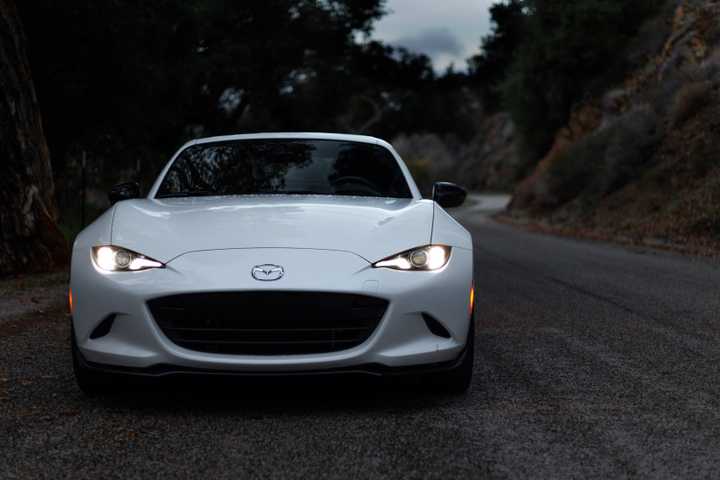
The 2026 Mazda MX-5 Miata remains a defiant market anomaly that refuses to play by industry rules. Entering its tenth year on the market, the current generation is not fading into obscurity. Instead, it achieved a 7.7 percent increase in U.S. sales in 2025, moving 8,727 units. For Q1 2026, Mazda reports a 30.7 percent sales increase year-on-year after selling 2,446 units. 970 of these were sold in March 2026.

The Miata serves as the sports car equivalent of a proven loyalty narrative, consistently converting pragmatic critics into passionate evangelists. Ultimately, this performance proves that an extraordinary ownership experience is something no amount of extra horsepower can replicate, cementing its status as a timeless benchmark for driving engagement.
A Sports Car That Does No Wrong

Despite its age, the MX-5 earns an incredible level of love from reviewers and owners alike. J.D. Power gives this model a 79/100 consumer-verified overall score, including 76/100 for quality and reliability, 77/100 for the driving experience, 85/100 for resale, and 82/100 for the dealership experience.
Edmunds lists 28 owner reviews for this generation of the MX-5, with a 4.7/5 average rating. Key strengths include its driving experience, striking exterior design, and competitive value, but it earns some criticism for lacking comfort, having a small interior, and poor outward visibility. iSeeCars gives this model an 8.8/10 overall score, including 8.9/10 for reliability and 8.7/10 for retained value.

The Next Mazda MX-5 Miata Will Be The Best Ever And Here’s Why
Mazda revealed some details about the next MX-5. And it’s time to get excited.
Mazda’s Simple But Effective Drivetrain

The Mazda MX-5 is only available with the brand’s naturally aspirated 2.0-liter four-cylinder gasoline engine option, including a standardized distributor-less ignition Skyactiv-G dual-overhead cam 16-valve powertrain, featuring variable valve timing. The end result is a 181-horsepower and 151-pound-feet output to the rear wheels. You have a choice of a traditional six-speed manual or automatic transmission, both of which sprint from zero to 60 MPH in a claimed 5.7 seconds and hit a 137 MPH top speed.

- Base Trim Engine
-
2.0-liter I4
- Base Trim Transmission
-
6-Speed Manual
- Base Trim Drivetrain
-
Rear-Wheel Drive
- Base Trim Horsepower
-
181 HP @7000 RPM
- Base Trim Torque
-
151 lb.-ft. @ 4000 RPM
- Make
-
Mazda
- Model
-
MX-5 Miata
- Segment
-
Sports Car
Tests indicate the automatic Retractable Fastback model to be a bit slower, with confirmed times as high as 6.5 seconds, but the manual Roadster easily hits its claimed time. The limited-slip differential is a first for the MX-5 since the second-generation NB. The asymmetrical system consists of a conical clutch and redesigned cam mechanisms that can respond to different inputs during acceleration and braking events, improving stability through tight corners.
A Truly Focused Suspension Setup

The 2026 Mazda MX-5 Miata features a sophisticated lightweight chassis that its dedicated engineers designed for precision handling. Its suspension configuration features an independent double-wishbone setup with a stabilizer bar in the front and an independent multi-link arrangement with a stabilizer bar in the rear, complemented by Mono-tube Bilstein dampers if you specify the higher-performance trims.
The braking system consists of power-assisted ventilated front discs and solid rear discs, with high-performance Brembo four-piston front calipers available as an upgrade.

Standard rolling stock includes 17-inch aluminum alloy wheels wrapped in high-performance summer tires, though base models may utilize 16-inch wheels.
The MX-5’s low curb weight is a fundamental principle of its design. The roadster maintains a lightweight reputation with a curb weight of 2,332 to 2,403 pounds for the soft-top manual, depending on specification, while the Retractable Fastback variant weighs in at 2,460 pounds. Mazda achieves a nearly perfect 50/50 front-to-rear weight distribution, a balance tuned to be precise when the driver is seated. This gram-focused strategic engineering ensures the vehicle’s rotational center remains near the driver’s hip, facilitating the iconic Jinba Ittai connection between car and pilot.

10 Cost-Effective But Often Over-Looked Alternatives To The Mazda MX-5 Miata
The Mazda Miata is an iconic sports car that blends performance and affordability perfectly, but it’s not the only model that should be on your list.
Compact But Fully-Kitted Cockpit

The Mazda MX-5 Miata features a very compact cabin space, so there isn’t a lot of space for too many pieces of equipment. Regardless, the brand fits necessary equipment into a comprehensive cockpit. The base Sport trim, priced at $30,430, includes manual air conditioning, power windows with one-touch down for driver and passenger, driver’s and passenger’s vanity mirrors, a 12-volt power outlet in the floor well, and a mesh aero board wind blocker.

The $33,930 Club adds seat heating, while the Grand Touring includes a Frameless auto-dimming rearview mirror with HomeLink. The Sport’s interior is upholstered in black cloth, while Mazda applies leather touches to the steering wheel, shift knob, and parking brake handle.
The Club features suede inserts on the seat, while the $35,730 Grand Touring gets full leather seats, which can be upgraded to Nappa leather for an additional fee. This trim also features black doorsill tread plates with stainless steel inserts.

All MX-5 Miatas feature Mazda’s older 8.8-inch touchscreen display with HD Radio and Pandora, together with a three-year trial of the Mazda Connected Services package. The unit accommodates Android Auto and Apple CarPlay, Amazon Alexa, two USB-C ports, and a six-speaker audio system. The Club features the upgraded Bose nine-speaker premium audio system, wireless Apple CarPlay, and a three-month trial of SiriusXM. Only the Grand Touring features navigation.
Sources: J.D. Power, Edmunds, and iSeeCars.