
Hydrogen fuel cell technology appears to be fighting a losing battle when it comes to mainstream adoption, but most brands that have invested in the technology remain committed to finding some way to make the alternate fuel source work. South Korea is one of the front-running regions committed to the hydrogen mobility sphere, having invested a significant amount of capital and development into the fuel source for multiple applications, including personal mobility. The country’s sector began developing hydrogen fuel cell technology in the late 1990s, leading to its automakers establishing themselves as one of the earliest to invest in clean mobility.
Beyond passenger cars, the Hyundai group specifically expanded hydrogen technology into heavy-duty transport before establishing its dedicated hydrogen brand, HTWO, to oversee the entire hydrogen value chain, including production, storage, and mobility applications. Hyundai has since advanced large-scale hydrogen infrastructure projects in Korea, Europe, and North America, aiming to make hydrogen an accessible clean energy source across industries. While its FCEV passenger car operations are dwindling, there’s one revolutionary concept that has the potential to truly change the game for hydrogen cars.
Hyundai’s Vested Interest In Hydrogen

Hyundai’s commitment to hydrogen mobility spans nearly three decades, beginning with the establishment of a dedicated fuel cell research team in 1998 and the development of early prototypes like the Santa Fe FCEV in 2000. The brand secured its place as a global pioneer in 2013 by launching the ix35 Fuel Cell, known as the Tucson FCEV in some markets, which was the world’s first mass-produced hydrogen passenger vehicle.
This was followed in 2018 by the Nexo, a dedicated hydrogen SUV that introduced advanced features like air purification and remote parking to the mainstream. Today, under its dedicated HTWO brand, Hyundai stands as one of the few global manufacturers still aggressively pursuing a hydrogen society, integrating the technology into everything from high-performance concepts to emergency power generators and logistics systems, reinforcing its belief that hydrogen is essential for achieving true carbon neutrality.
Immense Success In The Commercial Sector

Hyundai has expanded its hydrogen strategy toward the heavy-duty commercial sector, where the high energy density and faster refueling of fuel cells offer a functional advantage over large battery packs for long-haul logistics. The centerpiece of this effort is the XCIENT Fuel Cell, the world’s first mass-produced hydrogen heavy-duty truck, which features a 469-horsepower motor and a range of approximately 450 miles.
As of early 2026, the European fleet alone has surpassed 20 million cumulative kilometers driven across countries like Switzerland and Germany, while operations in North America have exceeded one million miles.
This real-world reliability has allowed Hyundai to expand its hydrogen-as-a-service ecosystem into South America, recently deploying a Class-Eight fleet in Uruguay.
Hyundai has solidified its position as the leader in the transition toward a zero-emission freight economy by demonstrating that hydrogen can handle the rigorous demands of timber logistics and port transportation while significantly reducing carbon emissions. Additional future endeavors that Hyundai plans to introduce include a biogas-based hydrogen extraction system from the waste-to-hydrogen plant in Chungju and the electrolysis-based hydrogen production facility in Buan.

The Science Behind Hyundai’s Hydrogen Fuel Cell Push
Hyundai is going in big on hydrogen technology for the next five years.
The N Vision 74 Is A Game-Changer

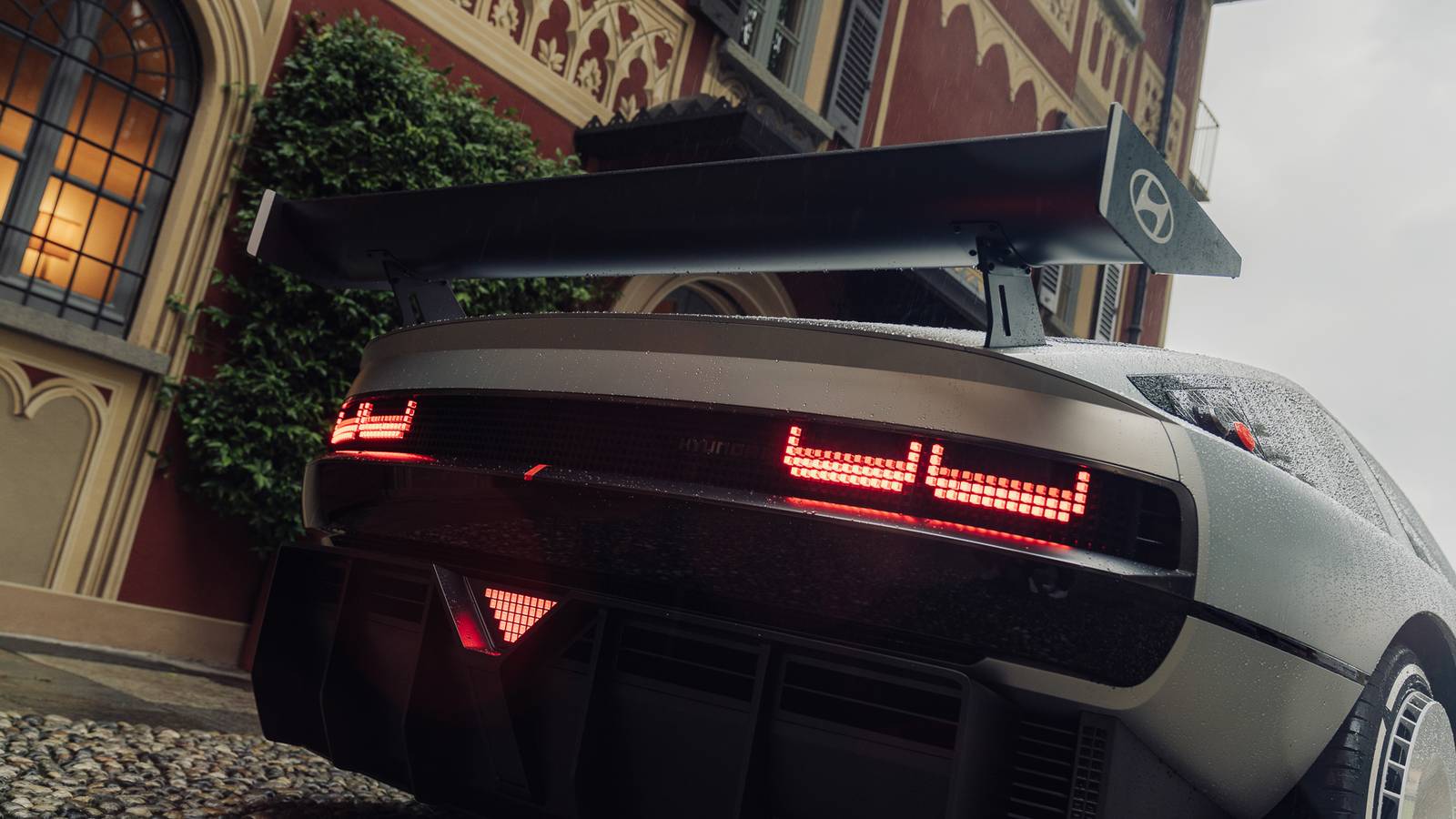
The Hyundai N Vision 74 was first revealed in July 2022 during Hyundai’s N Day event as a functional prototype designed to test and showcase the brand’s future high-performance technologies. Specifically, it serves as a technical showcase for a unique hydrogen-electric hybrid powertrain that combines a 62.4 kWh battery with a hydrogen fuel cell to provide both long-range endurance and rapid refueling capabilities.
Since its debut, the car has remained a major talking point due to its striking retro-futuristic look, which pays direct homage to the 1974 Pony Coupe concept designed by Giorgetto Giugiaro. It’s a highly desirable concept that blends historical heritage with cutting-edge engineering, capturing the imagination of enthusiasts. This has led to years of intense speculation regarding a limited production run, which Hyundai finally confirmed in 2024.
Hyundai’s Revolutionary Hybrid System

A production version of the N Vision 74 is currently rumored for a limited 2026 release. Its launch would fundamentally disrupt the hydrogen car landscape by shifting the narrative from utilitarian efficiency to high-performance desirability. By utilizing a hydrogen-electric hybrid architecture, it solves the range versus power dilemma. The large battery provides immediate torque and track-ready cooling, while a 95 kW fuel cell acts as an onboard generator to sustain performance and accommodates five-minute refueling times that current BEVs cannot match.
This move would prove that hydrogen technology suits buses or long-haul trucks, while still acting as a viable solution for enthusiasts who demand the lightweight agility and endurance required for spirited driving or competitive motorsports. Furthermore, its design serves as a new take on aspirational green technology. The choice to make a hydrogen vehicle the most must-have halo car in the industry, Hyundai would be the only brand creating a performance-oriented demand that could finally justify the massive infrastructure investment needed for a widespread hydrogen economy.

Stellantis Finally Understands That Hydrogen-Powered Cars Are Going Nowhere
Like many other automakers, Stellantis has halted its investments in hydrogen fuel cell technology.
A Case Study On Retro-Futuristic Design

The exterior of the N Vision 74 recreates the wedge silhouette made popular during the 70s and 80s. This consists of clean surfaces and the unique B-pillar of the original prototype, which also never reached production but served as the spiritual DNA for Hyundai’s sports car ambitions.
A signature Parametric Pixel lighting system in the rectangular headlights and taillights introduces a futuristic aesthetic, which is a digital-inspired design language also seen on the Ioniq EV series. The marriage of old and new is further cemented by functional aesthetics. The body lines are nostalgic, but the massive rear wing, side air intakes, and aero-disc wheels are precision-engineered for the aerodynamic and cooling requirements. This design demonstrates the functional ability of high-performance hydrogen-hybrid cars that can also show off classic proportions, while meeting the extreme technical requirements of future racing technologies.
Exhilarating Performance Claims

The N Vision 74’s drivetrain consists of a dual-rear-wheel-drive configuration, featuring two independent motors fitted to each wheel. These enable precise electronic torque vectoring to optimize cornering and allow for controlled drifting. In its original concept form, the system produces a combined 671 hp and 664 pound-feet of torque.
The concept weighs in at 5,450 pounds, but it will still cover a 0 to 60 MPH acceleration sprint in a suggested four seconds before hitting a 155 MPH top speed limit. Reports based on information supplied by key insiders indicate that a limited road-legal model could be due for production. This may produce as much as 775 horsepower, affording it a sub-three-second 0 to 60 MPH acceleration time.

All-New Hydrogen-Powered Hyundai NEXO Unveiled Looking Like A Million Bucks
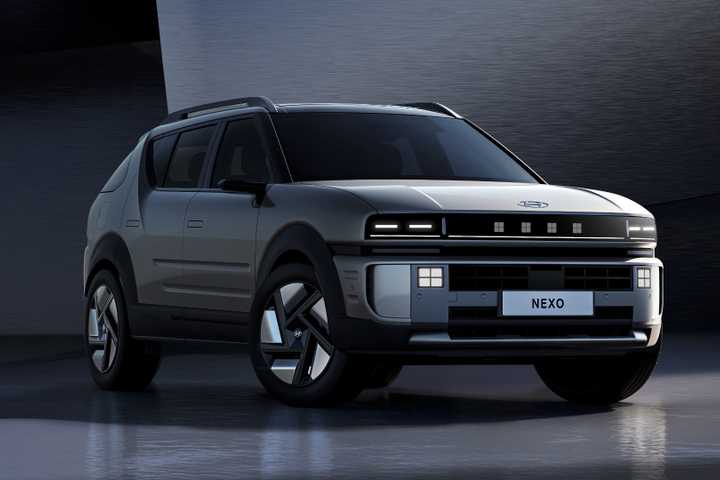
Hyundai unveiled the all-new NEXO at the 2025 Seoul Mobility Show, marking a milestone in hydrogen vehicles.
The Nexo Carries Hyundai’s Hydrogen Flag In Global Markets

The all-new 2026 Hyundai Nexo marks a significant leap for the brand’s dedicated hydrogen fuel cell SUV, featuring a redesigned powertrain that produces a combined 255 hp. This is a substantial increase over its predecessor’s low-output motor. The upgraded system pairs a 110 kW fuel cell stack with an 80 kW battery. With this, the brand claims a 7.8-second 0-to-62 MPH acceleration time and a 111 MPH top speed limit.

- Base Trim Engine
-
Hydrogen Fuel Cell EV
- Base Trim Drivetrain
-
Front-Wheel Drive
- Base Trim Horsepower
-
201 hp
- Base Trim Torque
-
258 lb-ft
- Make
-
Hyundai
- Model
-
Nexo
- Segment
-
Compact SUV
Thanks to a larger hydrogen storage capacity of 6.69 kilograms, the Nexo achieves a highly competitive driving range of up to 513 miles under WLTP standards, or roughly 434 miles by South Korean testing metrics. While Hyundai has historically offered the Nexo in the U.S. as a California-only lease, the brand has confirmed it is not bringing this new generation to the U.S. market, instead focusing its sales efforts on South Korea, Europe, and Australia, where hydrogen infrastructure investment is more robust.
How Hydrogen Gets A Car Going

A hydrogen fuel cell electric vehicle features a fuel cell stack to convert hydrogen gas into electricity. This energy then powers an electric motor and emits water vapor as a byproduct. The benefits of this system include net-zero tailpipe emissions, quiet operation, and instant torque outputs, albeit not as high as conventional EVs. Hydrogen vehicles also don’t rely on large batteries or long charging times, but you do have to refill the hydrogen tank at a hydrogen fueling station, which takes about five minutes, depending on the tank capacity. The onboard fuel cell generates electricity in real time through an electrochemical reaction between stored hydrogen and oxygen from the air, powering the vehicle while driving.

FCEVs appeal to drivers who want the clean energy benefits of an EV, but without having to deal with the downtime of charging or the added weight of large battery packs. FCEVs hold a fractionally small share of the American market because they are only available in California, which is the only region in the country that has hydrogen refueling stations. Recent reports suggest that a lot of these stations are subject to closure due to a lack of demand for FCEVs. The high cost of hydrogen production, transportation, and storage slows broader adoption, but federal and state investments in hydrogen infrastructure continue.
Sources: Hyundai