
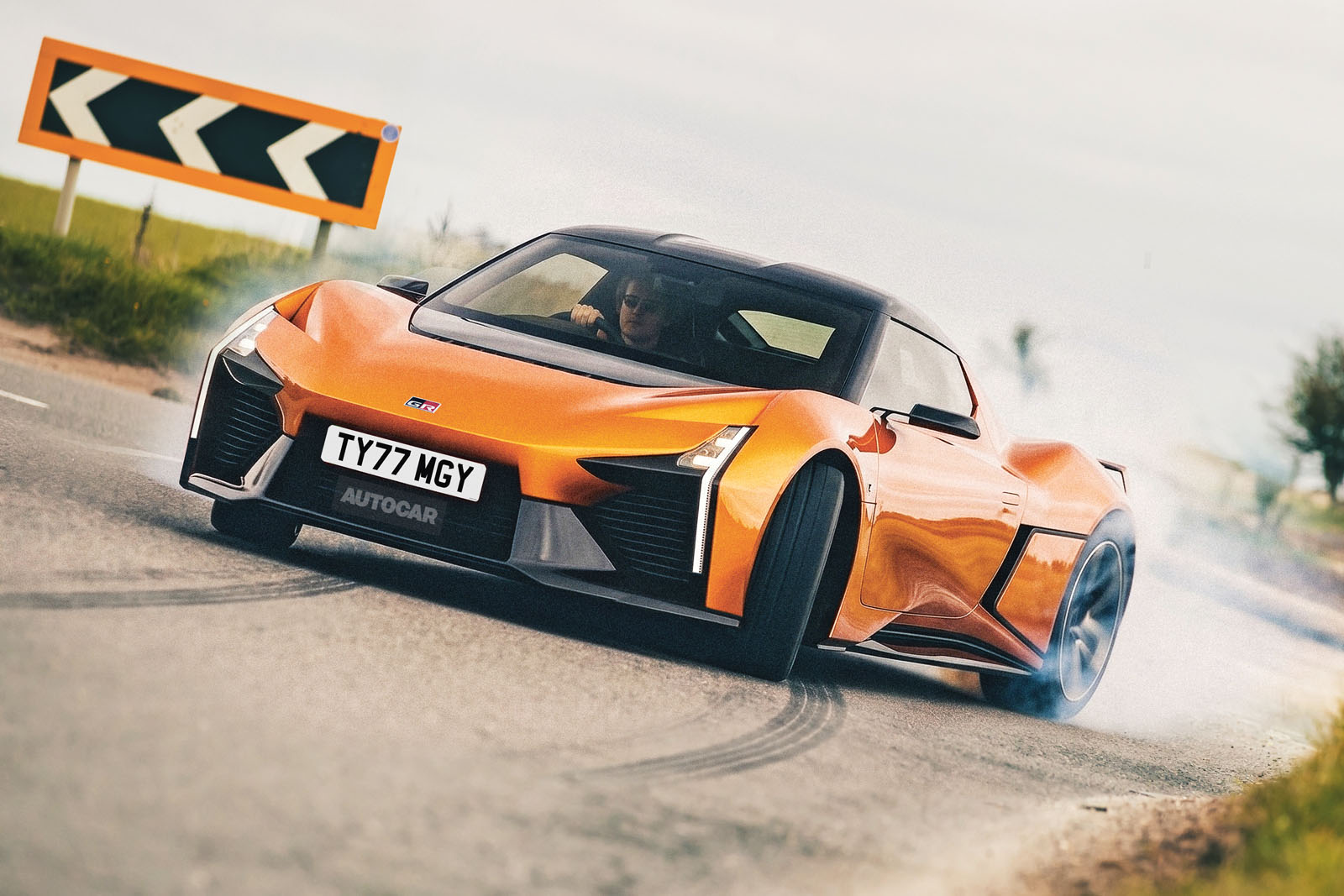
Toyota has trademarked the GR MR2 name and the new car is likely to go without Toyota badges entirely as the GR GT does – to cement the sporting brand’s positioning as a stand-alone marque.
Testing of the eventual road car is thought to have ramped up recently with the deployment of a new sports car prototype at the Toyota-owned Fuji Motor Speedway.
Wearing a mish-mash of body parts from existing Toyota models – Lexus LC doors and GR Yaris lights among them – the two-door test mule is clearly mid-engined (based on its huge side air intakes and vented hood) and, in video taken from the side of the track, can be heard to emit a purposeful turbo four-pot soundtrack.
Even though it gives clues to the size and engineering of Toyota’s new entry-level sports car, the test car is not thought to closely preview its styling. Instead, the new Emira rival is expected to be heavily based on the bold FT-SE concept Toyota revealed in 2023.
While it was originally destined to use an all-electric powertrain based around Toyota’s new-generation energy-dense battery packs, the FT-SE was unmistakably ‘mid-engined’ in its proportions and could make production relatively unchanged by virtue of the new G20E engine’s compact proportions.
Since the FT-SE was revealed, Toyota has doubled down on its commitment to a ‘multi-pathway’ energy strategy, investing in new petrol and hybrid powertrains, as well as hydrogen combustion, in parallel with the expansion of its EV line-up – and paving the way for a new generation of combustion-engined sports cars.
What the Yaris M test car tells us
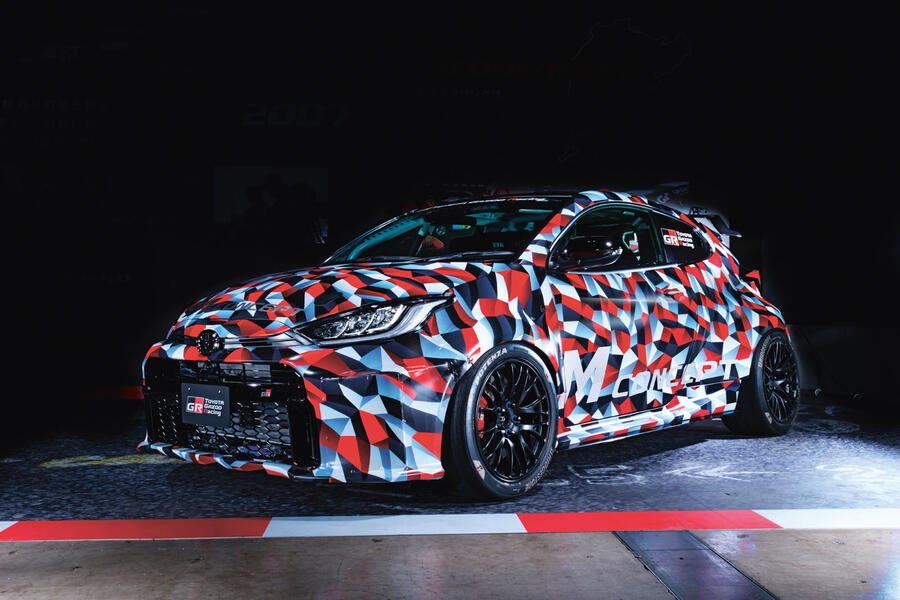
Toyota is aiming to eradicate “prayer time” with its new mid-engined platform. That’s what chairman Akio Toyoda calls the moment when a high-output front-engined car understeers into a sharp bend: “It’s time to pray to God.”
The firm touts the success of the standard GR Yaris in motorsport – having competed in the World Rally Championship, Super Taikyu and Nürburgring 24 Hours – but says characteristics inherent in its drivetrain layout ultimately limit its performance potential.