
It was 1955 when General Motors engineer William G Cobb demonstrated the Sunmobile, a 15in-long model car powered by selenium photovoltaic cells – and fascination with fuelling cars using sunlight has endured ever since.
Nissan celebrated Clean Energy Day earlier this year by unveiling a Nissan Ariya equipped with solar panels, which in real-world testing on a sunny day added 14 miles to the EV’s range.
The team reckon that in sunny Barcelona the solar Ariya could acquire a daily average of 11 miles. Average year-round boosts are estimated at 6.3 miles for London, 11.7 miles for New Delhi and 13.2 miles for Dubai and it’s expected that, in certain situations, drivers could reduce their charging frequency by between 35% and 65%.
Following initial long-distance testing, which included a 963-mile journey between the Netherlands and Spain, Nissan’s engineers drew the conclusion that solar integration could reduce a commuter’s number of annual visits to charging stations from 23 to eight.
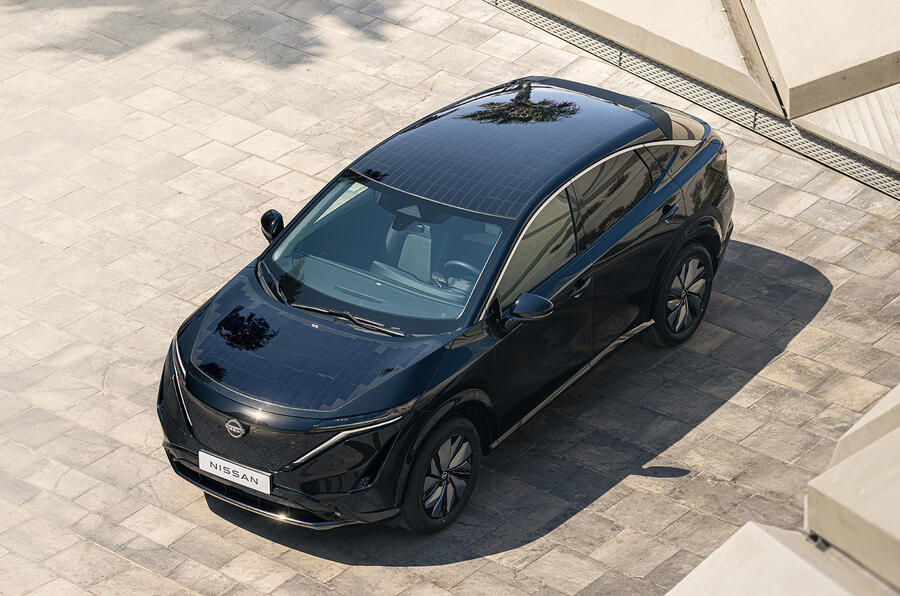
The Ariya project is a collaboration between Nissan and Dutch solar mobility innovator Lightyear, which supplied the nextgen tech used to cover 3.8 square metres of the Ariya’s exterior in custom-made polymer and glass panels.
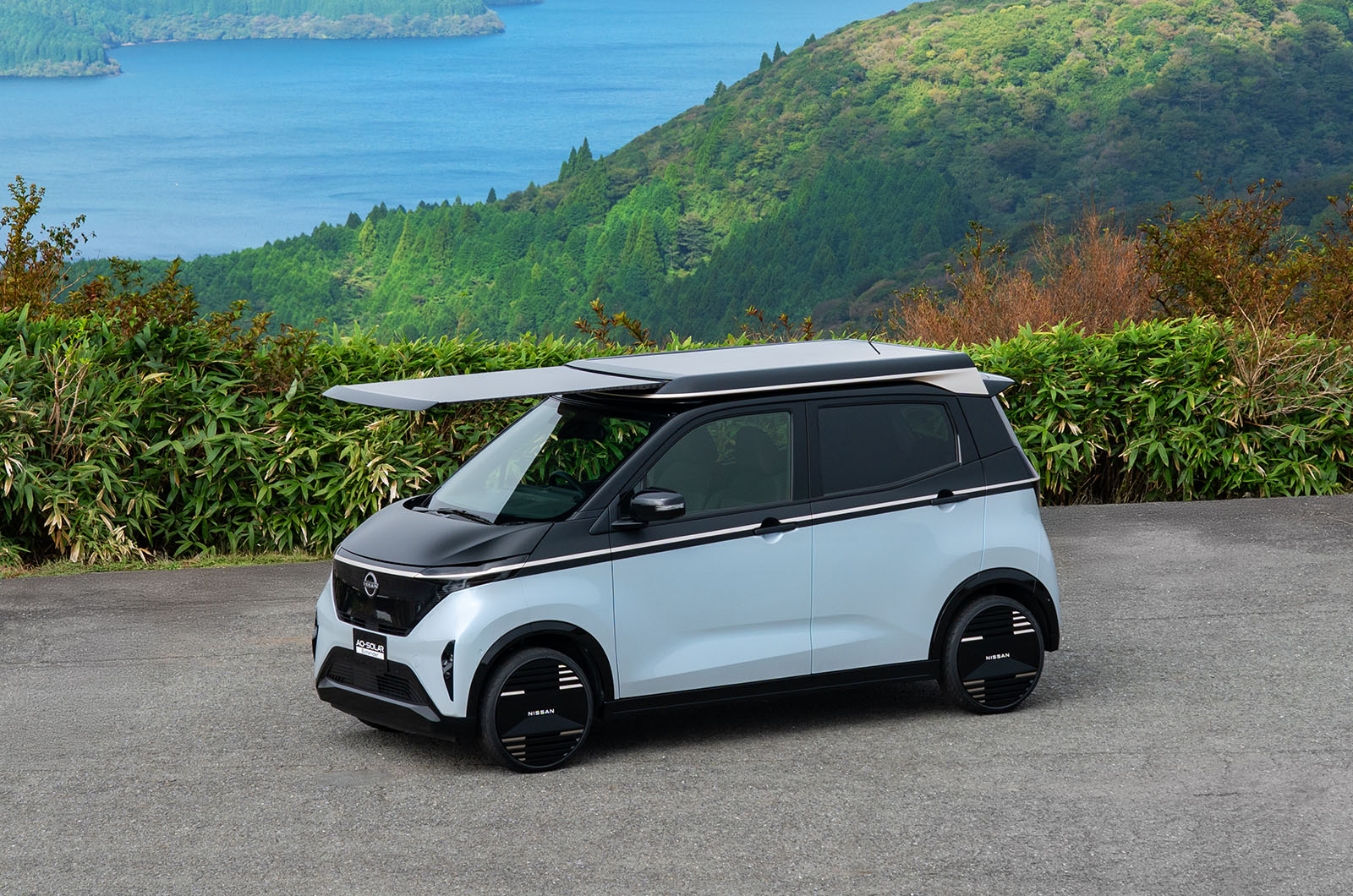
The Ariya isn’t the only solar power project that Nissan has underway. At the 2025 Tokyo motor show, it revealed the AoSolar Extender, a cunning photovoltaic system mounted on the roof of an electric Sakura kei car. Rectangular in shape and covering the entire roof, it automatically slides out over the front of the car when it is parked.
Once extended, the panel also doubles as a sunshade over the windscreen, helping to keep the cabin temperature down on hot days. It retracts again when the car is about to be driven off or, in order to prevent damage, when high winds are detected.
The fixed housing for the extendable section is also covered in solar panels, so the system is always generating energy during daylight hours.
Total generation is around 500W, depending on weather conditions, and the unit is designed to minimise drag and integrate with the Sakura’s styling when stowed.
The engineering team estimates that the system has the potential to generate enough solar electricity to power the average Sakura for 1860 miles per year.
Analysis of driving data from Sakura owners shows that many travel only relatively short distances on errands or school runs. On that basis, it’s estimated that for a significant number of owners, solar-generated power could do away with the need for charging from the grid altogether.