
Seat will offer electric cars when production costs come down further but will not simply ‘de-content’ and rebadge Cupra EVs, because the sibling brands will have entirely separate line-ups going forward.
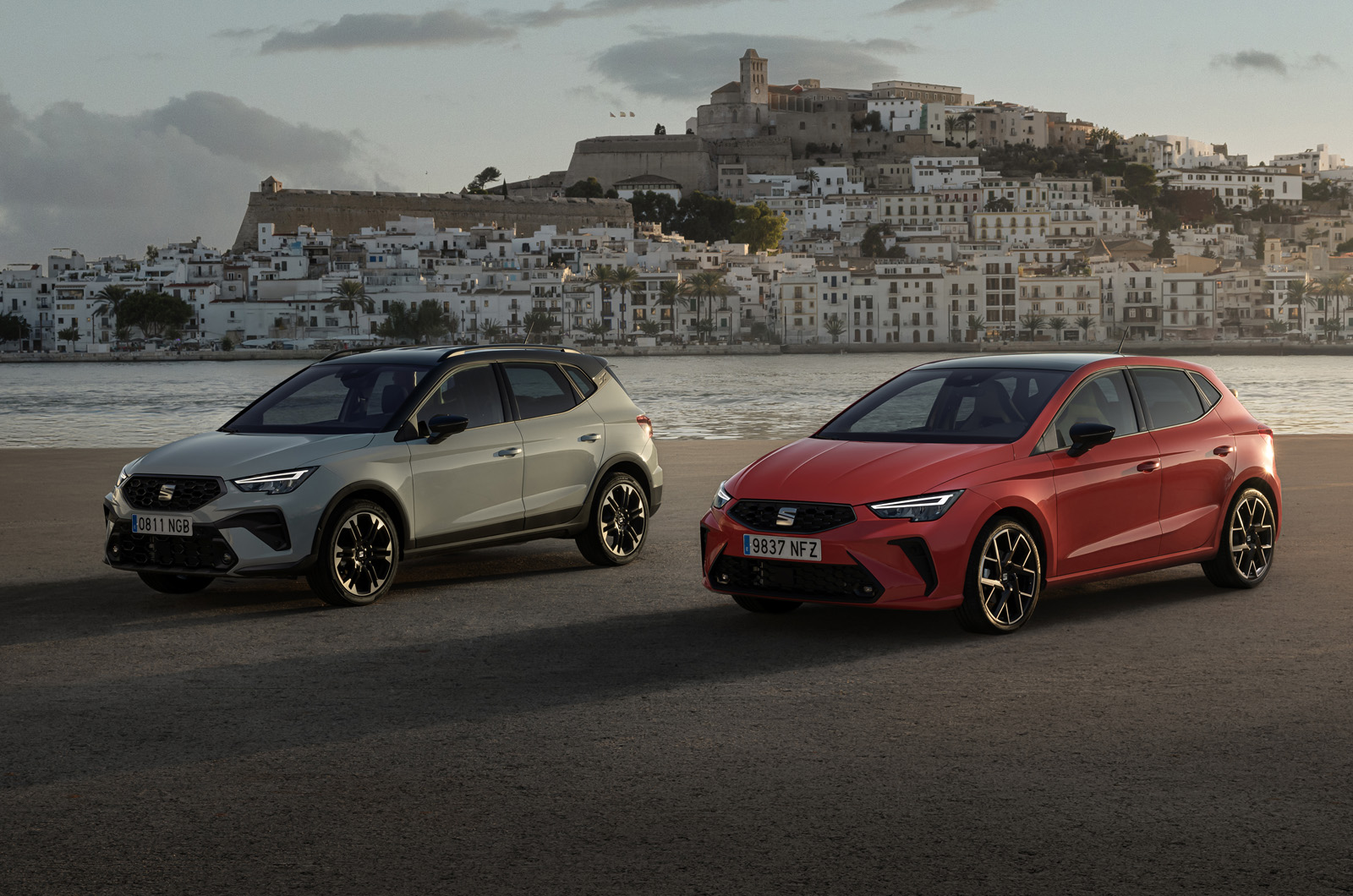
Seat recently ended a long drought of new model launches with facelifts for the Ibiza supermini and Arona crossover, the first substantial investments in its line-up since the launch of the fourth-generation Leon in 2020, and will follow up with new mild-hybrid engines for the duo next year.
However, with the recent retirement of the Ateca and Tarraco SUVs, Seat is down to just three models, all petrol-powered, and has given little indication as to what the future holds, as the company diverts the bulk of resource and investment towards its fast-growing Cupra sibling.
Now, though, CEO Markus Haupt has given Autocar the first clues that the first all-new Seat models in years could be on the horizon, as the company continues to invest in the value-oriented marque.
Asked whether Seat still had a role to play in the context of Cupra’s plans to significantly expand its line-up and become a leading global premium brand, Haupt said: “We cannot imagine our company without Seat. Seat is the heritage of our company and has made history in Spain and other countries.
“So it’s a very important message: we still are investing in the Seat brand. Next year we will have mild-hybrid versions of [the Ibiza and Arona], and both cars are still running at a very high rate.”
He pointed to the fact that the Ibiza was Spain’s best-selling car in February as testament to the brand’s ongoing popularity and said there was no immediate need to reconsider its viability in the short to medium term.
“When we face up to 2029 and 2030 and CO2 [emissions regulation] becomes harder than today, for sure there will come a point where we need to discuss what the future of this brand can be,” he continued.
“For that, we probably still need to work on the cost of electric car platforms, because today it would be very tough to have a Seat that is able to earn money with the costs we have.
“Someday the discussion will pop up on what to do with Seat. But until then we have a clear strategy to keep betting on the models we have.”
Asked whether Seat will still be selling new cars in 2035, Haupt said “I hope so”, emphasising the brand’s different positioning from Cupra and the different role it plays globally as a provider of affordable, ICE-powered cars.
“The brand position is completely different, the customer base from both brands is different,” he said, “and we cannot forget overseas markets, where electrification is still not as it is in Europe.
“So we are very happy. It’s part of the strategy of what we are doing now. It’s not just a causality. We still bet on both brands very strongly.”
Asked about the prospect of Seat selling a cheaper version of the Cupra Raval electric supermini, perhaps with a shorter range and less equipment, Haupt responded: “We would never do that, because I think we need to keep both brands differentiated. Raval will always be a Cupra, and just de-contenting Cupra cars and making Seats out of them is for sure not the right strategy for us.