
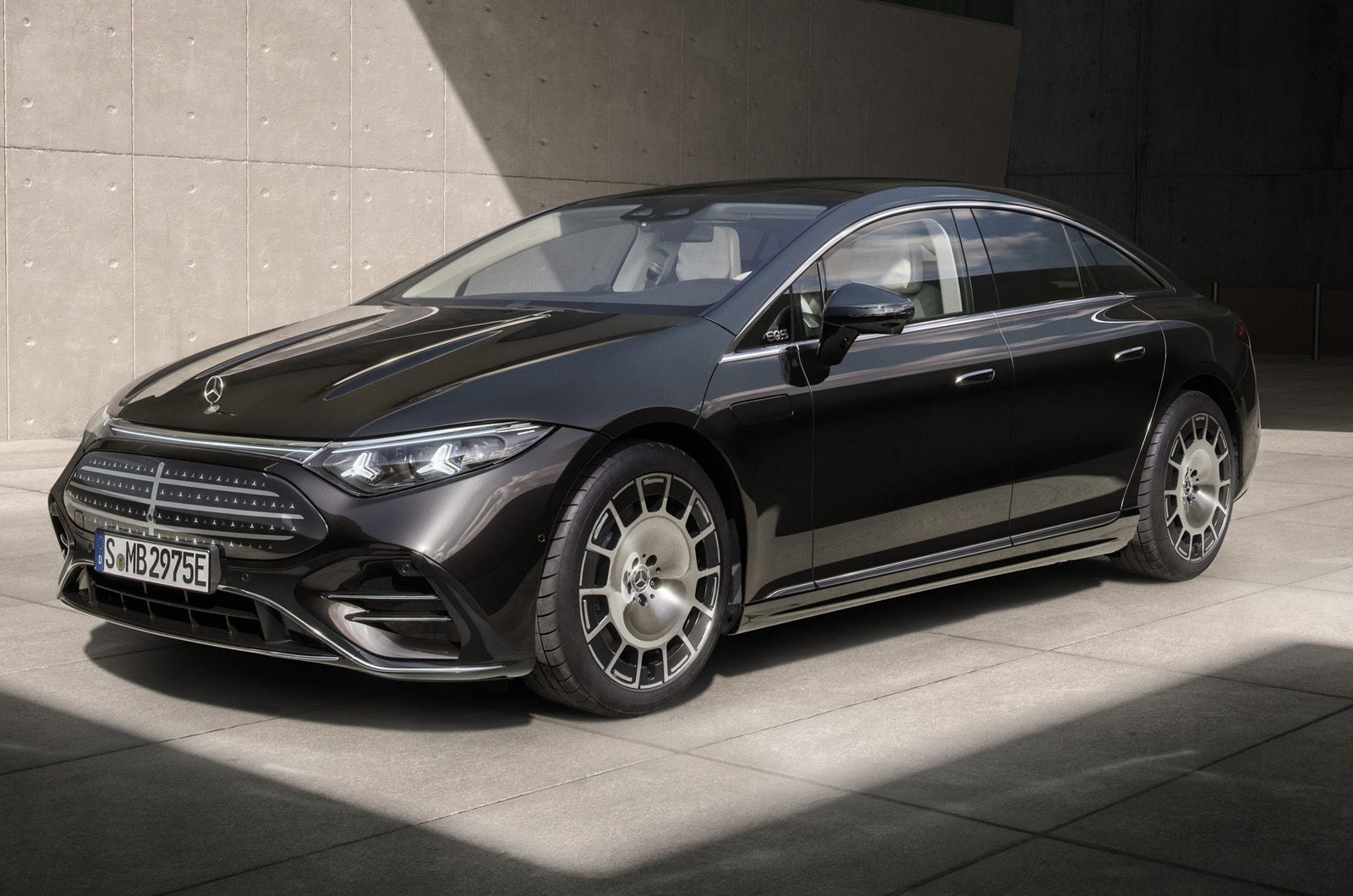
One of Europe’s longest-range EVs, the Mercedes-Benz EQS, has had its legs stretched even further with the addition of a new version that can go nearly 600 miles between charges.
The flagship electric limo has been heavily updated for 2026, receiving a raft of visual and technical enhancements that will help its case against the BMW i7, Lucid Air and upcoming Jaguar Type 00.
Chief among the tweaks is the adoption of a battery chemistry that boosts energy content by 3%, taking the outright capacity from 118kWh to 122kWh with no impact on the size or weight of the unit.
The increase in capacity, as well as various tweaks to improve efficiency, mean the rear-driven EQS 450+ now has 13% more official range, at 575 miles – only a few less than the Air Grand Touring, which is currently Europe’s longest-legged EV.
The dual-motor EQS has meanwhile had its range boosted to 544 miles.
While the EQS remains on the EVA2 platform (which it shares with the smaller EQE), it has made the significant switch from a 400V electrical architecture to an 800V one, which means the maximum charging speed is up from 200kW to a much more competitive 350kW – in line with the maximum speed of most UK public chargers.
It can still use 400V chargers, though, having the capacity to ‘virtually divide’ its battery into two parts and top up each half at 175kW.
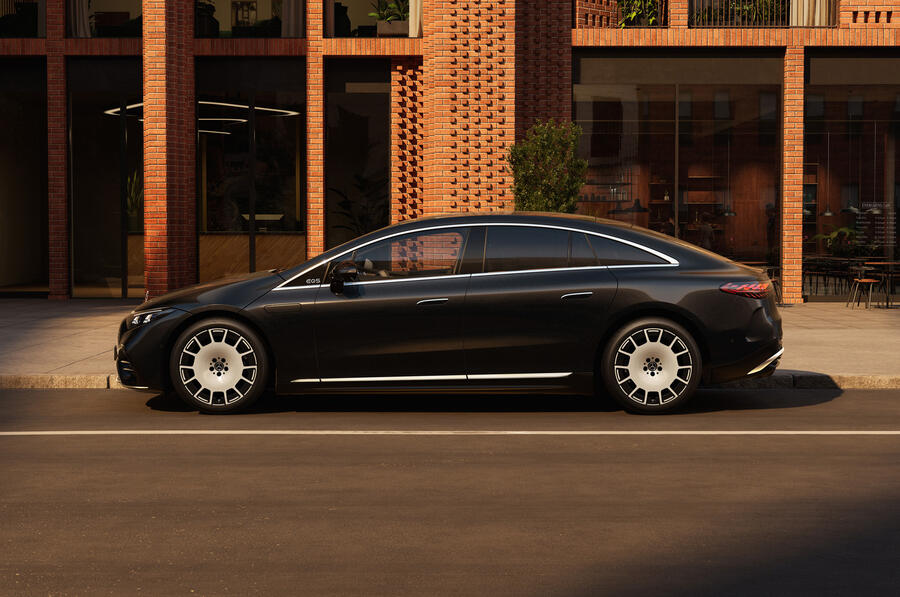
The EQS’s motors are meanwhile said to mark a “generational leap” from their predecessors, being more compact, more efficient and more robust, while the amount of energy they can recuperate under deceleration is up by a third, at 385kW.
Elsewhere, the EQS has been fitted with a new optional steer-by-wire system (as recently tested by Autocar), which replaces the mechanical steering column with a virtual linkage to save space and weight and swaps the steering wheel for a yoke, as the lock-to-lock range has been reduced from several turns to just 270deg.
The EQS also gets an upgraded version of the Airmatic air suspension system that’s fitted to the new electric GLC and updated S-Class, which uses data from the cloud to prepare the dampers for potholes and speedbumps.
There’s also a new automatic reversing function for use in tight environments where turning isn’t possible; the headlights illuminate a 40% wider field while using 50% less energy; and the front end has been resculpted to optimise aerodynamic efficiency.