
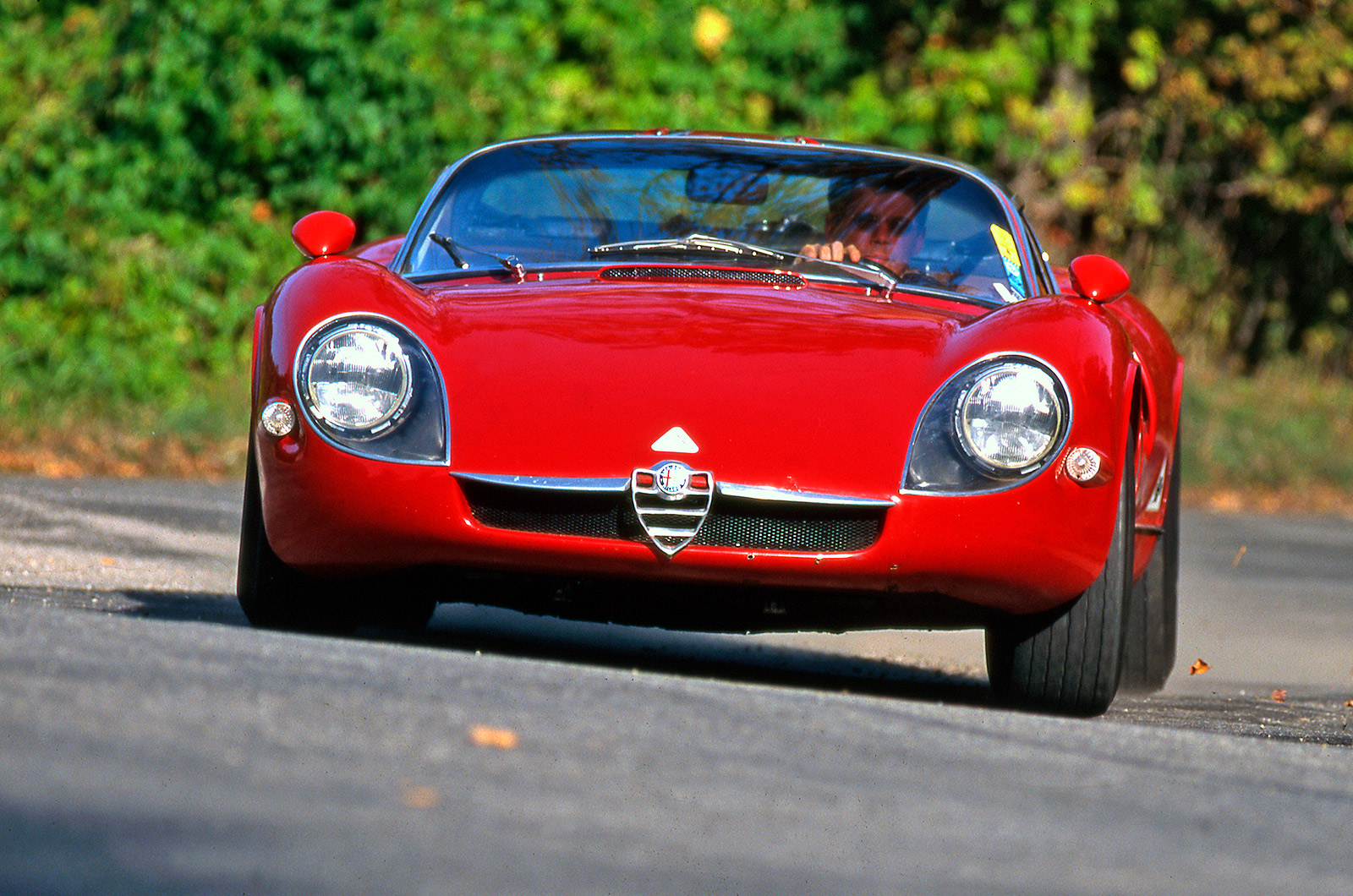
No other Alfa Romeo before or since has looked quite like these cars, which were nicknamed Il mostro (‘the monster’), but their six headlights arranged in two sets of three would make a comeback in the 21st century.
155
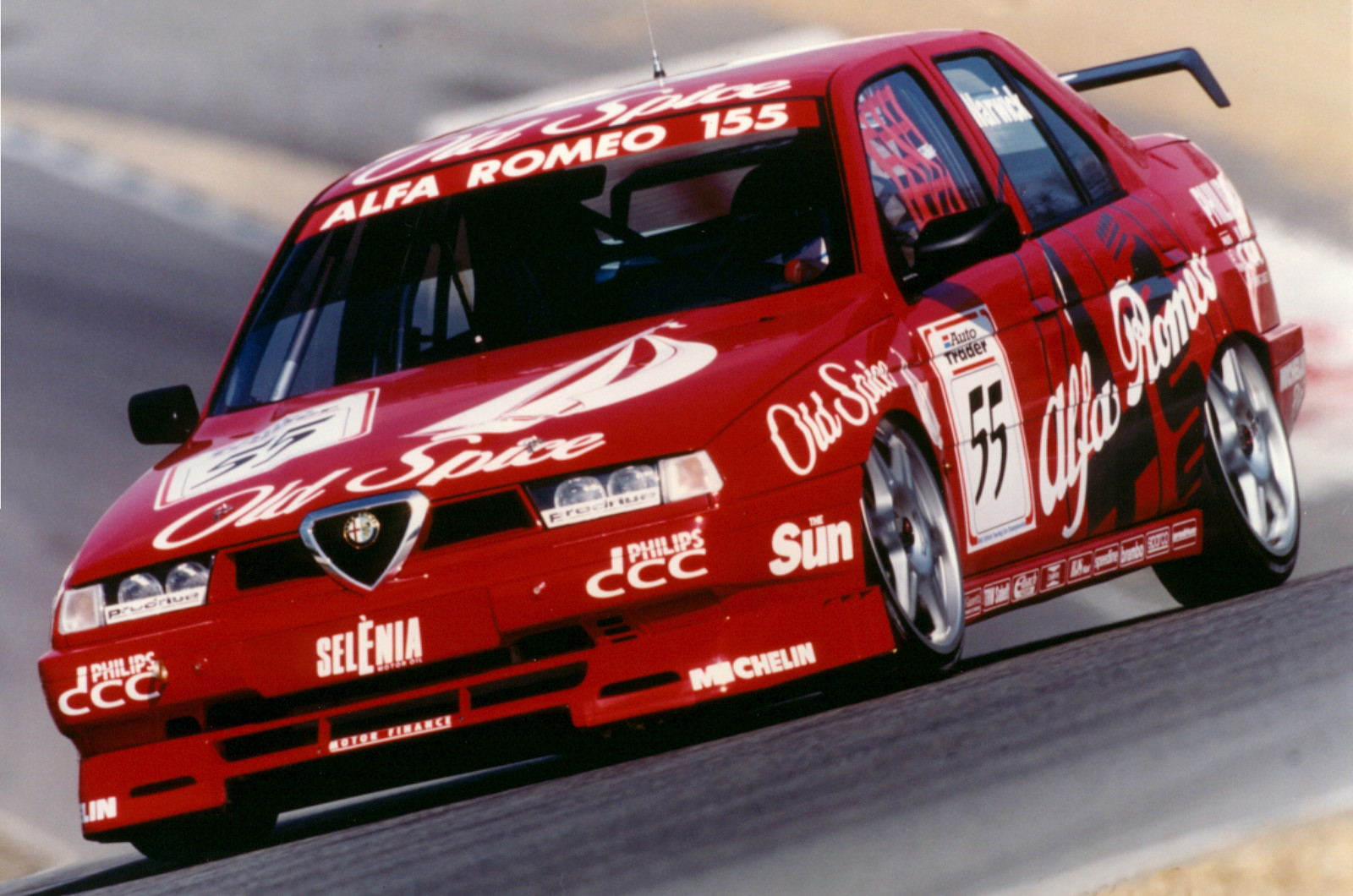
Given the new Fiat connection, it was reasonable enough that the front-wheel drive 155 compact executive should share a platform with the Fiat Tempra and Lancia Dedra. Production began in 1992 and ended six years later.
The car was very successful in motorsport. The 155 Silverstone, launched in 1994, was created specifically to give Alfa Romeo an advantage in that year’s British Touring Car Championship, which it dominated. Other 155s would win Touring Car titles in Germany, Italy and Spain.
145/146
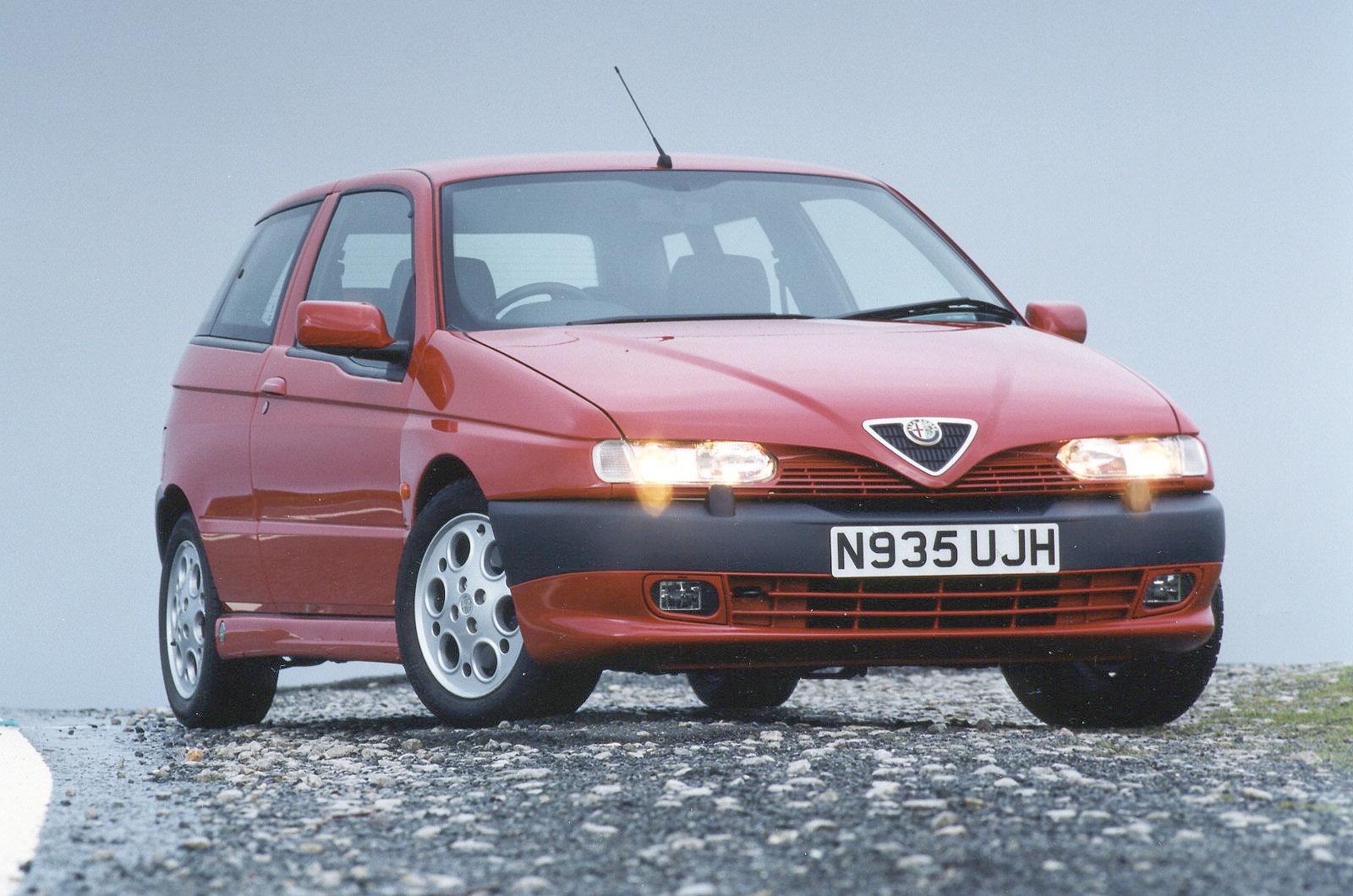
Alfa’s small family hatchbacks of the mid to late 1990s was divided into two ranges with similar mechanicals but different characters. The 145 (pictured) was the more youth-oriented three-door, while the 146 had five doors and more conservative styling, and was aimed at people who might previously have bought a 33.
Like the 33 and the Alfasud, the 145/146 was available at first with boxer engines, though these were discontinued. In hot hatch form, both cars were offered with 2.0-litre TwinSpark engines producing around 150bhp, but only the 145 version had the Quadrifoglio/Cloverleaf badge.
GTV/Spider
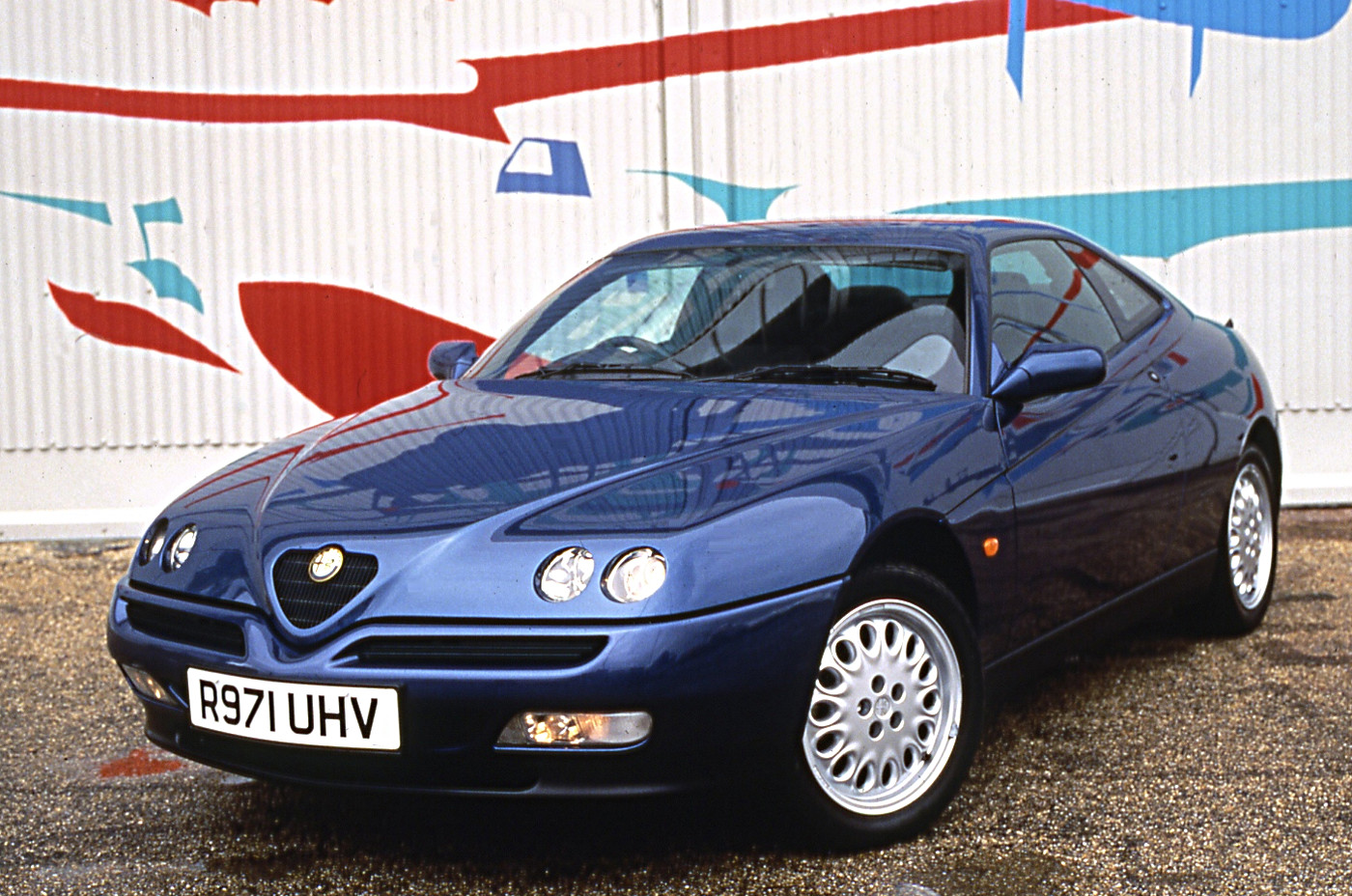
Like the 145/146 whose platform they shared, the GTV and Spider (both using names from Alfa Romeo’s past) were broadly speaking the same car, respectively a two-seater sports coupé and its convertible equivalent which were built from 1993 to 2004.
Alfa offered several four-cylinder and V6 engines. The most unusual was a turbocharged 2.0-litre V6, which was approximately as powerful as the 3.0-litre version but put the car in a lower tax bracket for Italian customers.
156
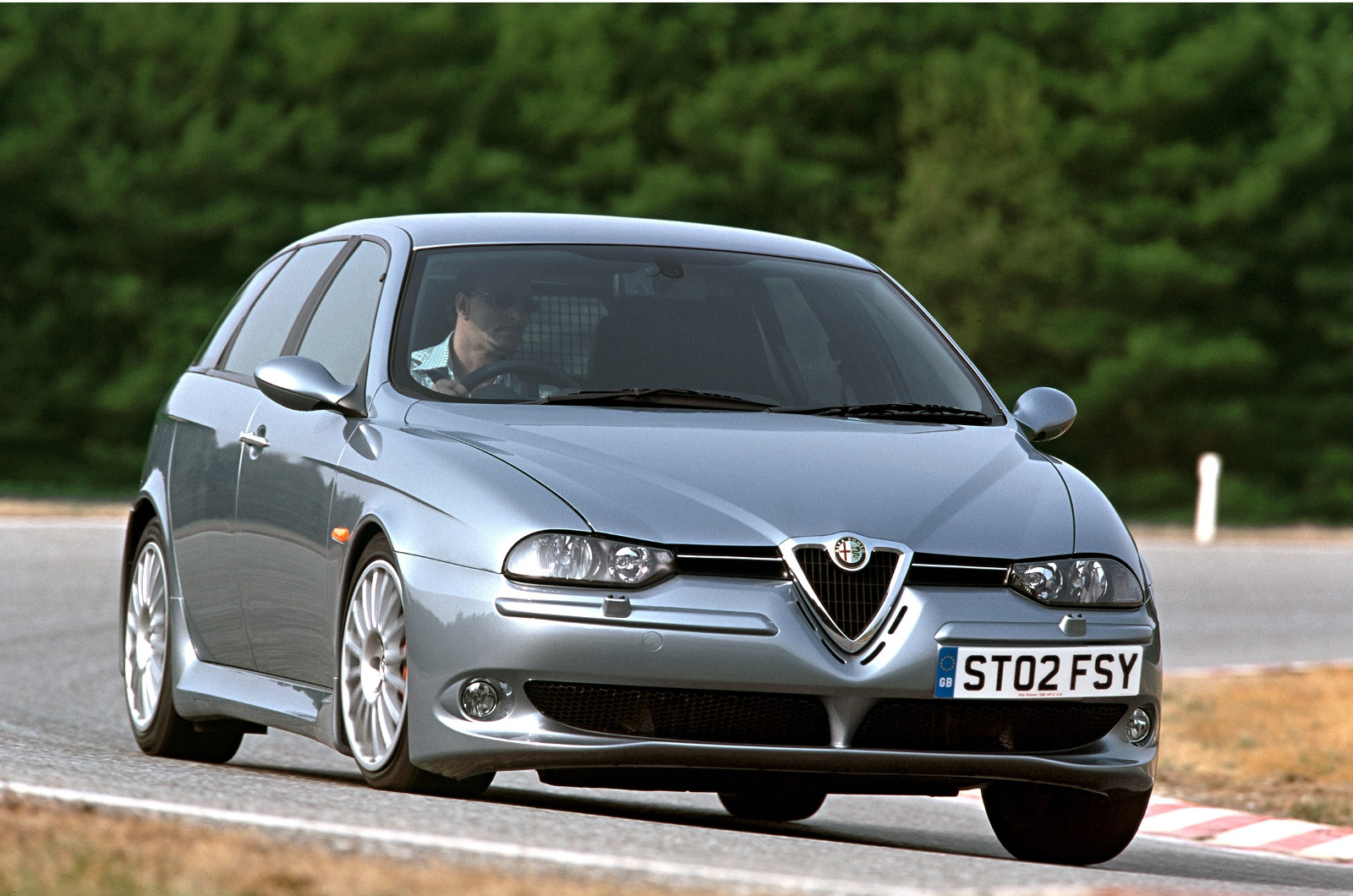
The 155 was replaced by the 156, which was in production for ten years from 1997. It was offered in a great many forms. Engines ranged from a 1.6-litre Twin Spark through a common-rail turbo diesel to a 3.2-litre petrol V6, body styles included saloon, Sportwagon estate and Crosswagon semi-off-roader, and there was a choice of front- or four-wheel drive.