
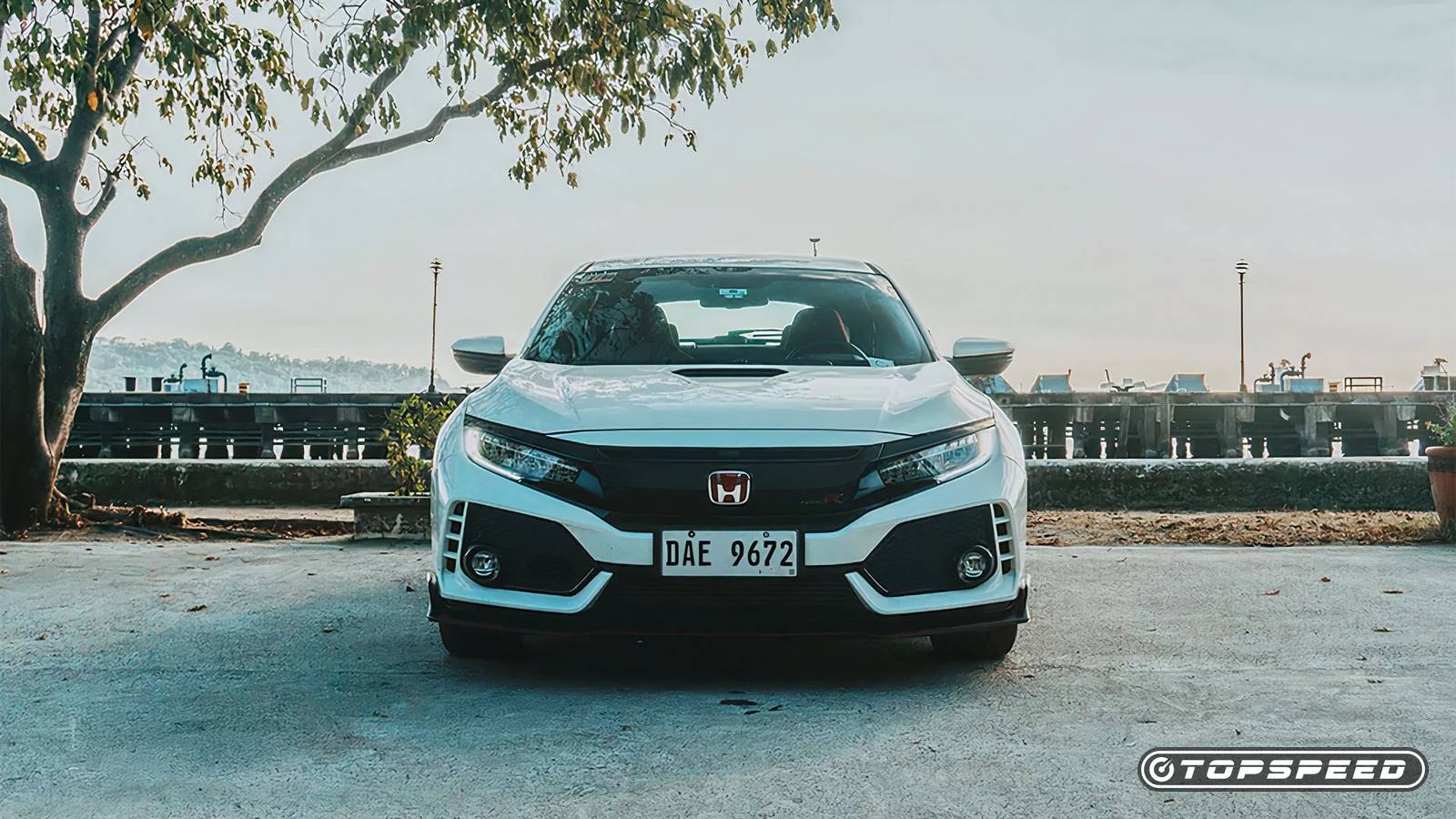
The previous generation (FK8) Honda Civic Type R, sold from model year 2017 to 2021, marked the first time the iconic hot hatch was available in the United States—and indeed, for the whole world. A 2020 model year Civic Type R also means at most a six-year-old model by this time, which should make these vehicles pretty good value, too. If you’re in the market to own an iconic front-wheel drive (FWD) hot hatch from Honda, here’s what you need to know about the 2020 model year’s resale value.
A Barely Depreciating Hot Hatch

If you’re shopping for a 2020 Honda Civic Type R, this vehicle has barely depreciated over the past six years, which is a good thing if you’re the seller, but if you’re the buyer, it means you’re still paying roughly the same amount for a brand-new 2026 Honda Civic Hybrid in base Sport trim.
A Little Under $30,000

According to Kelley Blue Book, a 2020 Honda Civic Type R has an average resale value of $29,692, which is directly in line with the base price of a Honda Civic Hybrid Sport that retails for $29,295. For reference, the Civic Type R sold for $36,995 when new. These are strong resale values for the Civic Type R, because over five years (2026 numbers are still not yet analyzed as this article was written in 2025), the Civic Type R has only depreciated by 19.7 percent, which is less than half the industry-wide depreciation of 45.6 percent in five years, according to iSeeCars.

Used values of the FK8 Honda Civic Type R are really strong and defy the industry average, because this vehicle isn’t unlike any Civic out there. Honda says that throughout the FK8’s production run from 2017 to 2021, 21,424 units were sold. Though this isn’t rare next to the obscure production numbers of exotic sports cars and the like, the Civic Type R’s numbers are still way less than the core Civic sedan and hatchback. For perspective, Honda can easily sell nearly 20,000 standard Civics monthly.
Why The Civic Type R’s Values Are Strong

First, there’s the rarity. The FK8 is a dream car for a lot of car enthusiasts, and let’s be honest, most of us can only afford these when they’re depreciated. As a result, demand for a used Civic Type R in the car enthusiast community is strong relative to how many exist in the used market. Yet rarity doesn’t explain the whole story. The BMW M2 is also one of the best performance cars that the German automaker has made and is sold at about the same numbers as the Civic Type R, yet it suffers from 40.2 percent depreciation in five years—about double the Civic Type R’s 19.7 percent five-year depreciation. Why is this the case?

Well, you have to remember that the Civic Type R is still a Honda, which is a brand known for having one of the industry’s best resale values. Thank the brand’s reputation for reliability in the Civic, and yes, that pretty much carries over into the Type R, too. Though, of course, maintenance costs for the Civic Type R will be more expensive, the 2.0-liter 306-horsepower turbo four-cylinder, along with its six-speed manual and other components, is extremely robust—easily lasting beyond 100,000 miles with just routine maintenance. Extremely fun, capable, yet usable daily, and reliable? That’s the perfect combination for a car that’s still mechanically functional for the next owner or two.

How Formula 1 Tech Makes This Japanese Hot Hatchback A Track Monster
The Honda Civic Type R may seem like a Civic on steroids, but there’s a method behind its aerodynamic and engineering madness.
Let’s Explore The Civic Type R’s Design And Engineering

Now that we’ve begun talking about the Civic Type R, let’s take a look at what this vehicle offers when it comes to design and interesting engineering details.
Boy Racer Looks

A 2020 Honda Civic Type R means you’re getting the final model year before this vehicle gets a mid-cycle facelift. This, however, was still at a time when Honda’s design language erred on the side of liberally going all out with the lines, creases, and vents (whether fake or real). Personally, I liked the design when it first came out, but as it aged, the novelty factor wore off. Perhaps it’s due to numerous Civics being dressed up to look like FK8s from where I live, though design is subjective anyway, so your mileage may vary.

As for the interior, the Civic Type R’s cabin looks purposeful. Like every other Civic Type R, the interior doesn’t stray too far from the standard model. Your only visual cues include the red Alcántara bucket seats, the red Honda logo, the red highlights on the steering and dash, and the various Alcántara surfaces around the cabin. Practicality levels of the Type R are pretty much the same as the standard Civic, but it’s limited by the fact that the rear seats are only designed to seat two occupants. Whether this is due to the Type R having a lower payload rating than the normal Civic is unknown, but I guess the Type R’s only meant to be enjoyed by four occupants.
Interesting Engineering Choices

FWD cars are popular, especially in the mainstream vehicle segment, due to their packaging advantages. Those packaging advantages result in a vehicle that’s both cheaper to manufacture and results in a more compact drivetrain layout, which results in better interior space utilization. Unfortunately, in a performance application, FWD has its limitations. That’s because in an FWD car, the wheels need to do two things: propel the car forward and also turn the vehicle. If the FWD car is too powerful, you’ll have a phenomenon called torque steer.

The imbalance in forces applied to the steering axes is what you feel as a tugging sensation on the steering wheel when you aggressively put too much power than the front wheels can handle, particularly when the wheels are not yet straight. This also happens due to FWD cars often having unequal half shafts, resulting in slight differences in torque distribution. Honda solved torque steer in the FK8 Type R by creating a unique dual-axis strut front suspension. This features a damper fork, which separates the knuckle from the damper as opposed to being a single part, allowing the wheels to have better movement to prevent torque steer. Furthermore, by positioning the steering axis closer to the wheel center, the amount of center offset was drastically reduced, further reducing torque steer.

Civic Showdown: How The Type R And Si Serve Two Different Drivers
Honda’s two fastest Civics are for very different buyers, and we’re dissecting what makes each special in this comparison.
How It Drives In The Real World

Consider me lucky to be able to take both a Civic Type R FK8 and the current FL5 as press cars, the former even as a holiday long-termer. Here’s what you need to know about the FK8’s driving experience.
Capable When You Want It

When the Civic Type R came out, it immediately became the fastest FWD car to lap the Nürburgring. Honda embraced the Type R’s FWD layout by solving its limitations. From the nearly eliminated torque steer, as well as its pointy and sharp front end that follows your intentions willfully, this hot hatch handles and corners like no other FWD car at its time could. Ditto the six-speed manual, whose gear shift tactile feel is one of the industry’s outright best. Rev matching also helps you nail the perfect downshift, yet the pedal placement makes it easy to execute a heel-and-toe if you want to do the rev matches yourself.
2020 Honda Civic Type R Specs
|
Engine |
2.0-liter turbo four-cylinder |
|
Layout |
FWD |
|
Horsepower |
306 hp |
|
Torque |
295 lb-ft |
|
Transmission |
6-speed M/T |
Whatever the mode, the 2.0-liter turbocharged four-cylinder delivers tenacious performance linearly. Turbo lag is minimal, even nearly eliminated when switching the car into R Mode. Here, the engine becomes hyperactive, the steering gets heavier and more responsive with less slack, while the adaptive suspension stiffens to eliminate body roll. If R Mode is too hardcore for you, especially on public roads, there’s an individual mode to let you set your own settings for the steering, suspension, and powertrain.

There is a minor drawback with the FK8, however, and it’s related to the limited cooling during hard, sustained track use. The tight engine bay, undersized cooling components, and a water-cooled exhaust manifold rapidly heating radiator fluid led to high drivetrain temperatures. The 2021 facelift somewhat solved this through an enlarged front grille opening and updated radiator core, but it only delayed the temperature buildup rather than completely solving it.
Comfortable When You Need It

But at the end of the day, the Civic Type R is still a Civic, and that’s what makes this hot hatch usable for daily drives. This is what hot hatches are supposed to be—fun and track capable, yet perfectly usable for a family. Left in Comfort mode, the suspension’s long travel allows for excellent ride absorption, while the precise clutch feel means that the biting point is so easy to decipher, you’ll find it surprisingly easy to drive in stop-and-go traffic. The steering remains precise even in its lightest setting, while in my use case with an FK8, I was easily doing 10.7 km/l or 25 MPG—really good for what is supposed to be a racecar with four seats and a generously-sized cargo area.

What will probably spoil the ambiance is its road noise—a lot of it. Though Hondas aren’t necessarily known for their tire noise suppression, the Civic Type R emits more than even the standard Civic due to the wide wheels and aggressively grippy tires. It’s not to a point that I’d consider tiring, but for some, it could be annoying after cruising for an hour or so on the freeway.