
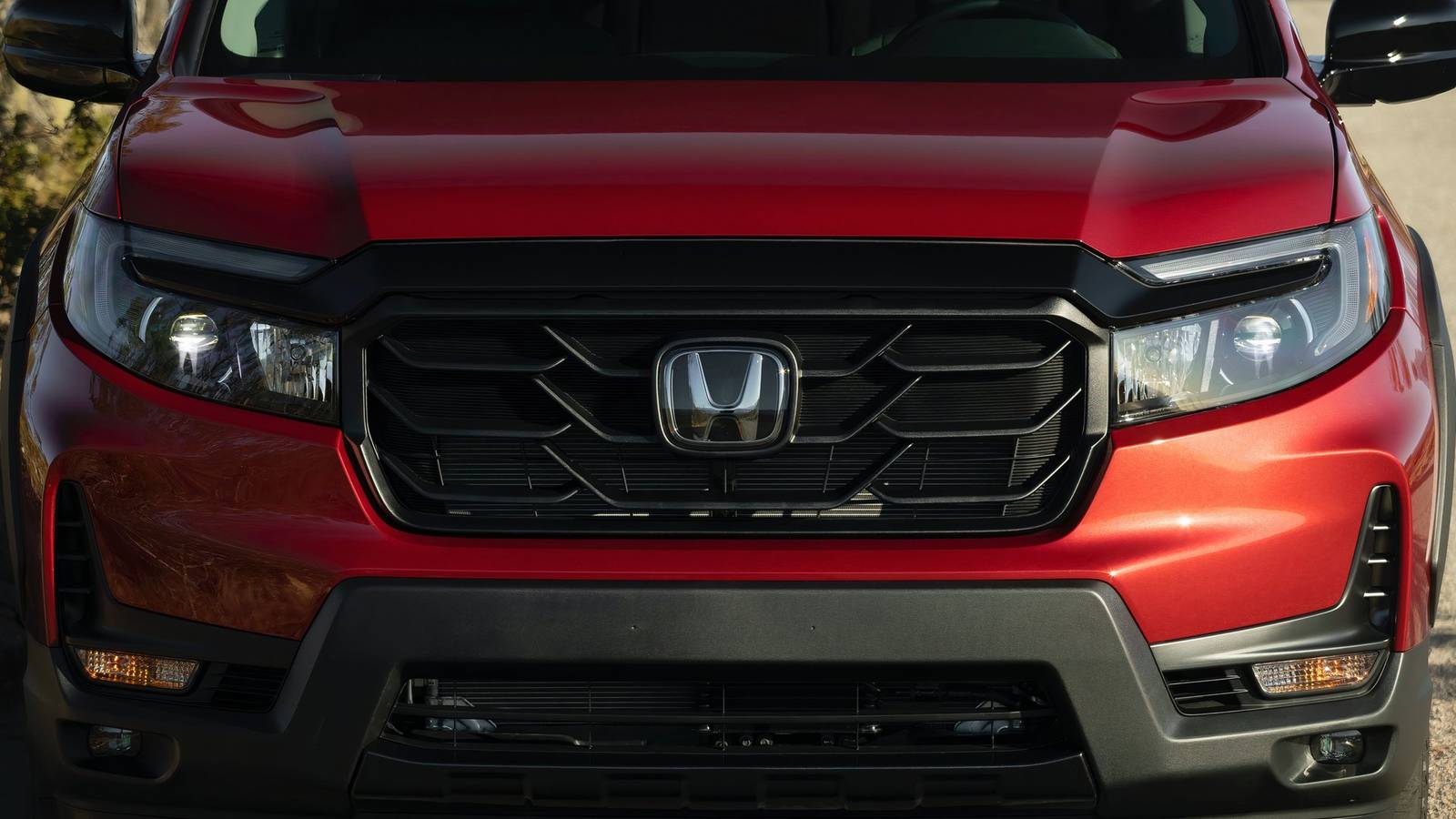
For decades, the midsize pickup segment has been defined by a familiar formula: body-on-frame construction, rugged off-road credibility, and a reputation for durability that borders on myth. At the center of that conversation sits the Toyota Tacoma, a truck that has built its legacy on toughness and resale value. But as the automotive landscape evolves, and as buyer expectations shift, those old benchmarks are starting to feel increasingly out of step with reality.
Today’s truck buyers aren’t all contractors or hardcore off-roaders. Most use their pickups as daily drivers, family vehicles, and weekend haulers. That means ride comfort, fuel efficiency, interior tech, and drivetrain smoothness matter just as much as towing capacity or axle articulation. And that’s where a very different kind of pickup begins to stand out.
Instead of doubling down on tradition, this pickup takes a radically different approach, one rooted in engineering efficiency and real-world usability. With a refined V6 powertrain, torque-vectoring all-wheel drive, and a unibody platform, it redefines what “capable” actually means in 2026 for the average truck buyer.
The Midsize Benchmark Everyone Knows – And Why It’s Starting To Show Its Limits

The 2026 Toyota Tacoma remains the benchmark for traditional midsize trucks, but its engineering approach is increasingly showing its age when examined through a technical lens. At its core, the Tacoma uses a body-on-frame chassis paired with a solid rear axle and leaf-spring suspension. While this setup is ideal for durability and heavy-duty workloads, it introduces compromises in ride quality and handling precision. The higher unsprung mass contributes to a choppy and unsettled ride, particularly when the truck is unladen and driven over imperfect road surfaces.
Powertrain development has moved forward, with newer Tacoma models adopting turbocharged four-cylinder engines producing up to 278 horsepower and 317 lb-ft of torque, with hybrid variants pushing up to 326 horsepower. While these figures appear competitive, real-world drivability can feel less linear due to turbocharging characteristics and transmission calibration.

The Tacoma’s part-time four-wheel-drive system also reflects its off-road-first design philosophy. It requires driver intervention to engage and defaults to rear-wheel drive on dry pavement, which limits its ability to optimize traction during everyday driving conditions.
Fuel efficiency remains another drawback, as the combination of body-on-frame construction and higher curb weights, often exceeding 4,400 pounds, places a natural limit on efficiency. Even though the Tacoma can tow up to 6,500 pounds, achieving that level of capability often comes with trade-offs in ride comfort and stability, especially during daily use. Ultimately, the Tacoma excels in extreme scenarios, but those scenarios no longer represent the needs of the majority of modern truck buyers.

Hyundai Santa Cruz vs Competitors: What Sets It Apart
Hyundai’s SUV-based truck remains an underrated option in the segment.
Why The Honda Ridgeline Quietly Delivers What Most Truck Owners Actually Need

The Honda Ridgeline takes a fundamentally different approach, beginning with a powertrain that emphasizes smoothness and predictability over outright output figures. Its 3.5-liter naturally aspirated V6 produces 280 horsepower and 262 lb-ft of torque, delivering power in a linear and consistent manner. Without the presence of turbocharging, throttle response remains immediate and predictable, which enhances drivability in both urban and highway environments.
This engine is paired with a 9-speed automatic transmission that features closely spaced gear ratios. The result is a power delivery that feels refined and responsive without being overly aggressive. Gear changes are smooth and well-timed, reinforcing the Ridgeline’s focus on comfort.

A defining technical advantage lies in Honda’s i-VTM4 all-wheel-drive system. Unlike traditional part-time systems, this setup operates continuously and is capable of distributing up to 70 percent of available torque to the rear axle. From there, the system can direct all of that rear torque to a single wheel when necessary, effectively creating a torque-vectoring effect that enhances both traction and cornering stability. This level of control allows the Ridgeline to maintain composure in wet or slippery conditions while also improving handling dynamics on dry roads. The system operates seamlessly in the background, requiring no driver input, and is not constrained to unsealed surfaces.
In terms of capability, the Ridgeline offers a maximum towing capacity of 5,000 pounds and a payload capacity of approximately 1,580 pounds. While these figures may fall short of ladder-frame competitors, they remain more than sufficient for the majority of real-world use cases. Fuel economy, rated at around 18 mpg in the city and 24 mpg on the highway, benefits from the truck’s lighter construction and aerodynamic efficiency.

The Toyota SUV That Feels More Luxurious Than A Mercedes GLC
This underdog redefines premium for Toyota, blending refined design, comfort, and intuitive tech to rival luxury SUVs like the Mercedes GLC.
Unibody Engineering That Changes Everything Behind The Wheel

The Honda Ridgeline’s unibody construction is the foundation of its distinct driving characteristics and represents a significant departure from traditional pickup design. By integrating the body and frame into a single structure, the Ridgeline achieves greater torsional rigidity. This increased structural stiffness allows for more precise suspension tuning and improved overall stability. It also reduces flex under load, contributing to a more composed driving experience.
The suspension setup further differentiates the Ridgeline from its rivals. Instead of a solid rear axle, it employs a fully independent rear suspension with a multi-link design. This configuration reduces unsprung mass and allows each wheel to respond independently to road conditions, resulting in improved ride comfort and better road contact.
These engineering choices translate into tangible benefits on the road. The Ridgeline absorbs bumps with greater ease, maintains better composure through corners, and delivers a level of steering precision that is rarely found in the pickup segment. Its lower center of gravity enhances stability, while improved weight distribution contributes to a more balanced feel.
Noise, vibration, and harshness are also significantly reduced due to the integrated structure and refined suspension tuning. At highway speeds, the cabin remains quiet and composed, making long-distance driving far more comfortable than in traditional trucks. While unibody construction may limit maximum towing capacity and extreme off-road performance, it provides clear advantages in the areas that matter most to everyday drivers.

How The Toyota Tacoma Became America’s Favorite Mid-Size Pickup
The trusty and much-loved Toyota Tacoma is the U.S.A.’s favorite mid-size pickup truck – here is how it shot to fame on our roads and trails.
Smart Features That Make Traditional Pickups Feel Outdated

The Ridgeline’s innovation extends beyond its drivetrain and chassis, incorporating a range of features designed to improve everyday usability. One of the most notable is the dual-action tailgate, which can open both downward and sideways. This design enhances accessibility, particularly in confined spaces, and reduces the need to reach awkwardly over the tailgate when loading or unloading cargo. The in-bed trunk adds another layer of practicality, offering approximately 7.3 cubic feet of lockable, weatherproof storage beneath the bed floor. Its integrated drain plug allows it to function as a cooler, further expanding its versatility.

The truck bed itself is constructed from a durable composite material that resists corrosion and eliminates the need for an additional liner. Its flat floor design maximizes usable space and simplifies the loading of larger items. Inside the cabin, the Ridgeline features a modern infotainment system with smartphone integration, along with a comprehensive suite of driver-assistance technologies. These systems include adaptive cruise control, lane-keeping assistance, collision mitigation braking, and road departure mitigation, all of which contribute to a safer and more convenient driving experience.
The all-wheel-drive system is complemented by selectable drive modes tailored for different conditions, including snow, mud, and sand. These modes adjust throttle response, transmission behavior, and torque distribution to optimize performance without requiring complex driver input. Even the braking system reflects the Ridgeline’s focus on stability and control, utilizing four-wheel disc brakes and advanced electronic brake-force distribution to ensure consistent stopping performance.
The Do-It-All Truck That Redefines What ‘Capability’ Really Means

When examined from a technical perspective, the Ridgeline’s approach to capability becomes increasingly compelling. Its reliable, naturally aspirated V6 engine, advanced all-wheel-drive system, and independent suspension work together to create a vehicle that excels in everyday conditions. The driving experience is smooth, stable, and predictable, qualities that are often overlooked in favor of more extreme performance metrics. At the same time, the Ridgeline retains genuine utility. Its towing capacity of 5,000 pounds and payload capability of over 1,500 pounds allow it to handle a wide range of practical tasks, from hauling equipment to towing recreational trailers. The durable composite bed and innovative storage solutions further enhance its usability.

What sets the Ridgeline apart is the way it integrates these capabilities into a cohesive and balanced package. Rather than prioritizing one aspect at the expense of others, it delivers a well-rounded experience that aligns with how most owners actually use their vehicles. In a segment that has long been defined by tradition, the Ridgeline represents a shift in perspective. It demonstrates that capability is not solely about maximum output or extreme conditions, but about how effectively a vehicle serves its owner on a daily basis. In that regard, it does challenge the Toyota Tacoma.
Sources: Honda U.S. and MotorTrend