
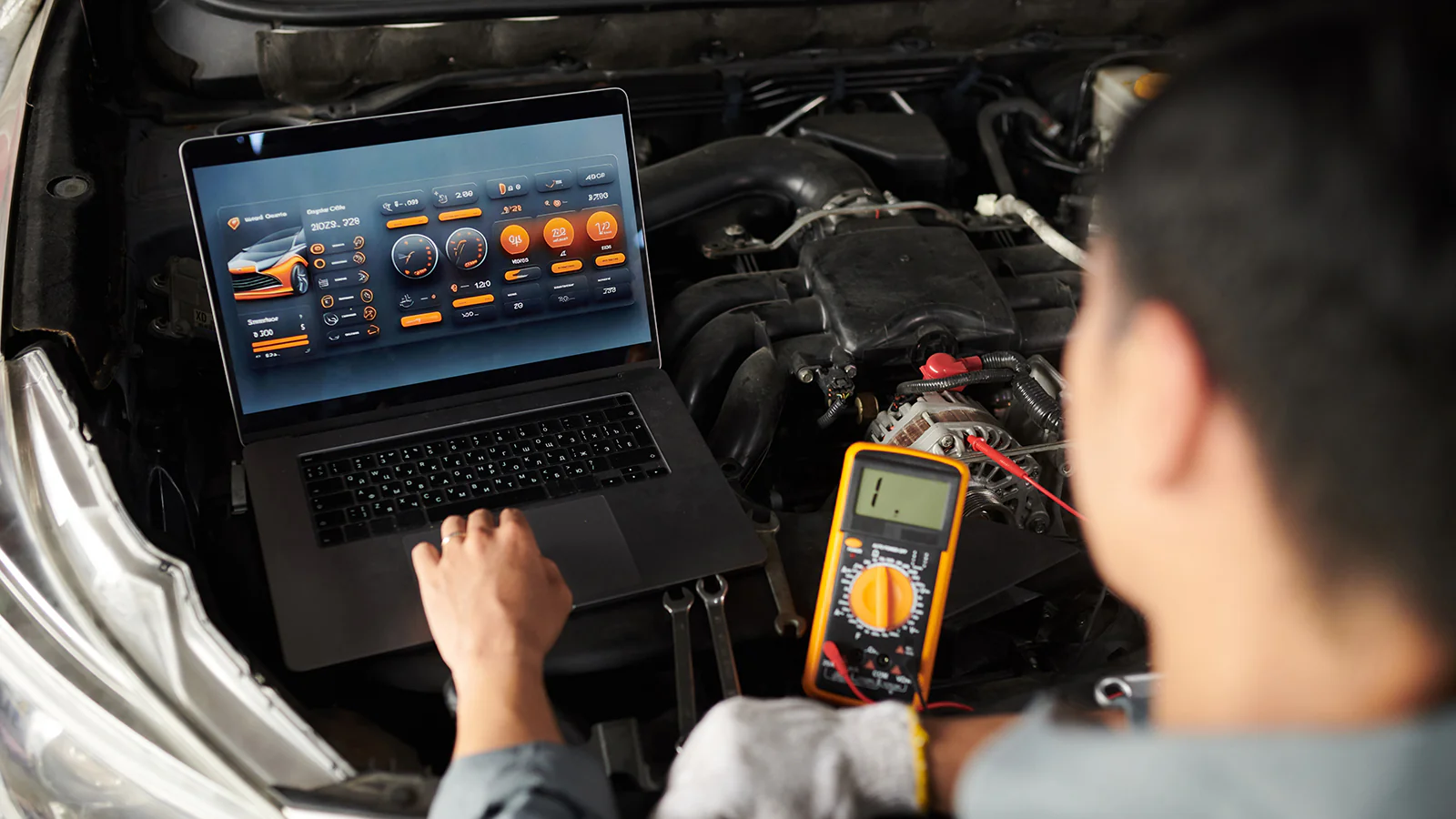

Your car runs on more than just gas and spark plugs these days. Software calls the shots inside the engine control unit, or ECU. This little box acts as the brain that manages fuel flow, ignition sparks, and air intake to keep everything humming smooth.
ECU tuning tweaks those settings for better speed, smoother rides, or even a bit more miles per gallon. In 2025, car makers push out smarter software updates, and rules on emissions tighten up. That means tuning offers big wins if you do it right, but you must watch the fine print on laws and your warranty.
Fundamentals of ECU Tuning: Mapping the Engine’s Potential
What Exactly is an ECU Map?
An ECU map is like a recipe book for your engine. It sets rules for fuel injection timing, when sparks fire, boost pressure in turbo setups, and how quick the throttle reacts. Factory tunes stick to safe baselines to meet emissions tests and last for years.
Stock maps play it safe. They prioritize low breakdowns and clean exhaust over max speed. Tuned maps change those limits to squeeze out extra power or fine-tune for your drive style.
You might gain 20-30% more horsepower from a good map tweak on a turbo car. But bad ones can lead to rough idles or worse. Always pick pros who know your model’s calibration files.
The Two Primary Tuning Methods: Flashing vs. Piggyback Modules
Flashing rewrites the ECU’s code straight from your laptop via the OBD-II port. It digs deep into the system for full control over every parameter. Changes stick around unless you flash back to stock.
Piggyback modules sit between the ECU and sensors. They tweak signals on the fly, like fooling the brain into more fuel without touching the core software. You can unplug them anytime for easy reversals.
Flashing pros include bigger gains and smoother feel. But it risks your warranty if caught. Piggybacks shine for beginners—less hassle, no deep code changes. Drawbacks? They might not match complex engines well, and detection stays possible too.
- Flashing perks: Total customization, permanent boosts.
- Flashing cons: Harder to hide, needs skill.
- Piggyback perks: Quick install, warranty-friendly.
- Piggyback cons: Limited tweaks, extra cost for hardware.
Pick based on your goals. For daily drivers, try piggybacks first.
Understanding Key Tuning Terminology
Horsepower measures raw pull, while torque twists the wheels hard from a stop. You want both for fun drives, but torque rules in traffic.
Air/fuel ratio, or AFR, keeps the mix just right—too lean burns hot and harms parts; too rich wastes gas and smokes up. Tuners aim for 14.7:1 at cruise, richer under boost.
Knock control spots bad vibes in the cylinders from early ignitions. The ECU pulls timing to save the engine. Boost limits cap turbo pressure to avoid overstress.
These terms pop up everywhere in tuning chats. Grasp them, and you’ll spot junk advice from real tips. Think of AFR like baking: wrong balance, and the cake flops.
Types of ECU Tuning and Their Applications in 2026
Performance Tuning: Maximizing Power Output
Performance ECU tunes chase top horsepower and torque. You could add 50-100 horses to a small engine with smart tweaks. Turbo tech in 2025 cars pairs perfect with this—smaller motors now spool fast for big kicks.
But power needs backup. Swap in a cold air intake for more breath, or a cat-back exhaust to let it breathe out. Without them, your tune might strain the stock setup.
Real example: A 2.0-liter turbo sedan jumps from 250 to 350 hp post-tune. Dyno sheets show steady pulls without spikes. Just remember, big gains mean more tire wear and fuel stops.
Efficiency Tuning: Fuel Economy and Daily Driving
Efficiency tuning smooths the ride over raw speed. It sharpens throttle response so your foot feels instant in stop-go traffic. Diesels often see 2-5 mpg bumps on long hauls.
Retune for even power delivery cuts waste from factory lag. Highway cruising gets calmer, with less downshifting. It’s no magic—expect modest wins if you drive smart.
Why bother? Gas prices hover high in 2025, and commutes drag on. A tuned daily driver feels peppier without guzzling extra. Pair it with steady speeds for best results.
- City perks: Quicker starts, less pedal mash.
- Highway wins: Steady cruise, minor mpg lift.
- Diesel bonus: Cleaner burns for longer life.
Emissions Compliance and “Green” Tuning Strategies
Rules get strict in 2025—cops eye dirty mods closer. Compliance tunes keep factory levels while adding pep. They tweak maps to pass smog checks without gutting cats or EGR valves.
Deleting emissions gear tempts some for easy power. But it’s a bad bet now. Fines hit thousands, and resale tanks if flagged.
Green strategies blend eco and fun. Optimize for low NOx output on modern sensors. Your ride stays legal and zippy. Check local laws first—some states scan OBD ports at inspection.
The Technical Process: How a Custom Tune is Created
Data Logging and Baseline Dyno Runs
Tuning starts with facts, not hunches. Hook up loggers to track AFR, boost, and temps during real drives. This baseline shows your engine’s true state.
Dyno runs lock wheels to rollers for safe load tests. Measure stock power—say, 200 hp at the wheels. Logs catch weak spots like lean spots under throttle.
Pros use this data to build safe maps. Skip it, and you risk hot spots or knock. One session often costs $100-200, but it pays off in reliability.
Closed-Loop vs. Open-Loop Tuning Adjustments
Modern ECUs run closed-loop most times. Oxygen sensors feed back to adjust fuel on the fly for perfect burns. Tuners tweak these limits carefully to avoid rich-lean swings.
Open-loop kicks in at full throttle—no sensor help, just map rules. Here, big changes shine for power. But mess it up, and you fry pistons.
Balance both for a solid tune. Closed keeps daily efficiency; open unleashes track fun. Sensors in 2025 models get smarter, so pros must stay sharp.
Future-Proofing: Updates and Re-flashing for New Hardware
Car makers drop ECU software patches yearly. Your tune might glitch after one. Good tuners offer re-flashes to sync up.
Add parts like bigger turbos? Revisit the map. A flexible tune adapts without full rewrites—save time and cash.
In 2025, over-the-air updates roll out fast. Pick shops with update tools. This keeps your setup fresh as tech shifts.
Navigating Risks, Warranty, and Legalities in 2026
Understanding the Warranty Voiding Question
Tuning often voids warranties, but not always. The Magnuson-Moss Act says dealers must prove the mod caused a failure. Still, they scan for high boost or error codes.
Soft tunes via piggybacks hide better. Deep flashes leave traces in logs. Document stock files to revert if needed.
Talk to your dealer upfront. Some brands like it if you prove gains stay safe. Weigh the risk—five-year coverage versus extra hp.
The Critical Importance of Supporting Modifications
Tune alone won’t cut it for big jumps. Upgrade intercoolers to cool hot boost air. Better fuel pumps feed the hunger without starving.
Cooling matters too—beef up radiators to fight heat soak. Skip these, and engines overheat or seize. A $500 tune plus $1,000 in parts beats a $5,000 rebuild.
Examples: Turbo cars need clutch upgrades for torque. NA engines want cams for revs. Build smart to keep reliability high.
- Must-haves for 50+ hp: Intake, exhaust, tune.
- For 100+ hp: Full bolt-ons plus clutch.
- Always: Fresh fluids and plugs.
Legal Landscape: Emissions Tampering and Road Legality
Tampering with cats or DPFs draws heat in 2025. Diesel deletes face EPA fines up to $4,000 per part. States like California scan deep at inspections.
Road legality varies—some mods pass if undetectable. But off-road only stickers limit street use. Check your area’s DMV rules.
Penalties sting: Failed tests, impounds, insurance hikes. Stick to compliant tunes for peace. It’s worth the extra effort.
Conclusion: Tuning in the Age of Advanced Automotive Software
ECU tuning unlocks your car’s hidden potential, from power surges to smoother commutes. But software grows complex, and regs tighten, so pick paths that fit your needs. Balance gains with risks—knowledge keeps you safe.
Key points: Grasp maps and methods first. Go performance for thrills, efficiency for saves, or green for compliance. Use dynos and pros for custom work. Watch warranties and laws close.
Vet tuners by your model’s rep. Demand supporting mods for real wins. Ready to tune? Start with a baseline log and trusted shop. Your engine will thank you.