
Luxury cars are typically niche and low-volume sellers, with margins decreasing with each year that passes. Cars that operate in this segment always make for poor investments, with depreciation rates being one of the worst across the entire car market. A big reason for these models suffering from such poor depreciation rates is attributed to their long-term reliability, which often requires large sums of investment to keep them on the road after the warranty has expired, ultimately making them undesirable products.

- Base Trim Engine
-
3.4L V6 ICE
- Base Trim Transmission
-
10-speed automatic
- Base Trim Drivetrain
-
All-Wheel Drive
- Base Trim Horsepower
-
416 HP @6000 RPM
- Base Trim Torque
-
442 lb.-ft. @ 1600 RPM
- Base Trim Fuel Economy (city/highway/combined)
-
17/27/21 MPG
- Make
-
Lexus
- Model
-
LS
- Segment
-
Midsize Luxury Sedan
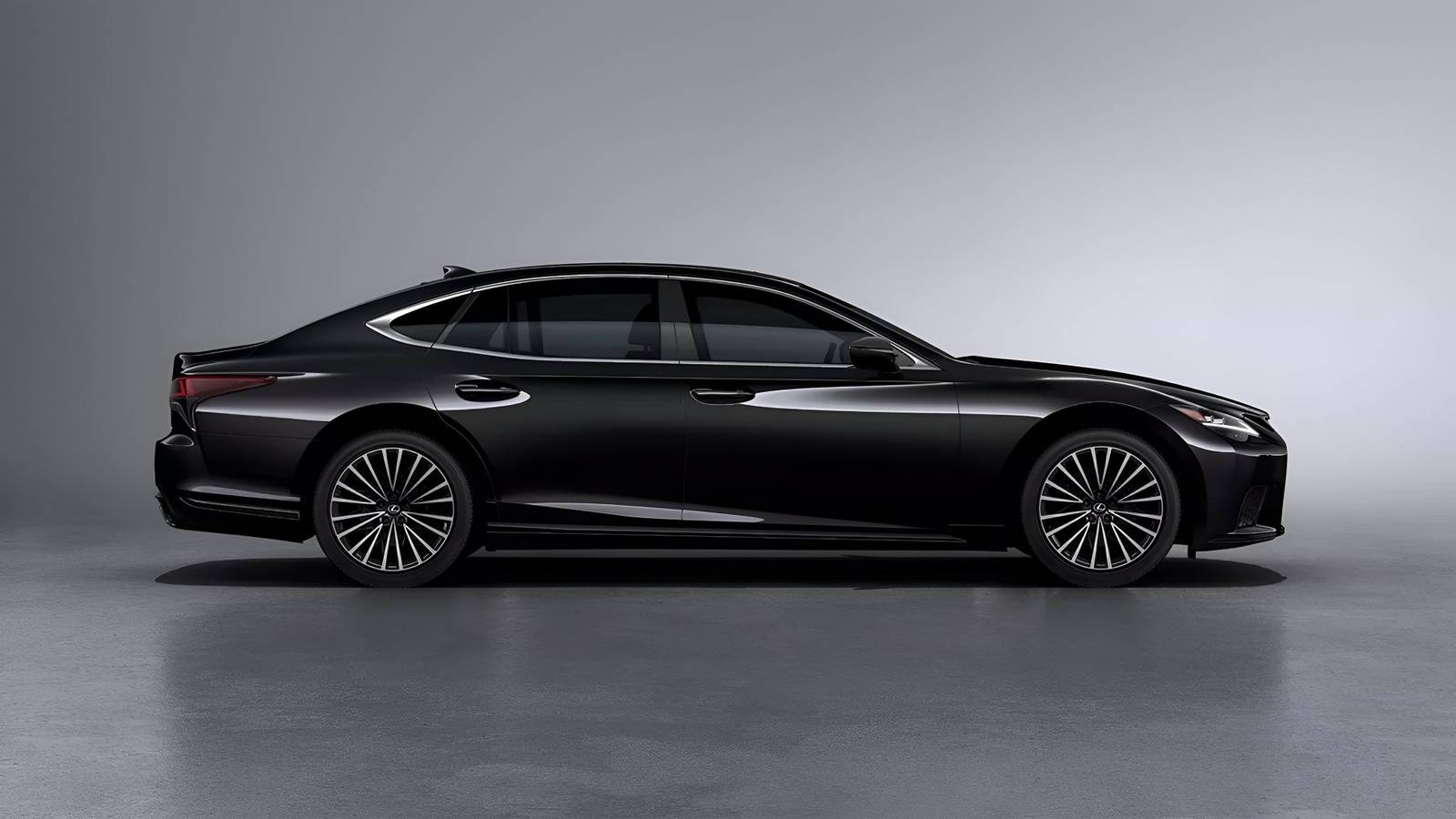
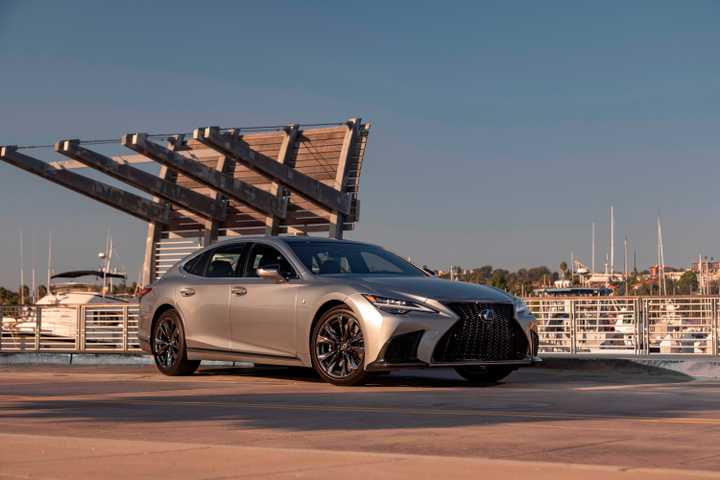
A lack of appeal in the used market also affects resale, as most people don’t have the need for such luxurious cars as a daily driver. The soon-to-be-discontinued Lexus LS 500 is one example of a luxury sedan that holds its value fairly well, considering it is a top-end luxury sedan. While not as impressive as other products from the brand, the LS often stands out as a better long-term investment when compared to key rivals such as the Mercedes-Benz S-Class and BMW 7 Series. Reliability is a major factor that strengthens its performance in this area, thanks to heavy investment and overengineering of its drivetrain, which the brand leverages from Toyota.
Lexus LS – A Great Example Of Holding Value In The Luxury Segment

According to Edmunds, the full cost to own a 2026 Lexus LS 500 Heritage Edition closes in at $120,295, $51,993 contributes towards depreciation. Over the first three years, you can expect it to lose $38,016 of its initial $99,280 MSRP. It’s also only going to cost you $10,707 to maintain and $1,310 to repair over five years and 60,000 miles. You can also expect to spend $18,176 on fuel and $10,205 on taxes and fees. Kelley Blue Book indicates that you can expect to spend $5,382 on maintenance and $1,324 on repairs during the same period.
iSeeCars is a bit lighter on the model’s depreciation, indicating that you can expect it to lose 21.6 percent or $21,099 of its value after three years. This performance is almost 15 percent better than the rest of the segment and almost three percent better than the entire sedan market.
Better Reliability Standards Than Its Rivals

The Lexus LS 500 is not a widely owned car in the U.S., so there isn’t a lot of data from existing owners to go on. Edmunds only lists reviews for the 2023 model, which currently sits on a 4.1/5 average rating. Reliability and manufacturing quality are standout benefits for many owners.
Specific repairs, as listed by RepairPal, include $252 on a stabilizer bar link kit, $517 on spark plug replacements, $1,718 for a new fuel pressure sensor, $3,124 for a new exhaust manifold, and $1,853 for new stabilizer bushings. Replacing the camshaft can set you back by as much as $3,983. Lexus issues all of its vehicles with a standardized warranty package as standard, which includes a 36-month or 36,000-mile basic warranty, a 60-month or 60,000-mile powertrain warranty, and 60-month coverage for corrosion with unlimited miles.
iSeeCars indicates that an LS 500 will run for 13.6 years or 148,541 miles with a 23.1 percent probability of reaching 200,000 miles, which is an incredible feat for a luxury full-size sedan.

The Most Reliable Hybrid SUV: Toyota, Honda, Or Lexus?
All three brands offer exemplary hybrid SUVs, but only one stands the test of time.
Business-Class-Like Interior Experiences

Lexus only sells the LS 500 in one set specification for 2026, namely the Heritage Edition, fitted with a comprehensive standard features list. This includes a 24-inch integrated heads-up display, the 23-speaker Mark Levinson surround sound audio system, wireless Apple CarPlay and Android Auto, and a wireless smartphone charger.
Heritage Edition in particular features a distinctive Rioja Red interior with a premium Ultrasuede-trimmed headliner and sun visors, together with Laser Special Black wood trim and a panoramic glass roof. Lexus also offers heating for the rear seats, while the fronts are power-adjustable with memory settings, heating, and ventilation functions, and massage capabilities alongside a heated steering wheel trimmed in wood.
Functional And Meaningful Features

Lexus equips the Heritage Edition with features such as Advanced Park for semi-automated parking, a Panoramic View Monitor with surround cameras for easier maneuvering, and a head-up display that projects key driving info into the driver’s line of sight. Connectivity includes wireless phone charging, multiple USB-C ports, and Bluetooth streaming. Traditional comfort touches include:
- Adaptive climate control
- Cruise control
- Keyless entry with push-button start
- Cupholders
- Power outlets
- Illuminated vanity mirrors

10 Luxury SUVs With Surprisingly Affordable Maintenance Costs
Luxury SUVs don’t always come with sky-high upkeep. These 10 models deliver premium features with maintenance costs that won’t break the bank.
An Impressive Balance Of Performance And Reliability

The Lexus LS 500 features the brand’s twin-turbocharged 3.4-liter V-6, producing 416 horsepower and 442 pound-feet of torque to all four wheels via a 10-speed automatic transmission. The result is a 4.6-second zero to 60 MPH acceleration time and 136 MPH limited top speed. The Toyota V35A-FTS offers strong combustion efficiency, built around an aluminum alloy block and heads that reduce weight and improve heat dissipation while maintaining rigidity.
The block also features cast-in iron cylinder liners, structural ribbing, and an aluminum alloy bedplate to stiffen the engine and control vibration. Forged steel crankshafts and connecting rods, forged aluminum pistons, and heat-resistant stainless-steel valves handle high boost and torque loads, while small twin turbos feed compressed air through air-to-water intercoolers and integrated exhaust manifolds. The D-4ST dual-fuel injection system combines direct and port injection for efficient combustion and reduced knock.
Dual overhead cams with continuous Variable Valve Timing tune airflow across the rev range, while oil sprayers cool piston bottoms under load. Toyota builds in reliability with a ladder-frame-reinforced block design and metal-bearing liners meant to support high speeds and loads, and it constantly refines manufacturing and software to reduce early issues like carbon build-up and turbo wear.
Fuel Consumption Returns You’d Expect

According to the EPA, the Lexus LS’s engine may be reliable, but the twin-turbo engine doesn’t return the best fuel efficiency estimates. You can expect this model to consume 17/27/21 MPG on the city/highway/combined cycle, while covering 456 miles on a single 21.7-gallon tank. You can expect to spend $6,250 more on fuel over the course of five years, $2,850 every year, and $4.74 to drive 25 miles.
Lexus doesn’t sell this model with the rear-wheel drive system anymore, but this model wasn’t that much more efficient, with it consuming 18/29/22 MPG, while covering 477 miles on a single tank. This would cost you $5,500 more in fuel over five years, $2,700 to refuel every year, and $4.52 to drive 25 miles.

10 Lexus Hybrid Models You Should Buy Used
Lexus offers some of the most reliable hybrid vehicles you can get. Whether you’re on a budget or have some money to spend, Lexus has you covered.
Why Luxury Cars Are Depreciation Pits

Full-size luxury sedans are the hardest-hit victims of depreciation because they represent the intersection of high initial MSRPs and rapid technological obsolescence, even when comparing them to some mass-market electric vehicles. In the secondary market, the status premium that first owners pay vanishes as soon as they drive off the dealership floor.
Used buyers are typically more practical, and they are often turned off by the astronomical out-of-warranty repair costs associated with complex air suspensions, high-output engines, and bespoke electronics created specifically for these models. As of 2026, there is a noteworthy luxury car market demand cliff that is significantly smaller than the supply of short-term purchases and, more specifically, lease returns.

These rates have worsened in recent years due to a perfect storm of market shifts. The aggressive transition toward software-defined vehicles means that high-end hardware now becomes outdated at the speed of a smartphone, making three-year-old flagships feel like relics compared to the newer models that replace them.
Furthermore, the 2026 luxury market is struggling with the off-lease luxury EV influx, which suffer even steeper losses due to rapid battery advancements and aggressive price wars from manufacturers. With the rise of subscription-based features and a definitive consumer shift toward ultra-luxury SUVs, the traditional flagship sedan has seen its residual floor drop to historic lows.
The Future Of The LS Looks Weird

Concepts that depict the next-generation Lexus LS see a drastic shift from a traditional three-box luxury sedan to a broader luxury space philosophy, which the premium Japanese brand shows off via three interesting concepts, namely the LS MPV, LS Coupe, and LS Micro.
Deviating sharply from the current model’s low-slung internal combustion architecture, these concepts are built on a dedicated EV platform featuring Gigacasting for a flatter floor and greater modularity. The LS MPV is the most dramatic departure, featuring a six-wheeled, triple-axle configuration designed to maximize interior volume and facilitate a business-class lounge with swiveling seats. For obvious reasons, we are very unlikely to see anything like this make it to the market.

The LS Coupe is a bit more of a realistic interpretation, while still outlandish. It functions as a high-riding, all-terrain flagship crossover that blends the elegance of the current model with the utility of an SUV, but in a sleeker fashion than the current LX. The LS Micro is a single-seat autonomous pod for urban luxury suited more towards extra-urban regions. This evolution focuses on software-defined technologies and incorporates sustainable materials like bamboo, moving away from the current generation’s focus on mechanical traditionalism.