
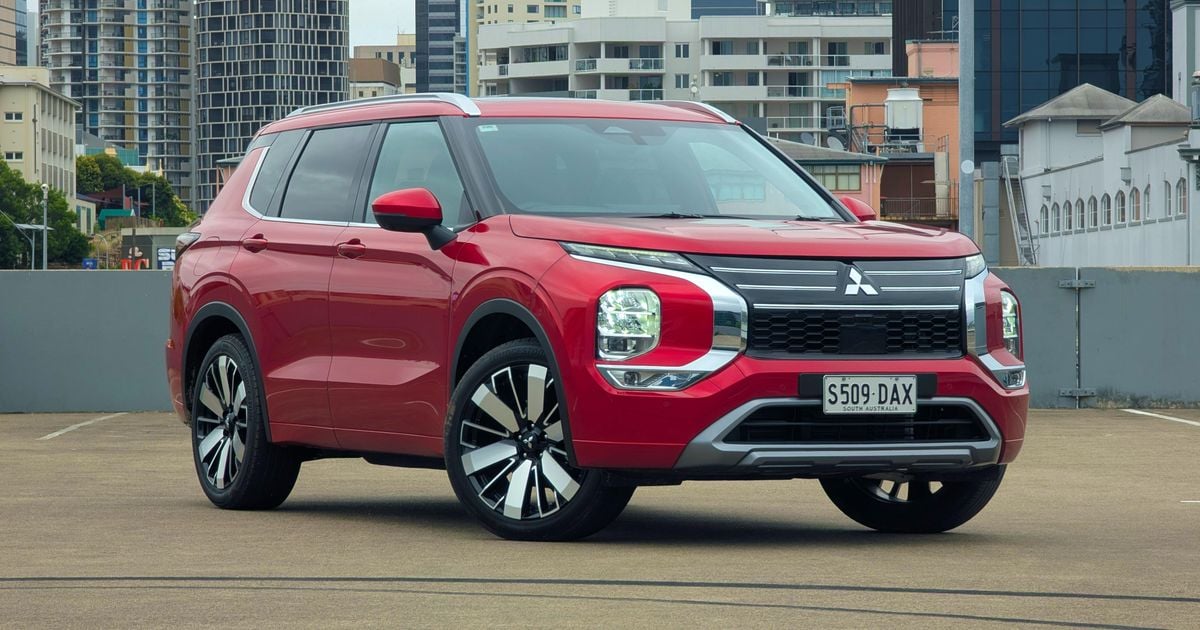
The Mitsubishi Outlander is one of the Japanese brand’s star pupils.
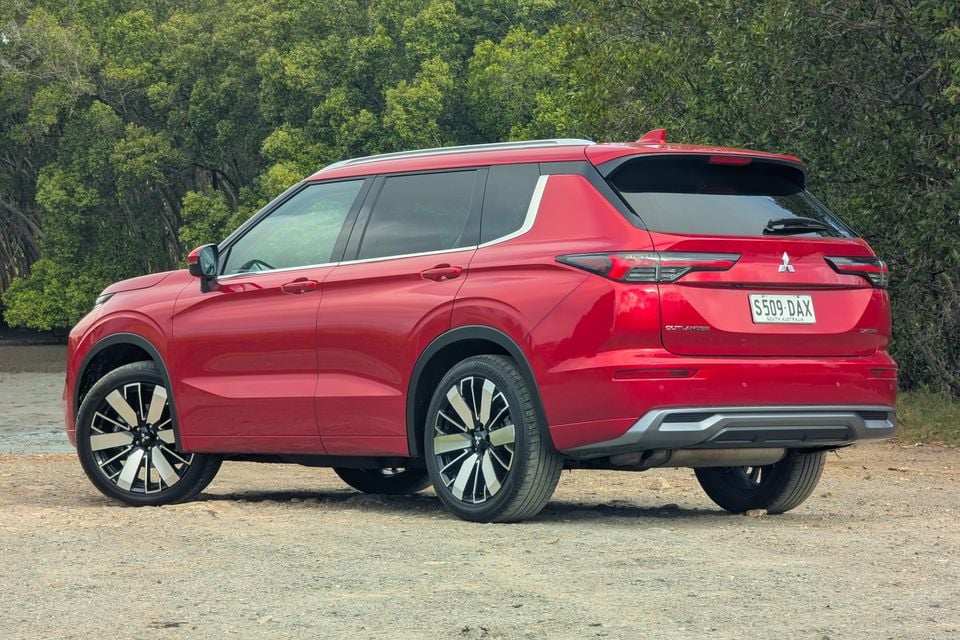
It accounts for around a third of its sales in Australia, and it’s one of the top three best-selling mid-size SUVs on the market.
After finally launching the fourth generation of the popular SUV here in late 2021, Mitsubishi treated the Outlander to a mid-life update late last year.
Well, we hope it’s a mid-life update. Mitsubishi does like to stretch out its model life cycles, after all. Nevertheless, the Mk4 Outlander, which still felt pretty fresh, has received a raft of meaningful improvements to help keep it among the most popular models in a bustling segment.
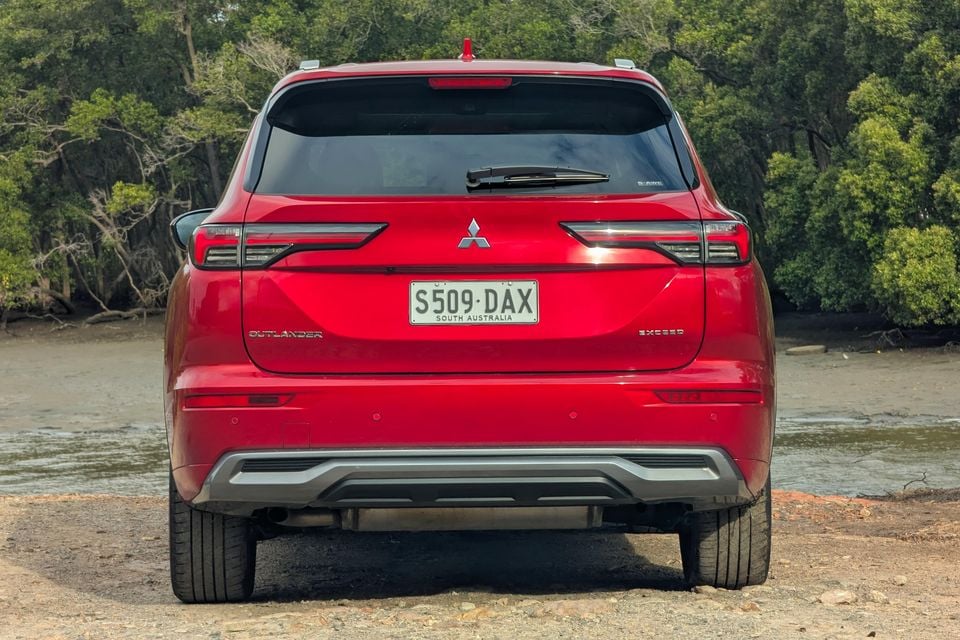
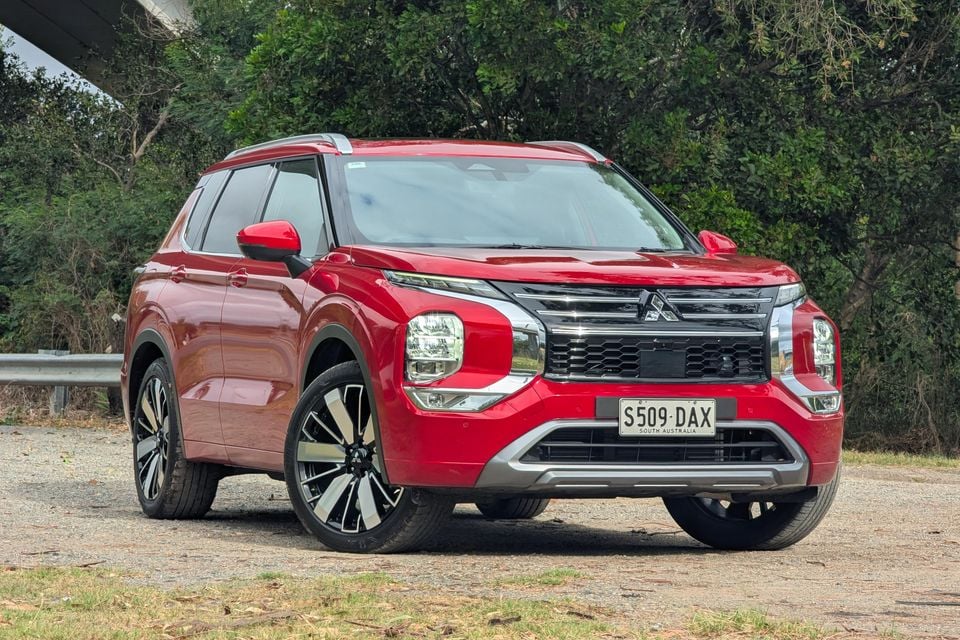
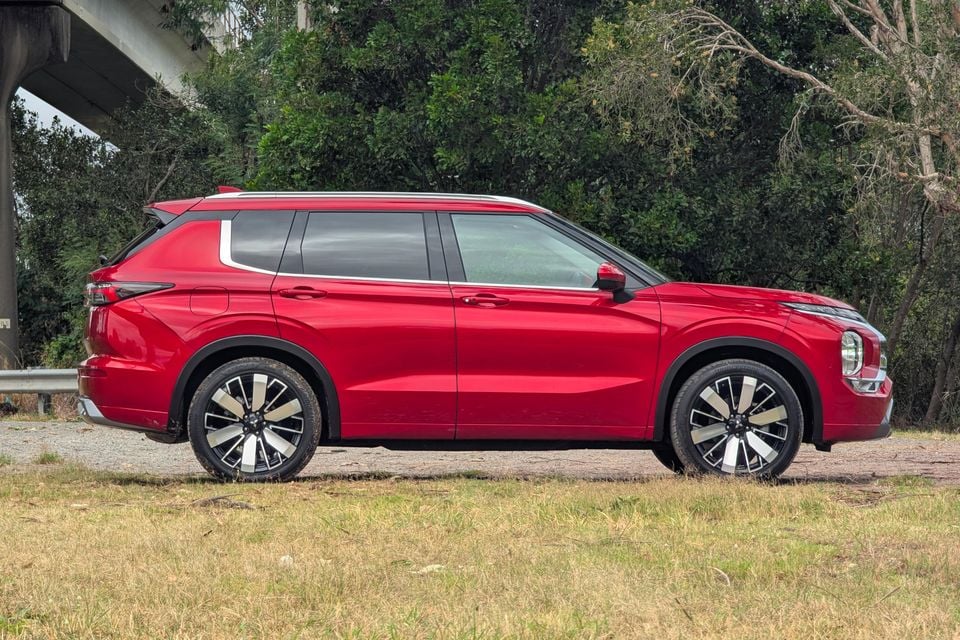
The cosmetic changes are minor but handsome, and include clear-lens tail-lights and attractive new wheels.
But the big news is a local chassis tune, including revised suspension and steering calibration and other improvements aimed at reducing noise, vibration and harshness.
Mitsubishi is pretty chuffed with it, as it’s rolling out this new chassis tune to other markets, too. Gone are the days when we’d export Magnas around the world, but at least we can still export engineering know-how.
How much does the Mitsubishi Outlander Exceed cost?
We tested the Outlander in Exceed trim, one rung down from the top-spec Exceed Tourer. Like the flagship grade, the Exceed is available exclusively with all-wheel drive and a five-seat configuration.
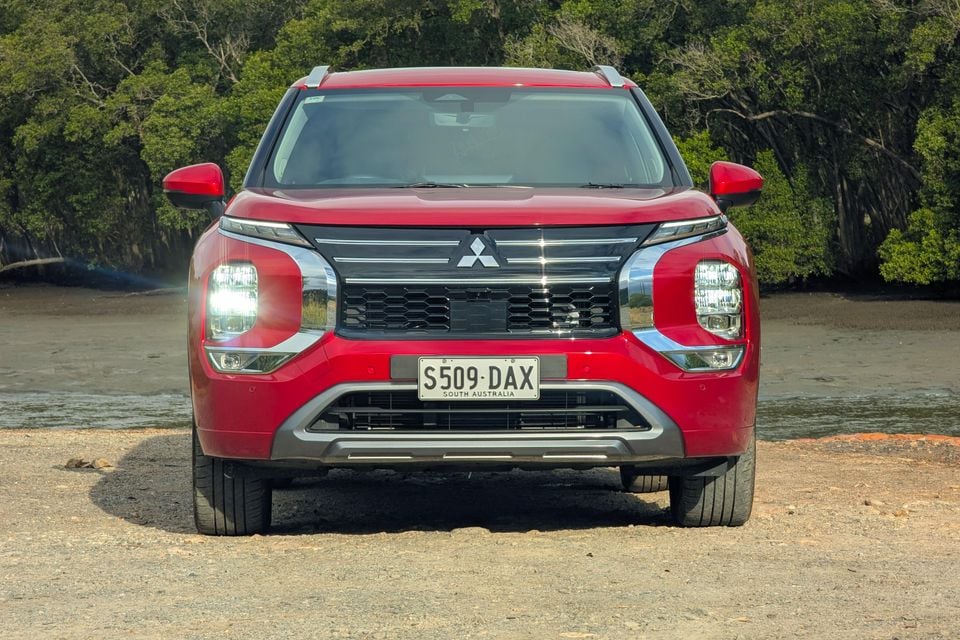
We can understand why Mitsubishi would restrict the up-spec Exceed and Exceed Tourer to all-wheel drive, but why can’t you get these top two trim levels with a seven-seat option?
| Model | Price before on-road costs |
|---|---|
| 2026 Mitsubishi Outlander ES FWD five-seat | $39,990 |
| 2026 Mitsubishi Outlander ES AWD five-seat | $42,490 |
| 2026 Mitsubishi Outlander LS FWD seven-seat | $43,290 |
| 2026 Mitsubishi Outlander LS AWD seven-seat | $45,790 |
| 2026 Mitsubishi Outlander Aspire FWD seven-seat | $47,790 |
| 2026 Mitsubishi Outlander Black Edition AWD seven-seat | $47,990 |
| 2026 Mitsubishi Outlander Aspire AWD seven-seat | $50,290 |
| 2026 Mitsubishi Outlander Exceed AWD five-seat | $55,140 |
| 2026 Mitsubishi Outlander Exceed Tourer AWD five-seat | $57,990 |
To see how the Mitsubishi Outlander lines up against the competition, check out our comparison tool
Let us help you find your new car
Buy your new car without the stress. It’s fast, simple and completely free.
Great service from Travis and team, second time I have used this business would not hesitate to recommend them to anyone
Craig C.
Purchased a Ford Ranger in Sunshine Coast, QLD
CarExpert helped Craig save thousands on his Ford Ranger, now let us save you on your next new car.
What is the Mitsubishi Outlander Exceed like on the inside?
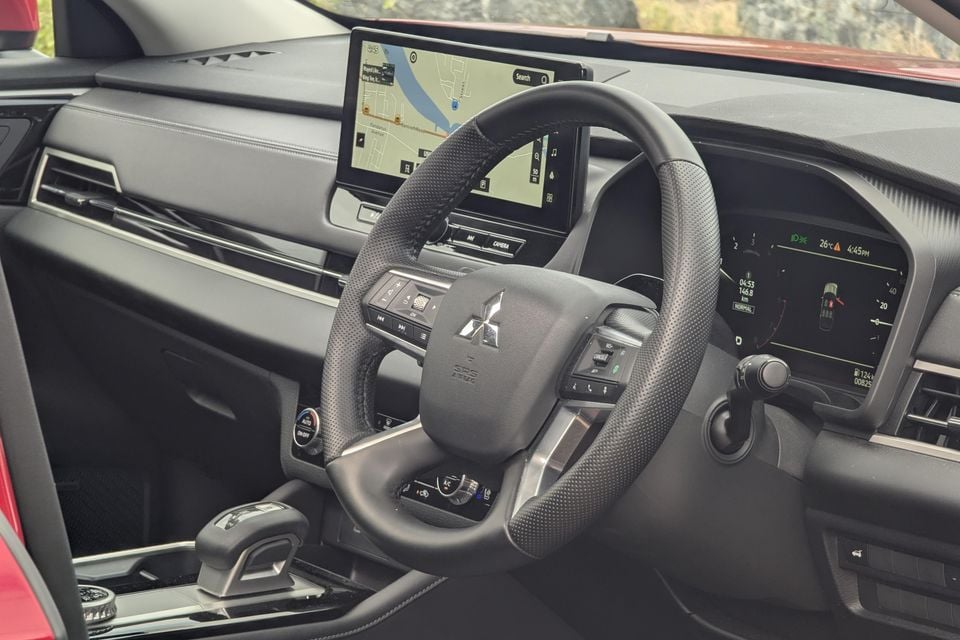
The Mitsubishi Outlander’s interior is spacious and comfortable and has a simple yet elegant design, with high-quality touch points and well-sized screens.
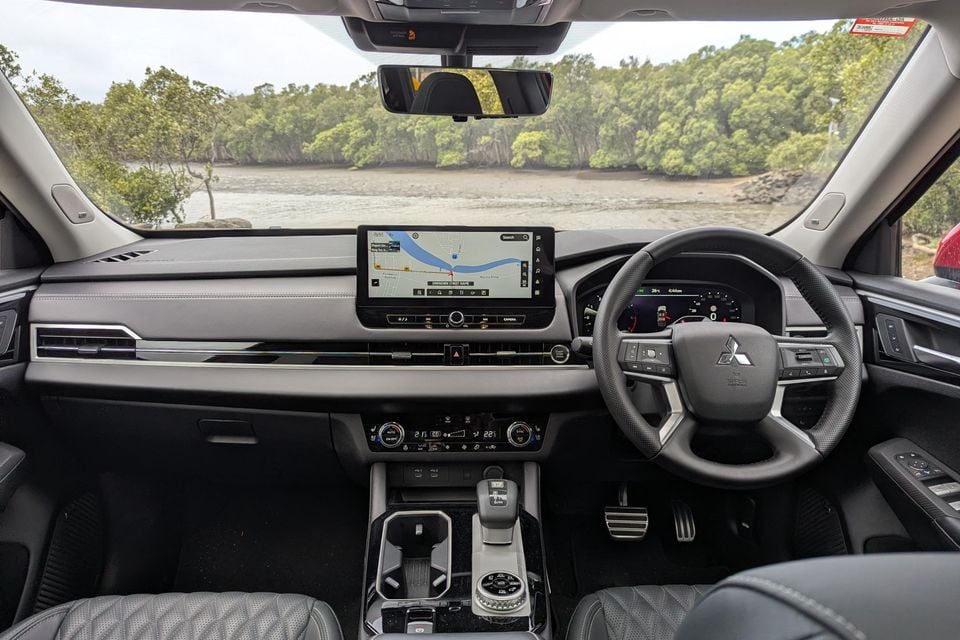
The facelift brought a larger 12.3-inch touchscreen infotainment system with wireless Apple CarPlay and Android Auto, keeping the Outlander in contention with key rivals.
Wireless Android Auto works well, reliably holding a connection, and there’s an easily accessible wireless charging pad to keep your phone topped up.
The infotainment system itself is a bit of a ghost town outside of smartphone mirroring. Most vehicle settings are actually controlled via the 12.3-inch digital instrument cluster, newly standard across the range, leaving only menus for app notifications, Mitsubishi Connect, and GPS information.
The satellite navigation also looks a bit dated, but then again you’ll probably be using Apple CarPlay or Android Auto anyway.
There’s a surround-view camera, which has decent if not exceptional resolution. You’ll find better in, for example, the GWM Haval H6. The new Yamaha sound system is among the better audio systems in the segment, with good sound quality and excellent bass.
In the Exceed, there’s quilted leather upholstery, with this quilting extended to the doors. Soft-touch trim is found on the sides of the centre console – somewhere a lot of brands skimp out on – so your knee won’t be uncomfortable resting against it.
The climate control dials look a bit like pie trays, but they feel nicely weighted. All the switchgear feels nice and solid, though we wish Mitsubishi’s gear shifter was nicer – it feels very light and plasticky.
The doors close with a solid thunk, and we didn’t observe any build quality issues.
The seats are comfortable and supportive, and the Outlander will remember if you left your seat ventilation (or heating) on – a thoughtful touch if you live somewhere like Brisbane where it’s pretty safe to assume every day will be warm.
I almost didn’t sit in the back of this tester because when I order an Uber, nine times out of 10 I get one of these.
They’re typically base ES grades, however, and the Exceed offers one more amenity than lesser Outlanders: an adjustable climate zone, bringing the total to three. You don’t get outboard heated seats, however, as in some rivals – you’ll need to step up to the Exceed Tourer for these.
Other amenities include a pair of USB-C outlets, plus map pockets on the front seatbacks. Mitsubishi has persisted with its odd centre armrest, which sees the entire middle section of the seat folded down when you just want to use the cup holders.
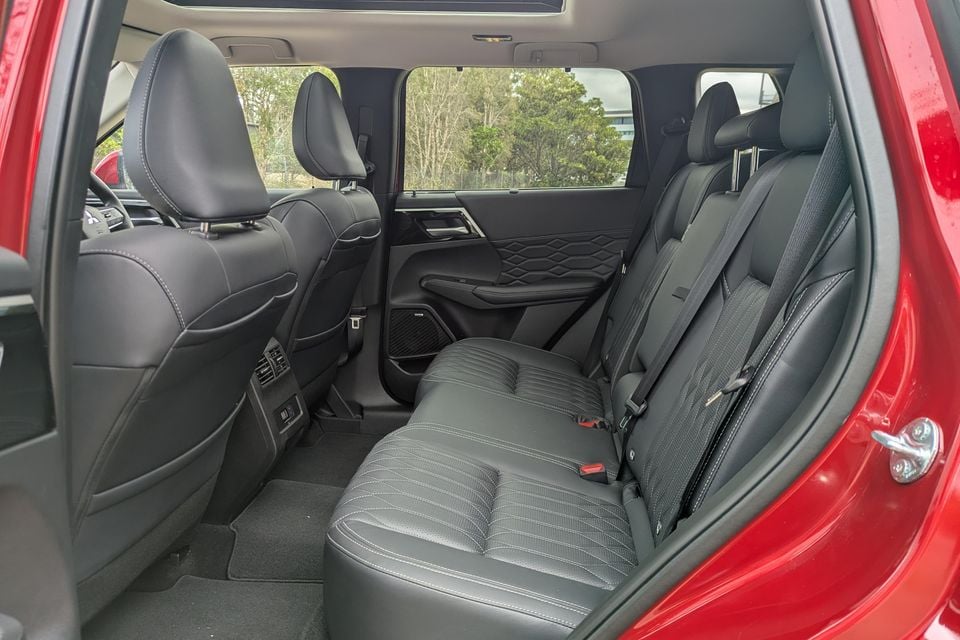
As for space, I never grumble when I get an Outlander as an Uber – okay, perhaps a little because it’d be nice to have something different once in a while! – as there’s plenty of legroom, though the centre-seat occupant does have to contend with a bit of a driveline hump.
Even with the panoramic sunroof, there’s plenty of headroom for someone my height (180cm) as the glass ends just ahead of the rear head restraints.
There’s no third row of seating in the Exceed. You can find one in lesser grades and it’s not at all spacious – Mitsubishi even markets the Outlander as a 5+2-seater instead of a seven-seater. Nevertheless, having a third row of seating is handy if you need to transport your kids and one or two of their friends, but Mitsubishi has locked out buyers who want this functionality and the amenities offered in the Exceed and Exceed Tourer.
Boot capacity is 485 litres, expanding to 1473L with the second row folded. You’ll find a pair of cupholders back here, plus levers to drop the second row.
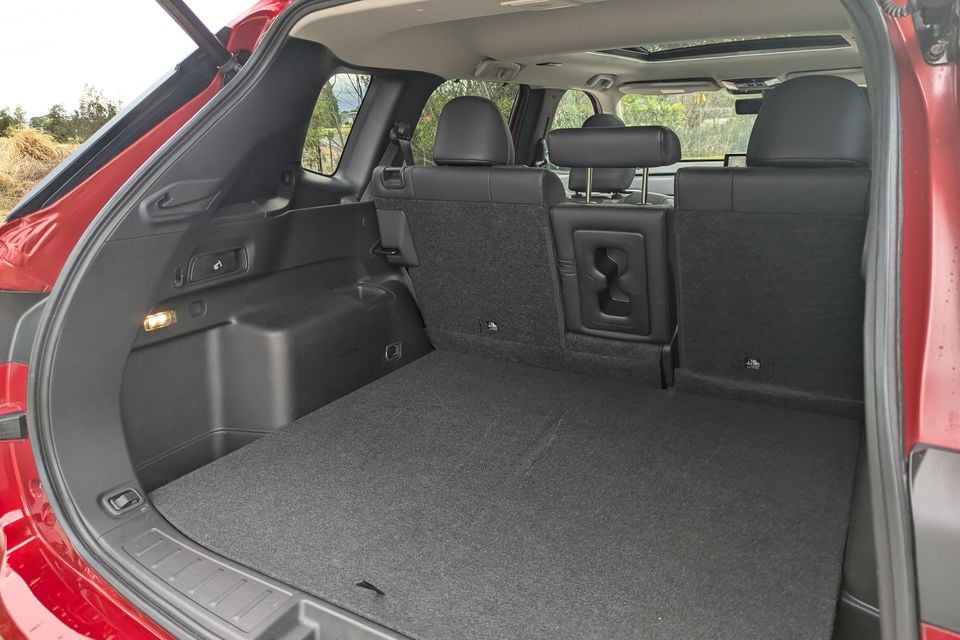
Refreshingly in this age of ubiquitous tyre repair kits and vanishing spare tyres, the Outlander has a full-sized alloy spare; seven-seat Outlanders still get a spare, too, though it’s a space-saver.
| Dimensions | Mitsubishi Outlander |
|---|---|
| Length | 4720mm |
| Width | 1862mm |
| Height | 1745mm |
| Wheelbase | 2706mm |
| Cargo capacity | 485L-1473L |
To see how the Mitsubishi Outlander lines up against the competition, check out our comparison tool
What’s under the bonnet?
We recorded fuel consumption of 11.3L/100km over the course of a week, which is well above the claimed average. And that wasn’t with a heavy right foot, either.
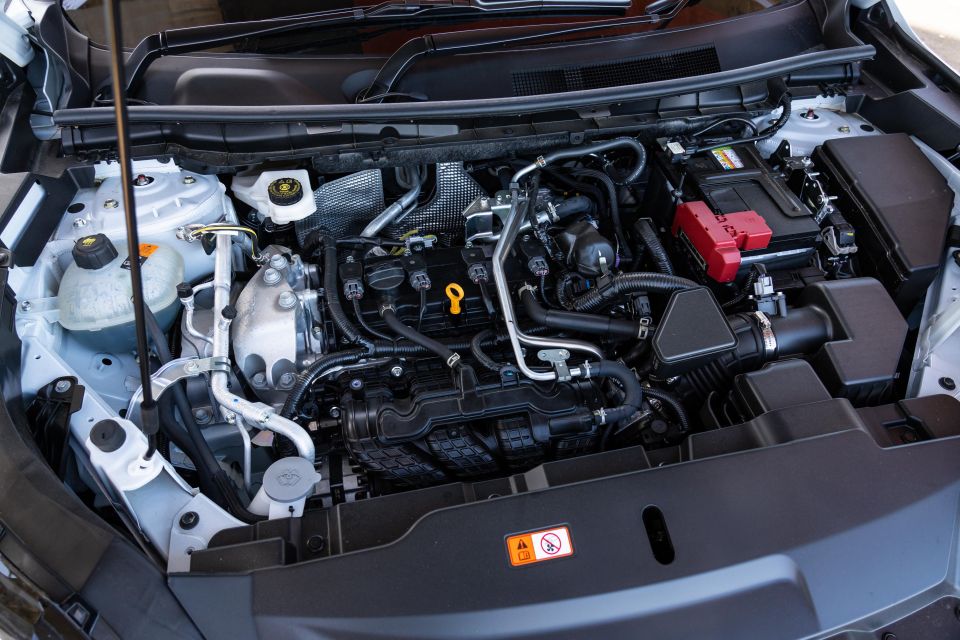
Across our test route, comprising a mix of inner-city, suburban and highway driving, we recorded 9.0L/100km.
The Outlander has selectable Eco, Normal, Tarmac (aka Sport), Gravel, Snow and Mud drive modes, though we kept it in Normal for our fuel economy test route and for most of our driving.
| Specifications | Mitsubishi Outlander |
|---|---|
| Engine | 2.5L naturally aspirated 4cyl |
| Power | 135kW @ 6000rpm |
| Torque | 244Nm @ 3600rpm |
| Transmission | ‘8-speed’ CVT |
| Drive type | AWD |
| Kerb weight | 1695kg |
| Fuel economy (claimed) | 8.1L/100km |
| Fuel tank capacity | 55L |
| Fuel requirement | 91-octane unleaded |
| CO2 emissions | 185g/km |
| Emissions standard | Euro 5 |
| Braked tow capacity | 1600kg |
To see how the Mitsubishi Outlander lines up against the competition, check out our comparison tool
How does the Mitsubishi Outlander Exceed drive?
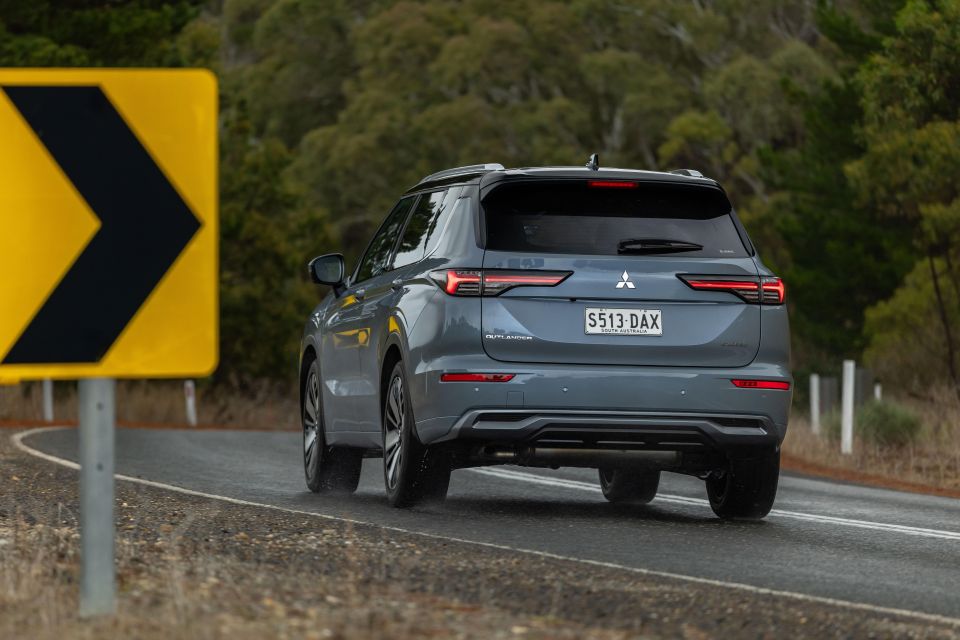
As mentioned, Mitsubishi has treated the Outlander to an Australian-developed chassis tune, with revised suspension and steering calibration.
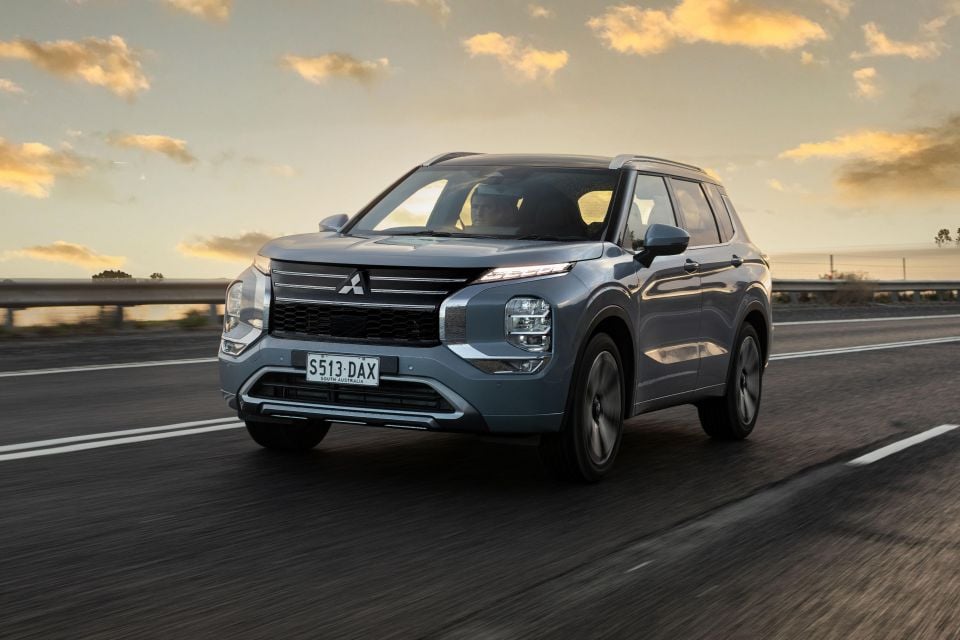
This included revised electric power steering mapping to bring improved on-centre feel and a more linear feel in turns, plus revised front and rear shock absorbers and a smaller-diameter front anti-roll bar.
The changes made to the Outlander’s exterior may be subtle, but the difference in how it drives is pronounced, and the result is a vehicle that feels much more polished than before.
In the pre-update model, ride quality was so-so and suffered particularly with the larger wheels of the Exceed and Exceed Tourer.
With this new suspension tune, bumps are absorbed really nicely. There’s been a huge improvement in compression performance and, while you may hear bumps, you’ll scarcely feel them. The overall result is a pliant ride that’s comfortable over even the most patchwork pavement.
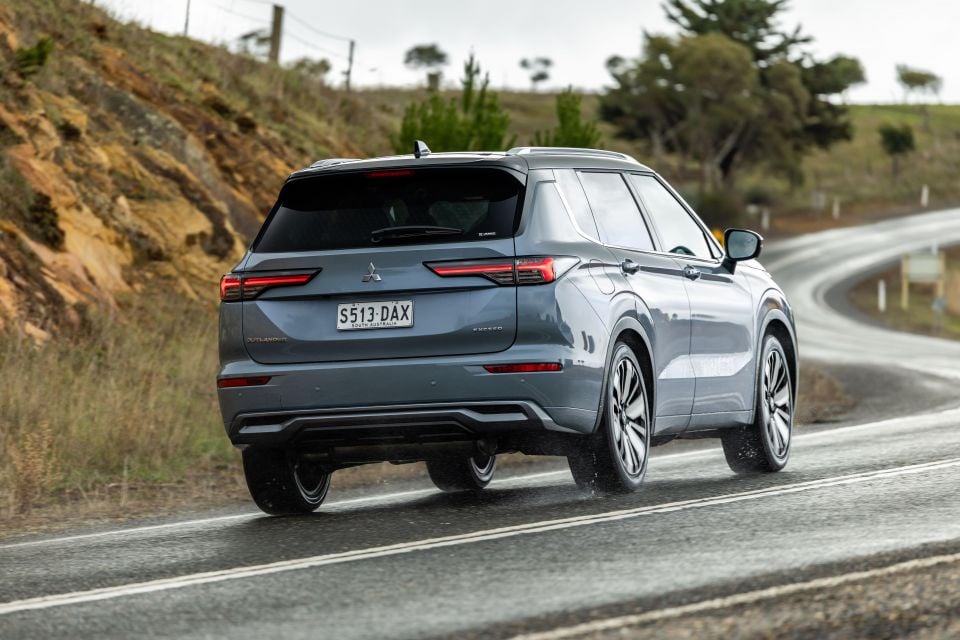
But rebound damping could stand to be wound up a bit. It takes a moment for the Outlander to settle over certain road scars and bumps, with a bit of float to the way it responds. The Outlander feels like a big, solid car, so if you’re after something sportier and more nimble, you’d best look at a Mazda CX-5 or Volkswagen Tiguan.
The steering wheel feels quite large, but the steering itself is nicely weighted and there’s some road feel here. It’s easy to twirl the Outlander around a tight parking lot, and it feels confident and secure when you’re out on the open road. We reckon most mid-size SUV buyers will be happy with the ride/handling balance struck by the latest Outlander.
Despite the introduction of a more efficient turbocharged mild-hybrid powertrain overseas, Mitsubishi Australia has made no changes to the powertrain offering locally.
The naturally aspirated 2.5-litre four-cylinder is entirely adequate, but rivals have moved the needle in terms of efficiency and performance.
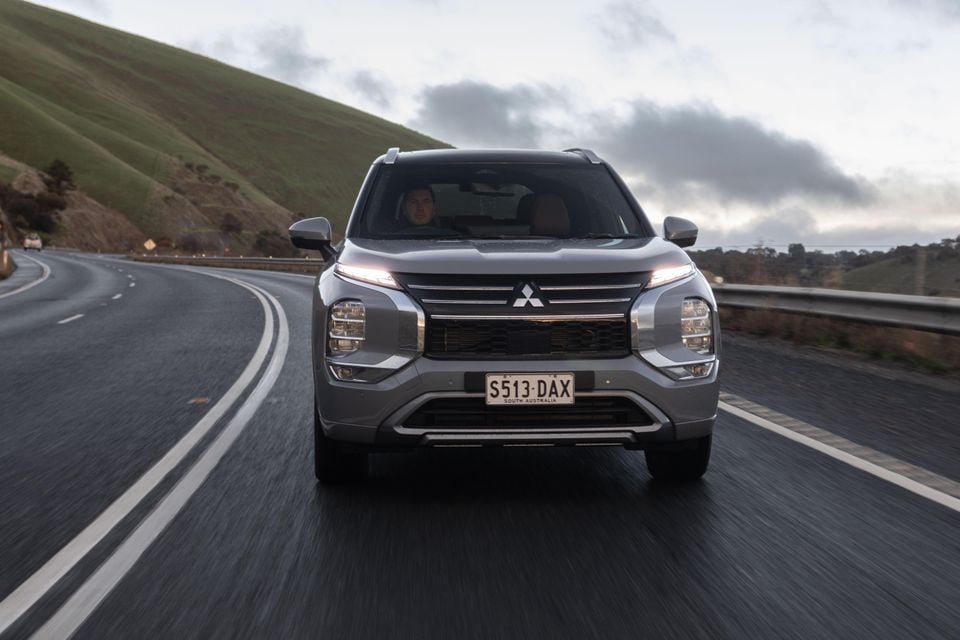
If you don’t like CVTs, you won’t like the way the Outlander drives. You get that same ‘rubber band’ feeling you get with most CVTs, although there are simulated shift points if you use manual mode and flick the paddle shifters.
Left to its own devices, the CVT feels like it has a very tall first ‘gear’ before it slurs into second.
There’s enough performance for getting around town and overtaking on the highway, but you won’t really want to give it any more beans. Should you do so, you have to contend with a lot of noise and your passengers will wonder what you’re doing to the poor car.
This is an SUV that doesn’t like to be hustled but if you don’t have a heavy right foot, you’ll find this isn’t an objectionable powertrain.
From expert reviews to the right deal
CarExpert brings reviews, research tools and trusted buying support together, guiding you from research to delivery with confidence.
The other downside of the engine is fuel economy, which is pretty ordinary. In a segment where hybrids are becoming increasingly common, the yawning gap between the Outlander’s atmo engine and its optional plug-in hybrid powertrain is just begging for a hybrid to be slotted in.
In addition to engine noise under heavy throttle, you’ll have to contend with tyre noise and wind noise at highway speeds. Some rivals are definitely quieter.
So, that’s how the Outlander rides and handles. What about its active safety and driver assist systems? Well, settle in for a long read, as it seems like Mitsubishi was determined to make the Outlander as annoying as many of the Chinese brands do.
Some systems work without fault, including the adaptive cruise control and the blind-spot monitoring. And to be fair, the Outlander does let you adjust the sensitivity of its lane support systems.
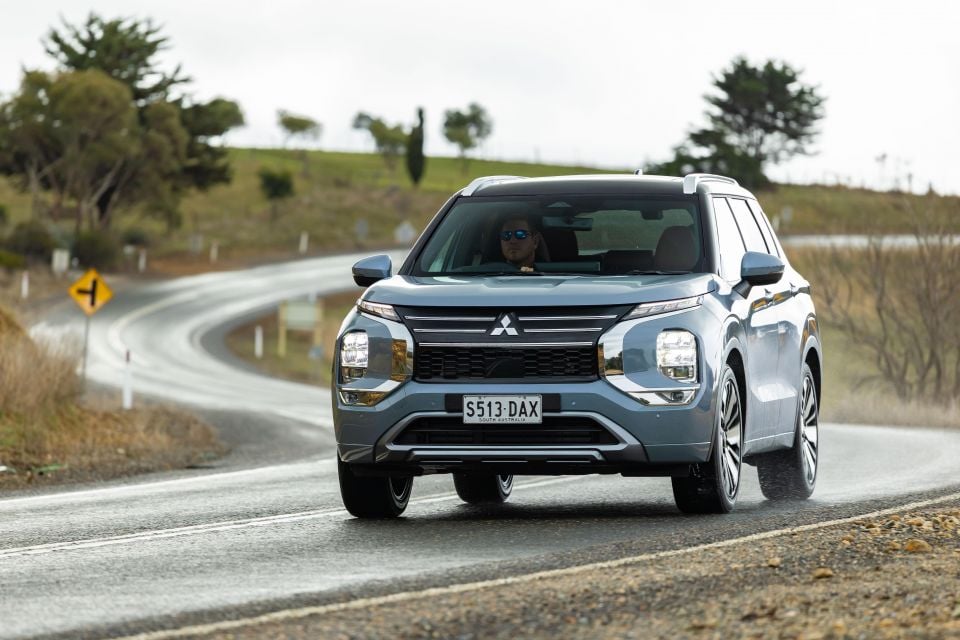
Nevertheless, we found the driver monitoring system domineering, the lane-keep assist paranoid, and the autonomous emergency braking system touchy.
Take the lane systems. There’s emergency lane-keep assist, lane-keep assist, plus a lane-centring system that works in conjunction with the adaptive cruise control.
What I found is the steering wheel would regularly vibrate in wide lanes or unmarked roads where it thought there ‘should’ be a lane marking. Many times, it would vibrate to warn me I’d crossed what it perceived to be a lane marking on the left, when in actual fact I was closer to the right-hand side of the lane.
Then I discovered this was just the emergency lane-keep assist function. The lane-keep assist system had actually been switched off by the previous driver. Suffice it to say, Mitsubishi’s definition of an emergency is very different to mine…
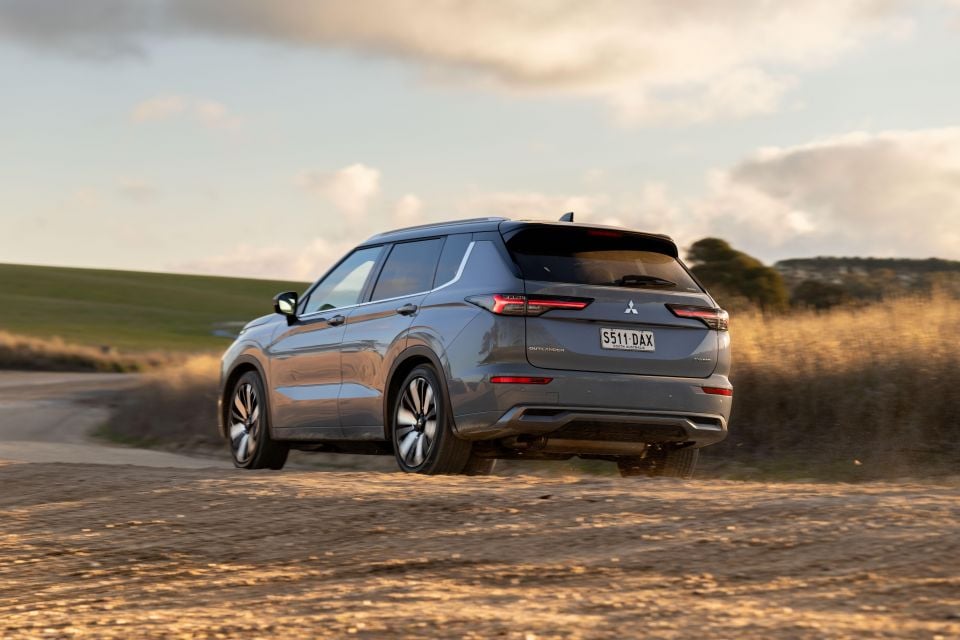
It was frustrating to find the lane support systems repeatedly chiding me for not staying within lane markings when I was, and this even occurred on straight roads.
The lane assist systems can also be a bit alarming, because to keep you in line the Outlander will actually apply braking force instead of just corrective steering torque.
At least the Mi-Pilot system, incorporating lane-centring, generally worked well. The lane centring ability of the Outlander isn’t class-leading but it didn’t make various stupid errors like the other lane support systems.
The AEB tried to apply the brakes one day when I was travelling at 60km/h and going around a vehicle that was turning right. The reverse AEB would be set off by shopping bags I carelessly left on my garage floor, even as I slowly reversed into position.
But nothing infuriates more in the Outlander than its driver monitoring system, which adopts a strict zero-tolerance policy to distraction, yawning, improper steering wheel holding, and even head tilting.
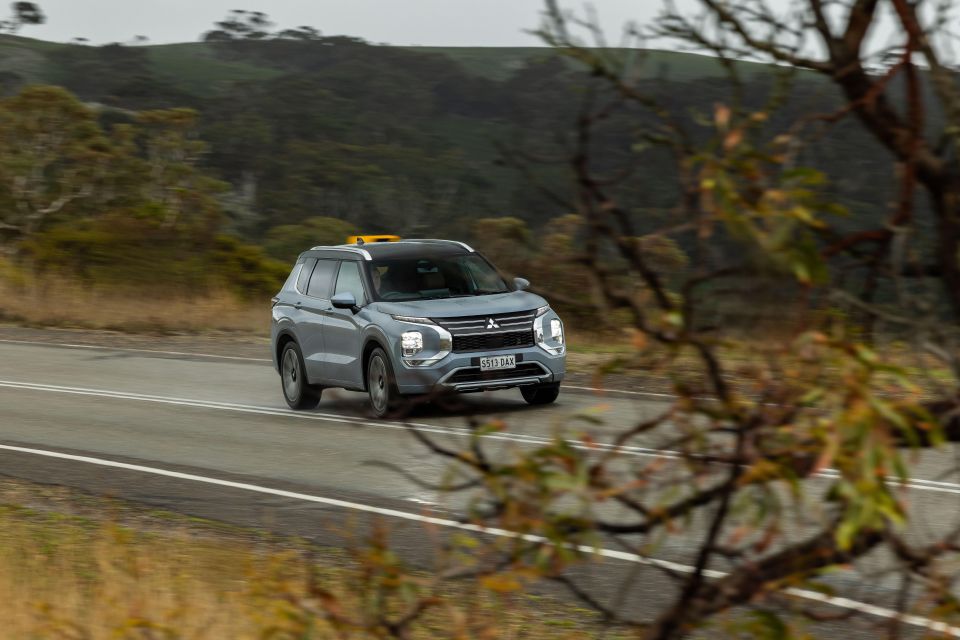
Admittedly, it’s quite accurate at determining whether you’re yawning or looking away. The problem is, it gives you no leeway whatsoever.
It’s really quite farcical. One day, I heard a chime I didn’t recognise so I looked down at the instrument cluster to see if there was a message about it and I immediately got a warning saying driver distraction detected.
When the Outlander’s all-seeing eye detects you yawning, you get a big pop-up message in the instrument cluster that you have to dismiss. And then after this it seems especially sensitive.
We definitely see the merits in driver attention monitoring systems, particularly for their use in detecting fatigue among drivers travelling long distances. But Mitsubishi’s application seems heavy-handed, and you can throw off the monitoring system sometimes by just tilting your head slightly, resulting in more pop-ups.
Our advice: save yourself the aggravation and turn it off each time you start the car. Don’t even try to cover it up, that’ll just make it angry…
To see how the Mitsubishi Outlander lines up against the competition, check out our comparison tool
What do you get?
There are five trim levels in the Outlander lineup, with our Exceed tester sitting second from the top.
2026 Mitsubishi Outlander ES equipment highlights:
- Five seats
- 18-inch silver alloy wheels
- Full-size alloy spare wheel
- Automatic LED headlights
- Full LED tail-lights
- Black cloth upholstery
- 12.3-inch digital instrument cluster
- 12.3-inch touchscreen infotainment system
- Wireless Apple CarPlay
- Wireless Android Auto
- Satellite navigation
- 8-speaker Dynamic Sound Yamaha Premium sound system
- 3 x front USB-C outlets
- Dual-zone climate control
The LS adds:
- Seven seats
- 18-inch two-tone alloy wheels
- Space-saver spare
- Roof rails
- Rain-sensing wipers
- LED front fog lights
- Leather-wrapped steering wheel
- Leather-wrapped gear shifter
- Wireless smartphone charger
- 2 x rear USB-C outlets
- Mitsubishi Connect
- Automatic collision notification
- Breakdown assistance
- Automatic collision, anti-theft and tow-away notifications
- Curfew, geo-fence and speed alerts
- Remote adjustment of climate control, locks, lights and horn
- Vehicle finder
- Navigation to final destination
The Aspire adds:
- 20-inch alloy wheels
- Adaptive LED headlights
- Black leatherette upholstery
- Power driver’s seat
- Heated front seats
- Heated steering wheel
- Head-up display
- Power tailgate
The Exceed adds:
- Five seats
- 20-inch two-tone alloy wheels
- Full-size alloy spare wheel
- Black or grey quilted leather upholstery
- Ventilated front seats
- Power passenger seat
- Aluminium pedals
- Digital rear-view mirror
- Exterior mirrors with memory, reverse auto-tilt
- Rear cargo floor box with lid
- Tri-zone climate control
The Exceed Tourer adds:
- Brick Brown semi-aniline leather upholstery
- 12-speaker Dynamic Sound Yamaha Ultimate 1650W sound system
- Heated outboard rear seats
- Massaging front seats
To see how the Mitsubishi Outlander lines up against the competition, check out our comparison tool
Is the Mitsubishi Outlander Exceed safe?
The Mitsubishi Outlander has a five-star safety rating from ANCAP, based on testing conducted in 2022.
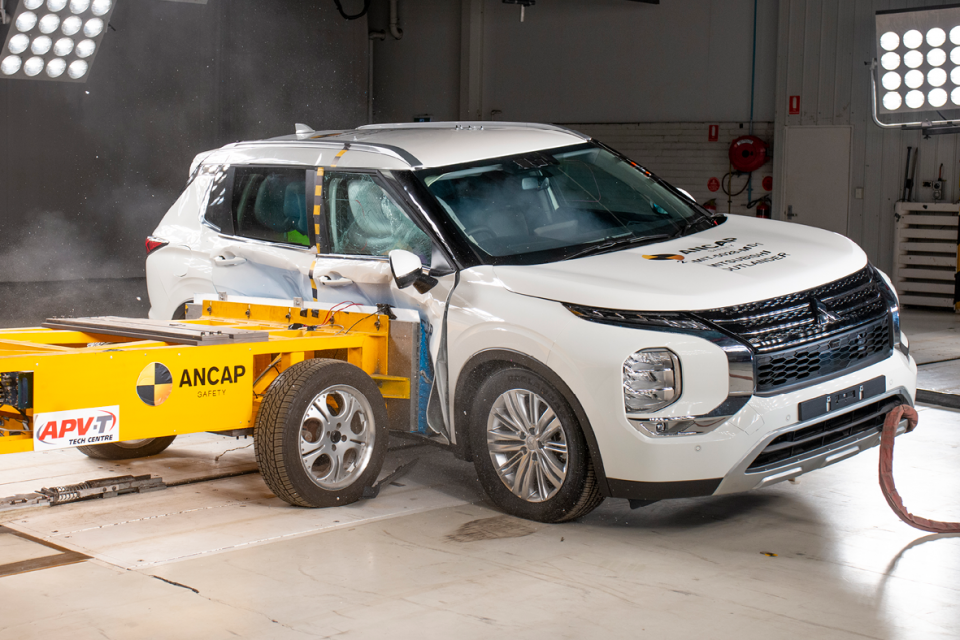
| Category | Mitsubishi Outlander |
|---|---|
| Adult occupant protection | 83 per cent |
| Child occupant protection | 92 per cent |
| Vulnerable road user protection | 81 per cent |
| Safety assist | 83 per cent |
Standard safety equipment includes:
- 8 airbags
- Driver
- Passenger
- Front side
- Curtain
- Centre
- Driver’s knee
- Autonomous emergency braking (forward and reverse)
- Adaptive cruise control
- Blind-spot monitoring
- Driver attention monitor
- Front and rear parking sensors
- Hill descent control
- Intelligent speed assist
- Lane-keep assist
- Emergency lane-keep assist
- Rear cross-traffic alert
- Surround-view camera
- Traffic sign recognition
Aspire grades and above get Mi-Pilot, which combines lane-centring and Traffic Jam Assist functions.
To see how the Mitsubishi Outlander lines up against the competition, check out our comparison tool
How much does the Mitsubishi Outlander Exceed cost to run?
The Outlander range comes with a five-year, 100,000km warranty as standard. This can be extended to 10 years and 200,000km if you service within Mitsubishi’s dealer network using its capped-price service program.
| Servicing and Warranty | Mitsubishi Outlander |
|---|---|
| Warranty | Up to 10 years or 200,000km |
| Roadside assistance | 12 months, then service-activated |
| Service intervals | 12 months or 15,000km |
| Capped-price servicing | 10 years |
| Average annual service cost over 10 years | $434 |
| Total capped-price service cost | $4340 |
Individual service pricing for the Outlander is outlined below:
| Service | Price |
|---|---|
| 1yr, 15,000km | $320 |
| 2yrs, 30,000km | $370 |
| 3yrs, 45,000km | $320 |
| 4yrs, 60,000km | $370 |
| 5yrs, 75,000km | $320 |
| 6yrs, 90,000km | $680 |
| 7yrs, 105,000km | $360 |
| 8yrs, 120,000km | $680 |
| 9yrs, 135,000km | $360 |
| 10yrs, 150,000km | $560 |
All vehicles are sold with 12 months of roadside assistance, which can be extended for up to four years when the vehicle is serviced at an authorised Mitsubishi dealer.
If the car isn’t serviced at an authorised dealer, the standard warranty is five years or 100,000km (whichever comes first).
To see how the Mitsubishi Outlander lines up against the competition, check out our comparison tool
CarExpert’s Take on the Mitsubishi Outlander
The Mitsubishi Outlander is quite a good car if you turn off some of its bloody annoying safety nannies.
Its powertrain isn’t the last word in performance, refinement or fuel economy, but the Outlander has a comfortable ride and pleasant dynamics. It also boasts a spacious, comfortable and well-appointed interior, and up to 10 years of warranty coverage.
But in Exceed trim, with a price tag of $55,140 before on-roads, it isn’t cheap.
At this price point, you can get its Nissan X-Trail cousin in penultimate Ti trim with the mechanically complex but more refined and economical e-Power hybrid system. Or a top-spec Kia Sportage GT-Line with a punchy turbocharged engine and even more standard kit. Or a Volkswagen Tayron with a third row of seats. Or…
You can see the Outlander’s dilemma. It’s an entirely pleasant and competitive medium SUV, but the mid-size SUV segment is Australia’s largest by sales volume and the number of models. So even being good, as the Outlander certainly is, sometimes isn’t good enough.
Interested in buying a Mitsubishi Outlander? Let CarExpert find you the best deal here
Click the images for the full gallery