
GMC isn’t usually associated with classic American muscle cars. The brand is better known for trucks, utility vehicles, and workhorses rather than high-performance, tire-smoking cars. However, during Detroit’s horsepower battles, GMC briefly made a vehicle that defied those typical expectations.
The 1971 GMC Sprint SP emerged during an era when large-displacement engines and bold performance claims dominated the industry. Although it did not carry the typical badges of mainstream muscle cars, it subtly embraced many of those same principles. Years later, the Sprint SP stands out as one of the more distinctive footnotes of that period—not due to a lack of capability, but because it came from a brand rarely associated with speed.
GMC’s Unexpected Entry Into The Muscle Car Era
Why GMC Stepping Into Performance Was So Unusual

GMC has traditionally not been associated with muscle cars. Its reputation centers on trucks, commercial vehicles, and utility vehicles rather than pure performance. While many American brands competed in horsepower wars during the late 1960s and early 1970s, GMC mostly focused on durability and professional-grade capabilities. This context helps explain why the GMC Sprint SP feels so unusual.

At the time, it was the peak muscle car era. Names that often came to mind for high performance were Chevrolet, Pontiac, Dodge, and Ford, which further underscored the emphasis on speed, power, and bold styling. GMC was more conservative and restrained, even though it was a part of the legendary General Motors. The funny thing was, buyers weren’t walking into dealerships expecting high-flying quarter-mile machines.

Instead, GMC’s customers prioritized practicality, fleet use, and premium truck trims over street performance. Against that backdrop, the idea of a GMC wearing serious big-block power seems unexpected, if not slightly contradictory. Yet this is exactly what happened. Beneath its conservative brand identity, GMC briefly produced a vehicle that quietly tapped into the same performance philosophy that defined the era.

This Classic Muscle Car Could Outrun Modern Performance Cars
The 1970 Chevelle SS 454 set a muscle car performance standard the lasted almost four decades and still impresses.
The 1971 GMC Sprint SP – A Muscle Car In Disguise
How The Sprint SP Blurred The Line Between Truck And Muscle Car

To better understand the Sprint SP, it’s helpful to start with the GMC Sprint itself. This car was essentially GMC’s version of the Chevrolet EL Camino; both shared the same underpinnings, a coupe-utility design that combined passenger-car architecture with pickup-like versatility. These stunning steeds filled a unique niche, executing well in terms of car-like handling and practical cargo capacity.

Even without high-speed performance figures, the Sprint distinguished itself from conventional trucks through its dimensions, ride quality, and overall design cues, which are more in line with those of passenger cars. And, of course, this made it well-suited to experimentation, whether by design or by coincidence. The Special Performance (SP) variant pushed the concept further. While it didn’t present itself as a conventional muscle car, it had the ingredients. It retained the visual identity of a stylish utility vehicle, but adopted hardware typically associated with far more aggressive machines.
A Split Personality That Catered To Different Purposes

This dual personality is what makes the Sprint SP particularly interesting in retrospect. At a glance, it could easily be mistaken for a lifestyle-oriented vehicle rather than a performance-focused one. The design did not overtly advertise speed or dominance in the same way as contemporary muscle coupes. However, the driving experience told a different story. The Sprint SP effectively blurred the boundary between segments, combining work-adjacent styling with muscle-era performance potential.

Secrets Of The 400-HP Beast That Became A Classic Icon
The 1970 Buick GSX was quite simply the best classic GM muscle car ever produced and a true icon of the Golden Age.
Big-Block Power Set The Sprint SP Apart
The 454 V8 That Gave GMC Serious Street Cred

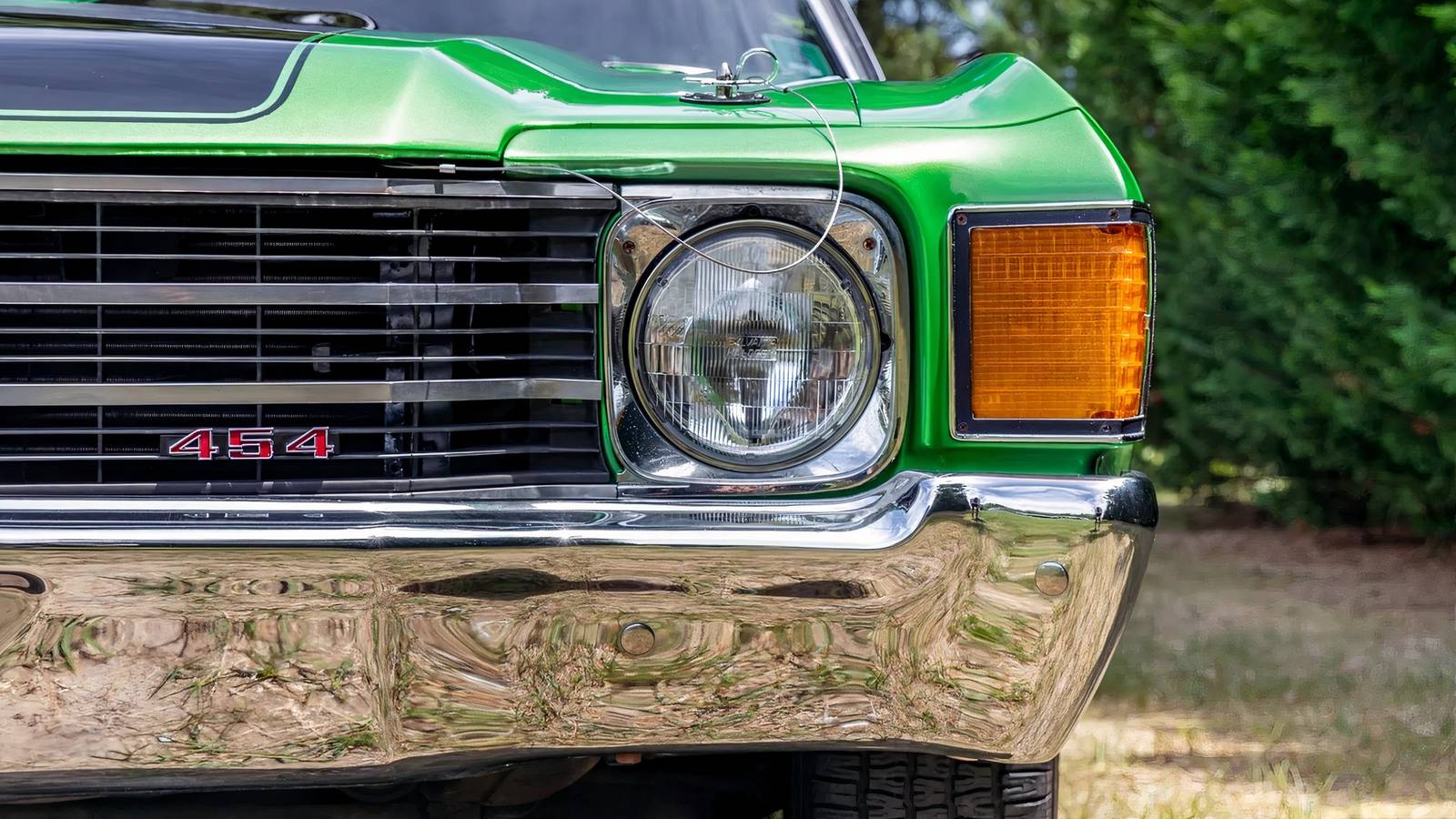
The defining feature of the Sprint SP was its 454-cubic-inch V8. In the early 1970s, engine displacement remained one of the most visible markers of performance credibility, and the 454 carried significant weight within that landscape. It represented the upper end of Detroit’s big-block philosophy, emphasizing torque and straight-line strength over efficiency.

For GMC, the inclusion of such an engine was notable. The brand was not widely known for performance vehicles, making the pairing feel unusual even by period standards. While the powertrain itself was not exclusive to GMC, its presence under a GMC badge created a different perception. The character of the 454 suited the muscle car mindset of the time. It delivered substantial low-end torque and an effortless sense of acceleration, traits that defined many of the era’s most memorable machines. Rather than relying on high-revving theatrics, engines like the 454 emphasized forceful, immediate response.
It Had The Power Needed To Deliver An Intriguing Package

This type of performance aligned well with the Sprint SP’s understated appearance. The vehicle did not rely on exaggerated styling cues to communicate its capabilities. Instead, the engine provided the substance, allowing the car’s performance credentials to speak for themselves without needing visual drama or unnecessary distractions. The broader industry context was already beginning to shift. Regulatory pressures and changing market conditions will soon challenge the dominance of large-displacement engines. The Sprint SP emerged at a moment when such combinations were still possible but increasingly constrained.
Why GMC’s Muscle Experiment Was Short-Lived
Low Production Numbers And Shifting Market Priorities

Although the Sprint SP has an intriguing design, it never gained widespread fame. This is mainly due to its limited production, with only a few units built, leaving the Sprint SP relatively obscure since small-scale cars generally don’t become widely recognized. Moreover, market conditions also significantly influenced this situation. The early 1970s marked a period of change for the American auto industry, with tightening emissions standards, rising insurance premiums, and growing attention to fuel economy. The landscape that had once encouraged big-displacement performance was steadily evolving.
Why It Slipped By Muscle Car Shoppers

GMC has historically not prioritized performance. Its main strength remains in trucks and utility vehicles, offering more stable long-term prospects. From this perspective, the Sprint SP appears less as a bold strategic move and more as a temporary detour. Lacking continued production, motorsport involvement, or strong promotional efforts, the model misses the essential features that keep cars in the minds of enthusiasts.

It was available, provided a decent performance, and gradually disappeared from mainstream discussion. Importantly, its story was far from isolated. Automotive history features many examples of capable vehicles that did not gain lasting recognition due to market forces rather than any inherent quality shortcomings.

15 Modern Muscle Cars That You Shouldn’t Overlook
Here’s a comprehensive list of models that perfectly capture the essence of old-school muscle, and blend them with modern-day conveniences
The Forgotten Legacy Of GMC’s Muscle Machine
Why The Sprint SP Deserves More Recognition Today

Viewed today, the Sprint SP remains an unusual footnote in GMC’s history. For a company so closely tied to trucks and utility, the idea of a muscle-era performance machine wearing a GMC badge remains unusual even decades later. Part of the Sprint SP’s appeal lies in how easily it escapes mainstream muscle car discussions. It rarely shares space with the period’s headline names, which has made it more of an enthusiast discovery than a widely recognized classic. Its scarcity certainly plays a role, but so does its unconventional positioning within both GMC’s lineup and the broader performance landscape of the time.

There’s also an interesting modern parallel. High-performance pickups and utility vehicles are now a familiar part of the market. Yet, the Sprint SP explored a similar blend of practicality and power long before such combinations became common. While it never achieved the cultural presence of more famous contemporaries, it hints at a side of GMC that is seldom emphasized—one willing, if only briefly, to step outside its traditional identity. In that sense, the Sprint SP’s significance is rooted less in dominance and more in contrast. Its story reinforces the idea that automotive history is shaped not only by celebrated icons but also by quieter experiments that challenge brand conventions.
Sources: GM, Classic.com, Bring a Trailer